
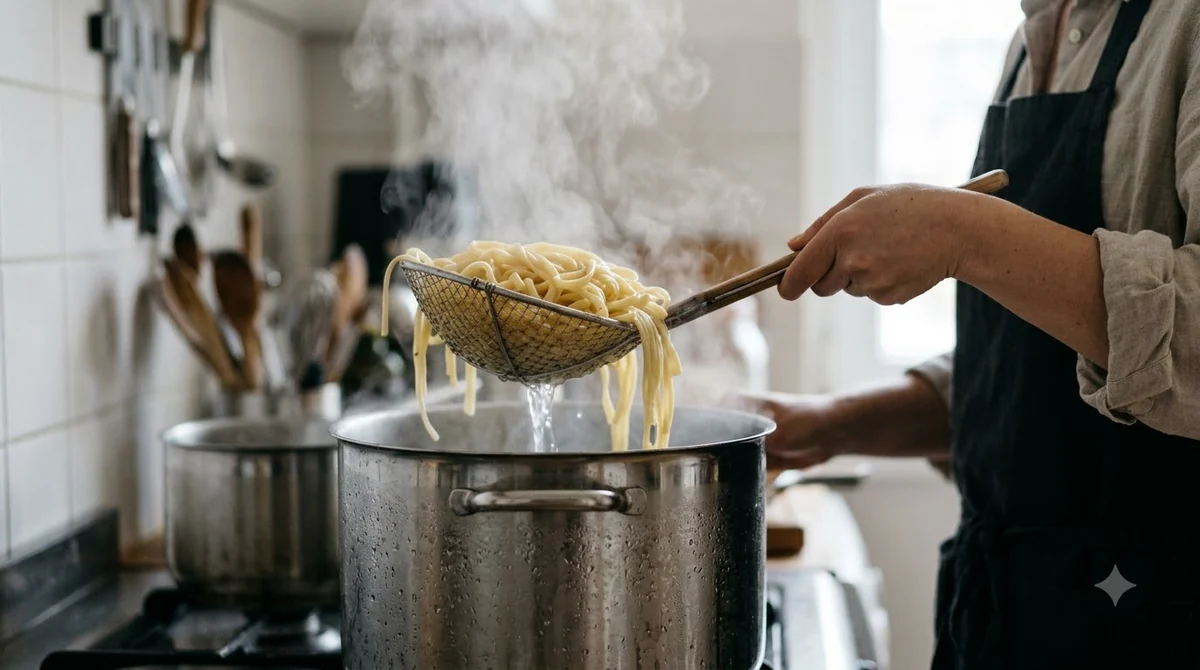

Learning how to cook pasta al dente comes down to three habits: salt the water well, start testing early, and drain before the center goes chalky. Al dente means “to the tooth” in Italian, and it describes pasta that is firm when bitten. Once you know the timing, the same method works for most dried shapes.
The steps below show how to cook pasta al dente the way most cooking guides describe it. Where sources disagree on timing, the article says so, so you can check the package and adjust.
What Al Dente Means
Al dente describes pasta cooked until it is firm when bitten, with a thin white core still visible at the center.
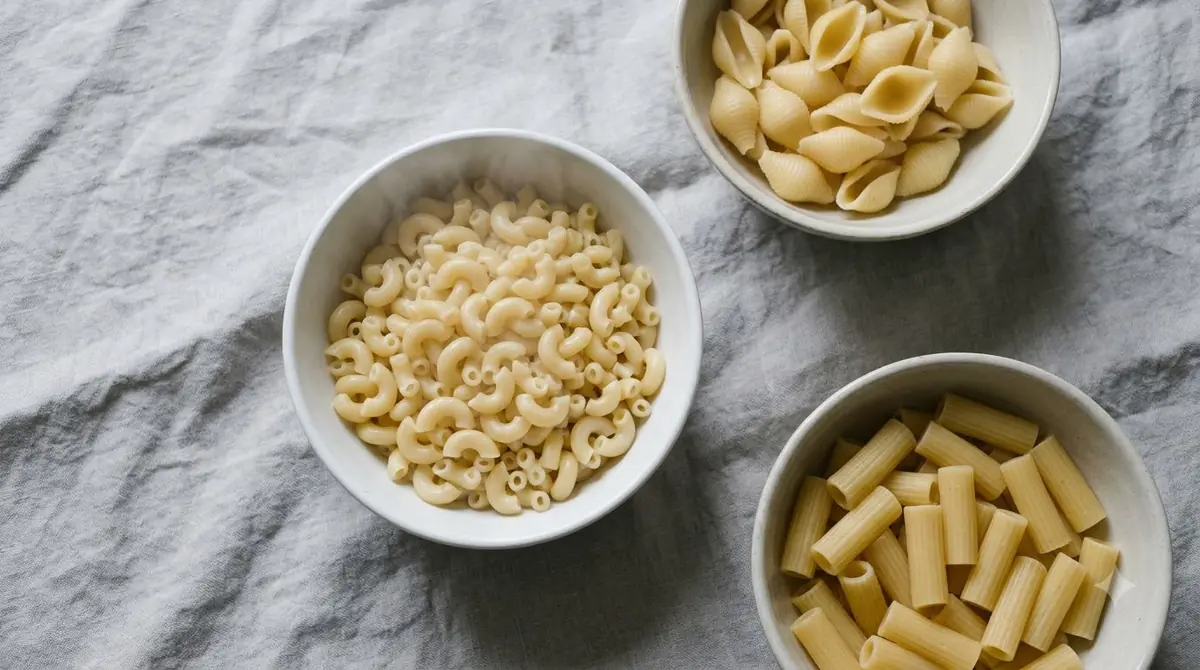
The phrase is Italian and literally means “to the tooth.” According to Wikipedia’s al dente entry, Italians once preferred very soft pasta, and shorter cooking first appeared in 17th-century Naples, initially for fresh pasta. By the mid-19th century, a short cook and a firm texture had become standard for all pastas.
Texture also has a nutritional angle. The same entry cites the American Diabetes Association, which says al dente pasta has a lower glycemic index than pasta cooked soft. That is one reason many home cooks aim for the firm stage rather than soft pasta.

Step 1: Use Enough Salted Water
Start with a large pasta pot of boiling water and enough salt to season the pasta. One recipe uses about 3 liters of water and a generous tablespoon of sea salt for 300 g of pasta, enough for four servings.
Salting the water is the simplest way to season pasta when you learn how to cook pasta al dente, since the pasta cooks in that water (see should you salt pasta water for the reasoning). Use a pot big enough that the water returns to a boil quickly after the pasta goes in. Wait for a full rolling boil before adding the noodles: Taste of Home notes that adding them earlier makes the cook time harder to monitor and can leave the pasta gummy and soft.
Amounts vary between recipes, so check how to cook pasta al dente in your own source. The Taste of Home guide to cooking pasta calls for 1 gallon of water per pound of dried pasta and 1½ tablespoons of kosher salt per pound, added once the water is already boiling so it dissolves right away. Follow the ratio your own recipe gives and season to taste.
Step 2: Stir Early and Often
Knowing how to cook pasta al dente includes stirring soon after the pasta goes into the water, so the pieces do not stick together. One recipe says to stir about every 2 to 3 minutes.
Keep the water at a steady rolling boil after adding the pasta, so cooking does not stall. A wooden spoon works well for this, as the same recipe suggests. The Taste of Home guide adds that the noodles should be fully submerged and stirred again every few minutes, even for short shapes.
Step 3: Start Testing Early
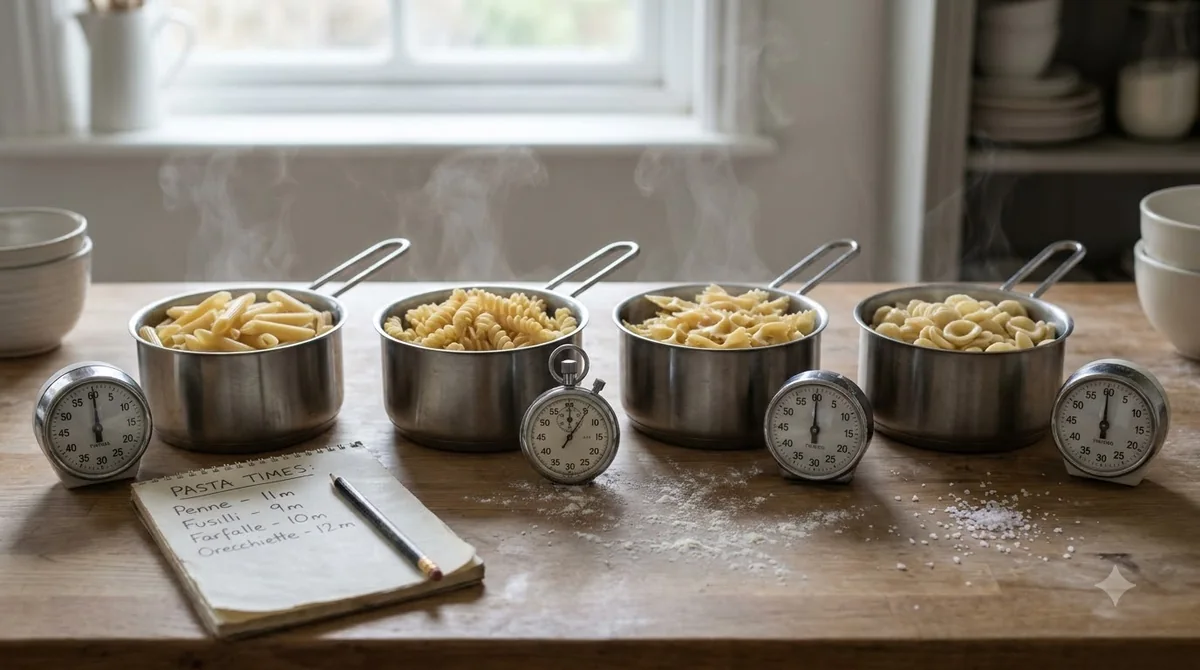
Learning how to cook pasta al dente starts with checking a piece a few minutes before the package time, because the printed time is only a guide. Sources differ on how early: one says about 2 to 3 minutes before the printed time, another says about 4 minutes before, and Taste of Home says to taste 1 to 2 minutes before the box time runs out.
- Set a timer for the package time minus a few minutes.
- Fish out one piece with tongs or a spoon.
- Bite through it, then check the center.
The exact time depends on the brand, thickness and shape. For one common shape, see how long to boil spaghetti. Thin shapes usually finish faster than thick ones. The exact minutes for each shape were not confirmed from a source we could read, so check the range printed on the package, and the manufacturer’s site for specialty brands.
How to Test for Doneness
The bite test is the most reliable check when you learn how to cook pasta al dente, because the timer alone can miss the mark. Al dente pasta is firm and chewy, with no chalky white core left in the middle.
- Pull one piece from the water and let it cool for a moment.
- Cut it in half and look at the center.
- Chew: firm but not raw is the target.
If the center still looks chalky, give the pasta another minute and test again. If the piece is already soft, drain it right away and finish it in the sauce, then start tasting earlier next time. Taste of Home describes al dente as cooked but still a tiny bit chewy, not completely soft all the way through, so a slightly firm center is the goal.
Finish in the Sauce
The last part of how to cook pasta al dente is timing the drain: drain the pasta when it is just short of your target texture if it will finish cooking in a warm sauce, because pasta can keep softening after it leaves the water. Have the sauce ready beforehand so the noodles can go straight into it instead of sitting in the colander. Our guide to how to finish pasta in the sauce shows how to handle that last minute in the pan.
Before you drain, set aside about a cup of the cooking water, as Taste of Home suggests. A splash of it helps the sauce cling to the pasta when you toss the two together in the pan. Our guide to starchy pasta water for sauce explains how to use it.
Common Mistakes When Learning How to Cook Pasta Al Dente
The most common error when learning how to cook pasta al dente is cooking past the firm stage, which leaves it soft and sticky. Too little salt and skipping the early tests cause similar problems.
| Mistake | What happens | Fix |
|---|---|---|
| Cooking to the package time without testing | Soft, overcooked texture | Test a few minutes early |
| Using too little salt | Flat, bland pasta | Season the water generously |
| Skipping stirring in the first minutes | Pieces stick together | Stir during the first few minutes |
| Leaving drained pasta sitting | Pasta keeps softening | Toss with sauce right away |
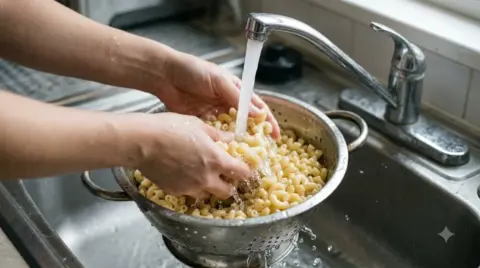
Skip the rinse for hot dishes, because how to cook pasta al dente for a sauce depends on keeping the surface starch. The Taste of Home guide says not to rinse drained pasta, because the surface starch helps sauce cling, and it makes an exception only for cold pasta salad.
Fresh pasta cooks differently from dried pasta. One source says al dente is best achieved with dried pasta, so start testing fresh pasta early and taste often.
Frequently Asked Questions
What does al dente mean?
Al dente means cooked until firm when bitten. The phrase comes from Italian and translates as “to the tooth,” describing pasta with a slight bite at the center. That firm bite is the target when you learn how to cook pasta al dente.
How do you know when pasta is al dente?
Bite a piece and check the center. Al dente pasta is firm and chewy, with the white core nearly gone, and it should not taste raw.
How much salt should I put in pasta water?
One recipe uses a generous tablespoon of sea salt for about 3 liters of water and 300 g of pasta. Taste of Home suggests 1½ tablespoons of kosher salt per pound of pasta, about 1 gallon of water. Follow the amount in your own recipe and season the water until it tastes clearly salted.
When should I start testing pasta?
When you learn how to cook pasta al dente, start testing a few minutes before the package time. Sources differ on the exact window, with one saying about 2 to 3 minutes, another about 4 minutes early, and Taste of Home saying 1 to 2 minutes before the box time runs out. Taste early, because you can always cook pasta longer but cannot undo overcooking.
Can fresh pasta be al dente?
One source says al dente is best achieved with dried pasta. Fresh pasta cooks faster, so test it early and taste often.
Why does pasta get mushy?
Pasta that goes past the firm stage turns soft and sticky, which is why how to cook pasta al dente depends on timing. It can also keep softening after draining, so toss it with sauce soon after it leaves the water.
The package time is a starting point, not a finish line. Learning how to cook pasta al dente takes a few tries, so start testing early, taste one piece at a time, and drain as soon as the center is nearly gone.
 6 min readLearnHow Long to Cook Ziti for Tender, Al Dente ResultsUpdated Nov 13, 2026
 8 min readLearnPasta al Pomodoro Recipe: Simple Italian Tomato Pasta at HomeUpdated Nov 10, 2026
 8 min readLearnPasta al Forno Recipe: 6 Easy Steps to Italian Baked PastaUpdated Nov 11, 2026
 8 min readLearnPizza Al Taglio Recipe: Roman Sheet-Pan Pizza You Can Make at HomeUpdated Nov 10, 2026
 8 min readLearnTrofie al Pesto Recipe: Potatoes, Green Beans and BasilUpdated Nov 11, 2026
 9 min readLearnHow Much Pasta Per Person Do You Really Need?Updated Nov 10, 2026