
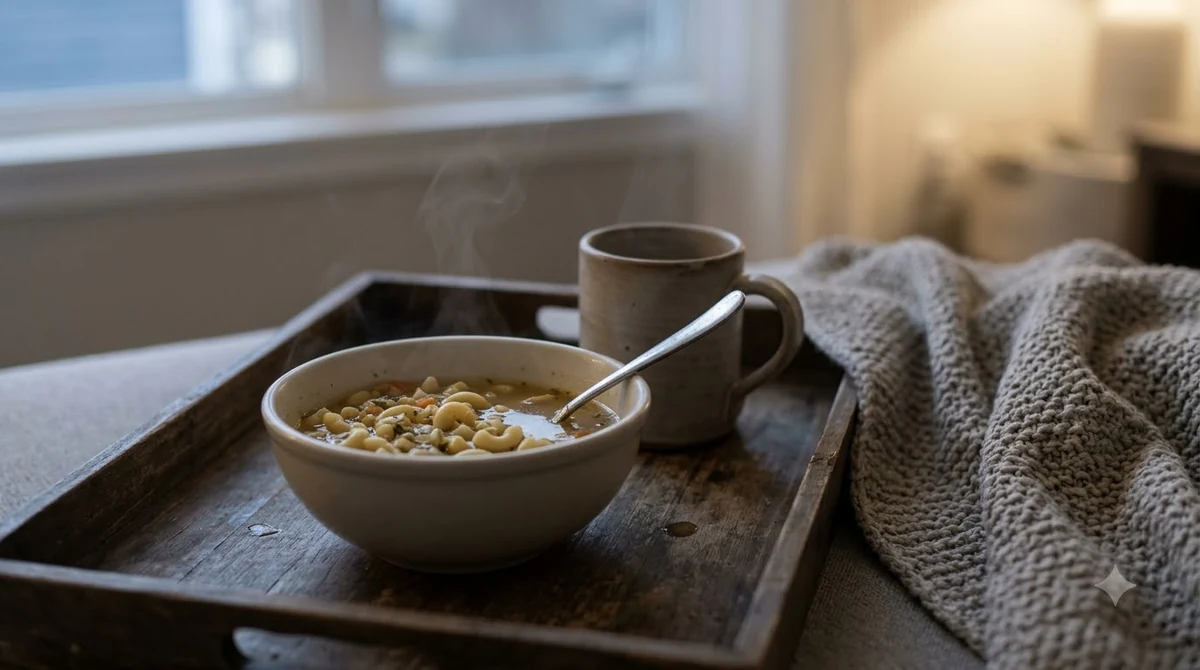

A pasta e ceci recipe combines small pasta with chickpeas, onion, garlic, and rosemary in a creamy, soup-like sauce. The dish is a homestyle Italian classic that comes together in about 45 minutes when you start with canned chickpeas. Dried chickpeas give a creamier result, but they need an overnight soak and a long simmer.
What Is Pasta e Ceci
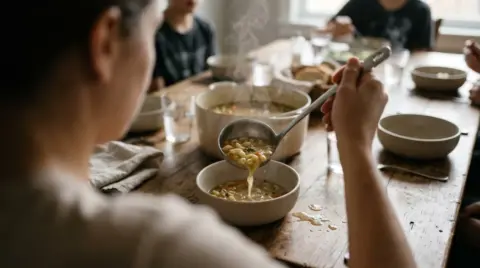
Pasta e ceci, which means pasta with chickpeas, is a homestyle Italian dish that Tasting Table calls a Roman specialty. It is closer to a thick soup than to pasta with sauce.
According to Tasting Table, the texture should be creamy and more soup-like than typical pasta with sauce, while the pasta itself stays al dente. The chickpeas break down into the broth, and the small pasta soaks up the rest.
Most pasta e ceci recipes share the same base: chickpeas, a small pasta, onion, garlic, celery, carrot, olive oil, and rosemary. Some cooks add pancetta or a single anchovy for savory depth, and Parmesan is the usual finish at the table. A close cousin is pasta e fagioli, which swaps the chickpeas for beans.
Ingredients and Ratios
A classic pasta e ceci recipe for four to six people uses two 15-ounce cans of chickpeas, 2 cups of water, and 8 ounces of ditalini. The aromatic base is pancetta, onion, carrot, celery, and garlic, finished with rosemary and a little red pepper.
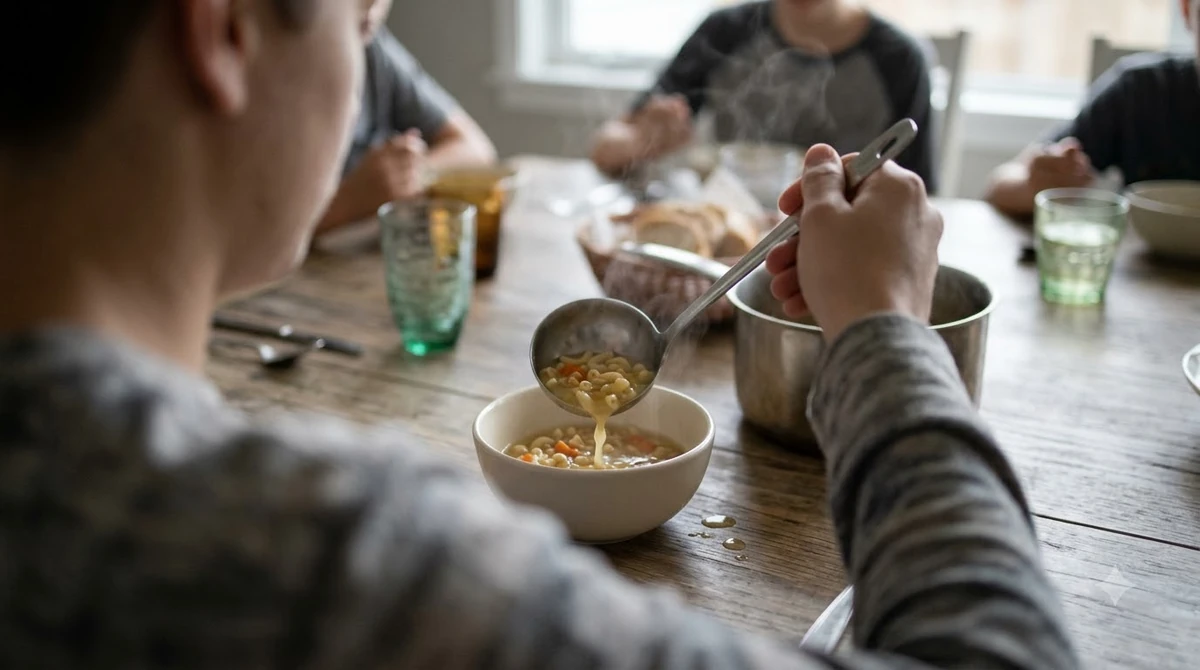
The amounts below follow the America’s Test Kitchen pasta e ceci recipe, which is written for four to six servings. The chickpeas go into the pot undrained, so their liquid becomes part of the broth.
| Ingredient | Amount | Role in the dish |
|---|---|---|
| Chickpeas | 2 (15-oz) cans, undrained | Body of the sauce |
| Ditalini | 8 oz (1½ cups) | Short pasta that thickens the broth |
| Water | 2 cups | Cooking liquid |
| Whole peeled tomatoes | 1 (14-oz) can, drained | Acidity and color |
| Pancetta | 2 oz, cut into ½-inch pieces | Savory base |
| Extra-virgin olive oil | ¼ cup, plus extra to serve | Fat for the base |
| Carrot, celery, onion, garlic | 1 small carrot, 1 small celery rib, 1 onion, 4 cloves | Aromatic base |
| Anchovy fillet | 1, minced | Savory depth without a fishy taste |
| Rosemary and red pepper flakes | 2 tsp minced, ¼ tsp | Herbal note and gentle heat |
| Lemon juice and parsley | 1 Tbsp each | Brightness at the end |
| Parmesan | 1 oz, grated (½ cup) | Finish at the table |
Step-by-Step Pasta e Ceci Recipe
This pasta e ceci recipe is built in one pot. Build a base, add the chickpeas with their liquid and the water, simmer for 10 minutes, then cook the pasta in the same pot for 10 to 12 minutes. Cooking the pasta in the broth is what makes the sauce silky.
The method below follows the America’s Test Kitchen recipe. Use medium heat for the base, then medium-low once the broth is simmering.
- Pulse the pancetta in a food processor for about 30 seconds, until it forms a paste. Add the carrot, celery, and garlic and pulse 8 to 10 times until finely chopped. Add the onion and pulse 8 to 10 times until the pieces are about ⅛ to ¼ inch.
- Transfer the mixture to a large Dutch oven. Pulse the tomatoes in the same processor until coarsely chopped, then set them aside.
- Add the olive oil and cook over medium heat, stirring often, for about 5 minutes, until browned bits form on the bottom of the pot.
- Add the minced anchovy, red pepper flakes, and rosemary. Cook for about 1 minute, until fragrant.
- Stir in the tomatoes, the chickpeas with their liquid, the 2 cups of water, and 1 teaspoon of salt. Bring to a boil, scraping up the browned bits.
- Reduce the heat to medium-low and simmer for 10 minutes.
- Add the ditalini and cook, stirring often, for 10 to 12 minutes, until tender.
- Stir in the lemon juice and parsley, then season with salt and pepper. Serve with grated Parmesan and extra olive oil on the side.
The pasta releases starch into the pot, which thickens the broth as it cooks. Taste before you add more salt, because the pancetta and Parmesan both bring salt to the dish. A good pasta e ceci recipe should leave the broth loose enough to spoon, since the pasta keeps soaking up liquid after you turn off the heat.
Dried vs Canned Chickpeas
In a pasta e ceci recipe, dried chickpeas need an overnight soak and 1½ to 2 hours of simmering, and they give a creamier result. Canned chickpeas skip both steps and still give this pasta e ceci recipe a silky finish when you use them undrained.
The dried method in Tasting Table’s pasta e ceci guide starts with 1 cup of dried chickpeas, soaked overnight and drained. Cover them with water about 1 inch above the beans, add a bay leaf, a garlic clove, and a sprig of rosemary, then simmer covered for 1½ to 2 hours. Add ½ cup of water if the pot dries out, and season with salt once the chickpeas are soft.
Once the dried chickpeas are soft, blend a ladle of them into a smooth puree and return it to the pot. That puree adds body without any cream, and the pasta then cooks in the same liquid for 12 to 15 minutes.
- Dried chickpeas: soak overnight, simmer 1½ to 2 hours, creamiest texture
- Canned chickpeas: no soaking, add undrained, ready after a short simmer
- Either way, check that the chickpeas are fully soft before adding the pasta
Whichever route you take, this pasta e ceci recipe is forgiving. If the broth tightens too much before the pasta is done, stir in a splash of hot water. If it still looks thin once the pasta is tender, let the pot rest off the heat for a few minutes, because the starch keeps thickening the sauce as it settles.
Choosing the Pasta
Ditalini is the most common pasta for a pasta e ceci recipe, and 8 ounces covers four to six servings. Tubetti and garganelli also suit the dish because they are short and sturdy enough for a brothy sauce.
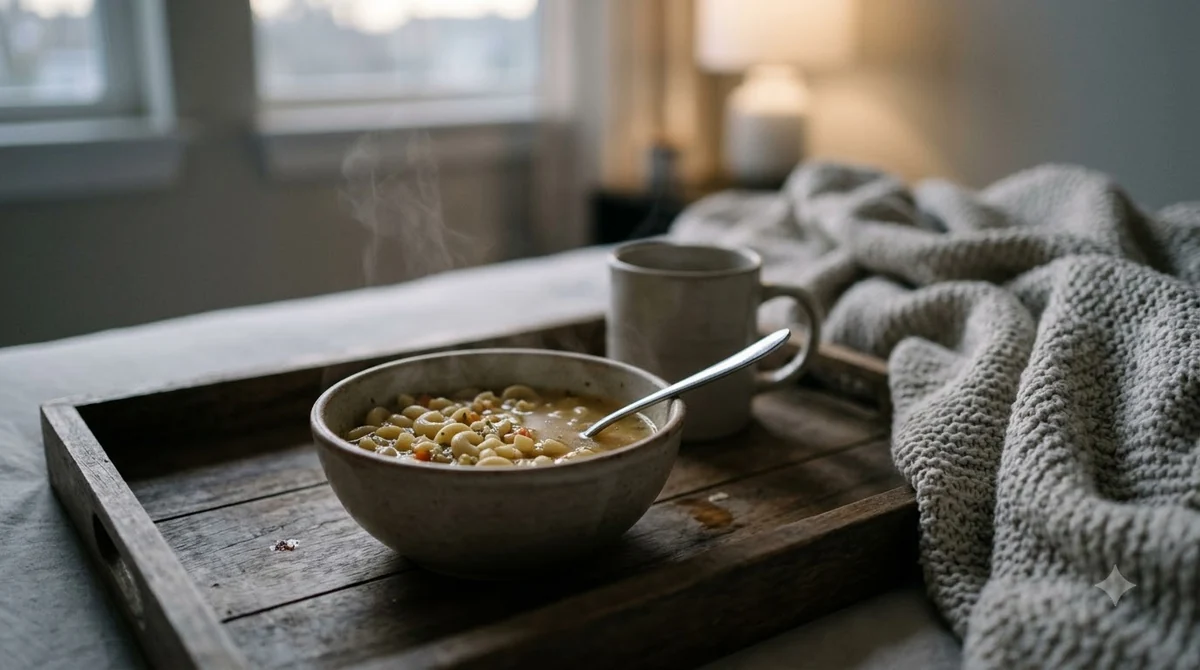
Tasting Table lists 7 ounces of dried short-cut pasta, such as tubetti or garganelli, for four servings. The America’s Test Kitchen recipe uses 8 ounces of ditalini, which is slightly more for the same dish.
- Ditalini: small tubes that match the size of the chickpeas
- Tubetti: short tubes that cook in a similar time, as the tubetti vs ditalini comparison explains
- Orzo: a substitute for ditalini, measured by weight rather than volume
Check the package for the cooking time of any pasta you choose for this pasta e ceci recipe, because shapes vary. Start tasting at the low end of the range, since the pasta should stay al dente.
Common Mistakes
In any pasta e ceci recipe, the most common error is adding all the water at once, which leaves the dish thin. Add liquid in small amounts and let the pasta thicken the broth as it cooks.
- Draining canned chickpeas, which removes liquid the recipe uses for body
- Skipping the browned bits, which add flavor to the broth when you scrape them up
- Overcooking the pasta, which turns the dish mushy instead of creamy
- Rushing a dried-chickpea version without a full overnight soak
Frequently Asked Questions
Can I make pasta e ceci without pancetta?
Yes. Start with olive oil alone and season the base well with salt, since pancetta adds savory depth. The rest of the steps stay the same, and the pasta e ceci recipe still turns out creamy.
Can I make pasta e ceci vegetarian?
Yes. Skip the pancetta and the anchovy, then use vegetable broth in place of some or all of the water. Taste and adjust the salt before serving, because the flavor will be lighter without the cured meat.
Can I use spaghetti instead of ditalini?
Short pasta is the traditional choice, so spaghetti is a departure. You can break it into short pieces before adding it to the pot, but check the package for the cooking time and taste as you go.
How spicy is this pasta e ceci recipe?
The America’s Test Kitchen version uses ¼ teaspoon of red pepper flakes, which gives only a gentle warmth. Add more or less to suit your taste, and leave the flakes out if you cook for children.
How should I store leftover pasta e ceci?
Store leftovers in a sealed container in the refrigerator, and follow your local food safety guidance for storage times. The pasta keeps absorbing liquid as it sits, so loosen the dish with a splash of water when you reheat pasta.
Can I make pasta e ceci ahead of time?
It is best served fresh, because the pasta keeps absorbing liquid as it sits. You can cook the chickpea and tomato base a day ahead, then bring it to a simmer and cook the pasta just before serving.
This pasta e ceci recipe works either way. Make the canned version when you need dinner fast, and save dried chickpeas for a weekend when you have time to soak and simmer them. Either way, taste before serving and adjust the salt, lemon, and Parmesan. In this pasta e ceci recipe, the broth and the pasta matter more than any single ingredient.
 8 min readLearnCacio e Pepe Recipe: Simple Method for a Creamy SauceUpdated Nov 10, 2026
 8 min readLearnPasta e Piselli Recipe: Italian Pasta and Peas in About 30 MinutesUpdated Nov 11, 2026
 9 min readLearnPasta e Fagioli Recipe: A Simple Italian Bean and Pasta SoupUpdated Nov 10, 2026
 9 min readLearnPasta e Patate Recipe: Neapolitan Pasta and PotatoesUpdated Nov 11, 2026
 8 min readLearnPasta e Lenticchie Recipe: A Simple Neapolitan Pasta with LentilsUpdated Nov 11, 2026
 8 min readLearnCreamy Tuscan Pasta Recipe: A Simple Skillet MethodUpdated Nov 10, 2026