
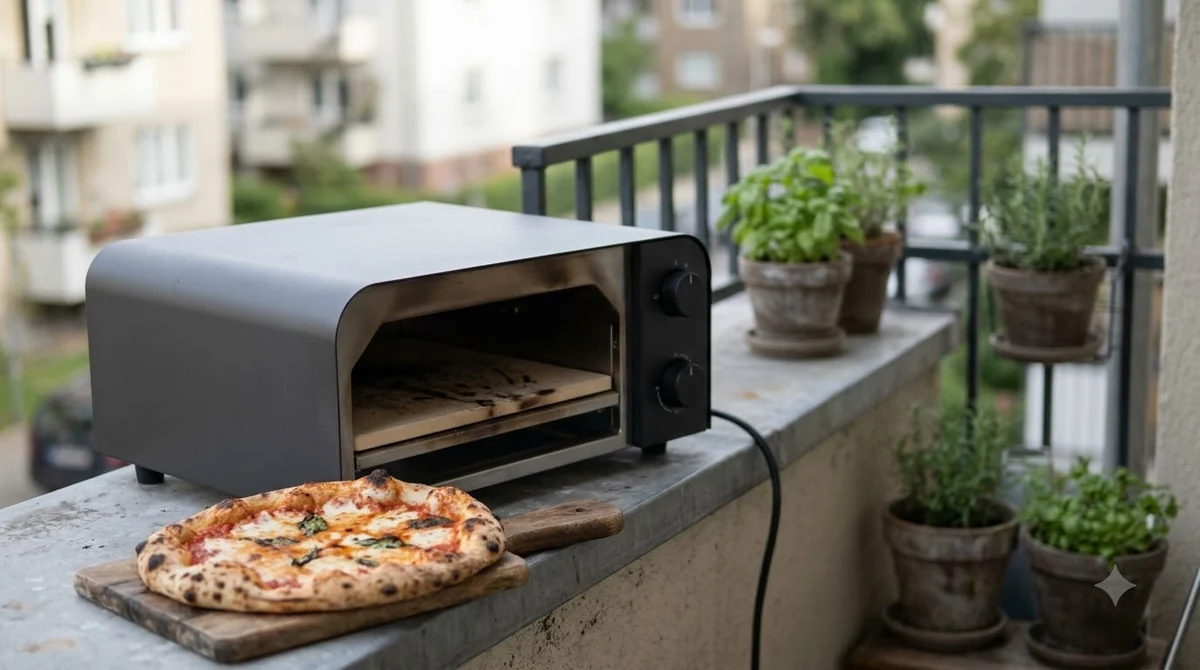

A pizza oven for balcony use works only when the oven’s manual allows outdoor use, your building permits it, and the balcony has open air, a stable base and clear space overhead. Fuel models need ventilation because they produce combustion gases, while electric models need a grounded outlet and a correctly rated cord. Check the manual before you move anything onto the balcony, since some models are designed for indoor use only.

Ooni Koda 2 Propane Gas Pizza Oven
Pros & ConsViewHide
Reasons to buy
- About 35 lb, light enough to move between spots
- Thicker stone for back-to-back pizzas, per Ooni
- Regulator and hose included for propane
Reasons to avoid
- Propane only and not compatible with natural gas
- 14-inch pizzas at most, smaller than the Koda 2 Pro
- Gas bottle is not included
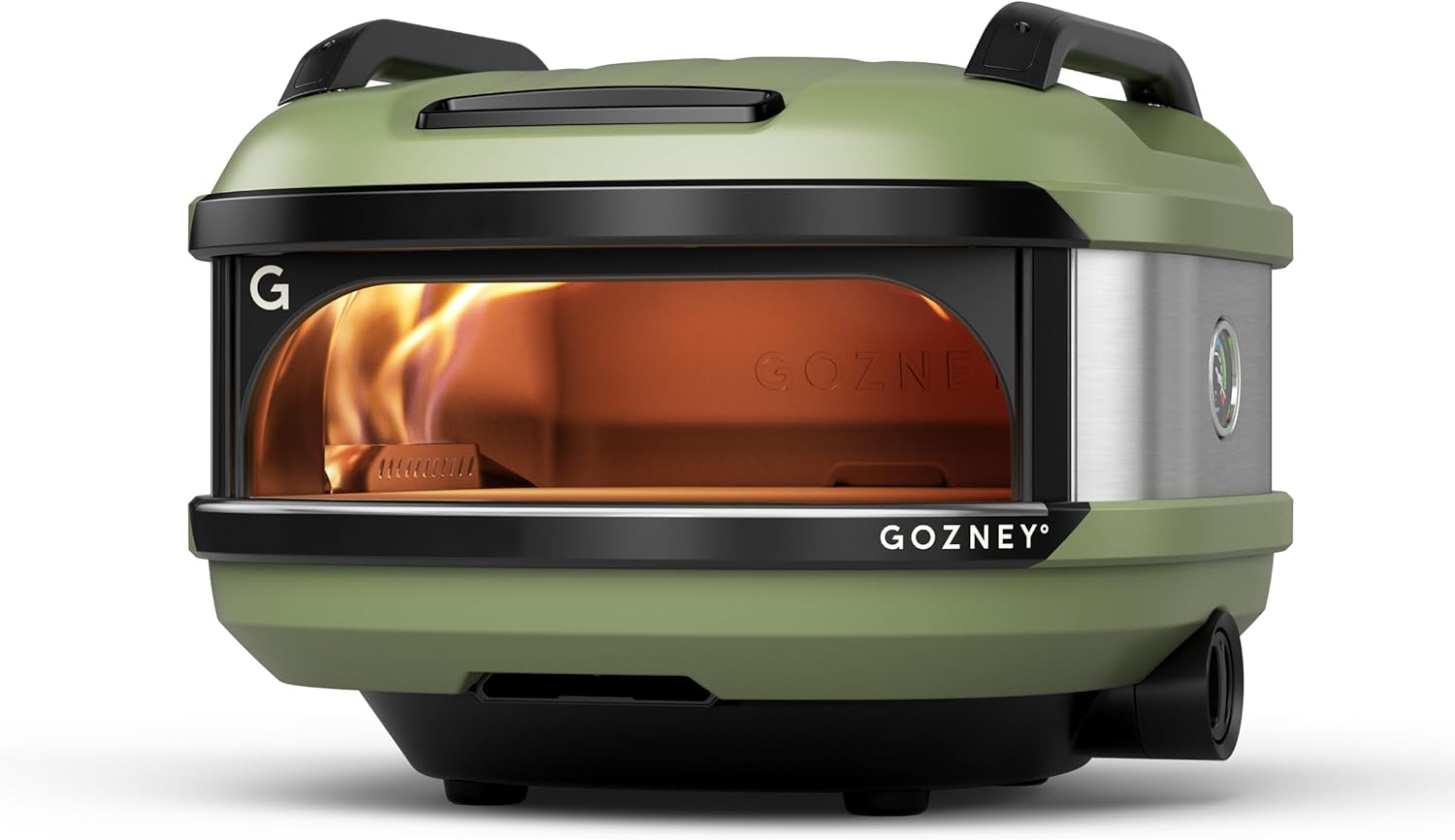
Gozney Tread Pizza Oven, Make 12” Pizzas
Pros & ConsViewHide
Reasons to buy
- Lateral gas burner recreates a wood-fired flame, per Gozney
- Heats up in about 15 minutes, per the listing
- Portable design, listed as 33% lighter than the Roccbox
- Aluminum and steel build with a removable cordierite stone
Reasons to avoid
- Makes 12-inch pizzas, smaller than 14 to 16-inch ovens
- Propane only with no wood option out of the box
- Rack, stand and bag accessories are sold separately
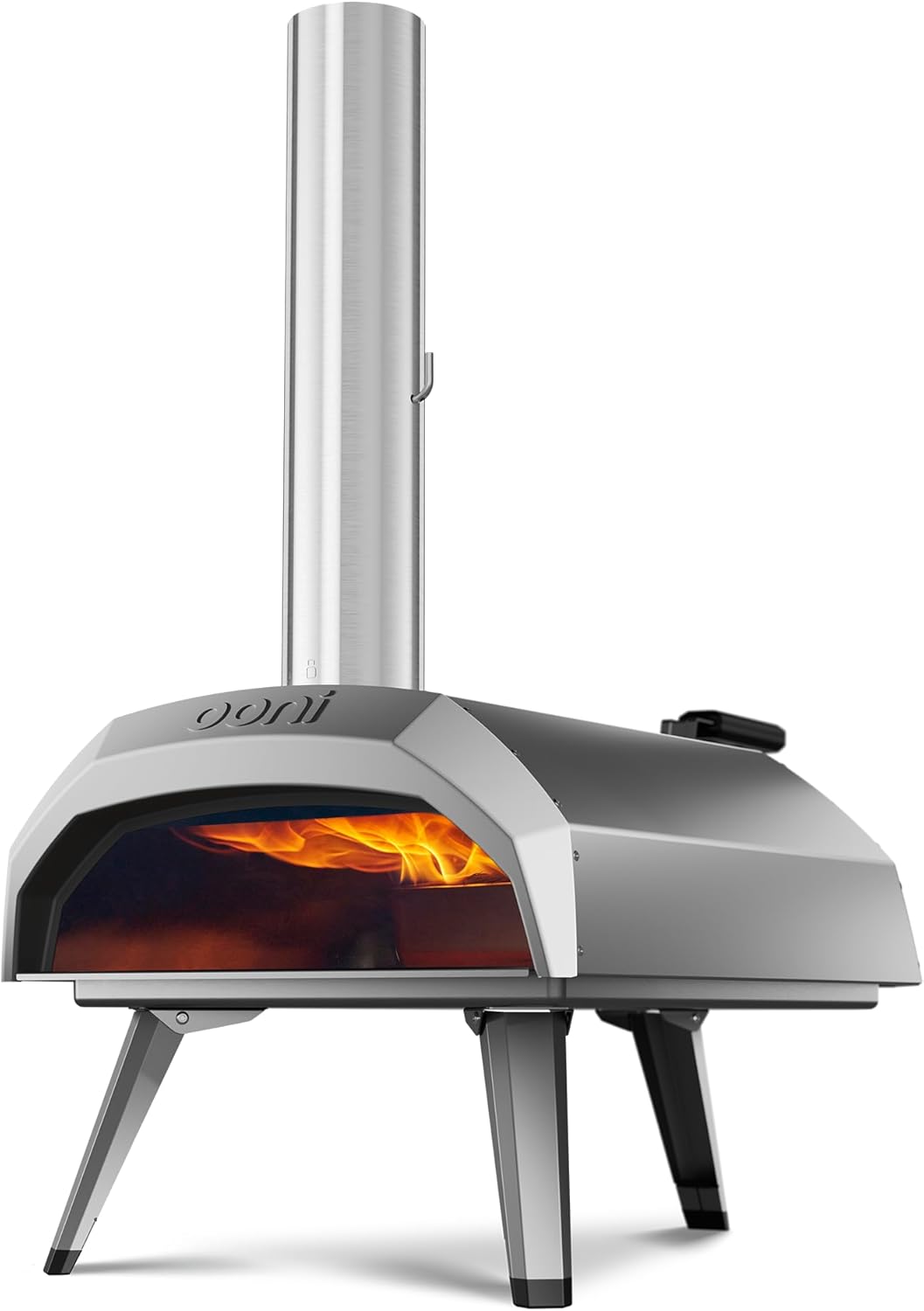
Ooni Karu 12 – Multi-Fuel Outdoor Pizza Oven
Pros & ConsViewHide
Reasons to buy
- Light at about 26 lb, so easy to carry
- Wood or charcoal ready out of the box, gas burner optional
- Reaches 950°F in about 15 minutes, per Ooni
- Strong Amazon rating across roughly 1,500 reviews
Reasons to avoid
- Gas burner is sold separately
- 12-inch pizza limit
- Wood and charcoal take more tending than gas
Can You Put a Pizza Oven on a Balcony?
Sometimes. A balcony can host a pizza oven only when the manual permits outdoor use and your lease or local fire rules do not forbid it. Treat those two checks as the first step, not the last.
The manual is the first authority. The Ooni Volt 2 manual states that the oven is designed for indoor use and should not be used outdoors. That single line rules out a balcony for that model, however sheltered the space looks. Other models have their own location rules, so read the section on outdoor use in the manual for your exact unit rather than relying on a product photo or a sales page.
Building rules add a second check. Some leases, condominium rules and local fire codes limit cooking equipment on balconies and decks. These rules rarely appear in a product manual, so ask your landlord or building management, and your local fire authority if you are unsure. The safety guidance from Fontana Forni does not address balcony or apartment use at all. A silent manual should never be read as permission.
Upper balconies raise a further issue. A balcony with another balcony above it has less overhead room, and a covered space can hold heat and smoke close to the oven. Fontana Forni’s guidance warns that enclosed or low-clearance patios can trap heat and smoke and create a fire and health hazard. A good rule is that a fuel oven belongs in open air, and a covered or walled-in balcony is a poor match for any model that burns wood, charcoal or gas. For a wider comparison of setups, read indoor vs outdoor pizza oven.
Which Fuel Suits a Pizza Oven for Balcony Use?
A pizza oven for balcony cooking is easiest to fit when it is electric, because it produces no flame or combustion gas, but it still needs a suitable outlet. Gas, wood and charcoal models need open-air ventilation and more clearance, so the fuel you choose often decides whether the balcony is usable at all.
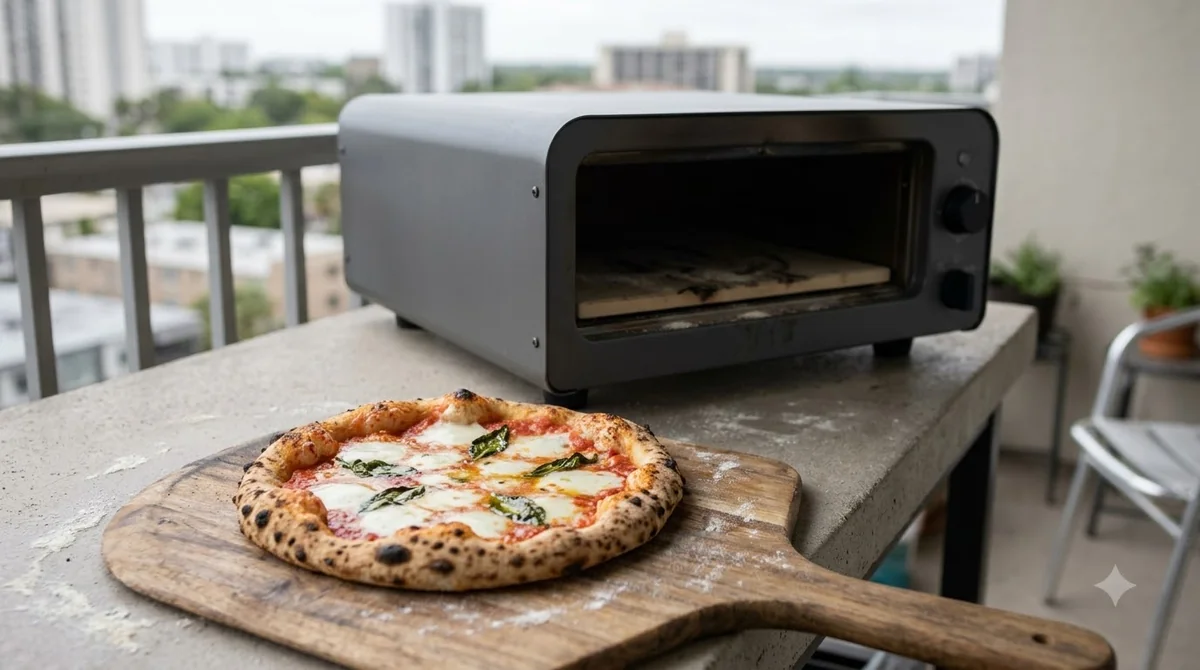
| Fuel | What it needs | Balcony fit |
|---|---|---|
| Electric | A grounded outlet at the voltage on the rating plate, and a correctly rated extension cord | Often the easiest fit, if the manual allows outdoor use |
| Gas | A gas connection with the proper accessories, open-air ventilation and a clear airflow path to the burner | Possible in open air; fittings and hoses need regular checks |
| Wood | Clearance from overhead structures, a non-combustible base and open air for smoke | Poor fit on enclosed or covered balconies |
| Charcoal | Open-air ventilation; the CDC says never burn charcoal indoors | Poor fit on enclosed or covered balconies |
Multi-fuel models add flexibility but not a free pass. The Ooni Karu 16 accepts wood, charcoal or gas, and its gas burner is sold separately, so decide which fuel you will actually use before you buy. Each fuel has its own balcony limits, and a model that suits a backyard may still fail the test on a shared upper balcony.
For a gas model, Fontana Forni states that any gas-fueled oven must be installed with the proper accessories, and it stresses airflow to the burner for combustion. Gas lines and any wood storage should sit safely away from the heat source. After cooking, turn off the gas completely at the source, not only at the control knob.
Space, Clearance and the Surface Under the Oven
For a pizza oven for balcony setup, keep at least 3 feet between the oven and any overhang or structure, and set it on a level, non-combustible base. A wooden balcony floor needs extra protection before a fuel oven goes on it.
Fontana Forni’s safety guidance advises at least 3 feet of clearance from overhangs and structures, and says the oven should sit on a stable, non-combustible surface that is level enough to prevent tipping. Work through the space in this order:
- Measure the overhead space first. Check for an upper balcony, a pergola, an awning or a ceiling that sits lower than 3 feet above the cooking area.
- Check the base. Stone, tile or a non-combustible mat are the simplest options. Fontana Forni says wooden decks are not recommended without a protective barrier, and suggests a non-combustible mat or stone slab beneath the oven.
- Check the side and top clearances in your manual. The Ooni Volt 2 manual lists 10 cm (4 in) on each side and 15 cm (6 in) above, but those figures are for indoor placement and should not be treated as a balcony rule.
- Leave working room. A peel, a fuel tray and a cooking surface need space beside the oven, and a crowded balcony makes accidental contact more likely.
Clearance numbers vary by model and by fuel. Use the figures printed in your own manual, and where the manual is silent, ask the manufacturer before you place the oven against a wall or railing.
Ventilation and Carbon Monoxide
A pizza oven for balcony cooking that burns fuel gives off carbon monoxide, a gas that can build up in enclosed spaces, so open-air ventilation matters more than the oven’s size. Balconies are not indoors, but a balcony with glass walls, a roof or a door opening into the flat can still let fumes collect.
The CDC’s carbon monoxide guidance says CO is found in fumes produced whenever fuel is burned, including in grills and stoves, and that it can build up indoors and poison people and animals who breathe it. The same page says never to burn charcoal indoors, and our guide on using charcoal in a pizza oven covers that fuel in more detail. Its specific warnings are about indoor and garage use, so it does not set a balcony distance. Treat the rule as a signal to keep the fire in the most open space you have.
The CDC lists headache, dizziness, weakness, upset stomach and vomiting as common symptoms, and notes they are often described as flu-like. Anyone who feels unwell near an operating oven should move to fresh air first and seek medical help if symptoms are serious. The CDC page also recommends installing CO detectors in the home.
- Keep the oven in open air, not in a corner between two walls.
- Avoid a covered space that traps smoke, which Fontana Forni links to low-clearance patios.
- Never move a burning fuel oven indoors to finish cooking or to keep it warm.
- Keep a working CO alarm inside the home near the balcony door.
Electrical Setup for Electric Pizza Ovens
An electric pizza oven on a balcony needs a grounded outlet at the voltage printed on its rating plate, and an extension cord rated at least as high as the oven. Check the plate on your unit, not the marketing page, because the voltage changes by region.
The Ooni Volt 2 rating plate lists 1600 W at 120 V on the US and Canada plate, and 1600 W at 220 to 240 V on the UK, EU, AU and NZ plates. The Ooni Volt 12 manual lists 220 to 240 V and 1600 W, names 230 V outlets only, and requires a residual current device, or RCD, rated at 30 mA or less. An RCD cuts the power when it detects current leaking to earth, so it is an important safeguard for any cooker used outside.
The same manuals give practical rules that apply to a balcony setup:
- Use only a properly grounded or earthed outlet. The Volt 2 manual gives this instruction directly.
- Match the extension cord to the oven. The Volt 2 manual says the cord must be marked with a rating at least equal to the appliance rating, and that it should not be draped over the counter.
- Connect in the right order. The Volt 2 manual says to attach the plug to the appliance first, then to the wall outlet.
- Allow for cool-down. The Volt 2 manual calls for at least 30 minutes in standby before switching off or unplugging, while the Volt 12 manual gives about 10 minutes. Follow the time in your own manual.
Keep the cord clear of water, foot traffic and the oven’s hot surfaces. A balcony that gets wet from rain or spray needs extra care with every connection, so keep the plug off the floor and above any puddles. If you are unsure whether an oven can stay out in the weather, read can you leave a pizza oven outside.

Wind, Children, Ash and Cool-Down Safety
With a pizza oven for balcony use, position the opening away from the prevailing wind, keep children and pets back during use and cool-down, and remove ash only after the fire is completely out. These three habits prevent most of the day-to-day hazards on a shared balcony.
Wind causes flare-ups and uneven heating. Fontana Forni advises positioning the opening away from prevailing winds for that reason. Balconies can channel air between walls, so check which way the wind blows on the day you cook, not only on the day you bought the oven.
Children and pets need a barrier. Fontana Forni says to keep them away for at least 2 to 3 hours after cooking, and Californo notes that exterior heat can attract curious kids. On a balcony, a railing is not a safety barrier for a hot oven, so keep the oven out of reach during cooking and cool-down.
Ash and fire cleanup need care. Californo says to put out the fire completely before cleanup, and to clean the oven after every use. Use a strong brush and a metal bin for burned wood. Fontana Forni warns against pouring water on a hot fire stone, since it can crack, and against using water on a grease fire, since it can splatter. Keep a Class K or ABC fire extinguisher nearby for grease fires, and never use a standard water extinguisher on a cooking fire.
- Check the wind before you light or switch on the oven.
- Keep furniture, cushions, plants and textiles well away from the oven.
- Stay with the oven while it is hot. The manufacturer pages read for this guide do not state a formal rule, so treat this as basic caution.
- Wait at least 2 to 3 hours after cooking before you clean it, per Fontana Forni.
- For gas models, turn the gas off at the source after cooking.
Frequently Asked Questions
Can I use a pizza oven on a balcony?
A pizza oven for balcony use is acceptable only if the manual allows outdoor use and your lease and fire rules allow it. The Ooni Volt 2 manual, for example, says the oven is designed for indoor use only. Ask your building management and your local fire authority before you set one up.
Is an electric pizza oven easier to use on a balcony?
Electric models produce no flame or combustion gas, so they avoid the carbon monoxide question that applies to fuel ovens. They still need a grounded outlet, a correctly rated cord and a manual that allows the location. Sources read for this guide do not rank overall safety across fuel types.
Do balcony pizza ovens need ventilation?
Gas, wood and charcoal ovens do, because they produce carbon monoxide while burning. The CDC notes that CO can build up in enclosed spaces, so keep the oven in open air with clear sides.
How far should a pizza oven be from an overhang?
Fontana Forni recommends at least 3 feet from overhangs and structures. Check your model’s manual for its own clearances, because the Volt 2 figures are for indoor placement.
Can I leave a pizza oven running unattended?
No. Stay with the oven while it is hot. The manufacturer pages read for this guide do not give a specific rule, so treat it as basic caution rather than a manufacturer requirement.
Can I put a pizza oven on a wooden balcony floor?
Fontana Forni says wooden decks are not recommended without protection. If you use one, place a non-combustible mat or stone slab beneath the oven and check the surface for heat damage after each cook.
Before you buy a pizza oven for balcony use or move one onto a balcony, confirm the manual’s location rules, your lease and the local fire rules, then pick the fuel that fits that space. If any check fails, a yard or open patio with clear airflow is a safer home for a fuel oven (see our pizza oven for backyard guide), and an electric model should go on a covered balcony only if its manual allows it.
 10 min readBy Use & ModelPizza Oven for Frozen Pizza: What to Check Before You BuyUpdated Nov 16, 2026
 8 min readBy Use & ModelPizza Oven for Indoor Use: What to Check Before You BuyUpdated Nov 16, 2026
 8 min readBy Use & ModelPizza Oven for Beginners: What to Check Before You BuyUpdated Nov 16, 2026
 9 min readBy Use & ModelPizza Oven for Bread: What to Look For Before You BuyUpdated Nov 16, 2026
 8 min readBy Use & ModelPizza Oven for Parties: What to Look for Before You BuyUpdated Nov 16, 2026
 8 min readBy Use & ModelCuisinart 3 in 1 Pizza Oven Parts: What Comes With It and How to CheckUpdated Nov 8, 2026