
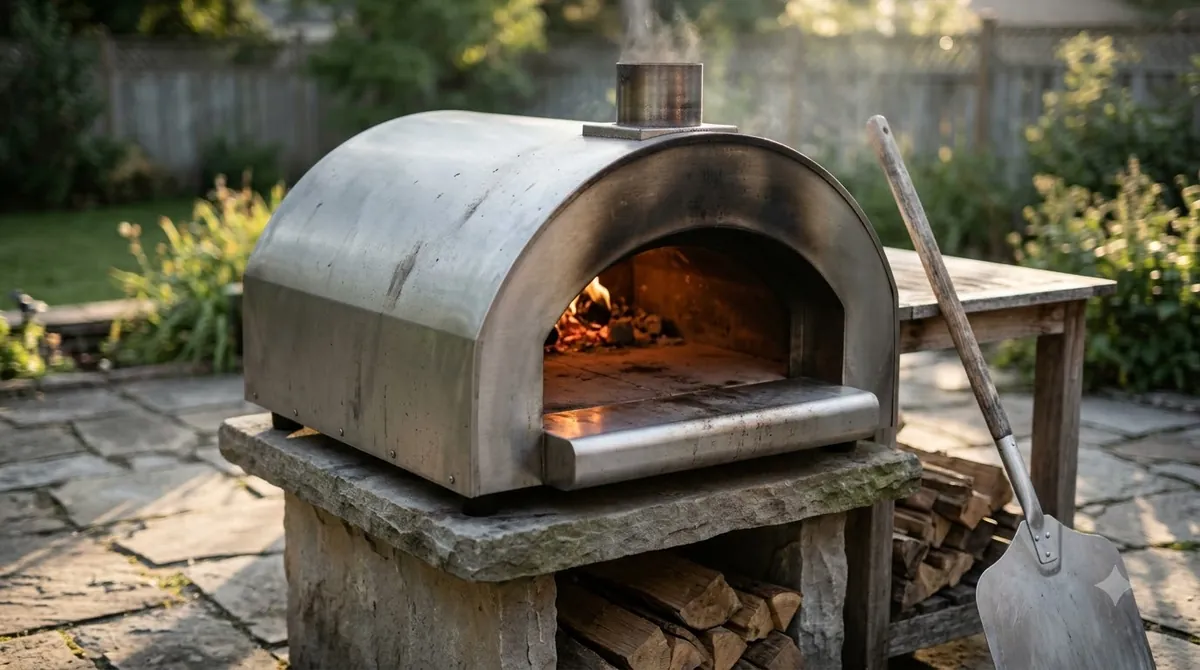

A pizza oven for cooking steak is one that gets very hot and holds steady heat on its cooking surface, so the outside sears before the inside overcooks. An Ooni steak recipe reproduced by Lakeland targets about 932°F (500°C) on the stone baking board, measured with an infrared thermometer.
Whether an oven suits you depends on how hot it runs, how much room a pan needs, and whether you can measure the inside of the steak. Thick and fatty cuts need more care than thin ones, so a pizza oven for cooking steak works best when you plan the pan and the probe first.
Food safety note: whole cuts of beef should reach at least 145°F with a 3-minute rest. Check the thickest part with a probe thermometer rather than judging by color.

Ooni Digital Infrared Thermometer Gun
Pros & ConsViewHide
Reasons to buy
- Reads surface heat up to 999 F in about 300 milliseconds
- 87% of ratings are 5-star
- Includes 2 AAA batteries
Reasons to avoid
- Reads the surface only, not the air inside the oven
- Battery powered

Ooni Koda 2 Propane Gas Pizza Oven
Pros & ConsViewHide
Reasons to buy
- About 35 lb, light enough to move between spots
- Thicker stone for back-to-back pizzas, per Ooni
- Regulator and hose included for propane
Reasons to avoid
- Propane only and not compatible with natural gas
- 14-inch pizzas at most, smaller than the Koda 2 Pro
- Gas bottle is not included
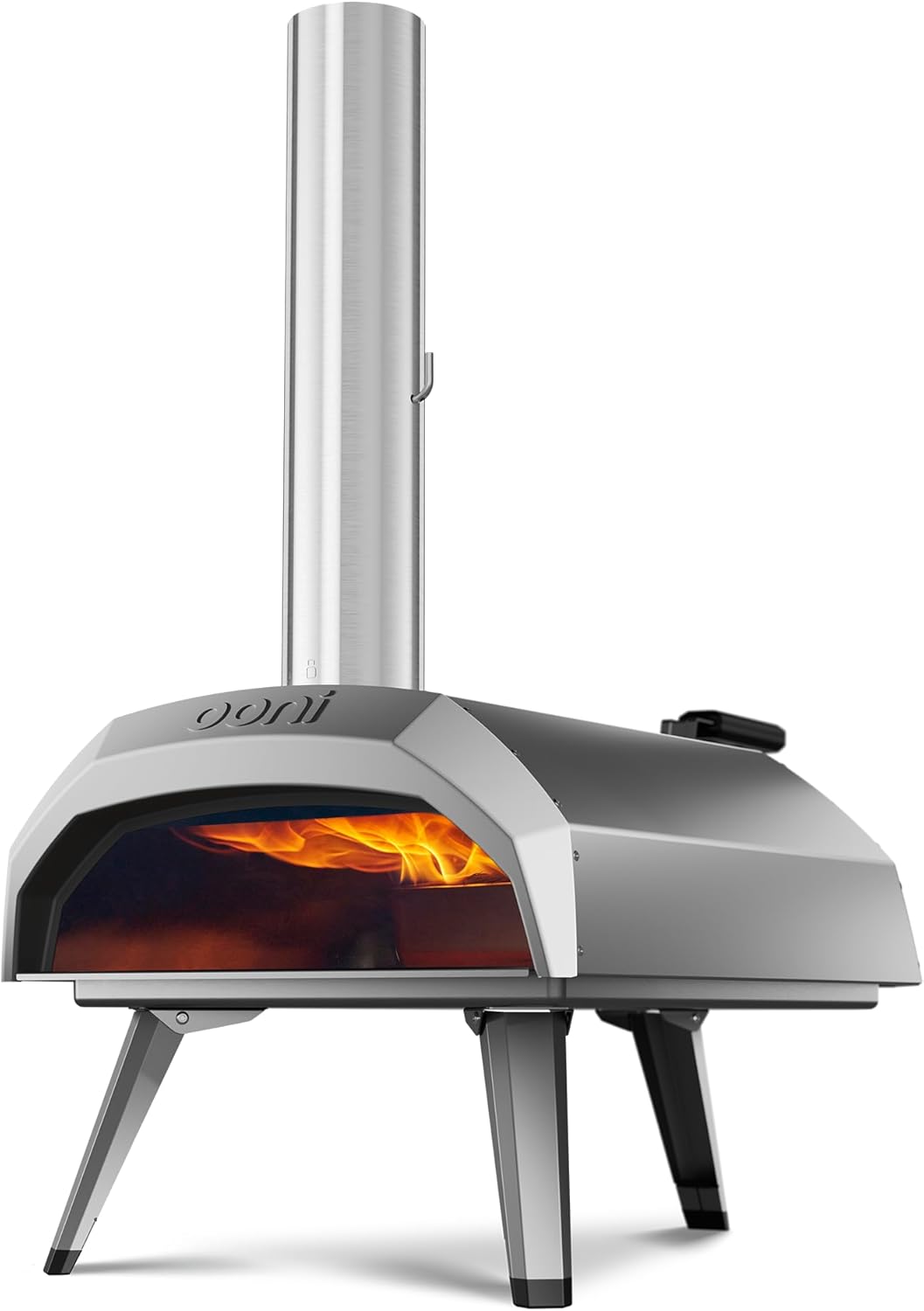
Ooni Karu 12 – Multi-Fuel Outdoor Pizza Oven
Pros & ConsViewHide
Reasons to buy
- Light at about 26 lb, so easy to carry
- Wood or charcoal ready out of the box, gas burner optional
- Reaches 950°F in about 15 minutes, per Ooni
- Strong Amazon rating across roughly 1,500 reviews
Reasons to avoid
- Gas burner is sold separately
- 12-inch pizza limit
- Wood and charcoal take more tending than gas
How hot does a pizza oven need to be for steak?
The Ooni steak recipe targets about 932°F (500°C) on the stone baking board, as reproduced by Lakeland’s flame-cooked steak guide.
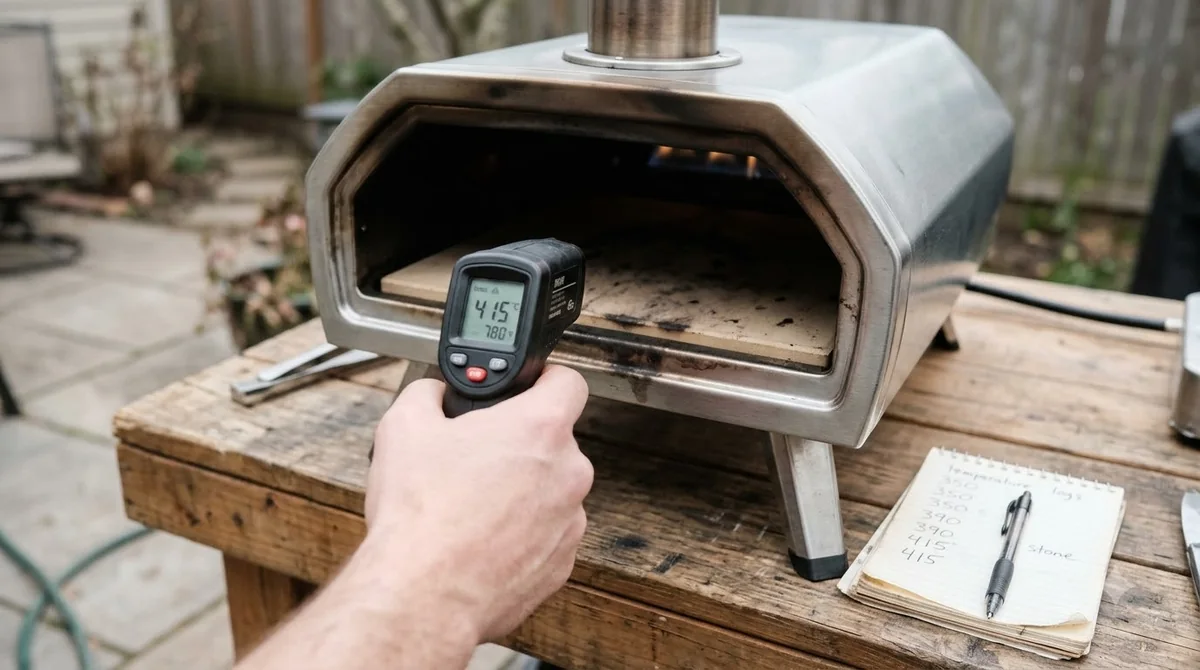
Air temperature and stone temperature are not always the same. The recipe asks you to check the stone with an infrared thermometer, because the stone is the surface that transfers heat to the pan and the steak. A reading taken from the dome or the door tells you less about that surface.
If your oven cannot show a stone reading, you have less control over the sear. Let the oven heat fully before the first steak goes in, and treat the target as a starting point. Ovens differ in size and fuel, so the same setting can give different results from one oven to another. For typical ranges, see how hot a pizza oven gets.

Which pan or surface works best for steak?
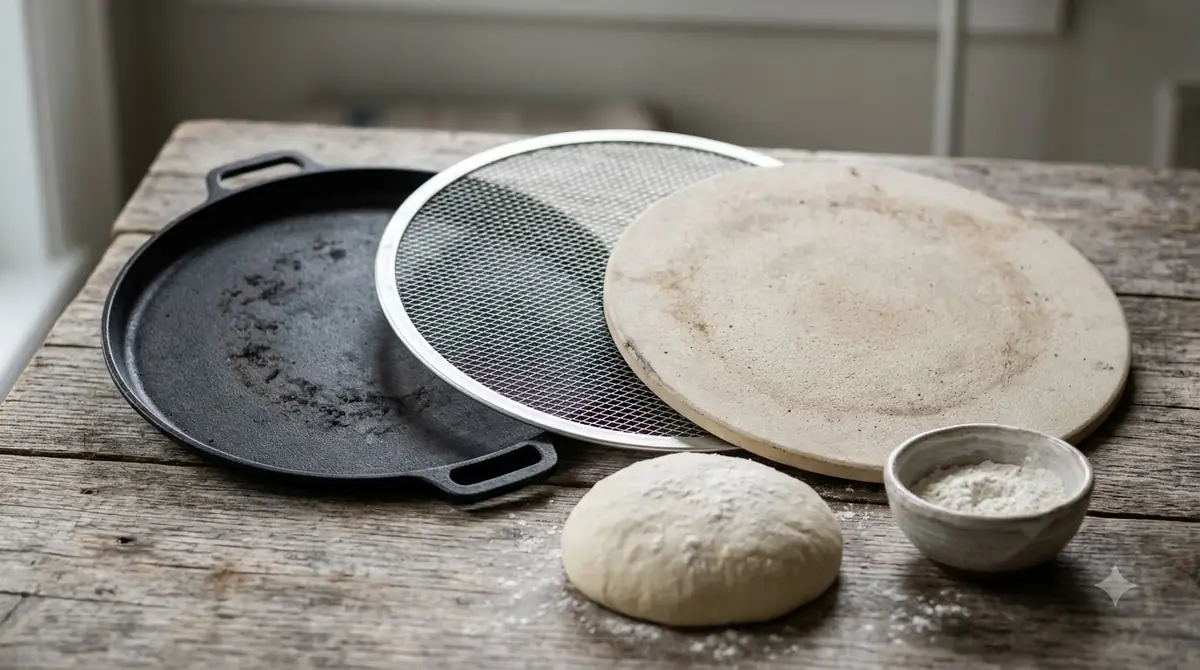
Most steak recipes for a pizza oven use a preheated cast-iron pan or grizzler plate rather than placing the steak directly on the stone. The Ooni recipe puts a cast-iron dual sided grizzler plate in the oven for 10 minutes before the steak goes on.
The steak sits on the grizzler ribs, so the metal is hot before the meat touches it. This is the reason for preheating: a cold pan drops the surface temperature and the steak cooks unevenly. Cast iron holds heat well, which helps keep the sear steady across the steak.
Pan shape matters for fatty cuts. For a fatty cut such as ribeye, a cast-iron pan with walls can help contain the flare-ups that dripping fat may cause, although the sources read for this article do not test pan shapes. A flat grizzler is simpler to use but gives less containment.
- Choose a pan that fits through the oven opening with room to flip the steak.
- Preheat the pan in the oven before the steak goes on, not on the counter.
- Use a pan with walls for fatty cuts, and a flat grizzler for leaner steaks.
- Expect smoke when fat hits the hot metal, and keep your hands clear of the opening.
The Ooni recipe seasons the steak with a little olive oil. Use only what you need, because extra oil on very hot metal produces heavy smoke.
What to check before buying a pizza oven for cooking steak
A pizza oven for cooking steak should reach high heat, leave room for a pan, and give you a reliable way to read the cooking surface. These four checks matter more than any single feature on the box.
| Check | Why it matters for steak | What to look for |
|---|---|---|
| Maximum heat | Recipes target about 932°F on the stone | A rated maximum that is clearly above the recipe target |
| Temperature reading | Lets you check the stone before cooking | A built-in gauge, or room to use an infrared thermometer |
| Cooking surface size | Must hold a pan and leave room to flip the steak | Measure your pan against the inside of the oven |
| Fuel type | Affects how steady the heat stays during a sear | A fuel you can control and monitor during cooking |
Fuel choice is a trade-off. Wood and pellet fuel give more visible flame, but they need more attention to keep the heat steady (see wood pizza oven temperature). Gas is generally easier to keep at a set level, and propane pizza oven temperature shows what to expect. The sources read for this article do not compare fuel types for steak, so check the manufacturer’s stated maximum temperature before you buy a pizza oven for cooking steak.
Also consider where you will use a pizza oven for cooking steak. Outdoor ovens face wind and airflow, which can change the heat from one side of the opening to the other. If you plan to cook steak outdoors often, look for an oven where you can rotate the steak easily and see the cooking surface clearly. Our pizza oven for backyard guide covers outdoor setups.
How long does steak take in a pizza oven?
The Ooni recipe cooks a 20 mm steak about 90 seconds per side, turning it so the heat evens out, then rests it roughly as long as it cooked. The recipe uses thick-cut prime steaks of about 8 to 12 oz each.
- Bring the steaks to room temperature, then season them.
- Heat the oven to the stone target, checked with an infrared thermometer.
- Preheat the grizzler plate in the oven for 10 minutes.
- Sear for about 90 seconds per side, flipping and rotating to even out the heat.
- Check the internal temperature with a meat thermometer.
- Rest on a board, covered with foil, for about the same time they cooked.
Thickness changes the timing. The 90-second figure applies to a 20 mm cut, and a thicker steak needs more time in the oven. For that reason, the thermometer should decide when the steak is done, not the clock.
Slice across the grain with a sharp knife after the rest. The recipe says to rest the steak on a wooden board, so juices settle back into the meat before you cut it.
What is a safe internal temperature for steak?
The University of Illinois Extension gives 145°F with a 3-minute rest as the safe minimum for beef steaks, chops and roasts. Medium is listed at 160°F and well done at 170°F.
| Doneness | Internal temperature | Source |
|---|---|---|
| Safe minimum for whole cuts, with 3-minute rest | 145°F | University of Illinois Extension |
| Medium | 160°F | University of Illinois Extension |
| Well done | 170°F | University of Illinois Extension |
| Medium-rare (recipe preference) | 135°F | Ooni recipe, reproduced by Lakeland |
| Rare (recipe preference) | 125°F | Ooni recipe, reproduced by Lakeland |
The two lowest figures come from the recipe, not from the safety guidance. Because they sit below the 145°F minimum that Illinois lists for whole cuts, treat them as a personal preference. Use a probe thermometer in the thickest part, away from the pan, and do not judge doneness by color alone.
Common mistakes and when a pizza oven is not the right tool
The most common mistakes are skipping the pan preheat, judging doneness by color, and using too much oil in a very hot pan.
- Skipping the pan preheat, so the steak cools the surface and cooks unevenly.
- Judging doneness by color instead of a probe reading.
- Using too much oil in a very hot pan, which can cause heavy smoke.
A pizza oven for cooking steak is not the right tool for every cut. Very thin cuts can overcook in a short time, so watch them closely. Outdoor airflow can also make one side hotter than the other, so turn the steak often.
If you cannot read the stone temperature or measure the steak’s internal temperature, a pan on a stove or grill gives you more control over the result.
Frequently Asked Questions
Can you cook steak directly on the stone?
The sources read for this article describe a preheated cast-iron pan or grizzler plate, not the stone itself. The pan holds its heat in the oven, and you should check the internal temperature of the steak with a probe.
What internal temperature is safe for steak?
The University of Illinois Extension gives 145°F with a 3-minute rest as the safe minimum for beef steaks, chops and roasts. Medium is listed at 160°F and well done at 170°F. Use a probe thermometer for an accurate reading.
How long should steak rest after cooking?
The Ooni recipe rests the steak on a board, covered with foil, for roughly the same time it cooked. Thickness changes the timing, so judge by the thermometer and then slice across the grain.
Do you need an infrared thermometer for steak?
The Ooni recipe uses an infrared thermometer to check the stone before cooking. It helps you reach the recipe target, but a probe thermometer for the steak is still needed to confirm doneness.
Is a pizza oven good for cooking steak?
A pizza oven for cooking steak gives a fast, high-heat sear, which is why many steak recipes use one. It suits thick cuts that you can control with a probe, but very thin cuts can overcook quickly.
Before you buy or cook, check three things: the stone or surface temperature, the size of your pan, and the internal temperature of the steak. Those checks matter more than any single oven feature, and they keep a fast sear from becoming an overcooked or unsafe steak.
 8 min readBy Use & ModelPizza Oven for Camping: How to Choose One and Use It SafelyUpdated Nov 16, 2026
 10 min readBy Use & ModelNinja Artisan Pizza Oven Dimensions: Size, Weight and Cooking AreaUpdated Nov 8, 2026
 8 min readBy Use & ModelOoni Karu 16 Recipes: Pizza, Sauce and Steak at High HeatUpdated Nov 6, 2026
 9 min readBy Use & ModelPizza Oven for Entertaining: How to Choose the Right OneUpdated Nov 16, 2026
 9 min readBy Use & ModelPizza Oven for Homemade Pizza: How to Choose by Heat, Fuel and SizeUpdated Nov 16, 2026
 10 min readBy Use & ModelPizza Oven for Home Use: How to Choose the Right Type and Stay SafeUpdated Nov 16, 2026