
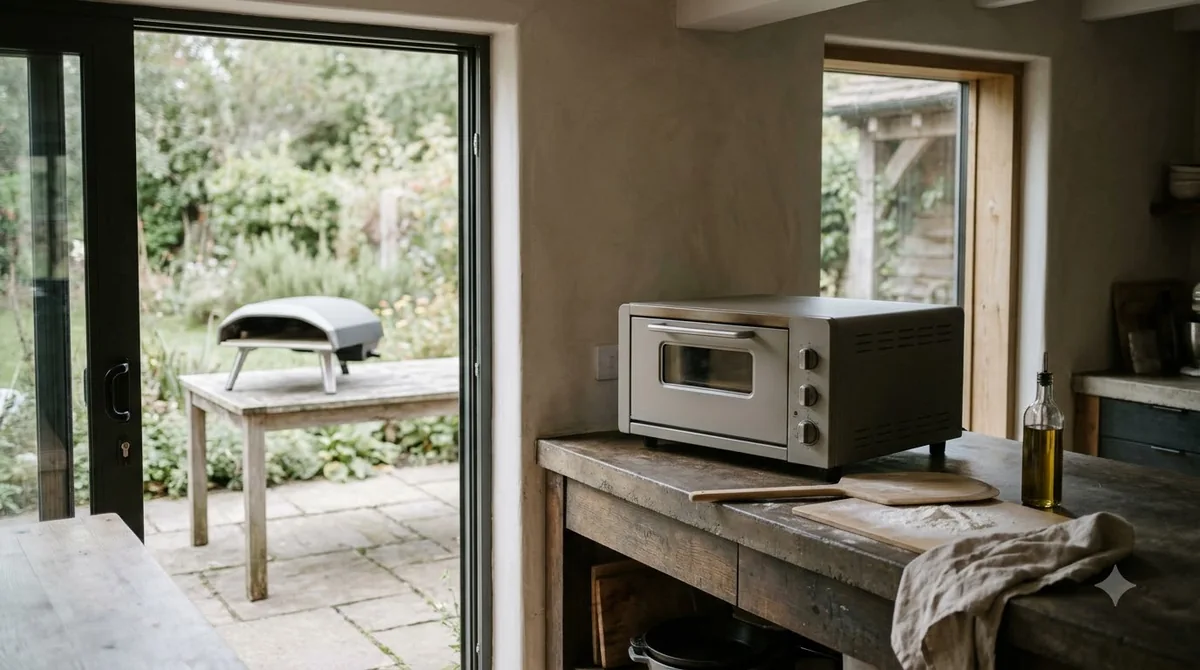

A pizza oven for home use is a countertop or backyard appliance that bakes pizza at very high heat. In the top indoor models tested by America’s Test Kitchen, a thin pizza cooks in about two minutes, while weaker models take much longer.
Electric models suit indoor kitchens and need an outlet. Gas, wood and multi-fuel models suit outdoor cooking and need fuel, airflow and open space. Pick the type that matches your pizza oven for home use needs before you compare brands.
Fuel-burning pizza ovens produce carbon monoxide, so follow your manual, the placement rules and local codes every time you cook.

Ooni Volt 2 Electric Indoor Pizza Oven
Pros & ConsViewHide
Reasons to buy
- Ooni lists a 70°F to 850°F range
- 13.3-inch pizza stone for 12-inch pizzas
- Three pizza presets plus Dough Proofing and two custom slots
- Three-year warranty when registered within 60 days, per Ooni
Reasons to avoid
- Indoor use only, per Ooni
- Weight and wattage are not on Ooni's getting-started page
- Fewer Amazon ratings than the Breville at 66 so far

Breville BPZ820BSS Smart Oven Pizzaiolo
Pros & ConsViewHide
Reasons to buy
- Rated to 750°F, which Breville calls a first for a domestic countertop oven
- Five presets plus a Manual Mode for deck and top temperatures
- Pizza peel and pizza pan included, per Breville's page
- Stainless steel body for indoor countertop use
Reasons to avoid
- Lower ceiling than the Ooni Volt 2's listed 850°F
- Large footprint at 18.1 x 18.5 x 10.6 inches
- Breville's page does not list wattage or weight

Pros & ConsViewHide
Reasons to buy
- Reaches 800°F with 5 touchscreen presets plus a manual setting
- Pizza stone and peel included
- Countertop design fits small kitchens
- 71% of 398 Amazon ratings are 5-star
Reasons to avoid
- Food Network calls it pretty noisy
- Makes 12-inch pizzas at most
- 8% of ratings are 1-star
Types of Pizza Oven for Home Use
A pizza oven for home use comes in four main types: electric, gas, wood-fired and multi-fuel. The fuel you can access at home decides which one fits.
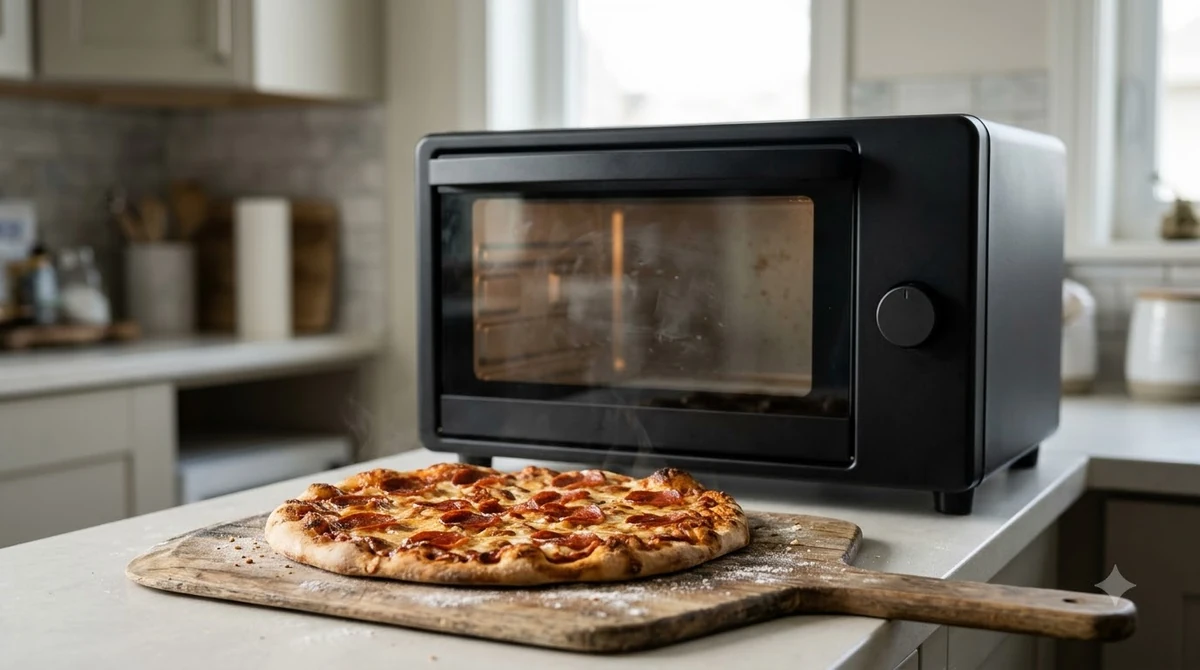
Electric countertop models heat with elements and plug into an outlet. Every indoor model in the America’s Test Kitchen review is electric, so these ovens suit kitchens with little or no outdoor space. Our best indoor pizza ovens guide compares specific models. Outdoor ovens run on propane, wood or charcoal, which means you manage a gas flame or a wood fire instead of a dial.
Wood-fired ovens are generally built on a base of tuff and fire brick, with a dome above the cooking floor that reduces heat loss. According to the Wikipedia overview of pizza ovens, results depend on the operator’s skill, because you control the fire and the timing yourself. The same overview notes that electric ovens have a smaller carbon footprint than wood-fired ovens.
Hybrid ovens can burn both wood and gas, and multi-fuel models accept more than one fuel. Check the manual for the exact fuels your model accepts, because the list changes from model to model.
| Type | Fuel | Where it fits | Daily effort |
|---|---|---|---|
| Electric countertop | Electricity from an outlet | Indoors, small kitchens | Low |
| Gas (propane) | Propane | Outdoors, patios and decks | Low to medium |
| Wood-fired | Wood | Outdoors, yards with space | High |
| Multi-fuel | Varies by model, check the manual | Outdoors | Medium to high |
An electric pizza oven for home use fits cooks who want quick, repeatable results on a weeknight and have no room for a fire. Gas ovens suit people who want a pizza oven on a patio with less hands-on fire management. Wood-fired ovens suit cooks who enjoy the process and have space for a dedicated outdoor setup.
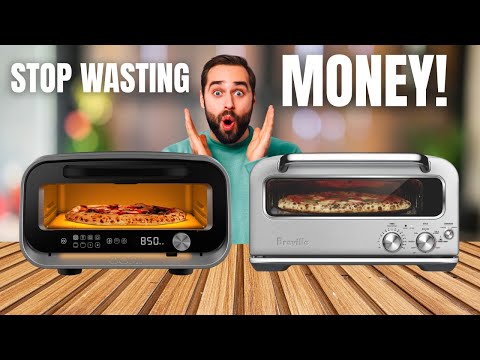
Indoor or Outdoor: Where You Can Use a Pizza Oven for Home Use
Indoor electric ovens fit small kitchens, but not every one can leave the house. Check the outdoor rule for your exact model before you buy.
In the America’s Test Kitchen indoor pizza oven review, the Ooni Volt 2 cannot be used outdoors. The Current Model P Smart can be used indoors or outdoors when it has an outlet, and the review advises checking the manual for voltage restrictions.
Outdoor ovens can only be used outside, and the same review advises storing them indoors when they are not in use. That storage step matters in a climate with rain, frost or strong sun, because a stored oven stays protected between cooks.
An indoor electric pizza oven for home use suits you if you have little or no outdoor space, or if you want to cook year-round regardless of the weather. Keep in mind that indoor models in the review measured about 18 to 21 inches wide, so measure your counter before you order. For a fuller comparison of the two settings, read our indoor vs outdoor pizza oven guide.
An outdoor oven suits you if you have a patio, deck or yard with a stable, open spot. It is the wrong choice for a space enclosed by walls, a roof or a garage, because fuel-burning cooking needs open air, and a balcony needs a check of your building rules and the manual first.
- Choose indoor if you have little outdoor space or cook in bad weather.
- Choose indoor if you want no fire, no fuel tank and no ash to clear.
- Choose outdoor if you have a yard or patio and enjoy the cooking process.
- Skip the indoor option if you need a pizza 18 inches or larger.
Size and Temperature for a Pizza Oven for Home Use
Most indoor home models reach 750°F to 850°F on their maximum setting and fit about a 12-inch pizza, while outdoor stones can be larger.
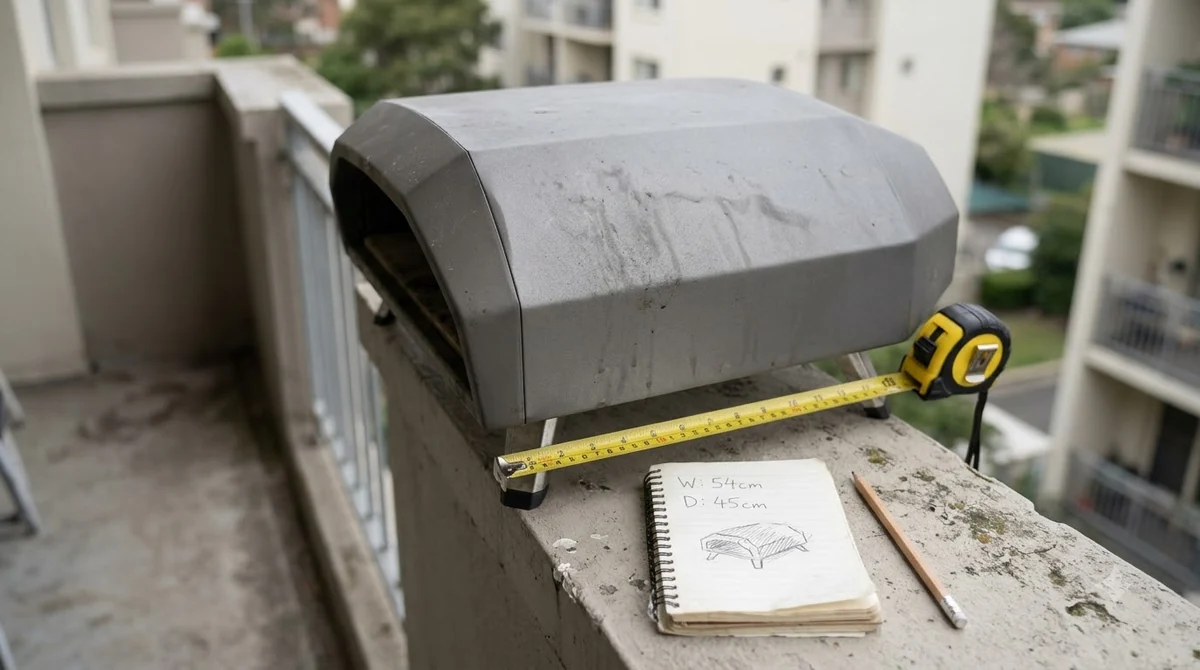
In the review, the Ooni Volt 2 and the Current Model P Smart both had an 850°F maximum setting. Their stones measured 13.25 and 13 inches square, and both fit 12-inch pizzas. The Breville Smart Oven Pizzaiolo tops out at 750°F with an 11.75-inch round stone, which suits pizzas of about 11 inches.
| Model | Max setting | Stone | Pizza size |
|---|---|---|---|
| Ooni Volt 2 | 850°F | 13.25 x 13.25 in | Fits 12-inch |
| Current Model P Smart | 850°F | 13 x 13 in | Fits 12-inch |
| Breville Smart Oven Pizzaiolo | 750°F | 11.75 in round | About 11-inch |
| Chefman High-Heat | 800°F | Not stated | Not stated |
A maximum setting is not the same as the heat you get on the stone. The Chefman High-Heat has an 800°F setting, but in the same review it never broke 700°F, and its stone averaged 557°F. Its Neapolitan-style crust took four to five minutes, compared with about two minutes on the top models.
For context, the review says home kitchen ovens top out around 550°F. That gap explains why a dedicated pizza oven, even a modest one, cooks a thin crust faster than a standard range. Our electric pizza oven temperature guide explains how settings and stone heat differ. Pick the size first, then check the stone temperature claims against the review data before you buy.
Power, Fuel and Placement for a Pizza Oven for Home Use
Electric models need a working outlet and the right voltage, while gas and wood models need a fuel supply, airflow and a clear outdoor spot.
Read the rating plate and the manual before you plug in or connect fuel. The review specifically advises checking the manual for voltage limits when an indoor electric model is used outside, so do not assume a standard outlet is correct for every model.
Before the first cook with your pizza oven for home use, confirm these points:
- The outlet type and voltage on the rating plate and in the manual.
- The fuel the model accepts, such as propane, wood or charcoal.
- The clear space the manual requires above and around the oven.
- Whether the manufacturer allows indoor use at all.
After cooking, wait for the internal cooling fan to stop before you unplug an indoor electric oven. The review notes that the fan keeps running after use, and unplugging early cuts off that cooling.
Outdoor ovens need a home between uses. Store them indoors when they are not in use, following the review’s advice, and keep fuel containers away from the oven and out of enclosed spaces.
Safety Rules for a Pizza Oven for Home Use
Never burn charcoal indoors or run a fuel-burning oven in an enclosed space, because carbon monoxide can build up where air does not move.
The CDC’s carbon monoxide guidance lists charcoal grills and other fuel-burning equipment as CO sources. It advises that charcoal should not be burned indoors, and that gas ovens should not be used to heat a home.
These rules apply to fuel-burning ovens, not to electric countertop models designed for indoor kitchens. Electric models still need the manual’s placement rules, but they do not produce combustion exhaust. Do not use a fuel-burning pizza oven for home use in an attached garage, a shed or any space with a roof and walls around it.
- Cook with charcoal or wood only outdoors, never in a garage or home.
- Never run an engine in an attached garage, even with the door open.
- Install battery or battery backup CO detectors near every sleeping area.
- Replace CO detectors per the manufacturer’s instructions, or about every 5 years.
Our answer on using charcoal in a pizza oven covers the charcoal rule in more detail.
Cost and Buying Checks for a Pizza Oven for Home Use
In the review, outdoor ovens ranged from about $500 to $800, and the high-end indoor model cost about $700. Those price bands are dated, so confirm current prices on the manufacturer or retailer page before you buy.
Price is only one part of the decision for any pizza oven for home use. A cheaper oven that does not match your outlet, outdoor space or pizza size is a poor buy, even if the sticker price looks right. The review’s indoor models weighed between about 25 and 39 pounds, so check that your counter or stand can carry the weight.
Before you buy a pizza oven for home use, check the following:
- Fuel access: an outlet, a gas supply or a safe wood and charcoal storage spot.
- Space: the oven’s footprint plus the clearance the manual requires.
- Pizza size: the stone must fit the pizzas you actually make.
- Weight: the oven must be safe to lift and to place on your surface.
- Manual rules: indoor, outdoor and storage limits in writing.
Frequently Asked Questions
Can I use a pizza oven for home use indoors?
Some electric models can be used indoors, but fuel-burning ovens should stay outdoors. The Ooni Volt 2 is indoor only, while the Current Model P Smart can work indoors or outdoors with an outlet, according to the America’s Test Kitchen review. Always check the manual for the rule that applies to your exact model.
Is charcoal safe in a pizza oven indoors?
No. The CDC advises that charcoal should not be burned indoors, because burning fuel releases carbon monoxide. Keep charcoal and wood ovens outdoors, and install CO detectors near every sleeping area in the home. Check the manual for placement rules near walls and overhangs.
How hot does a pizza oven for home use get?
Indoor electric models in the review had maximum settings between 750°F and 850°F. The review says home kitchen ovens usually top out around 550°F, so a dedicated pizza oven runs much hotter. A maximum setting is not a guarantee, because the Chefman High-Heat stayed below 700°F in testing.
What size pizza fits a pizza oven for home use?
Most indoor models in the review fit a 12-inch pizza. Outdoor stones in the same review fit about 12-inch pizzas, and some fit 18-inch pies. Measure the stone and your peel before buying, because the stone size sets the largest pizza you can bake.
Are outdoor pizza ovens more expensive than indoor ones?
In the review, outdoor ovens ranged from about $500 to $800, and the high-end indoor model cost about $700. The gap is not large in that test, but prices change often. Check the current listing before you buy, and compare the total cost with the accessories you need.
Do I need a special outlet for an electric pizza oven for home use?
Check the manual for the outlet type and voltage your model needs. The review advises checking voltage restrictions when an indoor electric model is used outdoors. Check the manual before you use an extension cord.
Start with your fuel access and your space, then shortlist a pizza oven for home use that fits both. If you are new to cooking pizza at home, our guide to a pizza oven for beginners explains what to look for first. Read the manual’s indoor, outdoor and storage rules before you order. Once the oven is home, set up CO detectors if you use any fuel-burning model, and test them on the schedule the manufacturer gives.
 10 min readBy Use & ModelPasta Machine for Home Use: How to Choose the Right TypeUpdated Nov 16, 2026
 8 min readBy Use & ModelPasta Machine for Spaghetti: How to Choose the Right TypeUpdated Nov 16, 2026
 9 min readBy Use & ModelPizza Oven for Entertaining: How to Choose the Right OneUpdated Nov 16, 2026
 10 min readBy Use & ModelPizza Oven for Outdoor Kitchen: How to Choose the Right OneUpdated Nov 16, 2026
 9 min readBy Use & ModelPizza Oven for Backyard: How to Choose the Right OneUpdated Nov 16, 2026
 8 min readBy Use & ModelPizza Oven for Camping: How to Choose One and Use It SafelyUpdated Nov 16, 2026