
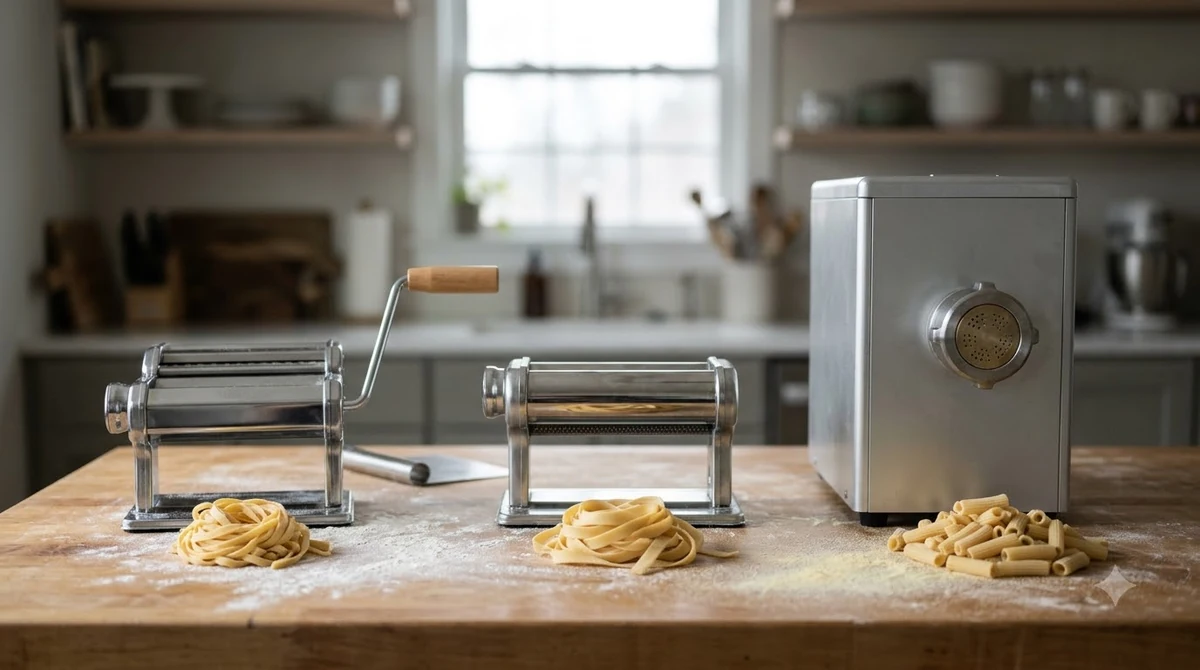

A pasta machine for home use is a countertop tool that rolls dough into thin sheets or pushes it through shaped dies, and the right model depends on how often you cook and how much hands-on work you want. Most home cooks choose between a hand-cranked roller and an electric model, and a smaller group prefers an extruder for short shapes. This guide explains the criteria so you can match a machine to your kitchen.
Manual roller machines cost less and suit occasional cooking, while electric models suit frequent batches. Check the thickness range, the cutter, the cleaning rules and the space you have before you buy. If you would rather compare specific models first, see our guide to noodle maker machines for fresh pasta.

MARCATO Atlas 150 Machine, Made in Italy, Red
Pros & ConsViewHide
Reasons to buy
- Made in Italy hand-crank pasta machine rolling dough in steps
- Includes a pasta cutter and hand crank
- Fits Marcato attachments and the optional motor
Reasons to avoid
- Only rolls and cuts the sheet; tortellini are still shaped by hand
- Takes more counter and storage space than a hand cutter
- Fixed to a countertop edge, so check clamp room

Imperia IPasta Classic Pasta Maker
Pros & ConsViewHide
Reasons to buy
- Made in Italy with chromed steel cutting rollers
- Makes 150 mm sheets, 6.5 mm fettuccine and 2 mm tagliolini
- Six roller thickness settings from 0.5 mm to 5 mm
- Clamp slot accepts a separate motor
Reasons to avoid
- Manual crank, so you turn it for every pass
- Only three cut widths in the box
- Motor is a separate purchase

Philips 7000 Series Pasta Maker
Pros & ConsViewHide
Reasons to buy
- Mixes, kneads and extrudes automatically, ready in under 10 minutes per the listing
- Makes up to 8 portions in one go
- Comes with 8 shaping discs
- Parts are listed as dishwasher-safe
Reasons to avoid
- Costs far more than a manual roller
- Needs permanent counter space
- 11% of ratings are 1-star

MARCATO Made in Italy Regina Extruder Pasta
Pros & ConsViewHide
Reasons to buy
- Hand crank, so no power is needed
- Comes with 5 dies for bucatini, fusilli, maccheroni, maccheroncini and rigatoni
- Made and assembled in Italy
Reasons to avoid
- 3.6 average rating, the lowest in this group
- Not dishwasher safe: let residue dry and clean with a dry brush
- Needs a table edge to clamp onto
Pasta machine for home use: how often you cook decides the type
For occasional cooking, a manual roller is usually enough, and it keeps the cost of a pasta machine for home use low. Frequent cooks and families who make large batches get more value from an electric model that does the rolling for them.
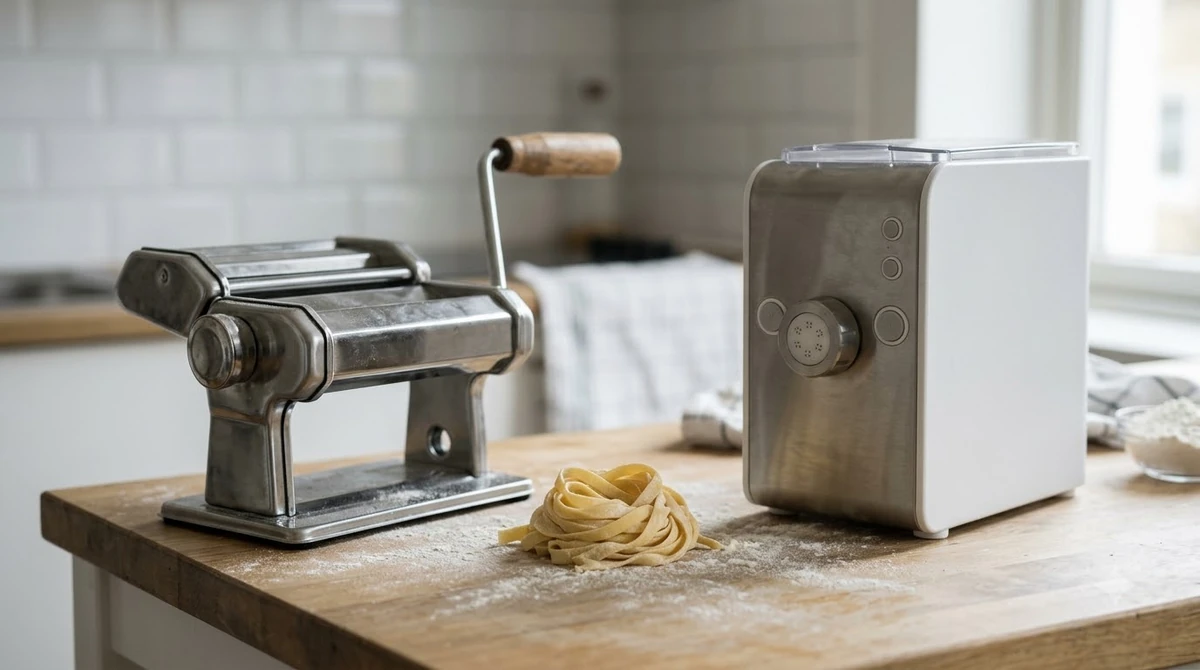
Ask yourself three questions before you choose. How many times a month will you make fresh pasta? How many people do you usually cook for? And do you enjoy the hands-on part of the process, or do you want the machine to handle it? If you cook once or twice a month for two people, a manual model is often the better fit. If you cook weekly for a large household, the time saved by an electric machine adds up quickly.
- Occasional cook, small household: a manual roller with a cutter.
- Weekly cook, large household: an electric roller or extruder.
- Want many shapes: an extruder with a set of dies.

Manual or electric: how the two differ
A manual machine uses a hand crank to pass dough through the rollers, and you set the thickness with a knob. An electric machine rolls the dough to the set thickness on its own, and you cut the sheets to length. Manual models are usually cheaper, while electric models are more expensive but produce more uniform sheets from batch to batch.
| Feature | Manual roller | Electric roller |
|---|---|---|
| Effort | You turn the crank for every pass | Machine rolls to the set thickness |
| Price | Usually the lower cost option | Higher cost; check current prices |
| Best for | Occasional home cooking | Frequent or large batches |
Some buyers prefer a manual pasta machine for home use because it gives more control over each sheet, and others choose electric because they cook for a crowd. Neither choice is wrong. Pick the one you will actually use, since a pasta machine for home use that sits in a cupboard saves no time at all.
An electric pasta machine for home use is also a practical choice for people who find repeated cranking tiring. A manual machine can be a good fit for many home cooks, but it asks more of your arms and your attention during each batch.
Roller or extruder: match the shape you want
Roller machines flatten dough into sheets that you cut into fettuccine, tagliatelle or lasagna sheets, and they are the right tool for filled pasta such as ravioli. Extruders push dough through a metal die to make shapes like penne, rigatoni or fusilli, which roller machines cannot produce.
If you mostly want long noodles, a roller with a cutter covers most needs. If you want short tubes or spirals, look for an extruder-style pasta machine for home use and check that the dies you need are sold for that model. For a stand mixer option, read the notes in our KitchenAid pasta extruder manual guide first. Some electric machines can handle both jobs, but each die set adds to the total cost.
Thickness settings: count matters less than the rollers
The roller machines tested by America’s Test Kitchen offered between 6 and 10 thickness settings, and the reviewers said the number of settings mattered less than rollers that open wide and close very tight. A wide opening on a pasta machine for home use lets you roll larger sheets, which matters for lasagna and wide noodles.
| Machine tested | Settings | Thickness range (inches) |
|---|---|---|
| Marcato Atlas 150 | 10 | 0.24 to 0.02 |
| Fox Run (Model 57666) | 7 | 0.2 to 0.08 |
| Weston (Model 01-0201) | 7 | 0.17 to 0.04 |
| Imperia by CucinaPro | 6 | 0.2 to 0.03 |
The same America’s Test Kitchen review of manual machines noted that a one-hand knob that clearly shows the setting is easier to use than a knob that needs two hands or does not line up with its markings. Those details affect daily use more than a single extra setting does.
A common method from a retailer guide on how a pasta machine works is to start at the widest setting, pass the dough through, then move one step thinner each time. The same guide suggests folding the sheet into thirds and running it through about five more times, dusting it each time. Treat that as a starting method, and follow the setting guidance in your own manual, and read our step-by-step guide on how to use a pasta machine before the first batch.
Cutting attachments: check the blades
When you shop for a pasta machine for home use, check the cutting attachment first. Most roller machines include one for fettuccine-width or angel hair-width strands. Quality varies. In the same ATK tests, two attachments did not cut through consistently, so some noodles had to be pulled apart by hand, while the Marcato Atlas 150 attachment was described as producing clean fettuccine and angel hair.
Before you buy, look at what the cutter makes and whether you can buy extra cutters later. Ask yourself these points:
- Does the cutter come with the machine, or sold separately?
- Do the blades line up evenly so strands separate on their own?
- Can you buy a wider cutter for lasagna or a narrower one for angel hair?
Setup and space on the counter
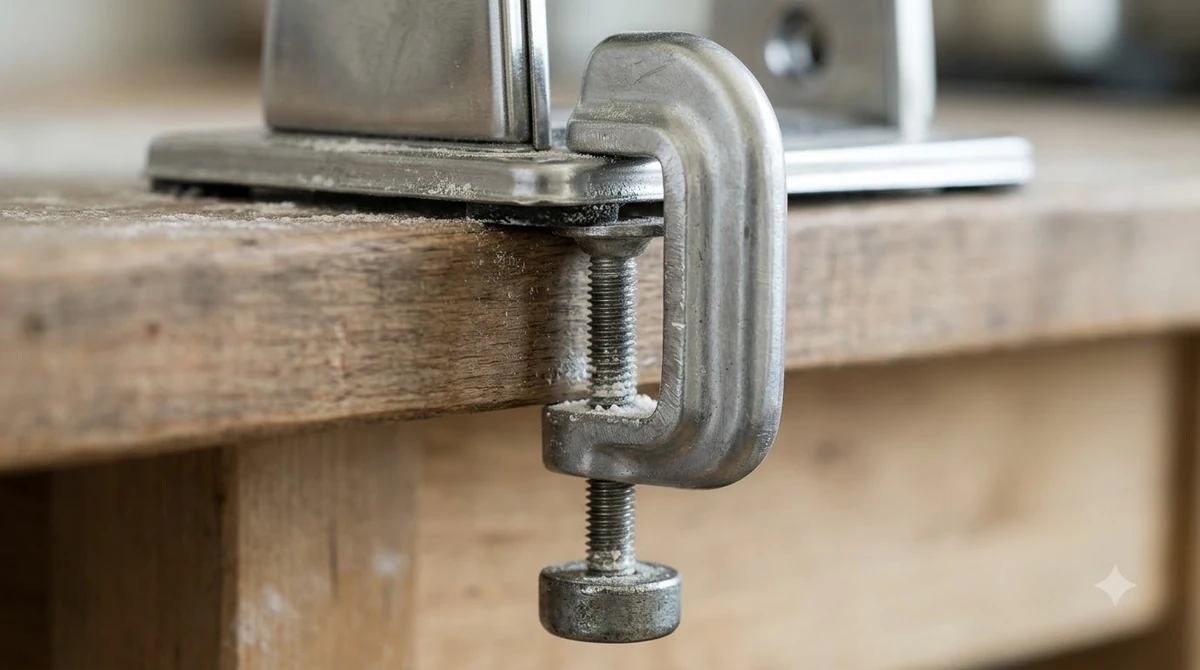
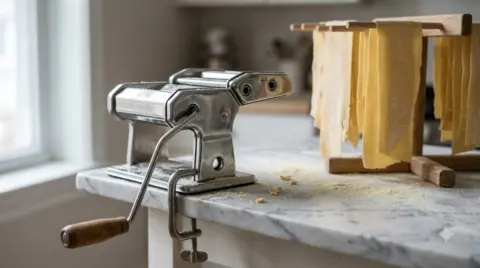
A roller machine clamps to a table or counter edge, and it must stay still while you crank. In the ATK tests, every machine was simple to set up and none of them moved after being clamped to the counter. Measure your counter edge and the clearance behind the rollers before you buy a pasta machine for home use, because a clamp that does not fit your counter makes the machine unusable. Our Marcato Atlas 150 manual guide shows how that clamp and crank setup works on one popular model.
Electric countertop machines need a free outlet and enough room for the body and the sheet or pasta you catch as it comes out. Check where you will store the machine, since some models and attachments take up a drawer or a cupboard shelf.
Cleaning and care for a pasta machine for home use
Marcato warns that its machines should never be washed under running water or in the dishwasher, according to the FAQ on Consiglio’s Marcato Atlas 150 page. Its care guidance says the outer surfaces can be cleaned with a cloth and a paintbrush, and that the resin combs can be removed to clean the cutting rollers.
- Brush the rollers and cutters with a brush, or use a wooden stick for stubborn residue.
- Wipe the exterior with a cloth. On a new machine, wipe off excess mineral oil with a dry cloth first.
- Remove the resin combs to clean the cutting rollers only by following your manual or the maker’s video, since removal steps differ by model.
Cleaning is a real factor when you choose a pasta machine for home use. A machine with removable parts and a simple brush routine is easier to keep in use than one that needs soap and water after every batch. Check the cleaning section of the manual before you buy, and see our guide to how to clean a pasta machine for the full routine.
Making dough that suits your machine
Fresh dough works best when you make it right before rolling, because it stays easier to shape and cut. Flatten each portion into a rectangle about as wide as the machine opening, dust it with flour, then pass it through the widest setting. Dusting between passes keeps the dough from sticking to the rollers, which is the first thing to check when your pasta machine for home use feels hard to crank.
Do not let the sheet drop straight onto the table as it exits the rollers, since that can stretch or distort it. Support it with your hand and lay it flat. Dough recipes vary by flour and egg, so use the recipe that came with your machine or one you trust, and adjust moisture by feel.
Frequently Asked Questions
Is a manual pasta machine enough for home use?
Yes, for occasional cooking. A pasta machine for home use with a manual roller with a cutter handles most noodle shapes, and it costs less than an electric model. If you cook fresh pasta every week for a large household, an electric machine saves more time.
Can I wash a pasta machine in the dishwasher?
No. Marcato’s care guidance says its products should never be washed under running water or in the dishwasher. Use a brush and a dry cloth instead, and check your own manual for any extra steps.
How many thickness settings should I look for?
The tested roller machines ranged from 6 to 10 settings, so any pasta machine for home use in that range is a fair starting point. Look for a wide opening and a tight close more than a high count, and make sure the knob is easy to read with one hand.
Do I need a cutter attachment?
If you want long noodles like fettuccine or angel hair, yes, so pick a pasta machine for home use that includes a cutter. Check that the blades line up so the strands separate cleanly, since some tested cutters needed hand separation.
Is an extruder better than a roller for home cooking?
Neither type of pasta machine for home use is better in general. A roller makes sheets for flat noodles and filled pasta, while an extruder makes shapes such as penne or fusilli. Choose by the shapes you cook most often.
Does a pasta machine need to be clamped to the counter?
Most roller versions of a pasta machine for home use clamp to a table or counter edge so they stay still while you crank. Measure your counter edge before you buy to make sure the clamp fits.
Choosing a pasta machine for home use starts with how often you cook, then check the cutter, the thickness control and the cleaning routine. A simple manual roller suits occasional cooks, while frequent cooks and large households should weigh an electric model. Read the manual for the exact settings and care steps of the machine you choose.
 8 min readBy Use & ModelPasta Machine for Spaghetti: How to Choose the Right TypeUpdated Nov 16, 2026
 10 min readBy Use & ModelPizza Oven for Home Use: How to Choose the Right Type and Stay SafeUpdated Nov 16, 2026
 8 min readBy Use & ModelPasta Machine for Beginners: How to Choose and StartUpdated Nov 16, 2026
 8 min readBy Use & ModelHow to Use Imperia Pasta Machine: Setup, Thickness and CuttingUpdated Nov 6, 2026
 10 min readBy Use & ModelPizza Oven for Outdoor Kitchen: How to Choose the Right OneUpdated Nov 16, 2026
 9 min readBy Use & ModelPizza Oven for Entertaining: How to Choose the Right OneUpdated Nov 16, 2026