
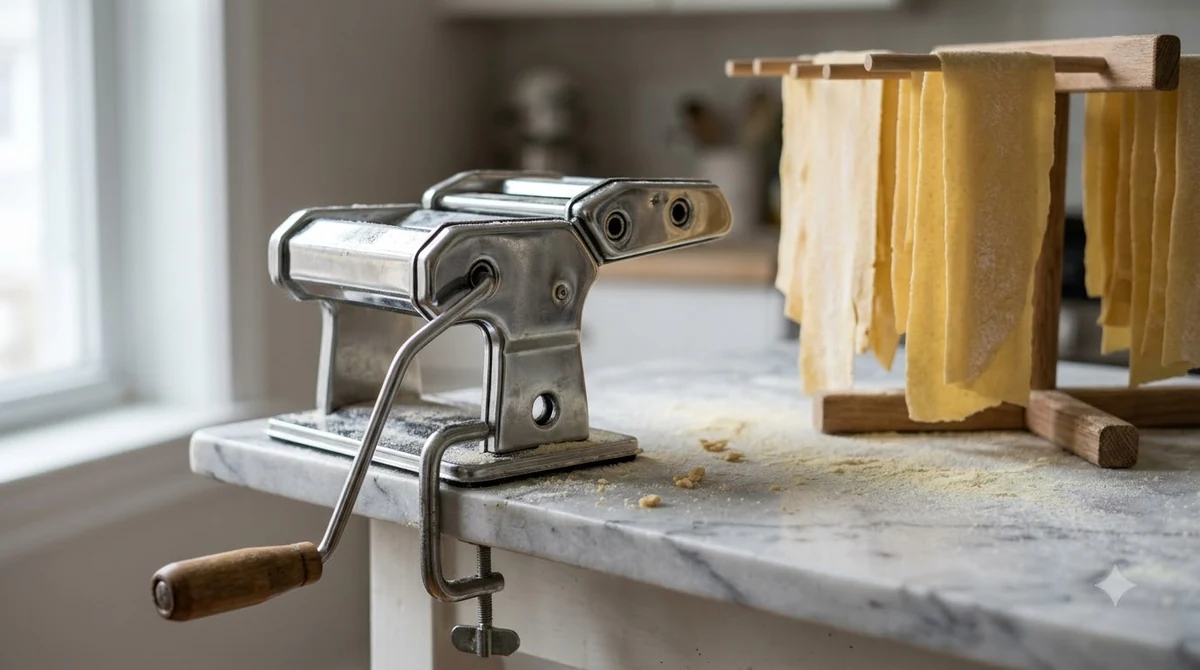

A pasta machine for spaghetti either rolls dough into sheets and cuts them into long strands, or pushes dough through a spaghetti shaping disc. Choose the type by how much hands-on work you want and whether your kitchen already has a compatible stand mixer.
Attachments and discs only fit the machine they were made for. Check whether the spaghetti cutter comes in the box before you compare prices on any pasta machine for spaghetti, because some machines sell it separately.

MARCATO Atlas 150 Machine, Made in Italy, Red
Pros & ConsViewHide
Reasons to buy
- Made in Italy hand-crank pasta machine rolling dough in steps
- Includes a pasta cutter and hand crank
- Fits Marcato attachments and the optional motor
Reasons to avoid
- Only rolls and cuts the sheet; tortellini are still shaped by hand
- Takes more counter and storage space than a hand cutter
- Fixed to a countertop edge, so check clamp room

MARCATO Made in Italy Spaghetti 150 Attachment
Pros & ConsViewHide
Reasons to buy
- Made in Italy cutter built for the Atlas 150
- 84% of Amazon ratings are 5-star
- Spaghetti is a staple shape for first-time cutters
Reasons to avoid
- Fits the Atlas 150 only, so check your machine name
- Single shape per attachment

KitchenAid KSMPRA 3-pc Pasta Roller/Cutter Set
Pros & ConsViewHide
Reasons to buy
- Roller and cutter attachments for KitchenAid stand mixers
- Rolls even sheets without hand cranking
- 88% of 9K Amazon ratings are 5-star
Reasons to avoid
- Needs a compatible KitchenAid stand mixer
- Rolls and cuts the dough, but does not fill or fold tortellini
- One of the costlier tools in this guide

Pasta Maker Deluxe Set- Stainless Steel
Pros & ConsViewHide
Reasons to buy
- Three attachments make five types: lasagnette, fettuccine, angel hair, spaghetti and ravioli
- Hand crank with adjustable thickness
- Chrome-coated steel body
- 67% of 4.6K Amazon ratings are 5-star
Reasons to avoid
- Manual only, no motor
- Clamps to a countertop edge
- 8% of ratings are 1-star
Three Types of Pasta Machine for Spaghetti
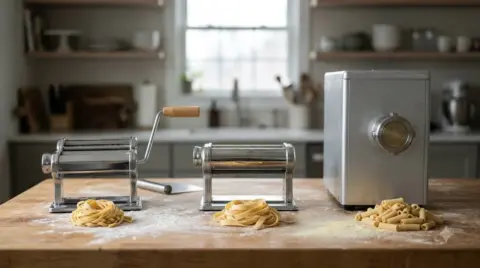
Three setups make spaghetti at home: a manual roller with a cutter, a stand mixer attachment, or an electric extruder with a spaghetti disc. Each pasta machine for spaghetti produces the same long shape, but each asks for a different amount of work.
A manual roller in a pasta machine for spaghetti flattens dough between two rollers, and you turn a crank to bring the sheet down to the thickness you want. The sheet then passes through a spaghetti cutter attachment, if the machine includes one. Some roller machines need that cutter bought separately, so confirm it in the manual.
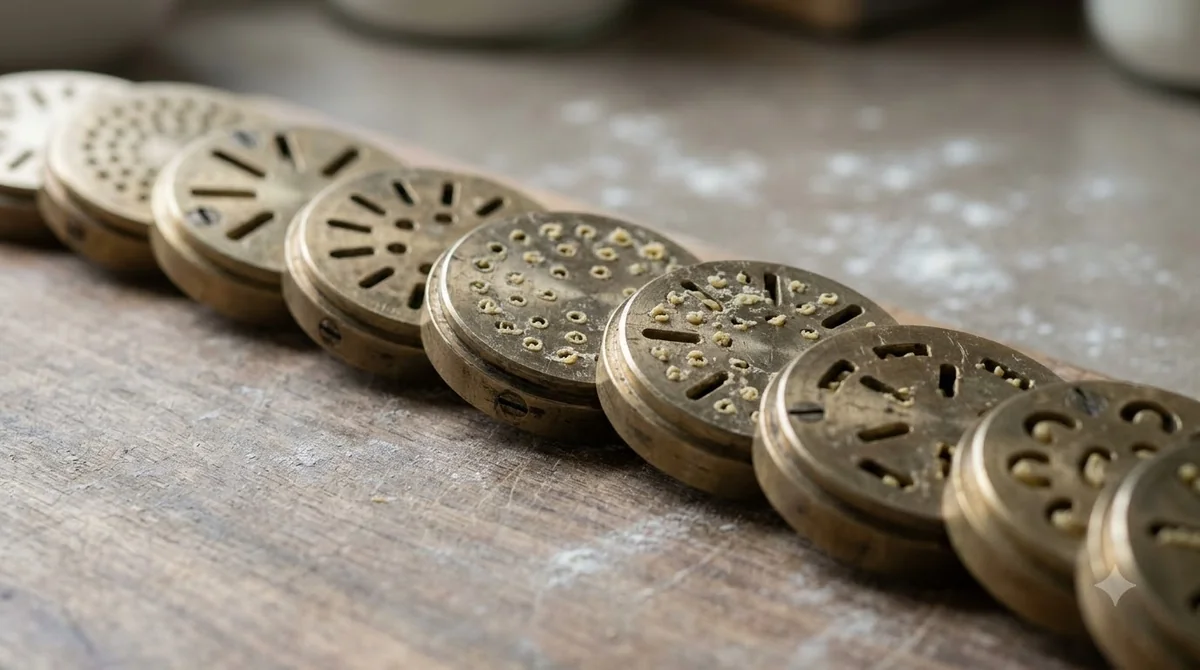
An electric extruder mixes, kneads and pushes dough through a shaping disc in one program. The Philips HR2382/16 is one example of this type. Its Philips HR2382/16 spec sheet lists 150 W power and eight shaping discs, and one of them is for spaghetti.
The same spec sheet says the machine weighs the flour and indicates the correct amount of liquid. Its product size is 12.4 x 13.5 x 8.5 inches, and its listed weight is 243.4 ounces, about 6.9 kg. The manufacturer also states that 2 to 3 portions, about 8.8 oz of pasta, can be ready in less than 10 minutes. Treat that as a manufacturer claim and check it against your own recipe. That model is only one example, so other extruders may use different discs and sizes.
What to Check Before You Buy
Check whether the spaghetti cutter comes with the machine, whether the attachment matches your mixer or roller model, and how the parts are cleaned. Those three points decide most of the difference between a good purchase and a frustrating one. A pasta machine for spaghetti that fits your mixer, includes the right cutter and cleans easily will get used far more often than one that does not.
- Included or sold separately: some machines ship without a spaghetti cutter, so the product page or manual must list it.
- Model compatibility: a stand mixer attachment works only with the mixer models it was built for.
- Disc list: an electric extruder should name a spaghetti disc among its included shaping discs.
- Cleaning method: read whether parts go in the dishwasher or should be brushed clean.
- Space: compare the listed dimensions of the pasta machine for spaghetti with your counter or storage space before buying.
Which Type Fits Your Cooking
A manual roller suits cooks who want control over sheet thickness, an electric extruder suits cooks who want fewer hands-on steps, and a stand mixer attachment suits people who already own a compatible mixer. The table below compares the three by the work involved and the first thing to check.
| Type | Hands-on work | Best for | Check first |
|---|---|---|---|
| Manual roller with cutter | You roll each sheet and feed it through the cutter | Cooks who want control over thickness | Whether the spaghetti cutter is included |
| Stand mixer attachment | The mixer drives the attachment while you guide the dough | Owners of a compatible stand mixer | Mixer model compatibility |
| Electric extruder with spaghetti disc | Add ingredients and let the machine mix and extrude | Cooks who want the fewest manual steps | Disc list and cleaning instructions |
Do you need an electric machine to make spaghetti? No. A pasta machine for spaghetti can be fully manual and still give good results. A manual roller can produce the same long shape, but it adds steps at the counter. An electric model removes some of those steps, but it depends on a power outlet and on the discs it ships with.
What Spaghetti Dough Needs
Traditional spaghetti is made from durum-wheat semolina and water, and the standard Italian version uses that flour. According to Wikipedia’s spaghetti entry, the pasta is a long, thin, solid, cylindrical shape.
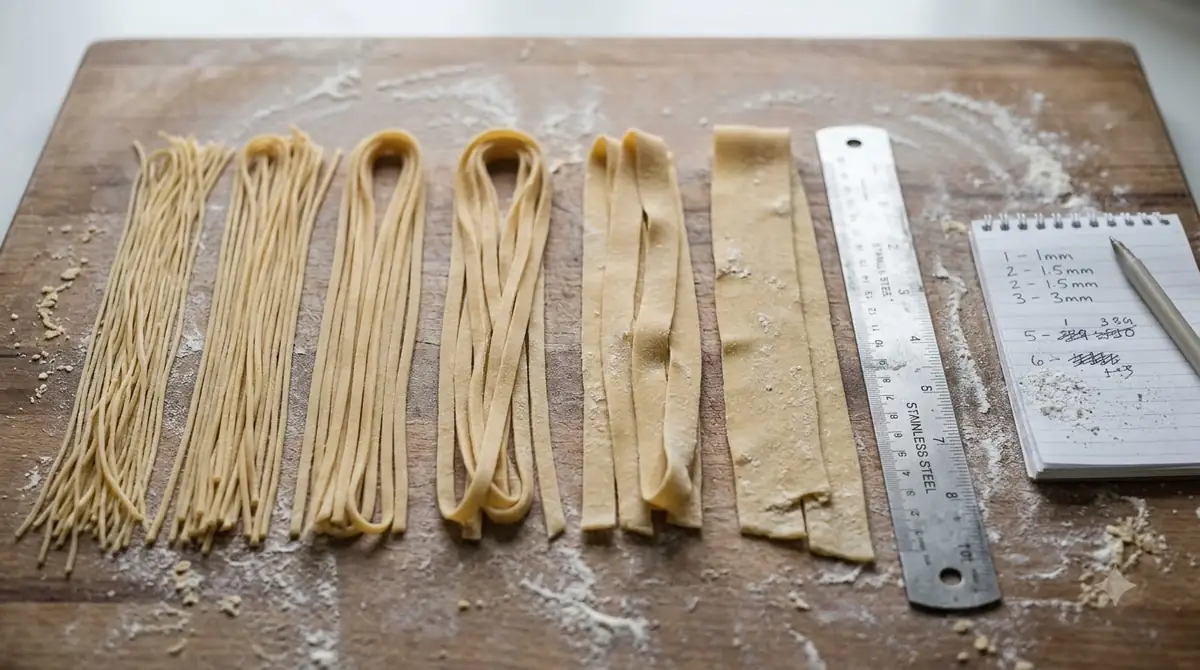
Thickness varies by tradition. Spaghettoni is a thicker form, spaghettini and capellini are thinner, and spaghetti in Naples is thinner than the version common in the United States. Check the cutter or disc name on your machine, because it tells you which thickness it makes. Our spaghetti pasta guide covers the shape itself.
Marcato’s Atlas and Ampia instruction manual gives exact numbers for its roller. It lists a spaghetti cutter for the Atlas 150 with a 2 mm diameter at regulator setting 4, a spaghetti chitarra cutter at 2 mm, a vermicelli cutter at 1 mm across, a linguine cutter at 3 mm and a bigoli cutter at 3.5 mm across. A capellini cutter makes 1 mm strands at settings 8 to 9. The manual says the Atlas 150 is compatible with 12 extra cutting accessories, so a pasta machine for spaghetti built on that roller can cover several thicknesses.
If you compare long shapes, linguine versus spaghetti and bucatini versus spaghetti show how much the width changes the dish.
Fresh spaghetti adds egg to the dough, and Marcato’s manual gives a base recipe for five people of 250 g of 00 flour, 250 g of fine durum semolina and 5 whole eggs. Wikipedia’s pasta article lists semolina flour, egg, salt and water as the ingredients for fresh pasta, and fresh pasta is more tender than dried pasta. It also cooks in about half the time of dried pasta.
Dried pasta needs only semolina and water, with eggs optional. Once cooked, dried pasta usually grows to about twice its original size, so cook a measured portion and do not judge quantity by the raw strand count.
Safety and Cleaning Notes
Follow the manufacturer’s manual for cleaning and safety with any pasta machine for spaghetti, and do not assume any attachment can go in water. Dough residue on rollers and cutters is usually easier to remove once it has dried, so keep the cleaning tool close to the machine.
- Unplug an electric pasta machine for spaghetti before cleaning it, and keep the cord away from the sink.
- Use the cleaning tool that comes with the machine. The Philips HR2382/16 spec sheet lists one among its accessories.
- Check the manual before putting any disc or cutter in the dishwasher. The same spec sheet calls that model dishwasher safe, but parts can differ between models.
- Dry all parts fully before storing the pasta machine for spaghetti, so dough does not stay trapped in the grooves.
What This Guide Does Not Verify
Cutter diameters, dough ratios, speed settings and current prices depend on the exact model. This guide states the Marcato Atlas 150 figures from its manual, but it does not state them for other brands. The brand pages for other roller machines and stand mixer attachments were not available for this check, so their cutter widths and compatibility lists are left out.
To check these points, read the manual for your model and confirm the current price on the seller’s page. The manual is also the right source for the dough ratio and the spaghetti cutter size. If you are still choosing between formats, how to choose a pasta maker compares them, and how to clean a pasta machine covers care after use.
Frequently Asked Questions
Can a pasta roller make spaghetti?
Yes, if the pasta machine for spaghetti includes or accepts a spaghetti cutter attachment. Roll the dough to the thickness you want, then pass the sheet through the cutter. Some machines sell the cutter separately, so check before you buy.
Is an electric pasta maker better for spaghetti?
It is better only if you want fewer hands-on steps from a pasta machine for spaghetti. An electric extruder mixes and extrudes in one program, but it works with the discs it ships with and needs a power outlet. A manual roller gives more control over sheet thickness.
Do I need a stand mixer to make spaghetti?
No. A stand mixer attachment is only one kind of pasta machine for spaghetti. Manual rollers and electric extruders work without a stand mixer, but a stand mixer attachment fits only the mixer model it was made for.
Can I use fresh dough in a pasta machine for spaghetti?
Yes. Fresh dough made with semolina and egg is a common choice for spaghetti. It cooks in about half the time of dried pasta, so watch the pot closely and test a strand early.
Why does dried pasta grow when cooked?
Dried pasta absorbs water while it cooks and usually grows to about twice its original size. Fresh pasta does not expand as much, which is one reason the two types are cooked and portioned differently.
Choose a pasta machine for spaghetti by the space you have and the hands-on work you want. If you already own a compatible stand mixer, check the attachment first. If you want the fewest manual steps, compare the included discs before you buy.
 10 min readBy Use & ModelPasta Machine for Home Use: How to Choose the Right TypeUpdated Nov 16, 2026
 10 min readBy Use & ModelPizza Oven for Home Use: How to Choose the Right Type and Stay SafeUpdated Nov 16, 2026
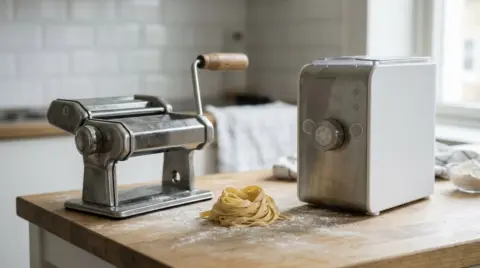 8 min readBy Use & ModelPasta Machine for Beginners: How to Choose and StartUpdated Nov 16, 2026
 10 min readBy Use & ModelPizza Oven for Outdoor Kitchen: How to Choose the Right OneUpdated Nov 16, 2026
 9 min readBy Use & ModelPizza Oven for Backyard: How to Choose the Right OneUpdated Nov 16, 2026
 9 min readBy Use & ModelPizza Oven for Entertaining: How to Choose the Right OneUpdated Nov 16, 2026