
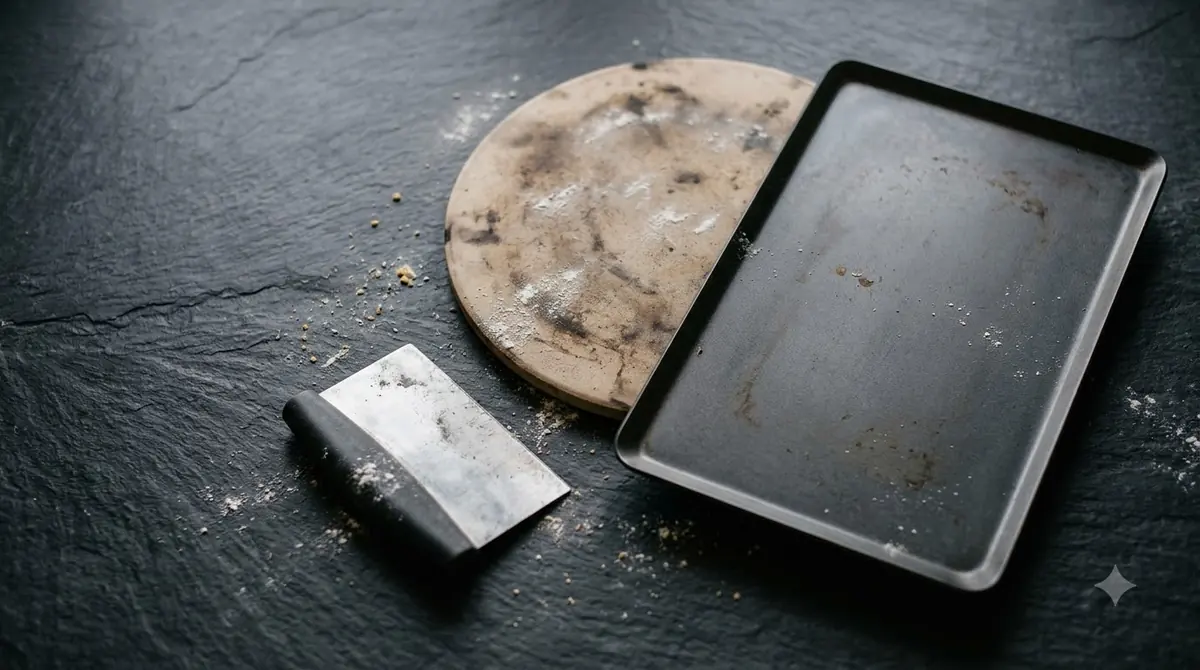

A pizza stone cracked in the oven is usually a thermal shock problem, caused by fast or uneven temperature change. Most cracks come from habits you can change, such as how the stone is heated and what touches it while it is hot.
Whether a pizza stone cracked this way can still be used depends on the size and shape of the crack, and the sources disagree on the answer. This article explains the causes, what a crack means for baking, and how to prevent new ones.
Why a Pizza Stone Cracked in the Oven
When a pizza stone cracked, thermal shock is the usual cause: a sudden temperature change that stresses the material. According to Wikipedia’s thermal shock article, it is a type of thermal stress caused by a sudden change in temperature.
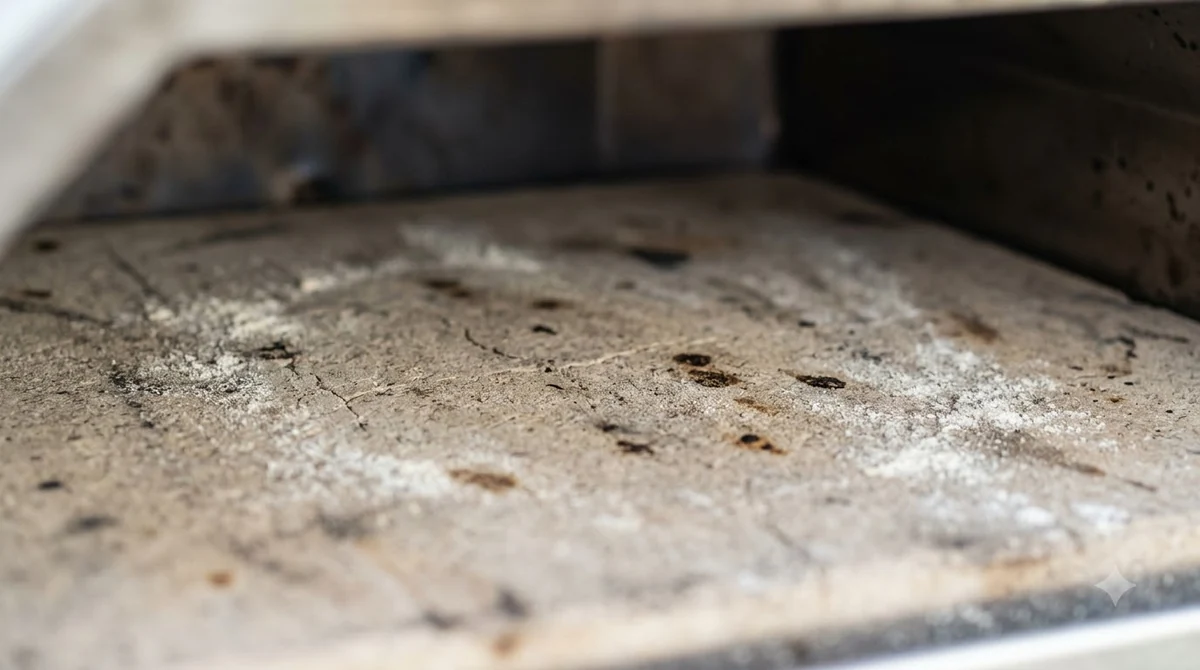
The mechanism is simple. Different parts of the material heat or cool at different rates, so they expand by different amounts. That mismatch builds strain, and the stone fails when the strain exceeds what the material can take. A stone that is hot in the middle and cool at the edges is under the most stress.
Heating and cooling too fast
The most common trigger is a cold stone placed in a hot oven. Tasting Table’s guide to preventing cracks names thermal shock as the main cause, and describes it as the stone heating or cooling too rapidly, especially when the change happens unevenly. Pulling a hot stone out and setting it on a cold counter or a wet surface creates the same problem in reverse.
Cold dough and trapped moisture
Cold or frozen dough placed on a very hot stone sets up a sharp temperature gradient under the dough. Tasting Table advises letting frozen pizzas warm up first so the pizza on your hot stone is not too cold. Moisture is the second hidden risk. Tasting Table says trapped moisture in the stone’s pores can force a crack when the stone heats, and Baking Steel, a seller of steel baking surfaces, warns that a stone that has not dried properly can weaken over time.
Drops and rough handling
A stone is brittle, so an impact can start a fracture even when the stone looks fine afterward. Baking Steel states that any kind of drop will cause fractures. Tasting Table lists rough handling as one of the three main causes, alongside thermal shock and trapped moisture or oil, and says even a small bump with a pizza peel can crack a stone.
Can You Still Use a Cracked Pizza Stone?
The sources do not agree on a single rule for a pizza stone cracked in use. A clean hairline crack that stays tight may be usable, while a crack that keeps growing or leaves loose pieces is a reason to replace the stone. The table below sets out what each situation looks like and what the sources say.
| Situation | What the sources say |
|---|---|
| A pizza stone cracked once down the middle, and the pieces still fit | A home baker on The Fresh Loaf forum reported that the stone cracked once down the middle and later bakes caused no further cracks. This is a single user report, not a test. |
| A pizza stone cracked and the crack keeps spreading | Baking Steel says a cracked pizza stone is a goner and that the crack will continue to expand with each use. The company sells steel baking surfaces, so read this view with that in mind. |
| Broken into loose pieces or sharp edges | The sources reviewed do not set a safety rule for this case. Treat a stone in loose pieces as unfit for baking and replace it. |
To inspect a crack, look at it in bright light and press gently on each side to see whether the pieces move. A stone that rocks or flexes is not a candidate for another bake, whatever the crack looks like.
Even when a pizza stone cracked but is still usable, it needs watching. Check the crack before each bake. If a piece moves, the edges feel sharp, or the crack is longer than it was, stop using the stone for pizza. A crack can also be made worse by a second thermal shock, so the same heating habits that protect a whole stone apply to a cracked one.
How to Keep a Pizza Stone From Cracking
Preheating the stone with the oven and cooling it slowly reduces the risk that a pizza stone cracked from thermal shock. The steps below follow the advice from Tasting Table’s prevention guide and Wikipedia’s pizza stone article.
- Place the stone in the cold oven before you preheat, so the stone and the oven heat up together. Wikipedia notes that some bakers heat the stone from a cold oven over at least 45 minutes to avoid fracture by thermal shock.
- Raise the temperature in steps rather than jumping straight to full heat. Tasting Table suggests increments of 100 to 200 degrees, and the guide to pizza oven temperature shows what each stage looks like.
- Warm frozen or very cold dough before it goes onto the hot stone, so the temperature difference is small. This applies to dough you saved by freezing pizza dough as well as to frozen pizzas.
- Let the stone cool slowly inside the oven after you switch it off. Tasting Table calls this the safest approach.
- Do not run the oven in self-clean mode with the stone inside. Wikipedia warns that the rapid temperature change can crack it.
- Keep water off the hot stone and do not wash it by submersion. For grease, Tasting Table suggests dabbing it with a damp cloth and drying the stone thoroughly. The full routine is in how to clean a pizza stone, and why a pizza stone turns black covers the darkening that often follows use.
A forum user also reported that broiler heat can cause cracking, so avoid placing a stone directly under a broiler element. This is a user report and was not tested for this article.
What the Stone Material Means for Cracking
Baking stones are made from several materials, and the material affects how well a stone handles temperature change. Wikipedia’s pizza stone article says a baking stone may be made of ceramic, stone, or salt, and that steel is also used.
Cordierite, a ceramic material, is known for its strong thermal shock resistance. Wikipedia’s cordierite article describes this resistance for kiln furniture and notes cordierite use in pizza stones. Resistance is not immunity, though. A pizza stone cracked by a fast temperature change can still fail, so the habits above still apply to every material.
What the Manufacturer Manual Says
This article could not confirm care or crack guidance from a manufacturer manual, so no brand-specific rule is given here. Manufacturer instructions differ by model and material. Check the manual or support page for your specific stone before you follow any stone-specific rule for heating, cleaning, or cracks. If a pizza stone cracked and you cannot find its manual, the maker’s support page is the next place to look.
Frequently Asked Questions
Why did my pizza stone crack in the oven?
When a pizza stone cracked in the oven, the most likely cause is thermal shock, a sudden temperature change that stresses the stone. Placing a cold stone in a hot oven, putting very cold dough on a hot stone, and trapped moisture are the common triggers named in the sources.
Is a cracked pizza stone dangerous?
The sources reviewed do not give a general safety rule. A stone in loose pieces or with sharp edges should not be used for baking. Check the crack before each use and stop if a piece moves.
Can a cracked pizza stone be repaired?
The sources reviewed do not describe a repair method, so this article does not recommend one. The safer choice is to watch the crack and replace the stone if it grows or breaks apart.
Should I replace a cracked pizza stone?
If a pizza stone cracked and the crack keeps spreading, or the stone breaks into pieces, replace it. A forum user reported a single clean crack that did not grow in later use, but that is one report, and a seller of steel surfaces advises replacement.
Can I pour water on a hot pizza stone?
Avoid it. Tasting Table advises against submerging the stone and recommends keeping liquids away from a hot surface. Water on a hot pizza stone causes a rapid temperature change, a common way a pizza stone cracked in use.
A pizza stone cracked in use is a warning sign, not always a total loss. Check the crack before the next bake, and stop using the stone if pieces move or the edges are sharp. Preheat with the oven, cool the stone slowly, and keep water and oil off the hot surface so the next stone lasts longer.