
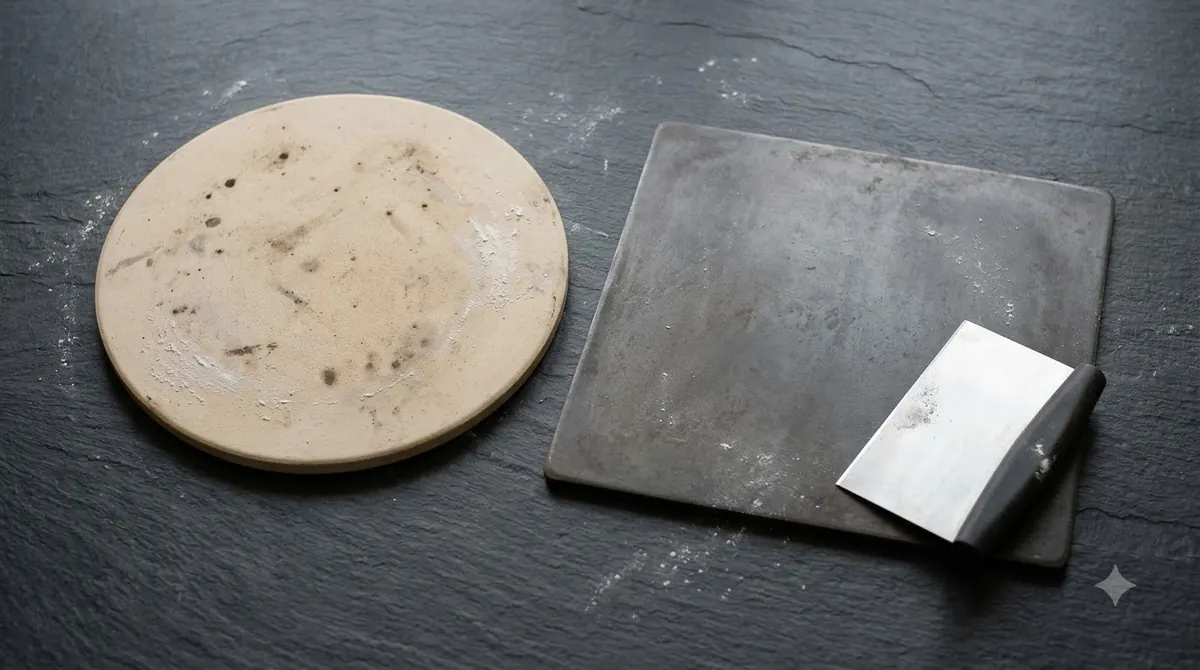

If your pizza stone turned black, the most likely cause is burned food, grease, and cheese that carbonized into its porous surface over many bakes. In most cases this is normal and does not make the stone unsafe to use.
When a pizza stone turned black, the color itself is cosmetic as long as the surface stays smooth. Raised crusty lumps, flaking, or cracks are the signs that need action, and the sections below explain how to tell the difference.
Why a Pizza Stone Turned Black
A pizza stone turned black because of carbonization, the process that turns organic matter into carbon under heat. Each bake leaves food and oil on the stone, and repeated high heat darkens them into a lasting tone.
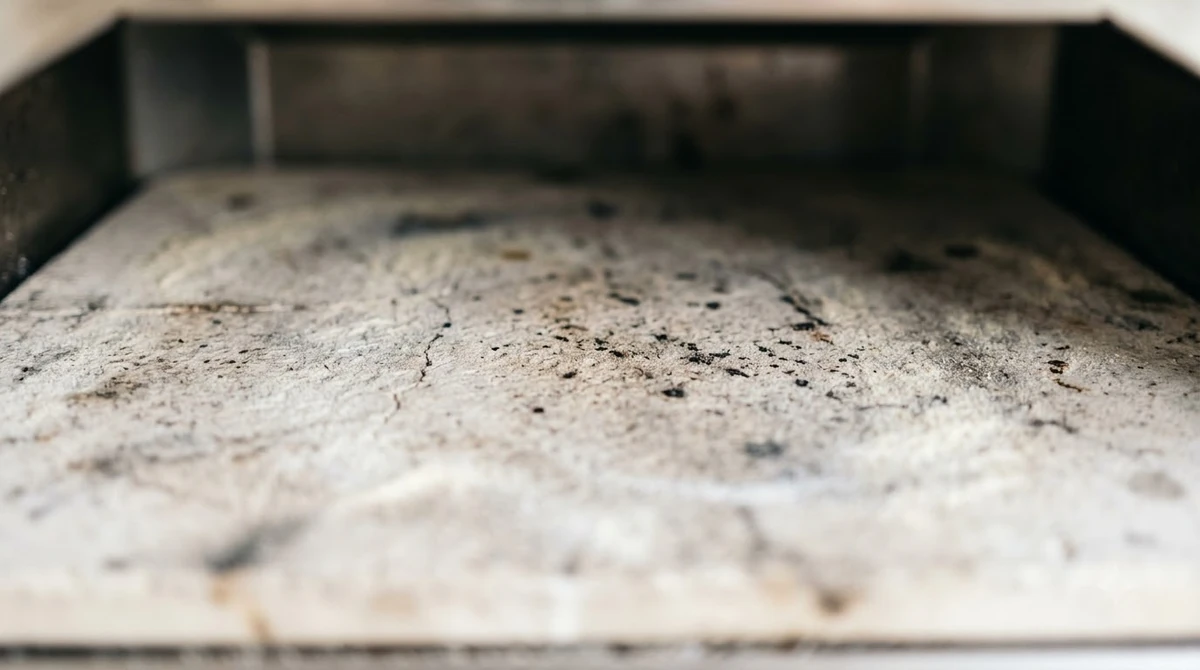
Every bake leaves a little residue behind. Flour that scorches, drips of cheese, and fat from sauce or toppings all land on a surface that runs very hot. Ooni notes that most of this debris carbonizes and burns off during cooking, which is why a pizza stone turned black instead of staying pale.
A pizza stone is also porous, so it takes in liquid. Wikipedia’s entry on baking stones says that because the stone is porous, it absorbs any fluid it contacts. Fat that soaks into the surface can leave dark spots that a quick wipe will not remove, so the discoloration tends to build up in the same areas over time.
Heat is what finishes the job. Fat and food residue that sit on a stone at oven temperature darken further with every bake, which is why an older stone looks darker than a new one.
Is a Black Pizza Stone Normal?
Yes, when a pizza stone turned black but its surface stays smooth and free of raised lumps, the color is normal. Ooni says a well-used pizza stone tells the story of every cook, and a little discoloration is completely normal.
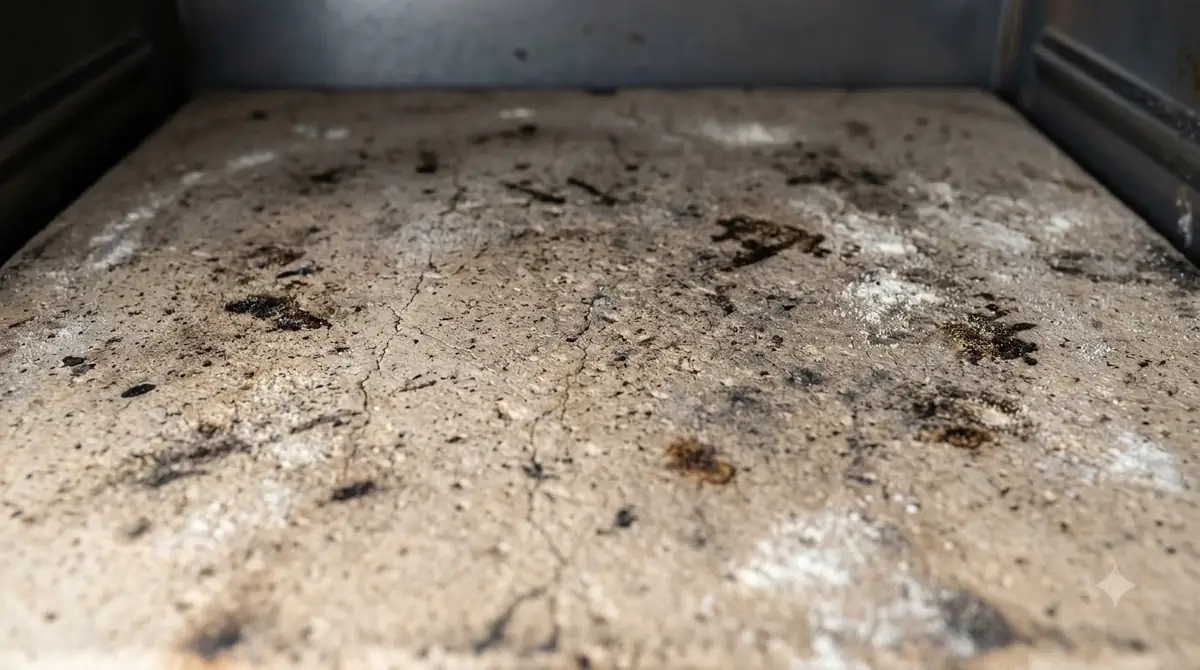
A pizza stone turned black from regular use is working as intended. Ooni’s cleaning guide treats surface marks as part of the stone’s natural seasoning. The same guide adds, “As long as the surface is smooth to the touch, the stone is fine.”
America’s Test Kitchen takes a similar view. Its advice is to treat a stone or steel like a cast-iron skillet, and it says stains happen and are nothing to worry about. Its wording is “Stains happen; they’re a sign that you’re making amazing pizza.” America’s Test Kitchen also advises scraping off any food blobs or excess char after baking and calling it a day. The color is a record of past bakes, not proof that the stone is damaged.
Texture matters more than color when a pizza stone turned black. A dark stone that feels even under your hand is fine. A stone with a rough, bumpy layer of hardened food should be cleaned before the next bake, because Ooni notes that a stone coated in burnt flour, cheese, and grease won’t cook as well as it could.
When a Dark Stone Needs Attention
If a pizza stone turned black and you see raised crusty lumps, cracks that grow, or an unstable fit in the oven, it needs attention. A pizza stone turned black with a smooth surface is not a reason to replace it.
| What you see | What it usually means | What to do |
|---|---|---|
| Smooth dark surface | Normal seasoning from past bakes | Keep using it and brush after each bake |
| Raised, crusty lumps of food | Burnt flour, cheese, and grease built up | Let it cool, then scrape with a stiff brush |
| Small hairline crack | Often caused by sudden temperature change | Watch it; Ooni says it may not affect performance |
| Crack that grows, or a stone that rocks | The stone is no longer stable | Replace it; Ooni says an unstable stone should be swapped |
| Cracking after water hits the hot stone | Thermal shock from a sudden temperature change | Do not repeat it, and never soak the stone |
Ooni warns that sudden temperature changes can cause cracks and that a soaked stone may break the next time it heats up. A small hairline crack may not affect how the stone performs, so the decision depends on whether the crack is growing or the stone moves when you handle it. The causes of splitting are covered in what to do when a pizza stone cracks.
When you decide, check the surface by hand first. Ooni’s guidance is that a smooth surface is fine, so bumps, flakes, or sharp edges are the things to treat.
Why Soap and Water Are Not the Fix
Soap and water are not the fix when a pizza stone turned black, because the unglazed surface absorbs liquid and can hold detergent for later bakes. Ooni does not recommend washing the stone with soap or water.
The porous surface is the reason. Wikipedia notes that a baking stone absorbs any fluid it contacts, and that detergent may taint the stone, giving foods cooked on it a detergent flavor later.
America’s Test Kitchen gives the same rule: “Don’t use soap on an unglazed ceramic stone.” It warns that soap can get trapped in the pores. For scrubbing, it says to use hot water, no soap, and a stiff brush, followed by thorough drying, while Ooni advises against water as well, so check which advice fits your stone’s maker.
Water causes its own problem. Ooni says not to submerge the stone, and a soaked stone may break the next time it heats up. Dark marks never justify a soak.
How to Scrape Off Burnt Bits Safely
If your pizza stone turned black from burnt cheese, let it cool completely, then scrape off raised burnt bits with a stiff brush, working in a sideways motion. Ooni recommends a sideways motion plus a back-and-forth scrub to loosen hardened debris.
- Wait until the stone is fully cool before you touch it with anything.
- Brush or scrape raised bits with a stiff brush, using a sideways motion.
- Add a back-and-forth scrub for hardened patches.
- Sweep the loosened debris out of the oven.
- Stop if the surface starts to flake, because that points to damage rather than residue.
Avoid harsh metal tools. Ooni warns that very harsh metal tools can damage the stone’s surface and create grooves that trap food, which makes the next layer of burnt residue harder to remove.
Ooni’s cleaning guide says you can let debris fully carbonize by running the oven at its highest temperature, and that once cooled, the cheese will have turned to ash that can be easily scraped away with a stiff brush. The pizza oven temperature guide shows how hot different ovens run. America’s Test Kitchen says any food residue becomes harmless ash the next time the stone is preheated to 500 degrees Fahrenheit, so a brush after cooling is usually enough. For the routine steps after each bake, the guide on how to clean a pizza stone covers the full process, and cleaning an Ooni pizza oven covers the oven itself.
How to Keep the Surface Smooth Between Bakes
Brush the stone after each bake, once it has cooled, so burnt flour and cheese never build into raised layers. Small, regular cleaning keeps the surface smooth and the bake even.
- Scrape off food blobs and excess char after each pizza.
- Preheat the stone fully so leftover residue can turn to ash.
- Brush the stone once it cools, not while it is hot.
- Keep the stone dry between bakes.
- Replace the stone if cracks grow or it rocks in the oven.
A pizza stone turned black that is cleaned this way keeps cooking well. Ooni’s point about burnt flour, cheese, and grease applies here: regular brushing protects the bake, not just the look of the stone.
Frequently Asked Questions
Can a black pizza stone make food unsafe?
A pizza stone turned black from seasoning alone is not a sign of a dangerous stone. Ooni says that as long as there are no raised, crusty lumps of food, the stone is in great shape to cook. A stone that is unstable or badly cracked should be replaced rather than used.
Should I wash a black pizza stone with soap?
No, even when a pizza stone turned black from grease. Ooni does not recommend washing a pizza stone with soap or water. The unglazed surface absorbs detergent, which can taint later pizzas. Scrape or brush the stone instead, after it has cooled completely.
Does a black stone cook worse?
Not by color alone. A pizza stone turned black from smooth seasoning can still bake well, and Ooni says a stone coated in burnt flour, cheese, and grease will not cook as well as it could. Brush off raised residue, and a dark but smooth stone can still bake well.
Is a small crack a reason to replace the stone?
Not always. Ooni says a small hairline crack may not affect performance. If the crack grows or the stone feels unstable, Ooni says to swap it for a replacement stone.
How often should I clean the stone?
Brush it after each bake, once it has cooled. America’s Test Kitchen recommends scraping off food blobs and excess char after baking, and says burnt residue turns to ash when the stone is preheated to 500 degrees Fahrenheit.
If a pizza stone turned black, choose the next step by touch rather than by color. If the surface is smooth and the dark marks are even, keep baking and brush after each session. If you feel raised lumps, flaking, or movement, clean gently with a brush and no soap, then replace the stone if the damage is structural.