
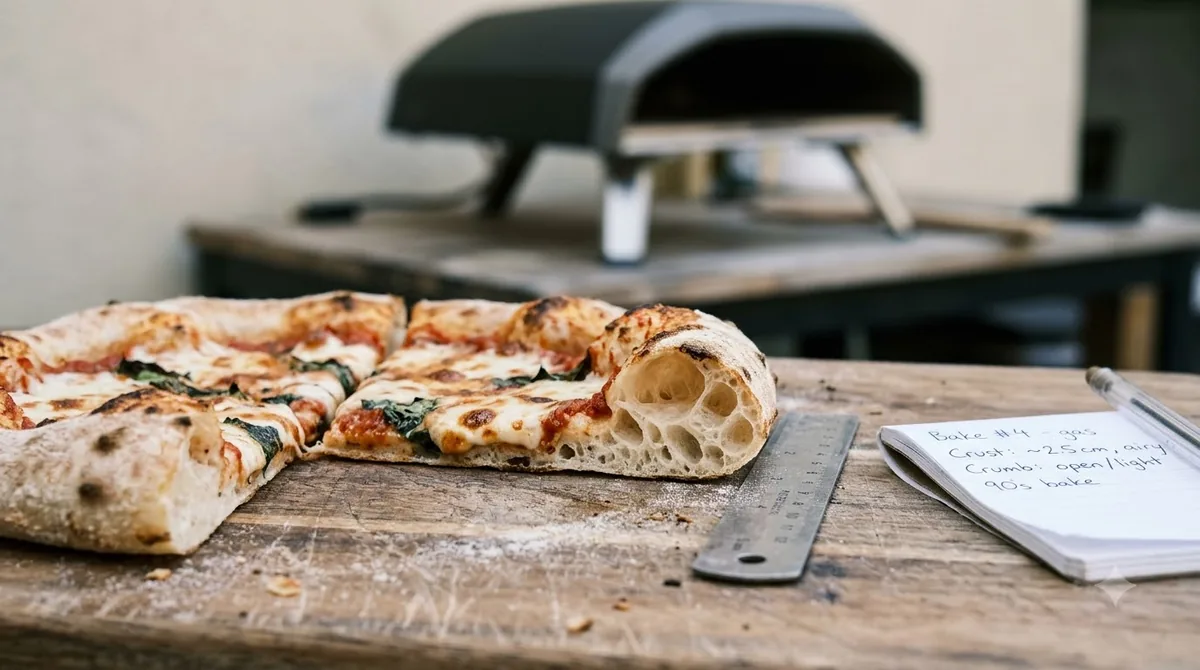

A supreme pizza recipe is a loaded pizza built on tomato sauce and mozzarella, with several meats and vegetables such as pepperoni, sausage or Canadian bacon, peppers, onion, black olives and mushrooms. Most versions finish with a dusting of Parmesan and bake until the cheese bubbles and the crust turns golden. Because the toppings do most of the work, prep and bake time matter as much as the ingredient list.
What Goes Into a Supreme Pizza Recipe
A supreme is defined by how many toppings it carries rather than by one fixed formula. The published recipes we read share a tomato base and a generous layer of mozzarella, then add a mix of cured meat, peppers, onion and olives.
The Taste of Home version uses Canadian bacon, sliced pepperoni, red and green sweet peppers, chopped onion and sliced olives, finished with basil and Parmesan. The The Practical Kitchen version uses a sausage link, pepperoni, green pepper, baby bella mushrooms and black olives on a thin crust. Both recipes in this supreme pizza recipe guide use the same core idea: a sauce, a stretchy cheese, and a handful of toppings that each add a different flavor.
Pepperoni is a natural anchor for a supreme pizza recipe, and the pepperoni pizza recipe shows the single-topping version. Wikipedia’s pizza article lists pepperoni among the common toppings used in the United States, alongside ham, mushrooms and anchovies, so it is easy to find in most grocery stores.
Making the Dough and Sauce
Choose a yeast dough for a soft, bready base, or an overnight thin-crust dough if you want a crisper edge. Season the sauce for a supreme pizza recipe simply with garlic, salt, oregano and basil so the toppings stay in front.
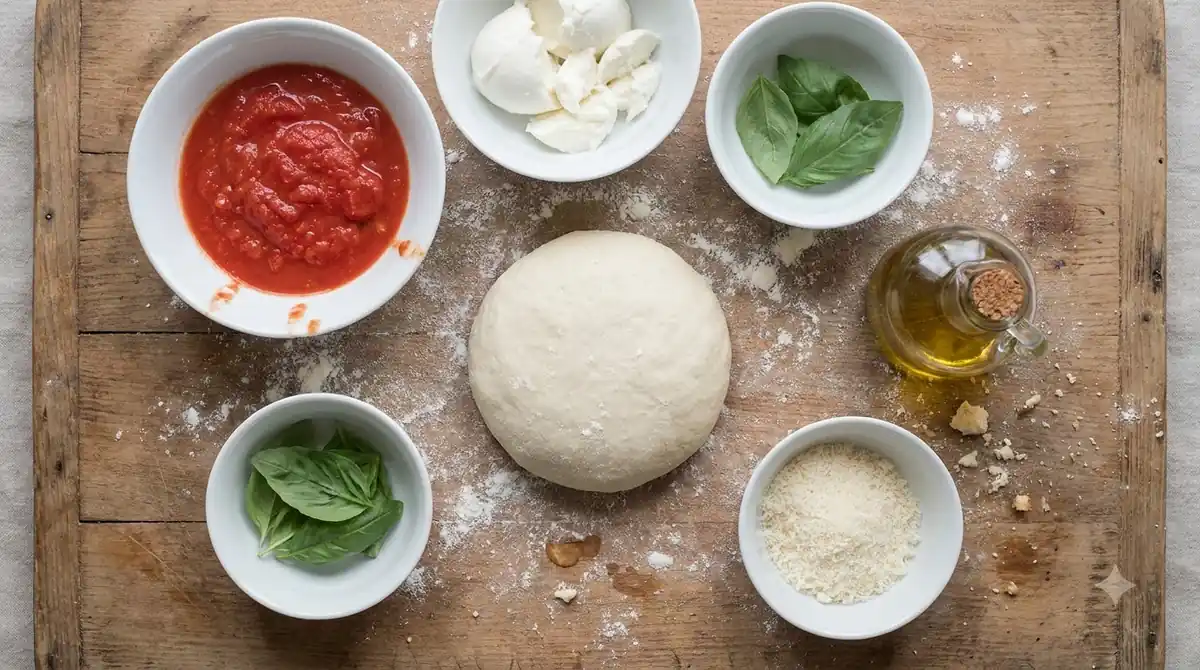
The Taste of Home dough for this supreme pizza recipe makes two 13-inch pizzas. It calls for one package (1/4 ounce) of active dry yeast dissolved in 2 cups of warm water at 110 to 115°F, plus 3 tablespoons of canola oil, 1-1/2 teaspoons of salt and 4 to 6 cups of all-purpose flour. The method beats the first 2 cups of flour with the yeast mixture for 3 minutes, adds the rest until the dough is soft, kneads for 6 to 8 minutes, and lets it rest for 10 minutes before rolling.
The Practical Kitchen version uses one ball of overnight thin-crust dough weighing 200 to 250 grams. Its sauce is 6 ounces of salt-free tomato sauce blended with one garlic clove, 1/2 teaspoon of salt, 1/4 teaspoon of dried basil and 1/4 teaspoon of dried oregano. That recipe yields enough sauce for three or four medium pizzas, so you can keep the rest in the fridge.
| Component | Taste of Home | The Practical Kitchen |
|---|---|---|
| Dough | Yeast dough, 4 to 6 cups flour, makes 2 pizzas | Overnight thin-crust dough, 200 to 250 g, makes 1 pizza |
| Sauce base | 2 cans (8 oz each) tomato sauce, grated onion, oregano | 6 oz salt-free tomato sauce, garlic, basil, oregano |
| Cheese | 4 cups part-skim mozzarella, 1 cup Parmesan | 1 cup low-moisture whole milk mozzarella, 1/8 cup grated Parmesan or pecorino |
| Meats | 4 oz Canadian bacon, 3.5 oz sliced pepperoni | 1 sausage link, 1/4 cup pepperoni slices |
| Vegetables | Red and green sweet peppers, 1 cup onion, 2.25 oz olives | Green pepper, baby bella mushrooms, black olives, 1/4 cup each |
Preparing and Layering the Toppings
In a supreme pizza recipe, cook and drain the wet or raw ingredients first, then layer them in a fixed order so the crust stays dry in the middle. Set everything out before you stretch the dough so a supreme pizza recipe goes together without delay.
Work through the toppings in this order:
- Brown the sausage in a medium skillet over medium heat, breaking it into crumbles, then drain it on a paper towel.
- Remove the seeds and ribs from the pepper, then slice or chop it. Wash and dry the mushrooms, and mince them finely so they cook through quickly.
- Drain the black olives well. If you are using Canadian bacon, dice it and pat it dry.
- Chop the onion, and grate the Parmesan or pecorino just before baking.
The Practical Kitchen layers its supreme pizza recipe in this order: sauce, mozzarella, pepperoni and sausage, then peppers, olives and mushrooms, with grated Parmesan on top. It suggests spreading the sauce with the back of a spoon almost to the crust, starting with two spoonfuls, and adding a little extra mozzarella over the toppings to help them stay put.
After saucing, work quickly to get the pizza into the oven. The same source says the toppings should already be cooked or ready to eat, which is why the sausage is browned first.
Baking the Supreme at 375°F or 500°F
The two published methods for a supreme pizza recipe use very different heat. Taste of Home bakes at 375°F in two stages, while The Practical Kitchen bakes at 500°F on a preheated baking steel for a few minutes.
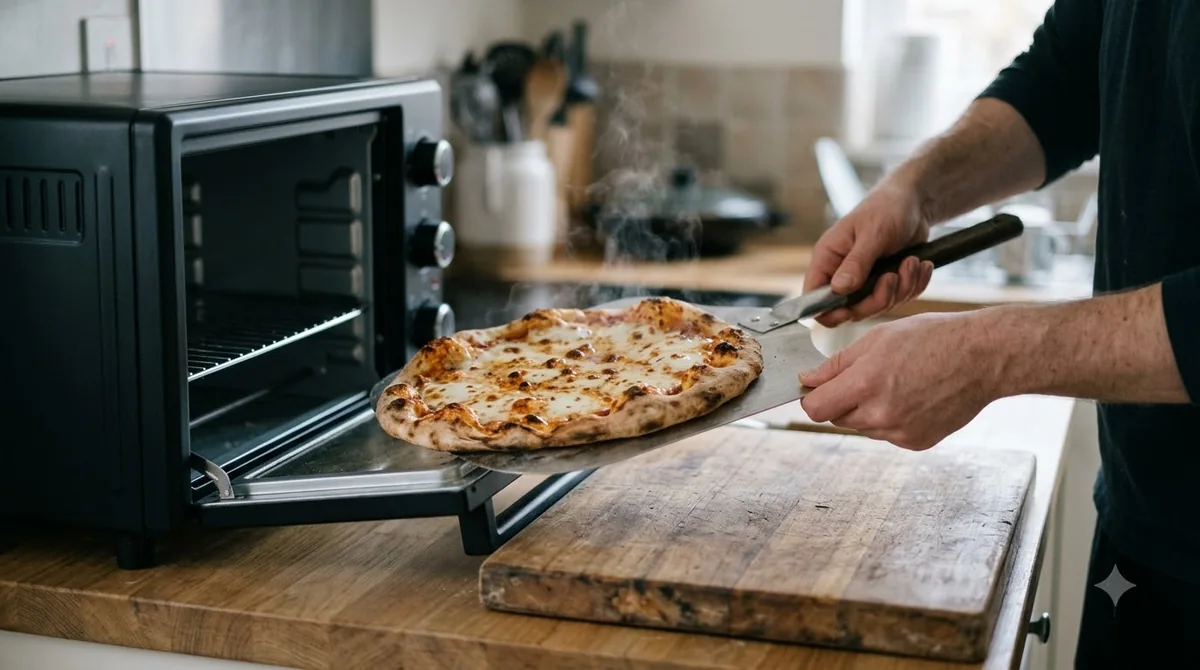
The Taste of Home method pre-bakes the crust for 15 minutes until it is lightly browned, then spreads the sauce, adds the toppings, and bakes 15 to 20 minutes more until the cheese melts. The Practical Kitchen method preheats the oven with the steel for one hour, then bakes 2 to 3 minutes, rotates the pizza, bakes 2 to 3 minutes more, and broils for about one minute until browned to taste.
| Method | Oven setting | Bake steps | Total time stated |
|---|---|---|---|
| Taste of Home | 375°F | 15 min for the crust, then 15 to 20 min with toppings | About 30 to 35 min |
| The Practical Kitchen | 500°F with a baking steel preheated 1 hour | 2 to 3 min, rotate, 2 to 3 min, then broil about 1 min | 1 hour preheat, then about 5 to 7 min of baking |
Choose the supreme pizza recipe method that fits your oven. Give the steel the full preheat the recipe calls for before you load the pizza, and use an oven thermometer to confirm the setting is the real temperature. For the mozzarella, check the label on your package for its melt and moisture notes, since low-moisture cheese behaves differently from fresh mozzarella.
Common Mistakes That Make a Supreme Soggy
Most soggy pizza problems come down to moisture: too much sauce, wet vegetables, or toppings that were not cooked before they went on.
- Over-saucing. Start with a light layer of sauce and add more only if the base looks dry.
- Raw, chunky mushrooms. Mince them finely so they cook through during the short bake.
- Wet olives. Drain them well before scattering them on the pizza.
- Slow loading. Once the sauce is on, get the pizza into the oven quickly, because the longer a topped pizza waits on the peel, the more likely it is to stick.
- Cold dough. For the thin-crust version, let the dough reach room temperature for 60 to 90 minutes before stretching it.
Dust the peel lightly with flour or semolina so the pizza slides onto the steel without catching. The sources we read do not give a fix for cheese that pools, so check your oven temperature and preheat time first.
Easy Variations on a Supreme
Keep the structure of the supreme pizza recipe and swap the proteins or vegetables. A veggie supreme pizza recipe drops the meats and keeps the peppers, onion, mushrooms and olives. A Canadian bacon version follows the Taste of Home list, while a sausage version follows The Practical Kitchen. For a sausage-forward pizza, see the sausage and peppers pizza recipe, or the meat lovers pizza recipe for a meat-only take.
The recipes we read do not give separate bake times for every variation. Use the same visual cues: cheese fully melted, crust golden on the edges, and no wet pools of sauce on the surface.
Frequently Asked Questions
What goes on a supreme pizza?
A supreme usually includes tomato sauce, mozzarella, pepperoni, a meat such as sausage or Canadian bacon, bell peppers, onion, black olives and mushrooms. Parmesan or pecorino is often grated on top.
Can I use Canadian bacon instead of sausage?
Yes. In this supreme pizza recipe comparison, Taste of Home uses diced Canadian bacon, and The Practical Kitchen uses a browned sausage link. Either works, but cook sausage first so it is ready to eat when it goes on the pizza.
What oven temperature should I use?
The two supreme pizza recipes we read use 375°F for a two-stage bake of about 30 to 35 minutes, or 500°F on a preheated baking steel with a short bake and a final broil. Follow the method that matches your dough and oven, and check the bake time against the recipe you follow before the first pizza.
Why does my supreme pizza get soggy?
Wet toppings, too much sauce and a slow trip to the oven are the usual causes. Drain the olives, chop the mushrooms finely, pre-cook the sausage and start with a light sauce.
Can I make the dough ahead?
A supreme pizza recipe can start with an overnight thin-crust dough, as The Practical Kitchen version does, so a cold rest before baking is part of that method. Bring it out of the fridge for 60 to 90 minutes before stretching so it is easier to shape.
Do I need a pizza steel?
The 500°F method in The Practical Kitchen recipe uses a baking steel, but the Taste of Home recipe uses greased pizza pans in a standard oven. A steel helps the base set quickly; a pan works for the 375°F method.
Choose the method that suits your oven and your dough, since a supreme pizza recipe works with either. A 375°F bake with a yeast dough gives a softer, bready crust, while a 500°F steel method suits a thin crust. For the best result with any supreme pizza recipe, keep the toppings dry and pre-cooked, and check your oven manual before running any high-heat setting.
 8 min readLearnSicilian Pizza Recipe: Dough, Toppings and Bake StepsUpdated Nov 10, 2026
 8 min readLearnNduja Pizza Recipe: Dough Quantities, Toppings and Bake TimesUpdated Nov 11, 2026
 8 min readLearnCheese Pizza Recipe: 2 Doughs and Easy Bake StepsUpdated Nov 10, 2026
 8 min readLearnVegan Pizza Recipe: Dough, Cheese and Toppings That WorkUpdated Nov 12, 2026
 10 min readLearnSheet Pan Pizza Recipe: Three Doughs, Exact Amounts and Bake TimesUpdated Nov 11, 2026
 8 min readLearnCalzone Recipe: Dough, Filling and Bake Times for Home and Pizza OvensUpdated Nov 10, 2026