


Knowing how to fix soggy pizza comes down to heat. A soggy middle usually means the stone or steel was not hot enough when the pizza went in, so most fixes happen before the pizza reaches the oven. Preheat fully, drain wet ingredients, and keep the sauce thick.
Why Is the Middle of My Pizza Soggy?
A soggy middle usually comes from an underheated stone, too much moisture from sauce or toppings, or a baking sheet that traps steam under the crust. Each cause has its own fix in the steps below on how to fix soggy pizza.
- Stone or steel not hot enough. Great Balls of Flour says the stone “must be super hot” before cooking, and its help page on soggy middles notes that the oven display does not show the true stone temperature.
- Watery sauce. Fontana Forni says sauce should be thick because it touches the dough directly.
- Too many toppings. Fontana Forni suggests limiting toppings to “around five” or using sparse amounts.
- Wet fresh mozzarella. Cheese that is not drained releases water into the dough as it bakes.
- Baking sheets. Tasting Table says a sheet can trap moisture underneath, so the top cooks faster than the bottom.
- Uneven top heat. Tasting Table, citing Neo Pizza, says more heat from the top than the bottom creates a thick uncooked band called a gum line.
Most soggy pizzas have more than one cause at once. Check the list against your last bake before changing several settings together, so you can tell which change actually helped. Learning how to fix soggy pizza starts with identifying which cause applies to your oven.
How Hot Should the Stone or Oven Be?
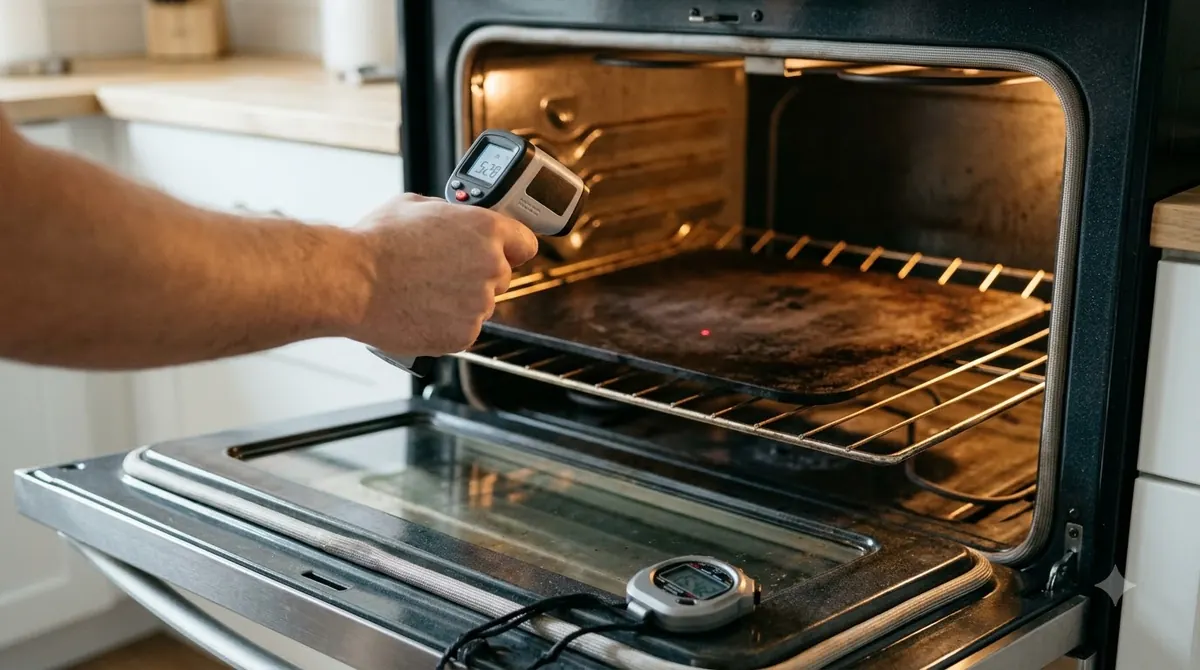
A properly preheated oven has its dome and floor in the mid-700s°F range, according to a ThermoWorks guide to stone-fired pizza temps. The right target depends on your oven type, so use the table below as a starting point. Getting the temperature right is the first part of how to fix soggy pizza at home, and our guide to how to get a pizza oven hotter has more ideas.
| Oven type | Target temperature | Source |
|---|---|---|
| Outdoor pizza oven | 700°F | Fontana Forni |
| Outdoor oven, general | 400 to 450°C | Great Balls of Flour |
| Kitchen oven | 230 to 250°C | Great Balls of Flour |
| Home oven | 475°F | Doh Wah, via Tasting Table |
These figures come from different makers and ovens, so they are not interchangeable. The 475°F home oven setting falls inside the 230 to 250°C kitchen range. ThermoWorks also recommends checking both the stone floor and the dome before cooking, and Great Balls of Flour suggests an infrared thermometer for the same job.
How to Fix Soggy Pizza Step by Step
Fix a soggy middle by heating the base fully, baking on the bottom rack, and rotating the pizza often, according to Fontana Forni’s soggy pizza guide. Work through these steps in order, because that sequence is how to fix soggy pizza most reliably, with each step building on the last.
- Preheat until the stone is fully hot. Test the floor and dome, and let the stone reheat between pizzas, as Great Balls of Flour recommends.
- Bake on the bottom rack. Tasting Table, citing Neo Pizza, says this offsets the oven’s heating element and adds more bottom heat.
- Bake right away. Fontana Forni says waiting lets water from the sauce soak into the dough, so practice how to launch a pizza quickly and cleanly.
- Rotate every 30 seconds. Fontana Forni says to check the base and keep turning until it browns.
- Expect a short bake. Fontana Forni says a bake can take about 90 seconds but may run up to four minutes.
Bake times vary with the oven and stone, so judge by the color of the base rather than the clock. Timing is part of how to fix soggy pizza, not a separate step. Tasting Table says a home oven at 475°F may need 10 to 12 minutes for a 14 to 16 inch pie.
How to Prepare Cheese and Toppings
Drain fresh mozzarella for at least an hour on a rack, and cook raw meats before they go on the dough, according to Fontana Forni. Wet toppings are the most common reason the center never firms up. Drained cheese is one of the simplest ways to learn how to fix soggy pizza quickly.
- Drain the mozzarella. Slice it and let it rest on a baking rack at room temperature for at least an hour.
- Press it dry. Tasting Table says to press drained mozzarella between paper towels before topping.
- Cook raw meat first. Fontana Forni lists chicken, bacon, ground beef and sausage as items to cook beforehand.
- Cook vegetables down. Sauté onions until translucent, cook mushrooms until softened, and cook spinach to remove its water.
- Keep the count low. Fontana Forni suggests around five toppings, or sparse amounts of each.
Fontana Forni also advises cutting toppings in half on a thin crust. The sources reviewed do not give exact gram amounts for toppings, so start light and add more only after a bake comes out dry in the middle. Adding toppings one at a time makes it easier to see how to fix soggy pizza for your own recipe. For a crust built to stay crisp, try a thin crust pizza dough recipe.
How Thick Should the Crust Be?
Great Balls of Flour shapes a 250 gram dough ball into a base of about 12 inches, and thicker bases usually need par-baking before toppings. Crust thickness is another variable in how to fix soggy pizza. A thicker base holds more dough for heat to travel through, so it needs more time to cook through.
Fontana Forni says thick or pan-style crust should be par-baked until the dough is firm and no longer wet, then cooled before the toppings go on. The sources reviewed do not give par-bake times or temperatures, so check the dough’s firmness by eye rather than following a fixed time. Our guide on how to par bake pizza crust covers the bake and cooling steps in more detail.
Do Baking Sheets, Steels or Stones Make the Difference?
Yes, the surface matters: a baking sheet can trap moisture under the crust, while a steel about a quarter inch thick heats faster than a stone, according to Tasting Table.
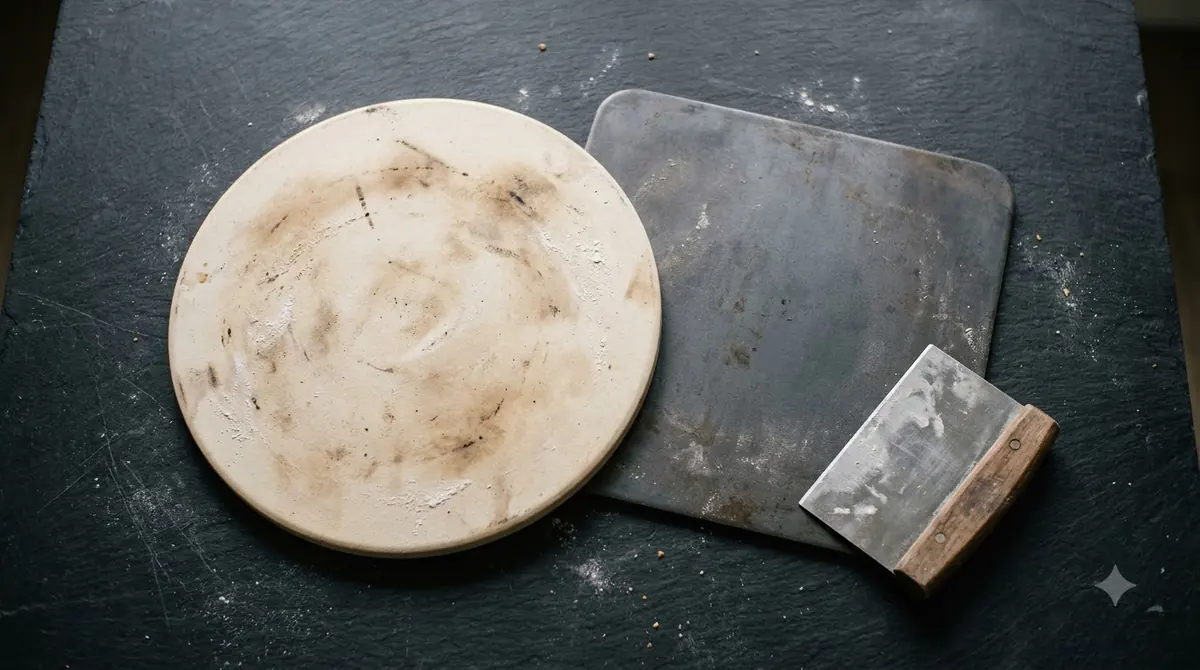
Tasting Table says modern pizza makers often use a steel in place of a baking sheet or stone. ThermoWorks describes a stone as having high thermal capacity but low conductance, which keeps it from releasing all its heat into the dough at once.
A stone holds heat well and releases it slowly, while a steel conducts heat faster. Both need full preheating, and choosing between them is part of how to fix soggy pizza in a home oven. Tasting Table advises placing a steel in the oven while it preheats, so it is already warm when the pizza goes in, which also shortens the cook time.
Can You Fix a Soggy Slice After Baking?
The sources reviewed for this guide focus on prevention, so they do not confirm a reliable way to rescue a finished slice. Once a pizza comes out wet in the middle, the realistic goal is preventing the problem on the next bake. That is the core of how to fix soggy pizza after the first failed attempt. If the bottom burns while the middle stays wet, read about pizza burning on the bottom.
Frequently Asked Questions
Why is my pizza crispy at the edges but soggy in the middle?
The edges usually get more direct heat, while the center stays wet when the base is underheated. Tasting Table, citing Neo Pizza, says more heat from the top than the bottom can create a thick uncooked band called a gum line. Knowing how to fix soggy pizza in this case starts with a full preheat and bottom-rack placement.
Should I use a pizza stone or a steel?
A steel conducts heat faster and is often about a quarter inch thick, according to Tasting Table. A stone has high thermal capacity, so it holds heat well across several pizzas. Either one works when fully preheated, and the difference is how quickly heat reaches the base.
How many toppings should I put on a homemade pizza?
Fontana Forni suggests limiting toppings to around five, or using sparse amounts. Wet toppings such as mushrooms and spinach release water, so cook them down before they go on the dough.
Does a baking sheet make pizza soggy?
A baking sheet can trap moisture under the crust, so the top cooks faster than the bottom, according to Tasting Table. A stone or steel gives the base direct heat instead, which helps the middle set. Switching surfaces is often the simplest answer to how to fix soggy pizza from a baking sheet.
What temperature should a home oven be for pizza?
Tasting Table, citing Doh Wah, recommends 475°F for a home oven. Great Balls of Flour gives 230 to 250°C for kitchen ovens, which is the same range. Check the stone surface with an infrared thermometer rather than relying only on the oven display. Knowing how to fix soggy pizza at home depends on knowing your oven’s real temperature.
Heat the stone fully, drain the cheese and keep the sauce thick before you change anything else. If a pizza stays wet in the middle after those steps, check the stone temperature with an infrared thermometer before adjusting the dough. That is the practical core of how to fix soggy pizza.
 6 min readLearnWhy Is My Pizza Soggy in the Middle? Causes and FixesUpdated Nov 13, 2026
 8 min readLearnUnderproofed Pizza Dough: Signs, Causes and How to Fix ItUpdated Nov 10, 2026
 8 min readLearnWhy Is My Pizza Crust Hard? Causes and FixesUpdated Nov 10, 2026
 7 min readLearnPizza Dough Tearing: Causes and Simple FixesUpdated Nov 10, 2026
 8 min readLearnPizza Sticking to Peel: Causes and FixesUpdated Nov 10, 2026
 9 min readLearnPizza Dough Not Rising? Causes and Fixes That WorkUpdated Nov 10, 2026