

When you compare tortellini vs ravioli, the main difference is shape: ravioli are square or round envelopes of pasta, while tortellini are small rings folded around a filling. Both are stuffed egg pasta from Italy, but they differ in how they are sealed, what goes inside, and how long they cook.
The tortellini vs ravioli gap also shows on the plate. Choose by the time you have, the filling you want and whether the pasta will sit in broth or in sauce.
Tortellini vs Ravioli at a Glance
In the tortellini vs ravioli comparison, ravioli are larger and sealed around a pocket of filling, while tortellini are tiny rings. Cook time is the quickest way to see the gap: fresh ravioli need about 4 to 6 minutes in boiling water, and fresh tortellini need only 2 to 3.
| Feature | Ravioli | Tortellini |
|---|---|---|
| Shape | Square or round, often with fluted edges | Small ring |
| Typical filling | Meat, cheese or vegetables | Meat and cheese, or cheese alone |
| Fresh cook time | About 4 to 6 minutes | About 2 to 3 minutes |
| Done when | It floats to the top of the pan | It floats to the top of the pan |
Tortellini vs Ravioli Shape: Square Envelope or Small Ring
Ravioli are small envelopes of pasta that are filled and sealed, usually square or round with fluted edges. Tortellini are rolled into a small ring, which is the shape most people picture when they hear the name.
To make ravioli, you lay out a sheet of dough, place spoonfuls of filling on it, cover with a second sheet and press around each mound to push out air. The edges can be crimped by hand or cut with a wheel or stamp. Tortellini are folded differently: a small round of dough wraps a bit of filling, the two ends are drawn together around a fingertip, and the pasta curls into a ring.
The practical result of this difference is that ravioli show a flat face of filling on every piece, while tortellini hold their filling in a tight, hidden pocket. That difference matters when you choose a serving style, because a ring is easier to lift from a spoon of broth than a large square is.
Dough: Sheet Thickness and Egg Content
In tortellini vs ravioli dough, both pastas use a thin egg dough, but the Bologna recipe gives a precise ratio for tortellini: 10 eggs for every 1 kilogram of flour.
The Dotta Confraternita del Tortellino describes the registered tortellino pasta as fresh yellow pasta made with 10 eggs and 1 kilo of flour. That page does not give a rolling thickness, so the practical test is simple: roll until the sheet is thin enough to read through and still holds together when folded.
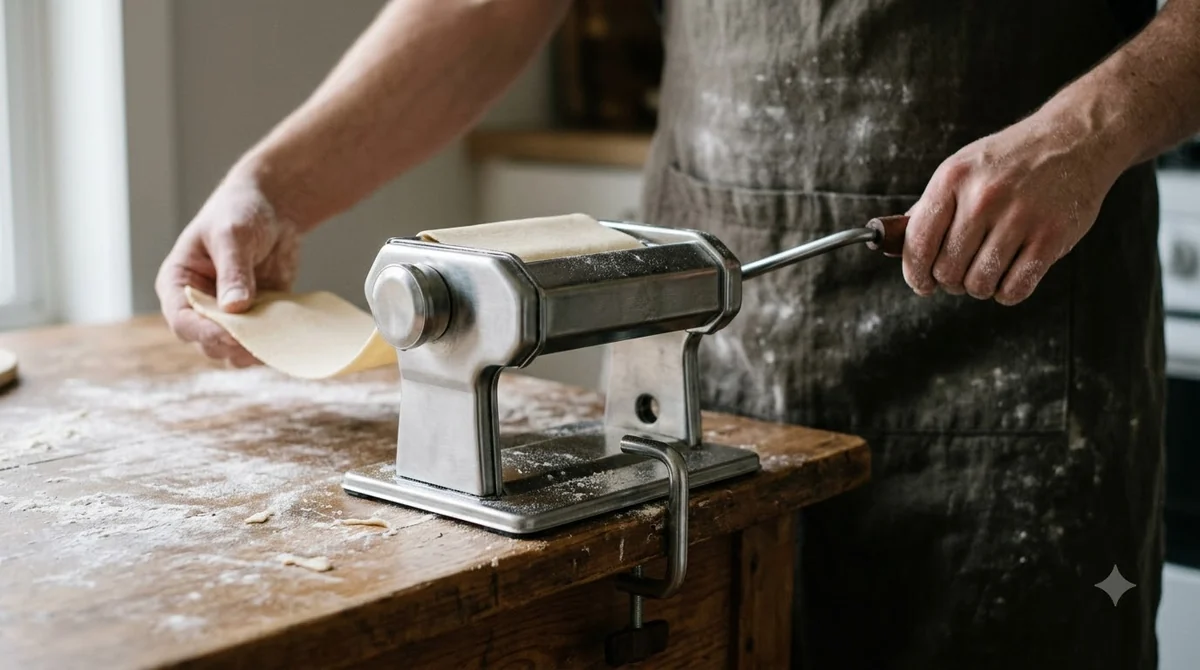
Ravioli dough is also egg pasta, and home recipes vary in egg count and flour, so follow one tested recipe rather than mixing two. Work the dough until smooth, rest it wrapped so it relaxes, and roll it through a pasta machine one setting at a time, which is the usual method for thin filled-pasta sheets. A basic fresh pasta dough recipe is a good place to start, and homemade ravioli walks through the full process.
Dough is where you have the most control. A firmer dough holds a tight seal around the filling. A softer dough rolls more easily but can tear or open during boiling if the edges are not pressed well.
Filling: What Goes Inside Each
In any tortellini vs ravioli comparison, the filling is where ravioli are broader. Ravioli fillings range from meat and cheese to spinach and pumpkin. The official tortellini filling is a fixed mix of pork, cured meats and Parmigiano that must rest before use.
The registered recipe for about 1,000 tortellini uses:
- 300 g pork loin
- 300 g prosciutto
- 300 g mortadella from Bologna
- 450 g Parmesan cheese
- 3 eggs and nutmeg
The pork loin is rubbed with salt, pepper, rosemary and garlic, left in a pan for two days, then cooked slowly with a little butter. The registered recipe combines it with the prosciutto, mortadella, Parmesan, eggs and nutmeg, and the mixture must rest at least 24 hours before the tortellini are filled.
Ravioli are commonly filled with meat, cheese or vegetables, often seasoned with garlic, basil or oregano. Tortellini are usually meat and cheese, or cheese alone, and seasonal versions use mushroom or pumpkin. For the pasta itself, see tortellini pasta, and for the larger cousin, tortelloni vs tortellini.
Cooking Time and How to Tell When It Is Done
In the tortellini vs ravioli cook-time check, fresh ravioli boil for about 4 to 6 minutes, fresh tortellini for 2 to 3, and dried tortellini for 10 to 12.
| Pasta | Form | Boiling time |
|---|---|---|
| Ravioli | Fresh | About 4 to 6 minutes |
| Tortellini | Fresh (refrigerated) | About 2 to 3 minutes |
| Tortellini | Dried | About 10 to 12 minutes |
Both shapes are done when they float to the top of the pan. Cook in batches in well-salted water so the pot keeps boiling, and lift the pasta out as soon as it floats to avoid overcooking the dough.
Broth or Sauce: Which Suits Each Shape
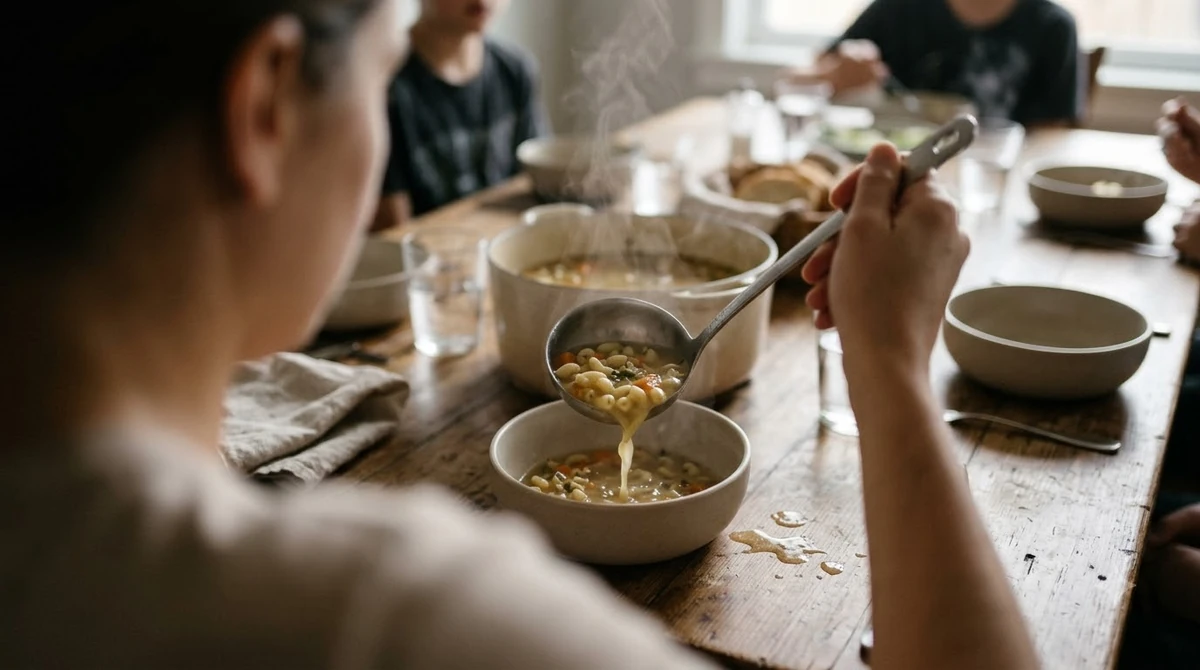
In tortellini vs ravioli serving, tortellini are the classic pasta for broth, and the registered Bologna recipe includes a broth built from capon and beef. Ravioli work with sauce, and both shapes can be served either way.
The Confraternita page lists a broth made with a capon at least five months old, beef shank, a beef femur, coarse salt, onion, carrot, celery, half a ramato tomato and a 24-month Parmigiano rind. The amounts on that page are for 2.5 kg of tortellini and include 30 g of coarse salt and half a capon, and the page does not give broth cooking times. It also states that tortellini must be eaten in broth.
For sauce in the tortellini vs ravioli decision, match the weight of the sauce to the pasta. A simple tomato sauce suits a meat or cheese ravioli, while a light butter sauce with herbs lets a delicate filling show.
Which One Should You Make at Home
For tortellini vs ravioli at home, make ravioli when you want a larger stuffed pasta with a flexible filling. Make tortellini when you have time for small folds and plan to serve them in broth.
Ravioli are the simpler project because each piece takes fewer folds and the filling can change from batch to batch. Tortellini take more hand work, since every piece is folded into a ring, but each ring holds a complete pocket of filling. Another hat-shaped relative is covered in cappelletti pasta.
If you want the official Bologna version, plan a day ahead. The filling must rest at least 24 hours before you use it, so make it first and fold the pasta the next day.
Mistakes That Make Either Shape Open in the Pot
Most burst or split pieces come from the same few problems, and they affect both sides of the tortellini vs ravioli choice. Fix these before you cook a full batch.
- Overfilling. Too much filling stretches the dough past what the seal can hold, so start with small spoonfuls.
- Trapped air. Air pockets expand in the water and push the seal open, so press from the center outward before closing the edges.
- Wet edges that do not stick. Brush the edge lightly with water or egg wash so the two layers bond.
- A rolling sheet that is too thin around a dense filling. Thin dough tears where the filling pushes against it, so keep the sheet thin but even.
- Boiling too hard or overcrowding the pot. A rolling boil with too many pieces knocks them together and tears the edges.
In any tortellini vs ravioli batch, stuffing devices and ravioli molds can make the sealing step faster, but the same rules apply to the seal and the dough. Check one piece in the pot before you cook the rest.
Frequently Asked Questions
Is tortellini just a small ring-shaped ravioli?
In the tortellini vs ravioli comparison, both are stuffed egg pasta, but ravioli are square or round envelopes and tortellini are small rings folded around a filling.
What is the official tortellini filling?
The registered recipe uses 300 g pork loin, 300 g prosciutto, 300 g mortadella, 450 g Parmesan, 3 eggs and nutmeg, and the filling rests at least 24 hours before use.
How long does tortellini take to cook?
Fresh tortellini take about 2 to 3 minutes, and dried tortellini take about 10 to 12 minutes. In both cases the pasta is ready when it floats.
How long do ravioli take to cook?
Fresh ravioli take about 4 to 6 minutes in boiling water, and they are done when they float to the top of the pan.
Can you put ravioli in broth?
Yes. The Bologna brotherhood treats broth as the proper home of tortellini, but nothing stops you serving ravioli in a light broth too. Keep the broth clear so the filling and shape stay easy to see.
In tortellini vs ravioli, which is easier to make at home?
Ravioli are usually easier for a first attempt because each piece needs fewer folds. Tortellini reward patience with small, neat rings once the folding becomes familiar.
For tortellini vs ravioli, choose ravioli for a larger, sauce-friendly stuffed pasta with a flexible filling, and choose tortellini for small rings served in broth. If you want the official Bologna version, start the filling a day early.