

Homemade ravioli is a stuffed pasta made from thin egg dough wrapped around a filling. A basic version needs flour, eggs, salt, a filling and a rolling pin or pasta machine. The dough is the part that most affects how the finished homemade ravioli turns out.
Two tested recipes use nearly the same base of flour and eggs, so the method is consistent. The steps below cover the dough, the filling, sealing and cooking, with exact weights where the source gives them.
What Is Ravioli?
Ravioli is a type of stuffed pasta with a filling enveloped in thin pasta dough, and it originated in Italy.
According to Wikipedia’s ravioli entry, the shape is usually square, although circular and half-moon (mezzelune) shapes also appear. Early references include 14th-century merchant letters from Prato, and the pasta is usually served in broth or with a sauce. For the half-moon version, see how mezzelune pasta is made.
Regional fillings vary. Rome and Latium favor ricotta with spinach, nutmeg and black pepper, while Sardinia adds grated lemon rind to its ricotta. In Campania, ravioli are often served with tomato sauce in summer and ragu in winter.
Because of these regional habits, ravioli is better understood as a family of stuffed pastas than as one fixed recipe, and it has close cousins such as the tortelloni and tortellini shapes. The rest of this guide follows the basic ricotta and egg version of homemade ravioli that most home cooks start with.
Homemade Ravioli Dough Recipe
A basic homemade ravioli dough uses 2 cups (240 g) all-purpose flour, 3 large eggs and 1/2 teaspoon salt, then rests at least 30 minutes.
King Arthur Baking’s ravioli recipe uses these quantities. It lists the flour in grams, which is more reliable than a measuring cup. The same recipe switches to a pasta flour blend at 2 cups (290 g) and adds 1 tablespoon (14 g) of cool water only in that case.
The Slow Roasted Italian takes a richer route. Its dough uses 2 cups of all-purpose flour, 4 large eggs (three in the dough and one in the filling) and 1 1/2 teaspoons of extra-virgin olive oil.
| Recipe | Flour | Eggs in dough | Oil | Rest |
|---|---|---|---|---|
| King Arthur Baking | 2 cups (240 g) all-purpose | 3 large | None listed | At least 30 minutes |
| The Slow Roasted Italian | 2 cups all-purpose | 3 large | 1 1/2 teaspoons extra-virgin olive oil | 30 minutes |
Both recipes rest the homemade ravioli dough for 30 minutes. King Arthur adds that refrigerated dough can rest up to overnight, but it must return to room temperature for at least 30 minutes before you roll it. For a general egg dough with its own kneading and resting times, see our basic egg dough for fresh pasta.
Dust the board with semolina or flour before you start rolling homemade ravioli. The Slow Roasted Italian calls for 4 tablespoons of semolina for dusting and suggests dusting the cut ravioli again so they do not stick together.
Ravioli Filling Ideas and Ratios
A classic ricotta filling for homemade ravioli uses 2 cups (454 g) ricotta with about 1 cup of grated hard cheese, and draining the ricotta first removes the excess liquid before you fill the pasta.
King Arthur Baking’s filling adds 1/4 cup (30 g) all-purpose flour, 4 tablespoons (12 g) of chopped fresh herbs, 1/2 cup plus 1 tablespoon (56 g) each of Parmesan and pecorino Romano, and a pinch of pepper, salt and nutmeg. That recipe makes 28 to 30 ravioli, each about 2 1/4 inches square.
The Slow Roasted Italian uses a simpler mix: 16 ounces of ricotta, 1 cup of grated Parmesan, 1 large egg, 1/4 teaspoon sea salt and 2 tablespoons of chopped basil. Its instructions say to place the filling for homemade ravioli in a fine mesh sieve over a bowl to drain excess liquid before assembling.
- 2 cups (454 g) ricotta cheese
- 1/2 cup plus 1 tablespoon (56 g) Parmesan
- 1/2 cup plus 1 tablespoon (56 g) pecorino Romano
- 4 tablespoons (12 g) chopped fresh herbs
- 1/4 cup (30 g) all-purpose flour
- Black pepper, salt and a pinch of nutmeg
How to Make Ravioli by Hand, Step by Step
To make ravioli by hand, roll the dough thin, brush water on the bottom sheet, scoop filling about 1 1/2 inches apart, cover with the top sheet, press out the air and cut.
- Divide the dough into a few sections and keep the rest wrapped while you work.
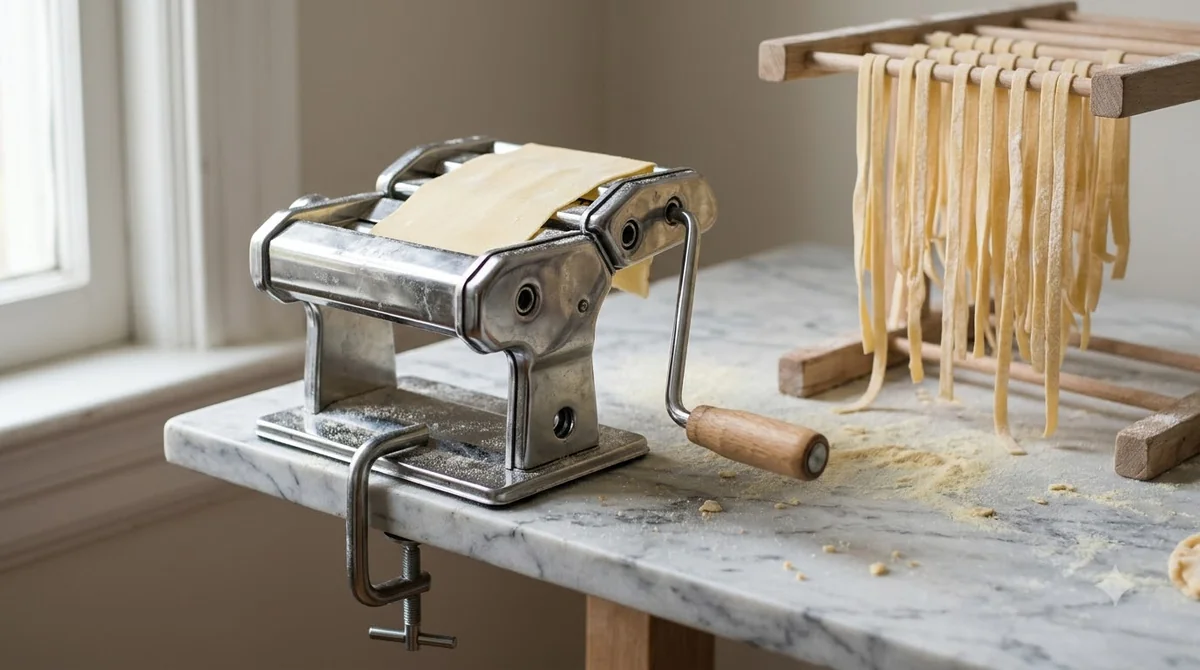
- Roll one section into a long rectangle, as thin as you can by hand, or use a pasta machine as described below, such as the Marcato Atlas 150 manual pasta machine.
- Trim the sheet to about 4 3/4 inches wide, with clean edges.
- Dust the sheet with semolina or flour and lay it on the board.
- Scoop the filling with a 1 1/2 tablespoon scoop, spacing the mounds about 1 1/2 inches apart.
- Brush a very thin layer of water around each mound and across the sheet between them.
- Lay the second sheet over the filling, then press around each mound with your fingers to seal it and push out trapped air from the center outward.
- Cut with a wavy pastry cutter or a ravioli stamp, then dust with more semolina so the pieces do not stick.
King Arthur’s homemade ravioli are about 2 1/4 inches square, and the Slow Roasted Italian’s method uses the same water-seal and air-press steps, so the sealing technique is shared across both recipes.
Rolling Thickness on a Pasta Machine
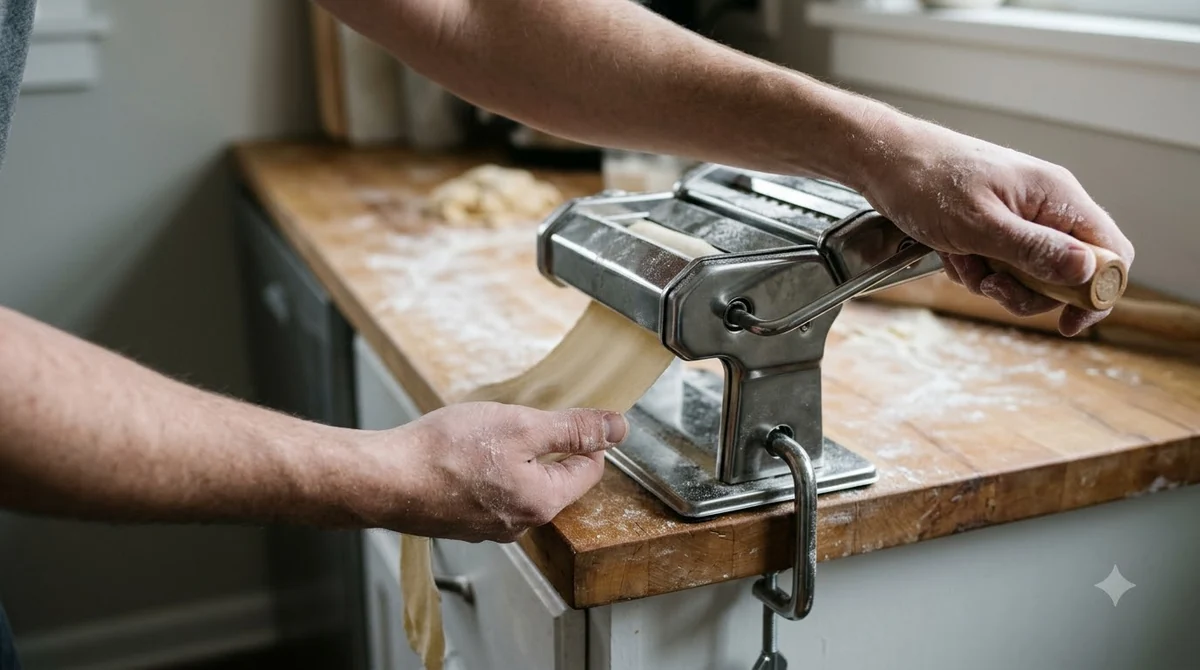
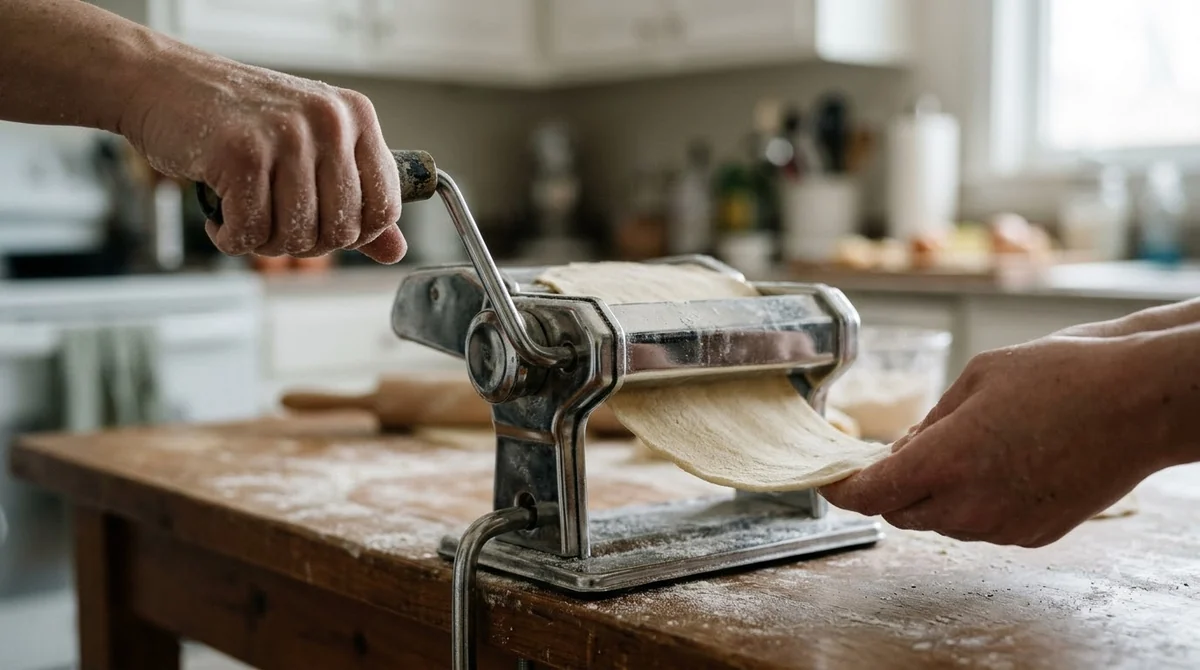
If you use a pasta machine, King Arthur advises passing the dough through and adjusting the setting each time until you reach setting #8, which it describes as about 0.6 mm thick on a standard roller. The Slow Roasted Italian stops one step earlier, at the second-thinnest setting.
The two recipes stop at different settings. Choose the setting that gives a sheet that holds together when you fill it, because a sheet that is too thin will not survive the next steps.
Common Mistakes to Avoid
A sheet rolled too thin can tear when you fill it or when it hits boiling water. Keep the homemade ravioli dough thick enough to hold the filling without breaking.
Trapped air is another problem. Air pockets can expand as the ravioli cook and split the seal, so press firmly from the center outward before you cut.
Skipping the water brush leaves dry edges that will not stick. Brush only a thin layer, because excess water can make the dough soggy at the seam.
Cooking Ravioli
Cook fresh homemade ravioli in heavily salted boiling water for about 6 to 8 minutes, although another tested recipe cooks them for only 2 to 3 minutes.
King Arthur Baking’s recipe boils the ravioli for 6 to 8 minutes and says to flip them every couple of minutes. The Slow Roasted Italian cooks them a handful at a time for 2 to 3 minutes, until the pasta is cooked through.
The Slow Roasted Italian’s recipe card lists a 15-minute cook time, but its instructions say the boiling step itself takes 2 to 3 minutes. Neither source explains the gap between the two times, so the texture is the better guide.
Lift the cooked ravioli out with a slotted spoon to drain, rather than pouring them into a colander.
Best Sauce for Homemade Ravioli
Warm marinara sauce or alfredo sauce, or a flavored olive oil with Parmesan and basil, are the simplest sauces to serve with homemade ravioli.
The Slow Roasted Italian says the simplest option is a drizzle of flavored olive oil, such as Meyer lemon, topped with grated Parmesan and chiffonade basil. For a sauced version, it suggests spooning warm marinara or alfredo over the top.
Marinara is the author’s favorite for dipping, which makes it a natural match for cheese-filled homemade ravioli. Brown butter with sage is a popular choice for squash or pumpkin filling, where its nutty flavor suits the sweeter filling.
- Ricotta or cheese filling: marinara, or warm alfredo
- Squash or pumpkin filling: brown butter with sage
- Any filling: olive oil, Parmesan and basil
Frequently Asked Questions
What is ravioli made of?
Homemade ravioli is made from thin pasta dough wrapped around a filling. A basic homemade dough uses flour, eggs and salt, and the filling is often ricotta mixed with grated hard cheese.
How much flour and how many eggs do you need?
One tested recipe uses 2 cups (240 g) all-purpose flour and 3 large eggs for the dough. The Slow Roasted Italian uses 4 eggs in total, with 3 in the dough and 1 in the filling.
Does ravioli dough need to rest?
Yes. Both tested recipes rest the dough for 30 minutes. King Arthur Baking says refrigerated dough can rest up to overnight, but it must return to room temperature for at least 30 minutes before rolling.
How do you keep ravioli from opening while they cook?
Brush a thin layer of water around each filling mound, press out the air from the center outward, and avoid rolling the sheet so thin that it tears.
How long should you boil ravioli?
The sources differ. King Arthur Baking gives 6 to 8 minutes in heavily salted boiling water, while the Slow Roasted Italian gives 2 to 3 minutes until the pasta is cooked through. Check the texture before you drain them.
Which sauce goes best with ravioli?
Warm marinara or alfredo sauce works well with cheese filling, and a flavored olive oil with Parmesan and basil is the simplest option. Brown butter with sage is a popular choice for squash or pumpkin filling.
Start with the basic ricotta filling and the 2-cup dough for homemade ravioli, then adjust once you know how your pasta machine rolls. If you are cooking for guests, make the dough the day before, rest it in the refrigerator, and bring it back to room temperature before rolling.