
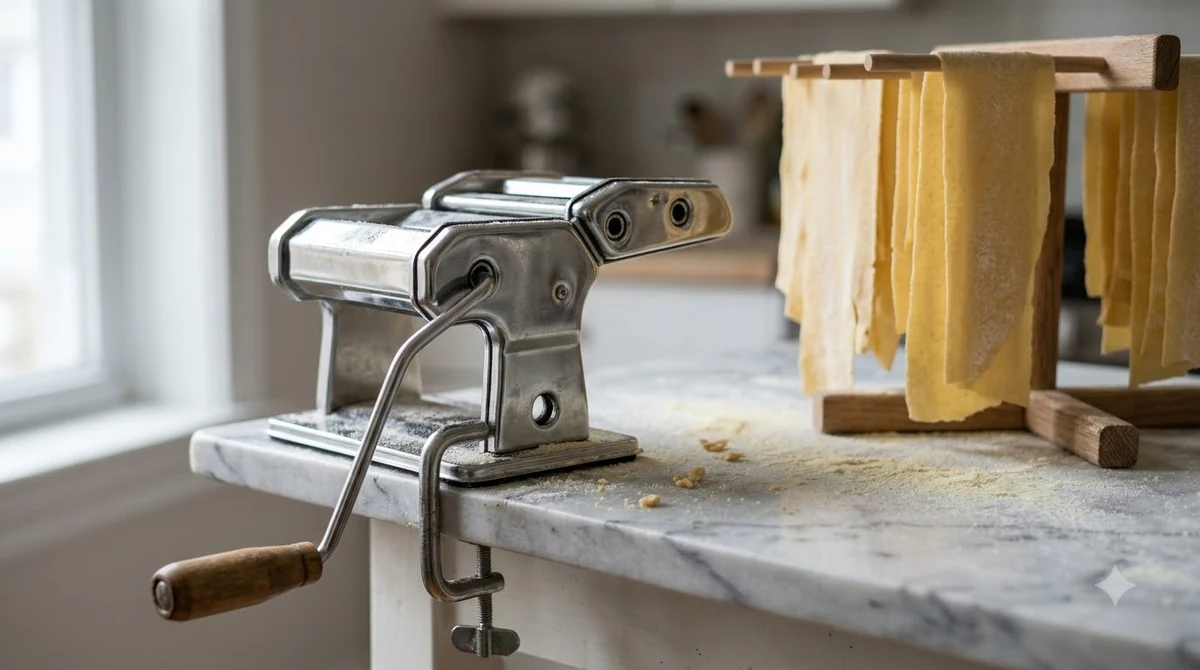

A fresh pasta dough recipe combines flour, eggs, olive oil and salt, then uses kneading and resting to make the dough smooth and easy to roll. PBS’s egg version calls for 3 cups of flour and 4 large eggs.
Egg dough is the classic version. Semolina and egg-free doughs use different flour and liquid amounts, and they are covered near the end.
Ingredients for a Fresh Pasta Dough Recipe
The classic egg version uses 3 cups of unbleached all-purpose flour, 4 large eggs, 1 teaspoon of extra virgin olive oil and ½ teaspoon of salt. Warm water is added as needed.
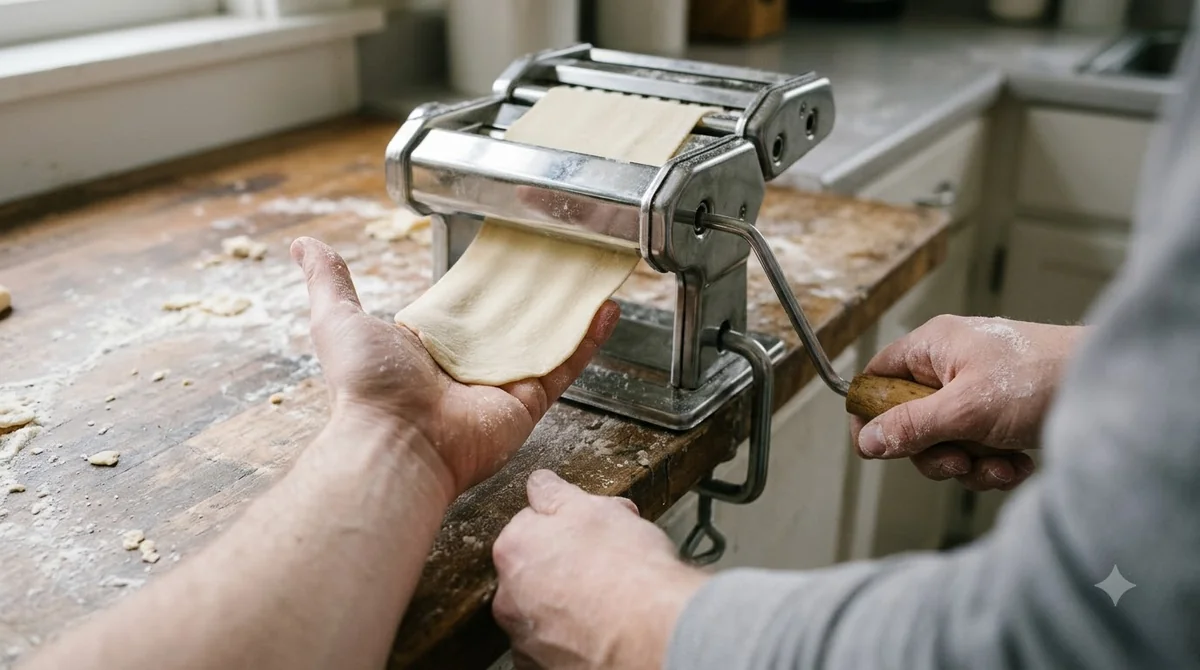
Here is the ingredient list from PBS’s fresh egg pasta recipe. The amount of water changes with the flour and eggs in your kitchen, so add it a little at a time.
- 3 cups unbleached all-purpose flour, or as needed
- 4 large eggs
- 1 teaspoon extra virgin olive oil
- ½ teaspoon salt
- Warm water as needed
PBS also suggests starting with 2 ⅔ cups of the flour when you mix the dough in a food processor, then adding more only if the dough needs it.
For a different starting point, Caputo’s classic fresh egg pasta dough uses 300 g of Caputo “00” Pasta Fresca flour with 3 whole large eggs. Weighing the flour lets you repeat a fresh pasta dough recipe with the same amounts. If you roll the dough in a machine, brush off dried dough afterward, as described in this guide on how to clean a pasta machine.
How to Knead Fresh Pasta Dough
Knead the dough for 5 to 10 minutes of constant kneading by hand, according to PBS. With a dough hook, KitchenAid UK suggests about 2 minutes on speed 2, followed by 1 to 2 minutes by hand.
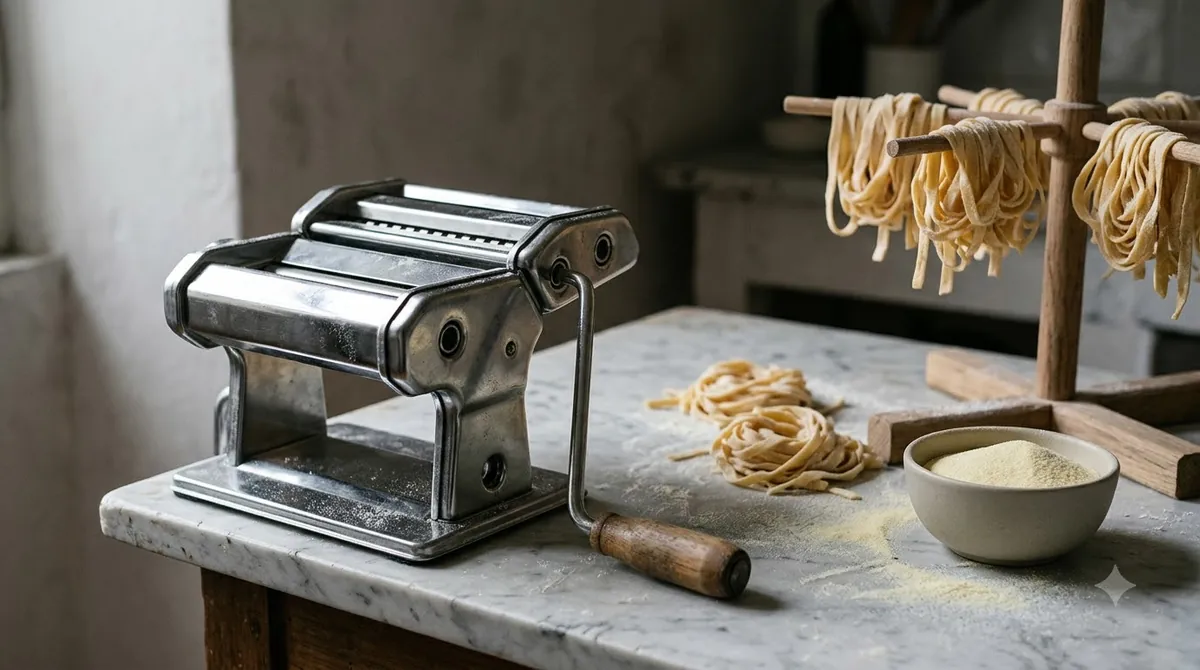
Kneading makes the dough smooth and even before it rests, and a manual pasta machine can then roll it into even sheets. Hand kneading needs slightly more time than a food processor, so plan for the upper end of the range if you knead by hand.
Caputo’s semolina dough also needs 8 to 10 minutes of kneading until smooth. That range overlaps PBS’s 5 to 10 minutes, so it works as a rough check for any fresh pasta dough recipe you follow.
- Mix the flour, eggs, olive oil, salt and a little water until a dough starts to form.
- Knead by hand for 5 to 10 minutes of constant kneading, or use the mixer method below.
- With a dough hook, mix on speed 2 for about 2 minutes, then knead by hand for 1 to 2 minutes.
- Stop when the dough is smooth and holds together, then move on to resting.
The mixer method uses a shorter kneading time than PBS’s hand-kneading range. Finish by hand for the last minute or two so you can feel the texture. Once the dough is smooth, the fresh pasta dough recipe is ready for resting.
How Long to Rest Fresh Pasta Dough
Rest the wrapped dough for at least 1 hour at room temperature, or for up to 1 day in the refrigerator, according to PBS. The mixer method from KitchenAid UK uses a much shorter rest of 10 to 15 minutes.
- Room temperature: at least 1 hour, per PBS.
- Refrigerator: up to 1 day, per PBS.
- Refrigerated dough: stand it about 1 hour at room temperature before rolling, per PBS.
- Mixer method: 10 to 15 minutes, covered, per KitchenAid UK.
KitchenAid UK says to cover the dough with plastic wrap, a plastic bag or an upside-down mixer bowl during the rest. Covering keeps the surface from drying out while the gluten relaxes.
Caputo’s semolina dough gives a wider room-temperature window: at least 30 minutes, and up to 6 hours. The sources differ because flour, eggs and kitchen temperature differ, so use the time from the recipe you follow and cover the dough whichever one you choose. The same timing logic applies when you rest a fresh pasta dough recipe overnight. Once rested, the dough can be rolled thin and filled for homemade ravioli, cut into ribbons for tagliatelle pasta, or rolled into wide sheets for the layers of a lasagna. It also suits small filled shapes such as Piedmont’s agnolotti pasta.
What to Do If Pasta Dough Is Too Dry
If pasta dough is too dry and crumbly, add more water 1 tablespoon at a time, according to KitchenAid UK. Adding it slowly makes it easier to stop before the dough turns sticky.
Flour and eggs vary from kitchen to kitchen, so the same fresh pasta dough recipe may need slightly more or less water. A small change at the start is easier to manage than a large correction later. Check the texture after each addition rather than adding everything at once.
- Knead for a minute or two and check whether the dough holds together.
- If it is still dry and crumbly, add 1 tablespoon of water.
- Knead again, then repeat one tablespoon at a time until the dough comes together.
If you use a food processor, PBS suggests adding a very small amount of warm water through the feed tube while the machine runs. Use the same careful approach for any fresh pasta dough recipe, because small changes are easier to control.
Semolina and Egg-Free Versions of This Dough
A semolina version uses 300 g of semolina flour with 160 to 180 g of room temperature water. An egg-free version uses 4 cups of durum wheat flour with 180 ml of warm water and 2 tablespoons of olive oil.
| Version | Flour | Liquid and fat | Kneading | Rest |
|---|---|---|---|---|
| Egg (PBS) | 3 cups all-purpose flour | 4 large eggs, 1 teaspoon olive oil, ½ teaspoon salt, warm water as needed | 5 to 10 minutes | At least 1 hour at room temperature |
| Semolina (Caputo) | 300 g semolina flour | 160 to 180 g room temperature water, no eggs or extra fat | 8 to 10 minutes | 30 minutes at room temperature, up to 6 hours |
| Egg-free (Ankarsrum) | 4 cups durum wheat flour | 180 ml warm water, 2 tablespoons olive oil | At least 10 minutes | At least 60 minutes in the refrigerator |
Compared with a standard fresh pasta dough recipe, semolina dough uses no eggs, so its water amount and texture differ from the egg version. Caputo’s traditional semolina recipe is a good reference for the flour and water amounts shown above.
Ankarsrum calls its egg-free version a vegan pasta dough, so it suits readers who avoid eggs. Plan ahead for the longer refrigerator rest, because this fresh pasta dough recipe needs that time before rolling.
Common Mistakes With Fresh Pasta Dough
Three common errors are rolling cold refrigerated dough, kneading for less than the recommended time, and adding too much water at once. Each one has a simple fix in the sources above.
- Rolling dough straight from the refrigerator. PBS says to stand it about 1 hour at room temperature first.
- Kneading for less than 5 minutes. PBS gives 5 to 10 minutes of constant kneading as its range.
- Adding a large splash of water. KitchenAid UK says to add 1 tablespoon at a time.
- Leaving the dough uncovered. KitchenAid UK says to cover it during the rest.
- Skipping the rest on egg-free dough. Ankarsrum recommends at least 60 minutes in the refrigerator.
Change one variable at a time, so you can tell which adjustment fixed the dough. That habit makes any fresh pasta dough recipe easier to repeat.
Frequently Asked Questions
Can I make a fresh pasta dough recipe without a mixer?
Yes. For a fresh pasta dough recipe, PBS says to knead by hand for 5 to 10 minutes of constant kneading, slightly longer than when mixing in a food processor. Rest the dough at least 1 hour at room temperature before rolling.
Can pasta dough rest overnight?
Yes. A fresh pasta dough recipe can rest in the refrigerator, and PBS allows up to 1 day. Let the dough stand about 1 hour at room temperature before rolling, so it is easier to work with.
Is semolina dough different from egg dough?
Yes. Caputo’s semolina version uses no eggs, with 300 g of semolina flour and 160 to 180 g of room temperature water. It is kneaded for 8 to 10 minutes and rested for 30 minutes at room temperature.
What if my pasta dough is crumbly while kneading?
Add more water 1 tablespoon at a time, according to KitchenAid UK. Knead after each addition and stop once the dough holds together.
How long should I rest egg-free pasta dough?
Ankarsrum recommends at least 60 minutes in the refrigerator for its egg-free dough, which uses 4 cups of durum wheat flour. Plan ahead, since the dough needs that rest before rolling.
How many eggs go into a fresh pasta dough recipe?
It depends on the flour. PBS uses 4 large eggs with 3 cups of flour, while Caputo’s classic version uses 3 whole large eggs with 300 g of 00 flour, so check the weight of your flour as well as the egg count. Check the recipe you follow before you measure.
A fresh pasta dough recipe is easiest to repeat when you note the flour weight, the liquid amount and both rest times. Start with the egg version for the classic dough, and choose the semolina or egg-free version if you need a different flour. Check the texture after each addition of water, and give the dough its full rest before rolling so the pasta is easier to shape.