
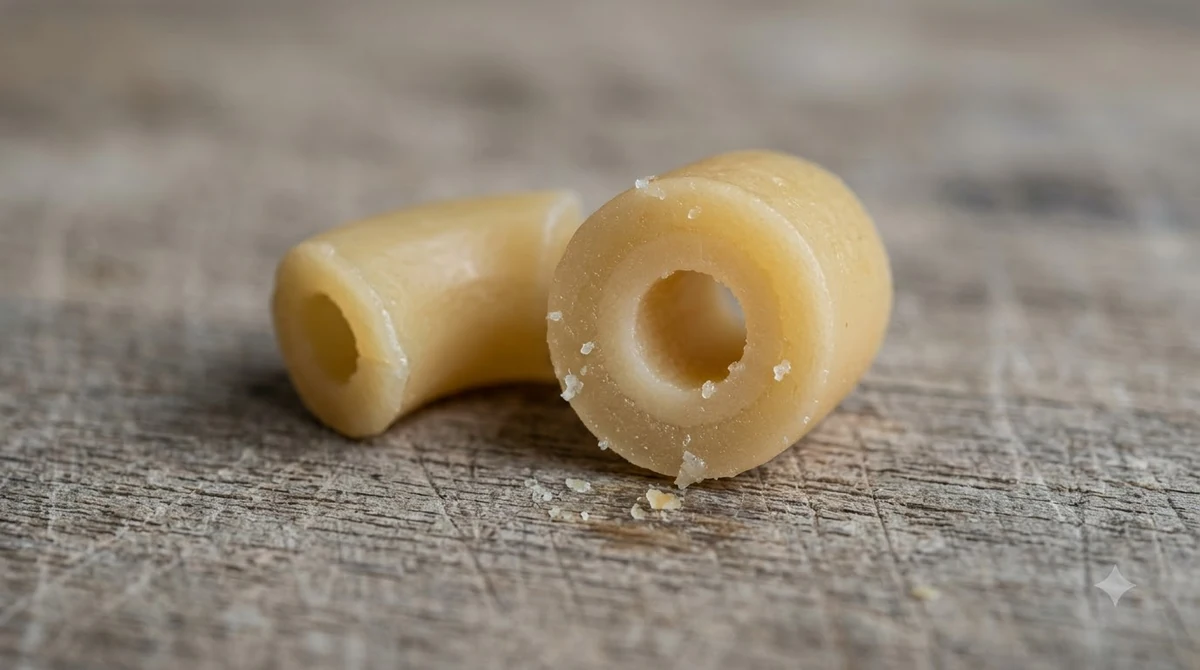

The answer to what is cannelloni is simple: a large, hollow Italian pasta tube wrapped around a filling and baked in sauce. Cannelloni is a classic baked pasta that home cooks can make with fresh sheets or store-bought tubes. Some packaged versions can be baked without boiling first, which makes the dish easier to prepare on a weeknight.
What Is Cannelloni?
Cannelloni is a cylindrical stuffed pasta, usually served baked with a filling and a sauce. Its tube shape is what sets it apart from most baked pasta dishes, because each piece holds its own filling inside rather than sitting in layers.
Because the filled tubes sit together in one dish, it is a practical option when you are cooking for several people. In the traditional method, a cook wraps a sheet of fresh pasta around a filling and rolls it into a tube. The filled pieces are arranged in a dish, covered with sauce, and baked until the pasta is tender. Each tube is filled one at a time, which is why the dish feels more hands-on than a casserole.
Cannelloni is often compared with lasagna, and both are baked pasta dishes with a filling and sauce. The difference is how the pasta is shaped and assembled: tubes that each hold a filling, rather than flat layers. For the layered version, see how to make lasagna.
For a homemade version, The Pasta Project’s dough uses 350 g of Italian 00 flour, 150 g of fine corn flour, a teaspoon of salt, and tepid water as needed. The dough rests for 30 minutes, then is rolled thin and cut into 15 cm squares, which rest for another 10 minutes before filling. For a plain egg-pasta base instead, see this fresh pasta dough recipe.
Where the Name and Dish Come From
Cannelloni means “large reeds” in Italian, and the word seems to have appeared at the turn of the 20th century. The name refers to the hollow, tube-like shape of the pasta, which resembles a reed or a pipe. Knowing what is cannelloni starts with that shape: a large hollow tube made to hold a filling.
Earlier references to stuffed pasta, called maccheroni ripieni, can be traced back to 1770, according to Wikipedia’s cannelloni entry. The same source lists regional names for the dish, including manfrigoli in Valtellina and canneroni in Naples, which shows that the dish was known under several names before the modern term became common.
Many stories describe who first made cannelloni and when. Some of these claims are not well documented, so it is best to rely on the meaning of the name and the early written references rather than on a single origin story.
Cannelloni vs. Manicotti
Cannelloni and manicotti are close relatives, and the main difference is how the pasta is made. Manicotti is the American version of the dish, while cannelloni is the Italian original.
| Feature | Cannelloni | Manicotti |
|---|---|---|
| How it is made | Pasta sheets wrapped around the filling | Machine-extruded cylinders filled from one end |
| Origin | Italian | American version of cannelloni |
| Filling method | Filling is rolled inside the sheet | Filling goes in through one open end |
The name manicotti is also often used for the baked dish itself, not just the pasta. If a recipe calls for either one, the same filling and sauce usually work for both. The what is manicotti guide covers the American version in more detail.
If you are choosing between them for dinner, the practical difference is the tube itself. Cannelloni rolled from sheets lets you spread the filling along each piece, while manicotti tubes are filled through one open end, so the choice often comes down to which shape is easier to find and fill.
Common Fillings and Sauces
The most common cannelloni fillings are spinach with ricotta and minced beef, and the shells are usually topped with tomato sauce. The Pasta Project recipe below shows one classic pairing.
Popular fillings include the following options:
- Spinach and ricotta, a light vegetarian filling
- Minced beef, often cooked with tomato sauce
- A meat filling with Pecorino Romano, eggs, and nutmeg
The Pasta Project’s homemade version uses a mix of beef, pork, and lamb, browned in olive oil and butter, then mixed with grated Pecorino Romano, eggs, and a teaspoon of nutmeg. The recipe cooks 400 g of mixed ground meat in olive oil and butter, cools it, and binds it with 100 g of Pecorino Romano and 4 large eggs before stuffing the pasta. If you like other stuffed pastas, compare it with tortellini pasta or cappellacci pasta.
A common mistake is filling the pasta while the mixture is still warm or loose. Warm filling makes the sheets hard to roll, and a loose filling can seep out during baking, so let it cool and drain any excess liquid first.
For the sauce, The Pasta Project’s version simmers 500 g of tomato passata with two garlic cloves, salt, pepper, and basil for about 15 minutes, then adds more basil for 5 minutes. The recipe tops the dish with 50 g of grated Parmigiano Reggiano and keeps the sauce slightly loose, because the liquid helps the pasta cook as it bakes. It uses thinner sheets and seals each roll with a little egg yolk.
Fresh or Packaged, and How It Is Baked
Traditional cannelloni is boiled first, but a loose tomato sauce lets the tubes cook in the oven without parboiling. Cooks’ Info notes that some cannelloni can now be bought ready to bake without boiling first.
Packaged tubes need a closer look at the label. Some boxes say no-boil or oven-ready, while plain manicotti or cannelloni may still need boiling. Because dry pasta has to absorb moisture from the sauce, The Pasta Project advises a slightly loose sauce, and extra sauce if you use dried tubes, because the pasta cooks in it.
Another method from the same recipe skips the tomato sauce. The tubes are brushed with beaten egg yolk, dusted with a tablespoon of cinnamon, dotted with butter, and baked at 160 °C for about 20 minutes. That traditional version still needs the squares parboiled first, so the boiling step depends on the method you choose. The tomato-sauce method needs no parboiling.
A simple tomato-sauce baking method looks like this:
- Cook the filling, then let it cool completely.
- Fill and roll the pasta sheets, or stuff packaged tubes.
- Spread a loose tomato sauce in the dish and arrange the tubes on top.
- Bake at 175 °C for about 25 minutes, then check that the pasta is tender with a fork.
The sauce is the cooking liquid in this method, so it should not be too thick. Oven times vary with the dish size and the tubes you use, so the fork test is more reliable than the clock. If you are new to the dish, the tomato-sauce method is the simpler place to start, because it needs no parboiling and uses a single sauce that also cooks the pasta, while the butter and cinnamon method adds a parboiling step and a separate topping.
Frequently Asked Questions
Is cannelloni the same as manicotti?
Not quite. Cannelloni is the Italian original, made from pasta sheets wrapped around a filling. Manicotti is the American version, made from machine-extruded cylinders filled from one end. Recipes often treat the two as interchangeable, so the filling and sauce matter more than the exact tube.
Do you have to boil cannelloni before baking?
Traditional sheets are usually boiled briefly first. Some packaged versions are labeled no-boil or oven-ready, and a loose tomato sauce can supply the moisture the pasta needs during baking. Check the label before you skip the boiling step.
What does cannelloni mean?
Cannelloni is Italian for “large reeds,” a reference to the hollow tube shape of the pasta. The name describes how the pasta looks before it is filled and baked, so it is a useful clue when you read a menu or a recipe in English or Italian. If you are asking what is cannelloni on a menu, expect a baked, stuffed pasta tube.
What is the most common filling for cannelloni?
Spinach with ricotta and minced beef are the most common fillings, and both are usually topped with tomato sauce. A mild cheese filling is also common, and meat or vegetables can be added to either style. Pick a vegetarian or meat filling based on who is eating, then match the sauce to the filling.
What temperature should cannelloni bake at?
One recipe from The Pasta Project bakes tomato-sauce cannelloni at 175 °C for about 25 minutes, until the pasta is cooked and the cheese is lightly browned. Check that the pasta is tender with a fork, because oven times vary.
Choose a filling and sauce that suit your meal, and decide whether you want fresh sheets or packaged tubes before you shop. Bake until the pasta is tender and the top is lightly browned. For a first attempt, spinach and ricotta with a simple tomato sauce is an easy place to start.