
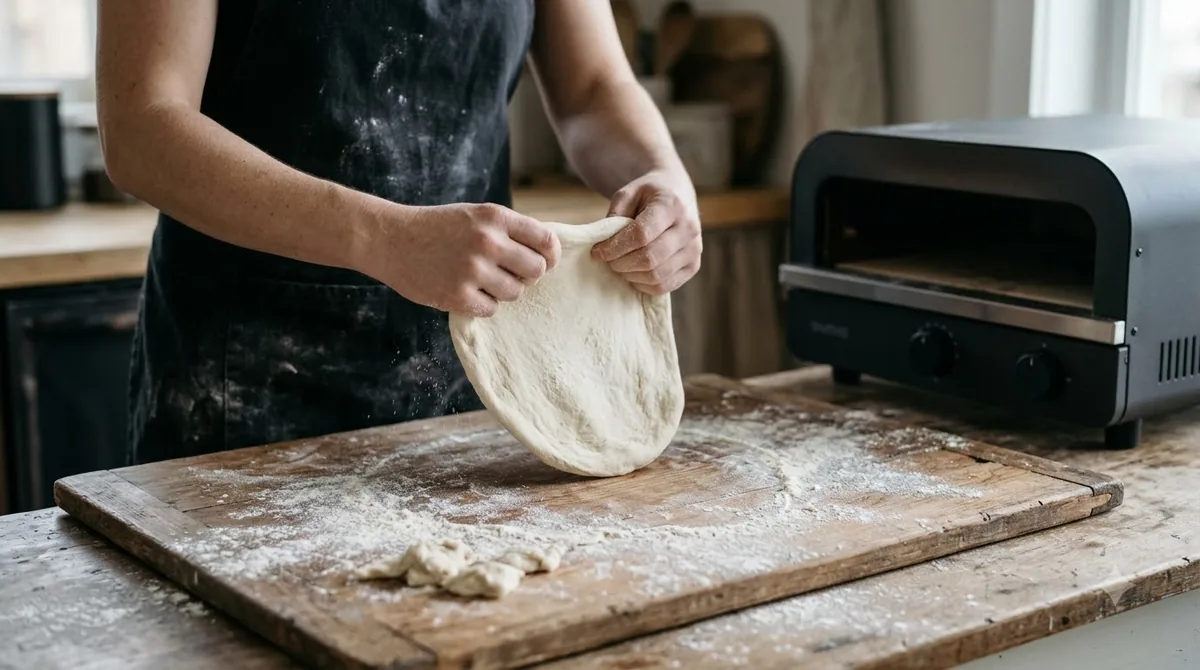

Whole wheat pizza dough is pizza dough made mainly from whole wheat flour, which gives the crust a nuttier flavor and a chewier bite. It suits home cooks who want a rustic crust and are willing to adjust water and rest time. Expect a firmer dough than a white-flour version, and plan for a longer rest before you shape it.
What Sets Whole Wheat Pizza Dough Apart
Whole wheat pizza dough keeps the bran and germ of the grain, so it tastes earthier and absorbs more water than dough made from white flour.
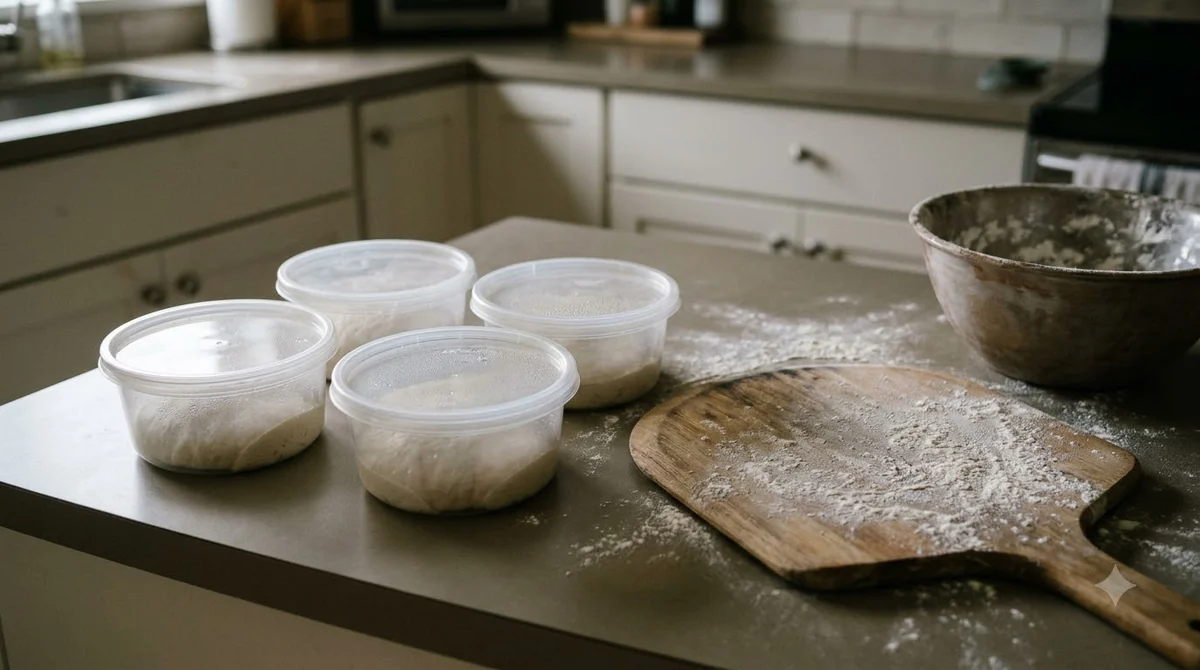
The bran and germ absorb more water than the nearly pure starch in white flour. America’s Test Kitchen’s flour guide puts the difference at about 13 percent more water by weight, so a white-flour recipe needs extra liquid when you swap in whole wheat flour.
Whole wheat dough can also feel tighter and less stretchy than dough made with bread flour. Many home cooks blend the two flours to keep the nutty flavor of whole wheat and the stretch of bread flour in one crust.
Feel is your best guide. A well-hydrated whole wheat dough looks slightly tacky and holds together when you stretch it gently. If the edges crack or tear, the dough needs more water or more rest.
Whole Wheat Versus White Flour Pizza Dough
Whole wheat dough tastes deeper and needs more water, while white flour dough is easier to stretch and more forgiving if your water measurement is slightly off.
The two doughs differ in a few predictable ways. Use the table as a quick guide before you adjust a recipe.
| Trait | Whole wheat pizza dough | White flour pizza dough |
|---|---|---|
| Flavor | Nuttier and earthier | Milder and neutral |
| Water needed | More, about 13 percent more by weight | Standard amount |
| Stretch | Tighter, can spring back | Easier to stretch |
| Crumb | Denser and chewier | Lighter and more open |
The table describes typical results. Your flour brand and your kitchen’s humidity will shift the water amount, so judge the dough by feel as well as by the number on the recipe.
Whole Wheat Pizza Dough Ingredients and Ratios
A tested whole wheat pizza dough uses 234 grams of whole wheat flour and 156 grams of bread flour, plus ice water, instant yeast, honey, olive oil and salt.
| Ingredient | Amount | Role in the dough |
|---|---|---|
| Whole wheat flour | 1½ cups (234 g) | Flavor and body |
| Bread flour | 1 cup (156 g) | Stretch and chew |
| Ice water | 1¼ cups (weight not listed) | Hydration |
| Instant or rapid-rise yeast | ¾ teaspoon | Rise |
| Honey | 2 teaspoons | Flavor and browning |
| Extra-virgin olive oil | 2 tablespoons | Tenderness and flavor |
| Salt | 1¾ teaspoons | Flavor and gluten strength |
That recipe uses 60 percent whole wheat flour and 40 percent bread flour. Its authors describe the mix as balanced for flavor, and they use a highly hydrated dough to build a strong gluten network that keeps the crust chewy.
Keep the flour split close to this ratio on your first attempt. Changing it too far changes how the dough behaves, so adjust one variable at a time and note what you changed.
How to Make Whole Wheat Pizza Dough Step by Step
Pulse the dry ingredients, add the ice water slowly, rest the mix, then add the oil and salt and knead until the dough forms a satiny ball.
Ice water helps keep the dough from overheating in a food processor. Follow these steps in order, and see making pizza at home if you want the full picture of toppings and baking.
- Pulse the whole wheat flour, bread flour, honey and yeast about five times.
- With the machine running, add the ice water slowly and process about 10 seconds, until no dry flour remains.
- Let the mixture rest for 10 minutes so the flour can take up the water.
- Add the oil and salt and process 45 to 60 seconds, until the dough is satiny and pulls away from the sides of the bowl.
- Knead the dough on a lightly oiled counter for about one minute, shape it into a tight ball, and place it in a lightly oiled bowl.
No food processor? Mix the flours, honey, yeast and water by hand until no dry bits remain, rest the dough, then add the oil and salt and knead until smooth. Hand kneading takes more patience, but the dough responds the same way.
The full method, with the same weights, appears in America’s Test Kitchen’s whole-wheat thin-crust recipe, which is a useful reference if you want to compare your dough against a tested version. For a white-flour version of a similar crisp base, see the thin crust pizza dough recipe.
How Long Whole Wheat Pizza Dough Should Chill
Refrigerate whole wheat pizza dough for at least 18 hours, and no more than two days, before you bake it.
A long, cold rest lets the dough relax. America’s Test Kitchen’s recipe notes that the chill lets enzymes slightly weaken the gluten, so the dough stretches more easily when you shape it.
Refrigerated dough keeps for the two days the recipe allows. For longer storage, freezing is a practical option, but the tested recipe does not cover freezing, so check the texture on a small batch first. The guide on how to freeze pizza dough explains how to wrap and thaw it.
Take the cold dough out before you shape it so it can warm up slightly. If the dough resists stretching and springs back, give it a few more minutes to relax before you try again.
Plan the timing backward from dinner. A dough chilled for 18 hours is ready the next evening, which makes this recipe easy to fit into a weekday meal.
Baking Whole Wheat Pizza Dough at Home
Bake whole wheat pizza dough on the hottest surface your oven allows, because a hot base helps the bottom crisp and brown.
America’s Test Kitchen’s recipe preheats a pizza stone under the broiler’s high heat to brown the crust. Use the highest setting your oven offers and let the stone heat fully before the dough goes on. If the stone is new to you, how to clean a pizza stone explains the upkeep, and how heat affects the bake shows how heat affects the bake.
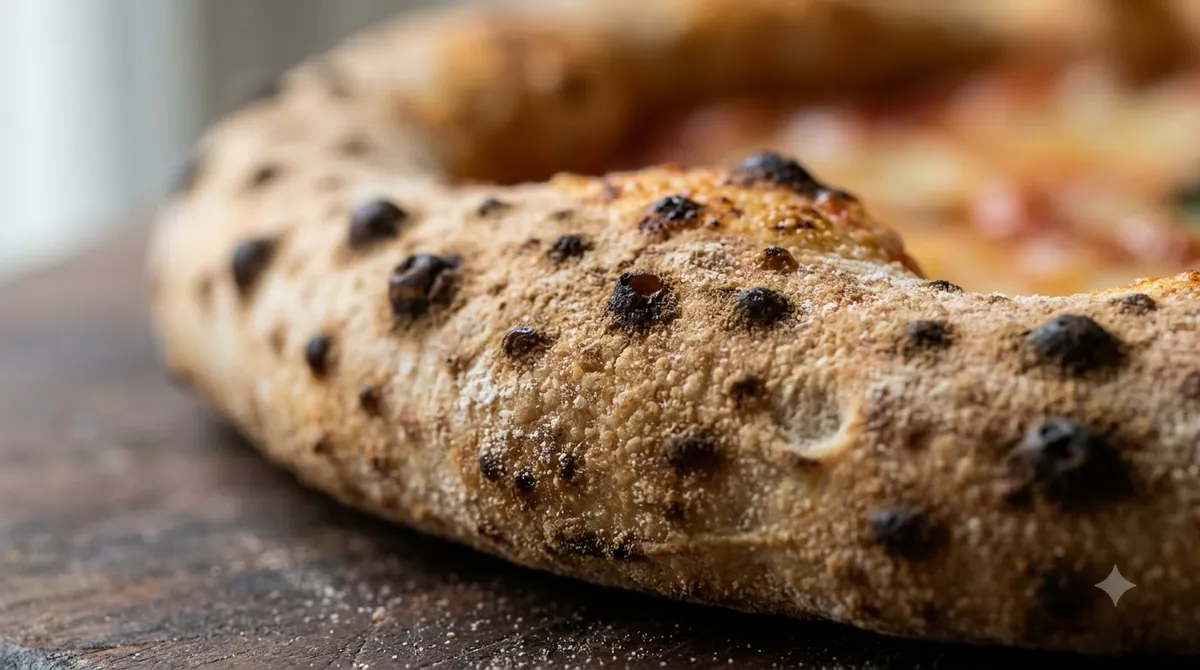
Check the bottom and edges often. A darker crust can look finished before the center is cooked through, so judge doneness by the color of the crust and the firmness of the center together.
Dust the peel with flour or semolina before you slide the shaped dough onto it, which keeps the dough from sticking at the critical moment.
Let the oven and stone heat fully between pizzas as well, because a cool stone makes the next crust slower to brown.
Common Problems with Whole Wheat Pizza Dough
Most problems with whole wheat dough come from too little water or too little rest, and both are simple to fix.
- Tight dough that tears: add water a spoonful at a time, then rest the dough for 10 minutes before you judge it.
- Dense, heavy crust: the mix may hold too much whole wheat, so raise the bread flour share.
- Dough that springs back: rest it longer before you stretch it.
- Dry, crumbly edges: add water in small amounts, as the flour guide advises.
- Gummy center: give the crust more time on the hot surface, and check that the dough is not too thick at the middle.
Change one variable at a time so you know what worked. Keep a short note of the water amount, the rest time and the result for each batch.
Frequently Asked Questions
Can I make whole wheat pizza dough with only whole wheat flour?
Yes, but expect a firmer, denser crust and more water. Blending in bread flour, as America’s Test Kitchen’s recipe does, gives more stretch and a lighter texture. Start with a blend, then move toward more whole wheat once you know how your dough behaves.
Why is my whole wheat pizza dough dry?
Whole wheat flour absorbs more water than white flour, so a white-flour recipe often turns out dry when you switch. Add water in small amounts and rest the dough before adding more, since the flour needs time to take up the liquid.
Do I need to chill whole wheat pizza dough?
The tested recipe refrigerates the dough for at least 18 hours, and up to two days, and that cold rest makes the dough easier to stretch. If you are short on time, you can bake after a shorter rest, but expect the dough to resist more when you shape it.
Can I mix whole wheat pizza dough in a stand mixer?
A stand mixer with a dough hook should be able to do the job, though the tested recipe uses a food processor. Add the ingredients in the same order, mix until no dry flour remains, rest the dough, then knead until it is smooth and pulls cleanly from the bowl. Stop the machine often to check the dough.
Is whole wheat pizza dough healthier than white flour dough?
Whole wheat flour keeps the bran and germ, so it is less refined than white flour. Whether a meal is healthier depends on the toppings and the portion size, so treat the switch mainly as a choice of flavor and texture.
If your first batch turns out dense or dry, change one thing at a time, starting with the water and the bread flour share. Whole wheat dough rewards patience, so give it the rest it needs before you judge the result.