
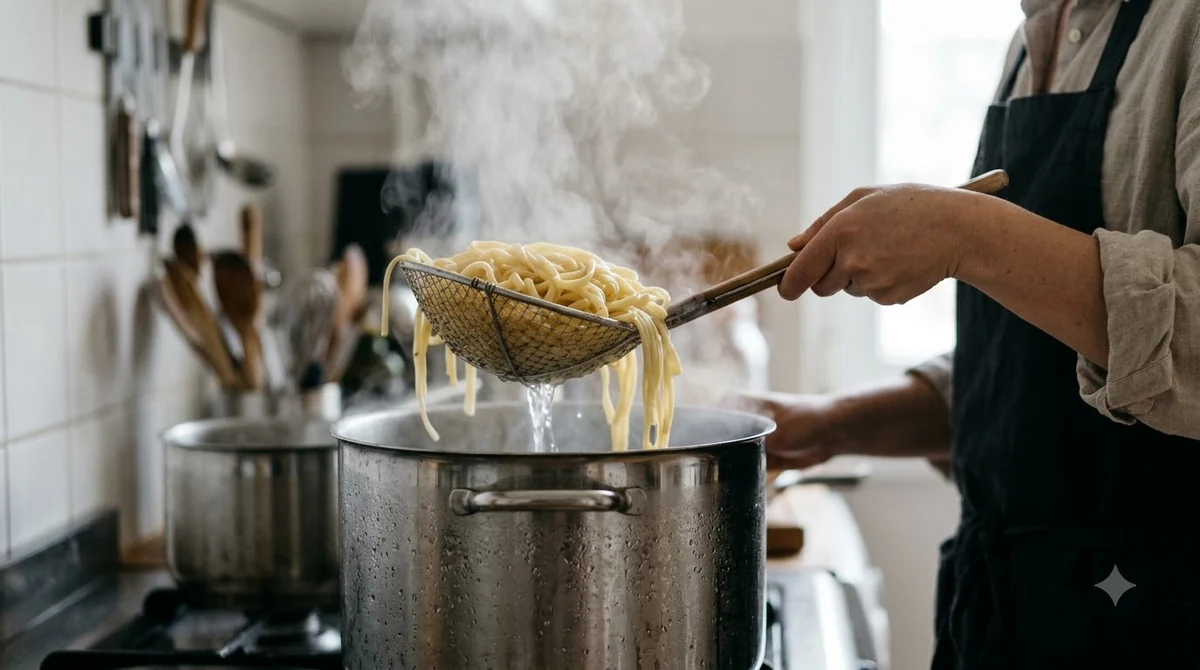

Spaghetti pasta is a long, thin Italian pasta made from durum wheat semolina and water. It is one of the most widely eaten pasta shapes, and it is cooked in boiling salted water until al dente. Its long strands suit light oil-based sauces and smooth tomato or cheese sauces that cling to each noodle.
What Is Spaghetti Pasta?
Spaghetti pasta is a long, thin pasta from Italy, most commonly sold in lengths of 25 to 30 cm (10 to 12 in), and made from milled wheat and water.
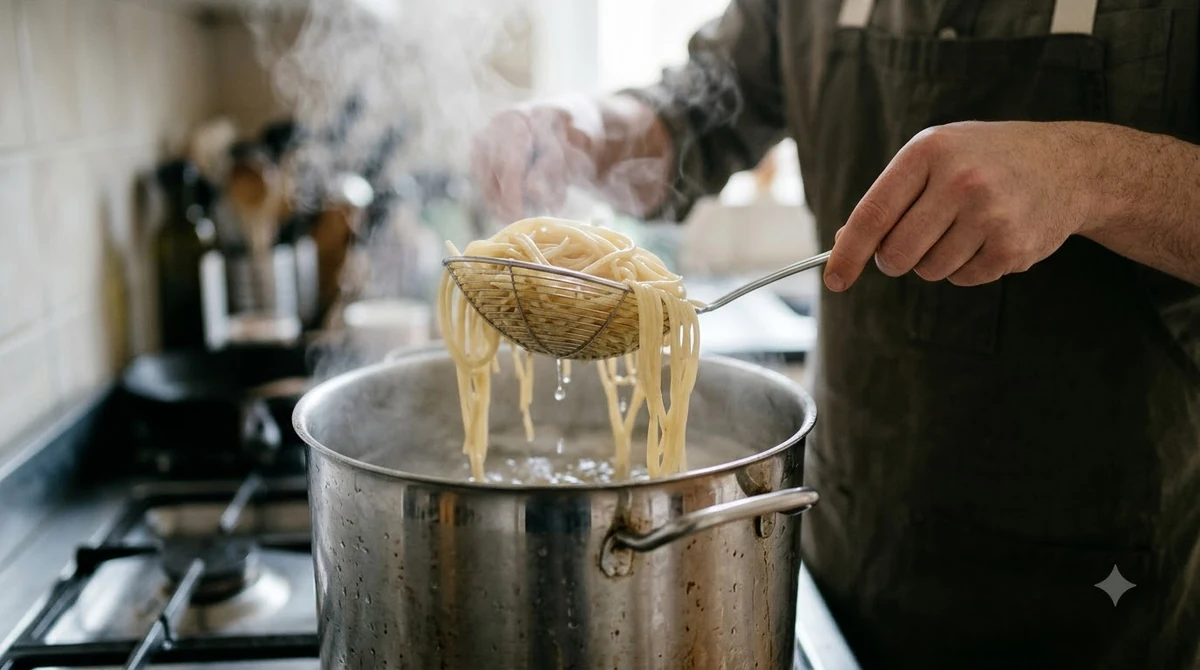
According to Wikipedia’s spaghetti article, the pasta is made of milled wheat and water, and the standard Italian version uses durum wheat semolina.
Spaghetti is one of the most widely eaten pasta shapes, and its thin, round form lets sauce coat every strand evenly. That makes it a practical match for many sauces, from simple olive oil to tomato-based ones. Thinner cord-shaped strands are covered in our guide to what vermicelli is.
Where Spaghetti Came From
The first recorded thin dried pasta of this kind appeared in Trabia, near Palermo in Sicily, but the exact origin of spaghetti pasta is still debated.
Early dried pasta took a long time to make ready. A late 15th century account describes twelve days of drying in the summer as typical for Sicilian macaroni, and cooking times were once very long as well.
Some historians also link spaghetti to an ancient thin, unleavened Middle Eastern bread called lakhsha, so the family tree of the dish is broader than Italy alone. Pairing pasta with tomato sauce was established in Naples by the 17th century.
Spaghetti and Related Shapes
Spaghettini is a thinner version of spaghetti, spaghettoni is a thicker one, and vermicelli sits between the standard shape and the thinnest strands. Thickness changes how a shape cooks and how well a sauce sticks to it. For the thinnest strands, see capellini vs angel hair. If you want a thick, hand-rolled cousin made from flour and water, pici pasta is the Tuscan answer.
| Shape | Thickness | Compared with spaghetti |
|---|---|---|
| Capellini | Very thin | Much thinner, suits delicate sauces |
| Spaghettini | Thinner | A thinner form of spaghetti |
| Vermicelli | Intermediate | Falls between the thin and standard shapes |
| Spaghetti | Standard | The reference shape for this guide |
| Spaghettoni | Thicker | A thicker form of spaghetti |
Is spaghetti the same as spaghettini? No. Spaghettini is a thinner form, so it suits lighter sauces, while standard spaghetti holds up better under a heavier tomato or meat sauce.
How to Cook Spaghetti Pasta
Cook spaghetti pasta in about 4 quarts of water for each pound, with 1½ to 2 tablespoons of kosher salt, and add the salt once the water starts to boil.
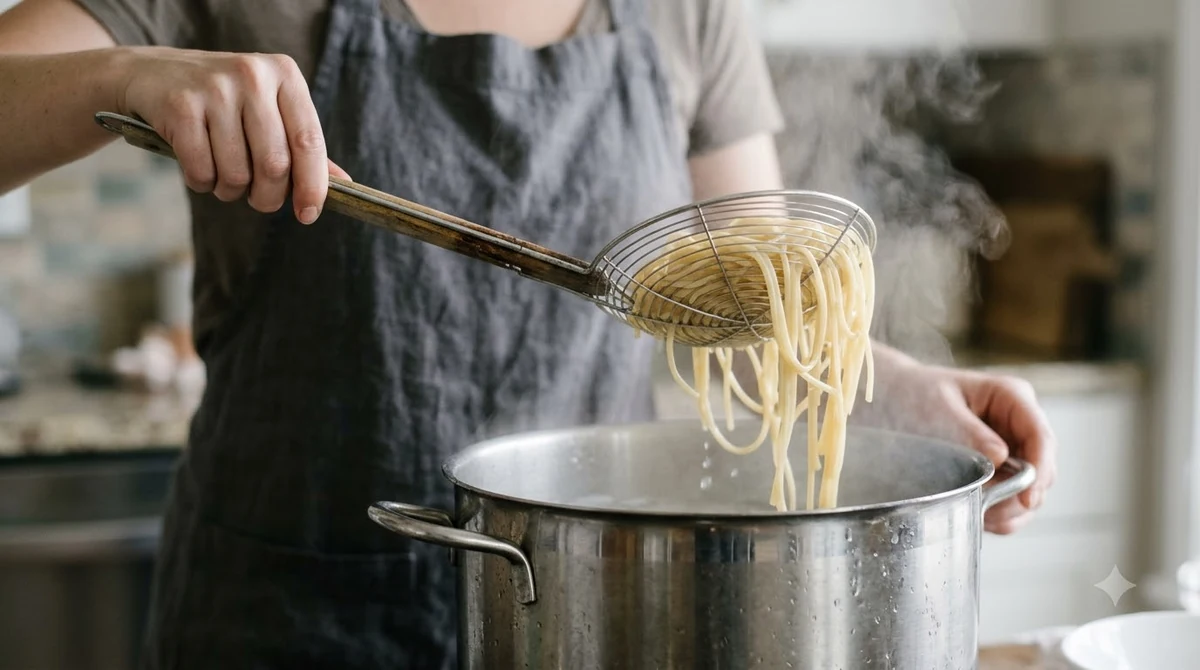
- Bring about 4 quarts of water to a boil for every pound of pasta. Eataly’s guide to cooking pasta recommends this ratio.
- Once the water boils, add 1½ to 2 tablespoons of kosher salt, just before the pasta goes in.
- Add the spaghetti and stir. Remove the lid if the water starts to bubble over.
- Start testing 2 minutes before the suggested al dente time on the package. Al dente means the pasta still has some bite once cooked.
- Before draining, reserve up to 1 cup of the cooking water, as Food Network advises.
The starchy water helps bind the sauce. If the sauce looks dry, add a ladleful of the pasta water, which keeps the starch from the pasta and thickens the sauce.
The Best Sauce for Spaghetti: Classic Choices
Tomato sauce is a frequent partner for spaghetti pasta, with amatriciana and carbonara as the best-known named dishes, and grated hard cheese as the usual finish.
Spaghetti is often served with tomato sauce, sometimes with herbs, olive oil, meat or vegetables. The classic pairings below are the ones that show up most often in Italian cooking.
- Tomato sauce with herbs and olive oil
- Amatriciana, one of the named classic dishes
- Carbonara, another named classic
- Vegetable or meat sauces for a heartier plate
Grated pecorino Romano, Parmesan or Grana Padano is the usual finish. Add a splash of pasta water before the cheese so it clings to the strands instead of clumping.
Homemade Spaghetti: What It Takes
Homemade spaghetti starts with the same basic ingredients as the dried version: milled wheat and water, with durum semolina as the standard choice in Italy.
Dried spaghetti pasta is shaped and then left to dry slowly. Historical records show twelve days of drying as typical in summer for Sicilian macaroni in the late 15th century, so drying has always been a long step.
Fresh and dried spaghetti do not share the same cooking time, so follow the timing in your recipe or on the package.
How Long Spaghetti Pasta Lasts and How to Store It
Store dried spaghetti pasta in a cool, dry place, where it stays fresh for up to two years when properly stored, according to a Chowhound storage guide.
Refrigeration is not necessary for dried pasta. Once a box is open, move the spaghetti into a zip-top bag or an airtight jar so it stays dry. In humid kitchens, a silica gel packet placed with the pasta helps guard against moisture.
Cooked spaghetti is a different case. The same guide says cooked dried pasta should be eaten within five days, so cook only the amount you plan to serve.
Check for signs of spoilage before you cook. Discard the pasta if you see mold or fuzz, or if it smells sour, rotten or musty.
- Mold, fuzz or other visible growth: throw the pasta away
- Sour, rotten or musty smell: replace the package
- Stale texture without other signs: quality has faded, but the pasta is usually still safe
Quality declines before safety. The same guide notes that spoilage is mainly a quality issue, and that it is extremely rare for pasta to become dangerous to eat.
Spaghetti Substitutes That Work
If you run out of spaghetti pasta, pick a long pasta of similar thickness, such as linguine, fettuccine pasta or bucatini pasta, and cook it to the package time. See linguine vs spaghetti and bucatini vs spaghetti for close comparisons.
- Linguine: long and flat, a close match in length
- Fettuccine: wider flat ribbons for richer sauces
- Bucatini: thick, spaghetti-like, with a hole through the center
- Capellini or angel hair: very thin, for light sauces only
Substitutes change texture and cooking time. Wider or hollow shapes hold heavier sauces differently, so adjust the sauce to match the shape you use.
Frequently Asked Questions
What is spaghetti pasta made of?
Spaghetti pasta is made from milled wheat and water, and the standard Italian version uses durum wheat semolina.
How long is spaghetti?
Spaghetti is most commonly available in lengths of 25 to 30 cm, or 10 to 12 inches. Check the package for the exact length, since brands can vary slightly.
How much water do I need for spaghetti?
Use about 4 quarts of water for each pound of spaghetti, with 1½ to 2 tablespoons of kosher salt. Add the salt once the water boils, just before the pasta goes in.
Is spaghetti the same as spaghettini?
No. Spaghettini is a thinner form of spaghetti, while spaghettoni is thicker. Spaghettini suits lighter sauces, and standard spaghetti suits most tomato and meat sauces.
What is al dente?
Al dente describes pasta that still has some bite once cooked. Start checking 2 minutes before the suggested time on the package, and taste a strand to decide.
How long does dried spaghetti last?
Dried spaghetti stays fresh for up to two years when stored in a cool, dry place. Once cooked, eat it within five days, and discard any pasta with mold or a sour smell.
Can I use another pasta instead of spaghetti?
Yes. Linguine, fettuccine and bucatini are common substitutes. Choose a shape with a similar thickness, and cook it to its own package time.
Choose spaghetti pasta when you want a long, thin shape for light oil or tomato sauces, and pick spaghettini or spaghettoni only when the sauce or texture calls for it. Keep a cup of the cooking water on hand, because it is the easiest way to fix a dry sauce.