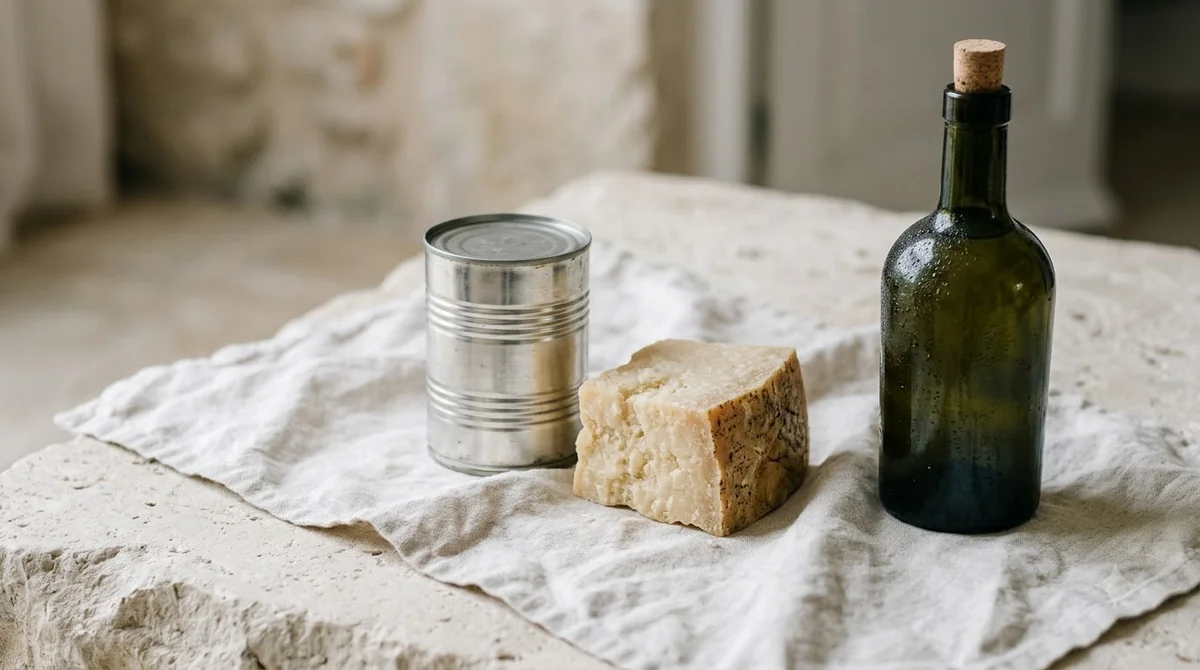

The answer to what does DOP mean is Denominazione di Origine Protetta, the Italian name for protected designation of origin (PDO), an EU label for food whose name is tied to one specific place. A DOP label confirms that a food is made in its named region using local methods. It describes where and how a product is made, not how good it tastes.
What Does DOP Mean on Food Labels?
DOP is the Italian abbreviation of Denominazione di Origine Protetta, and its English equivalent is protected designation of origin, usually written as PDO. The term is used on food from Italy and across the European Union, where the same scheme protects names of regional products.
The EU runs three food name schemes: protected designation of origin (PDO), protected geographical indication (PGI) and traditional speciality guaranteed (TSG). PDO is the one that carries the DOP label. According to the European Commission’s quality scheme guide, PDO names are those with the strongest links to the place where they are made.
On a food package, what does DOP mean is always the EU and Italian origin scheme described here, so you can ignore any other use of the abbreviation.
What Does DOP Mean for Production Rules?
A DOP product must be made, processed and prepared in its named region, and its raw materials must come from that area.
The Commission’s guide states the rule plainly: every part of the production, processing and preparation process must take place in the specific region. That covers the stages from raw material to finished product, not only the final packing step.
Kalamata olive oil is the guide’s example of a PDO, and our guide to what is extra virgin olive oil explains how olive oil grades work. Its olive varieties come from the Kalamata area, so the name ties the oil to both the place and the trees grown there. A producer outside that area cannot use the name just because the recipe is similar.
This is also why the name matters when you buy. A DOP label tells you the product went through a defined chain in one place, so you can compare it with a similar product that carries no protected name. Ask what does DOP mean for that specific product, then check where the producer says the work happens.
The rule also reflects traditional practice. According to The Local Italy, DOP products usually also show that the producer followed traditional methods. The certification confirms origin and production rules, but the label does not say the product is the best of its kind.
DOP vs PGI vs TSG
DOP is the strictest of the three EU food schemes, PGI needs only one production stage in the region, and TSG protects a traditional method rather than a place.
| Scheme | Link to place | Production rule | Example |
|---|---|---|---|
| PDO (DOP) | Strongest link to the place | Every stage in the region, raw materials from the area | Kalamata olive oil |
| PGI (IGP) | Quality or reputation tied to the region | At least one stage in the region, raw materials can come from elsewhere | Westfälischer Knochenschinken |
| TSG | Not tied to a place | Traditional method or composition is protected, and the product can be made elsewhere | Gueuze |
The practical difference in what does DOP mean versus PGI is where the work happens. A PDO needs the whole chain in one place, while a PGI can be prepared partly elsewhere. If you see IGP on an Italian product, that is the Italian name for PGI, the less strict of the two place-based labels.
Comparing what does DOP mean with PGI and TSG is easier when you ask three questions: where the link to the place comes from, which steps must happen locally, and whether the raw materials are local too. PDO answers yes to all three. PGI answers yes only to the production step, and TSG rests on the traditional method rather than the map.
For a home cook, the table answers what does DOP mean in practice. If a recipe calls for a DOP ingredient, the producer had to meet the full regional rule. If the label says PGI, the link to the region is real but looser.
What Does DOP Mean for Quality? Is It a Quality Mark?
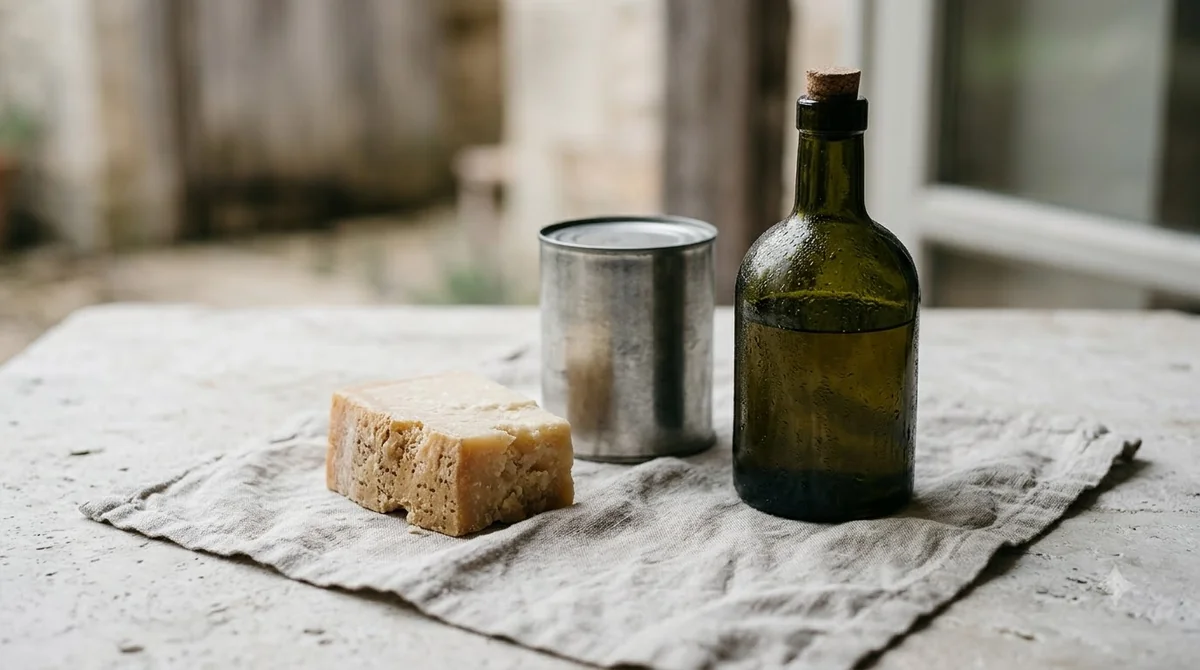
No. A DOP label describes where and how a product is made, not how good it tastes.
The Local Italy explains that the DOP label “isn’t a quality mark; it refers only to how and where the product is made or grown.” The main exception it names is DOCG wine, which must also pass a tasting panel. For other DOP foods, the label confirms origin and method only.
Many DOP products are good in practice, the same article notes, because they often come from small artisan producers. That is a reason to check the producer and ingredients, not a guarantee. A product without the label can also be excellent.
If you only remember one thing about what does DOP mean, remember this: the DOP seal is a statement about origin and process. It does not rank one product above another, and it does not replace a tasting in your own kitchen.
What Does DOP Mean on the Package? How to Spot It
Look for the red-and-yellow DOP seal and the name of the certifying body on the package.
Use this checklist to see what does DOP mean on a real label:
- The words Denominazione di Origine Protetta or the DOP abbreviation
- The red-and-yellow seal, which carries the name of the certifying body
- A protected product name, such as Kalamata olive oil, not a generic description
- A name you can confirm in the EU register
Registered names are listed in the eAmbrosia database, which the Commission’s guide points to for registration details. Search the product name there before you rely on the label. A name that does not appear in the register does not carry EU protection.
What Does DOP Mean When You Cook?
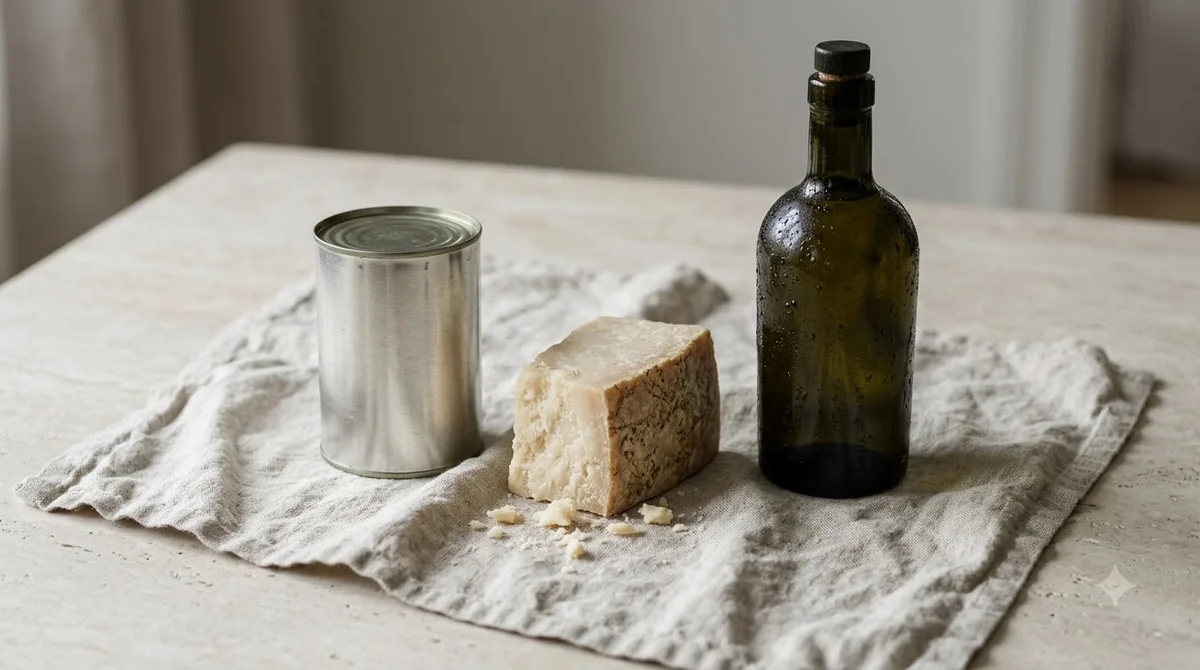
A DOP name ties an ingredient to one region and its methods, so check the label before you swap it in a recipe.
The label tells you where a product was made and under which rules. It does not tell you how the product will taste in your dish. Two DOP products from the same country can differ, and a non-DOP product can suit a recipe well.
When a recipe names a specific DOP ingredient, such as the cheese in Parmigiano Reggiano vs parmesan or the tomatoes in homemade marinara sauce, buy that product if the origin matters to the dish. If the recipe only needs a general type of cheese, oil or ham, a good non-DOP version is a reasonable choice.
In practice, a DOP label is a reason to read the package, not a reason to pay more. Buy the DOP version when the recipe depends on that specific regional product, such as a cheese that is central to a traditional dish, and spend your budget elsewhere otherwise.
Frequently Asked Questions
What does DOP mean, and is it the same as PDO?
Yes. DOP is the Italian abbreviation of Denominazione di Origine Protetta, and protected designation of origin (PDO) is the English term for the same EU food scheme. Both terms describe a food name tied to one specific place and its production rules, so you can treat them as equivalent when reading a label.
What does DOP mean for quality: is a DOP product better?
Not necessarily. According to The Local Italy, DOP is not a quality mark. It refers only to how and where a product is made or grown. Many DOP products are good because they often come from small artisan producers, but a non-DOP product can also be high quality.
Can a product use the DOP name if it is made elsewhere?
No. Selling a product under a DOP name when it does not meet that DOP’s criteria is illegal, according to The Local Italy. The Commission’s guide says every part of production, processing and preparation must take place in the named region, so a product made elsewhere cannot qualify.
How do I check whether a name is registered?
The European Commission’s guide points to the eAmbrosia database for registered names. Search the product name there to confirm it is a registered EU food name. If the name does not appear, it does not carry EU protection, so read the label closely before you trust it.
Is IGP the same as PGI?
Yes. IGP is the Italian name for PGI, protected geographical indication. The rule is looser than DOP: at least one stage of production, processing or preparation must take place in the region, and raw materials need not come from the area. The Commission’s guide uses Westfälischer Knochenschinken, a Westphalian ham, as a PGI example.
Does DOP mean organic?
No. DOP describes a link to a specific place and its production rules, and it is not an organic certification. If organic status matters to you, look for a separate organic label on the package and read the producer’s description to confirm.
Now that you know what does DOP mean, if you are shopping for a DOP ingredient, read the seal, the certifying body and the place name before you buy. Use DOP as a guide to where a product was made, then judge the rest by ingredients and taste. In a recipe, a DOP name is a signal to check the origin, not a promise of a particular flavor. For more label explainers, see our learn guides.