
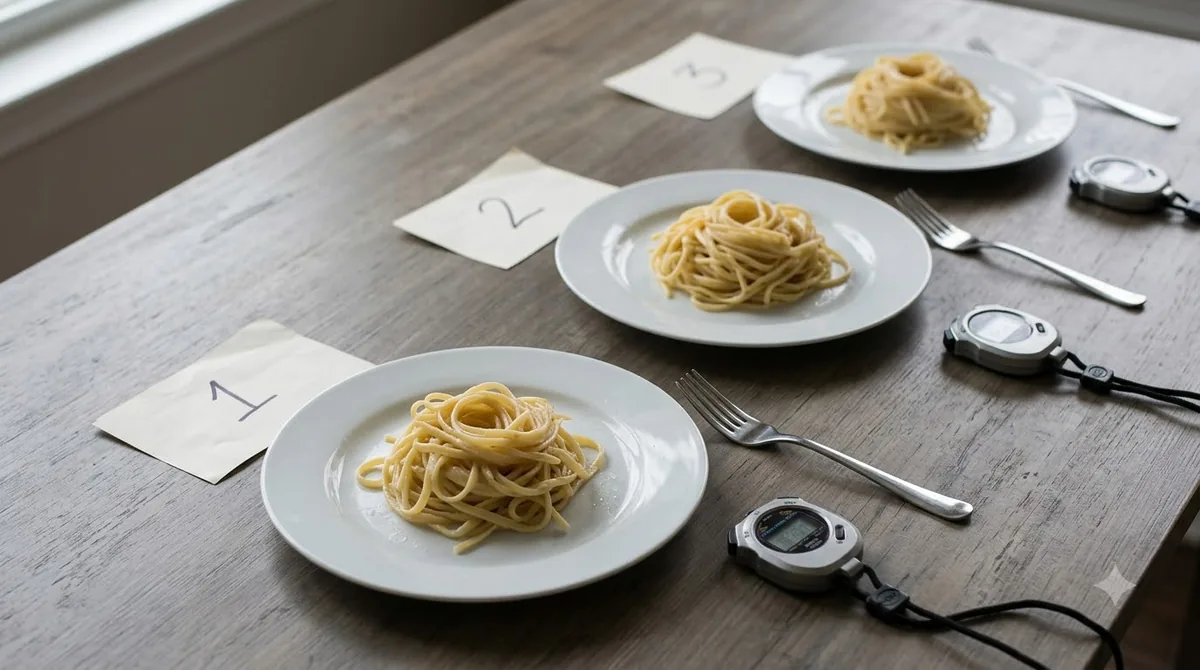

What is vermicelli? It is a thin, cord-shaped pasta. Under US federal rules it is not more than 0.06 inch across, which makes it thinner than spaghetti. The name is Italian and means “little worms,” a reference to its shape.
Vermicelli also names rice noodles used across Asian cooking, and those are a different product from Italian wheat pasta. Knowing what is vermicelli on your label decides how you cook it and whether you can swap it for another strand.
What Is Vermicelli and Where the Name Comes From
Vermicelli is a long, thin strand pasta whose Italian name translates to “little worms,” which describes its shape. The English word comes from the Italian vermicello, a diminutive of “worm” that traces back to the Latin vermis.
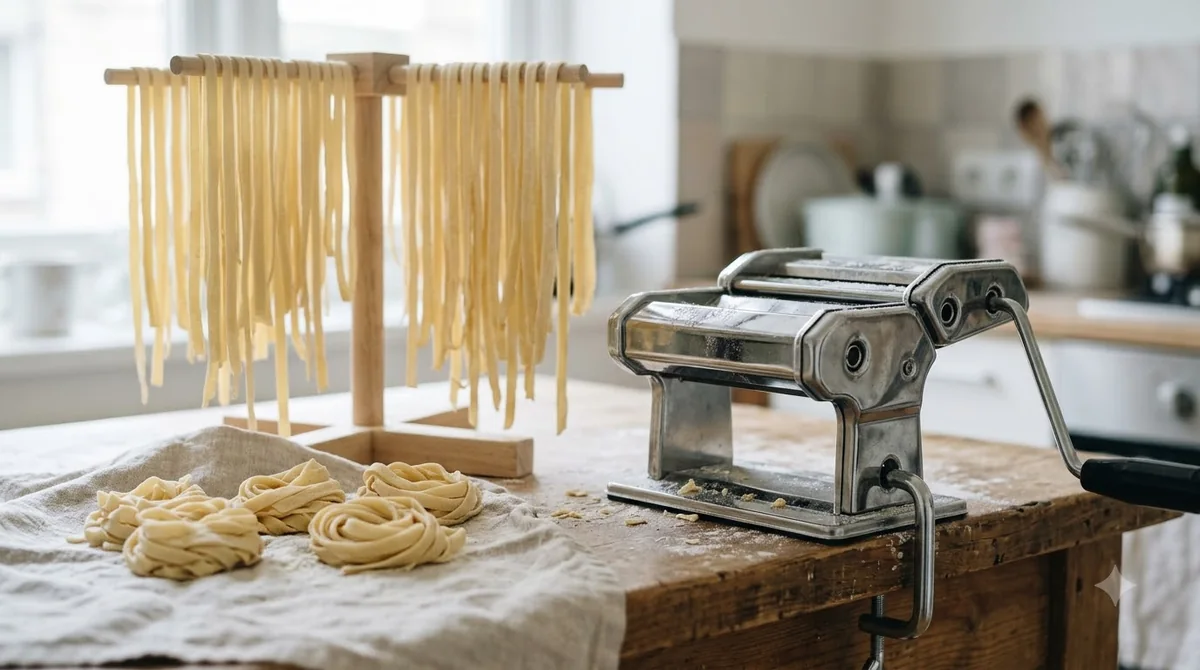
In everyday use, the term describes a solid, cord-shaped strand, so it sits in the same family as spaghetti rather than with tube-shaped pastas such as penne. The key point is the shape: vermicelli is solid, not hollow, and it is narrower than most long pasta sold in US supermarkets.
People often ask what is vermicelli when a recipe lists it next to spaghetti or angel hair and they want to know whether the swap changes the dish. The name is a starting point, but the diameter and the base ingredient decide the rest. Both are worth checking before you buy, because two boxes can share a name and still hold different products.
What Is Vermicelli Compared With Spaghetti
In the US, vermicelli is cord-shaped pasta not more than 0.06 inch in diameter, while spaghetti runs from more than 0.06 inch up to 0.11 inch. Those bands come from the Code of Federal Regulations, section 139.110, which sets the definitions for macaroni products.
| Pasta | US diameter rule | Shape rule |
|---|---|---|
| Vermicelli | Not more than 0.06 inch (about 1.5 mm) | Cord-shaped, not tubular |
| Spaghetti | More than 0.06 inch, up to 0.11 inch | Tube-shaped or cord-shaped |
For a plain answer to what is vermicelli in US terms, the rule is the clearest yardstick for a thin strand. According to the federal definition, a product that measures above 0.06 inch cannot be labeled vermicelli under that standard, so the number does the work that the name alone cannot.
Cooks who follow a recipe written outside the US should keep this in mind. A recipe from another country may call for vermicelli and mean a strand that is thicker than the US product, so a quick look at the size stated on the package helps you match the right strand. When the label gives no size, the sauce and the dish are a good guide to what the recipe expects.
Italian usage runs differently. Per Wikipedia’s entry on the pasta, vermicelli is generally thicker than spaghetti in Italy, so the same word can describe a slightly heavier strand there. The trade-off is simple: for a thin strand on a US shelf, the label rule is the safer guide, while an imported box may follow Italian sizing.
What Is Vermicelli Made From: Wheat or Rice
Wheat vermicelli is usually made from durum semolina, while rice vermicelli is a thin noodle made mainly from rice. The two share a name and a slim shape, but the base ingredient is the real difference.
Dried Italian-style vermicelli is typically milled from durum wheat semolina, a coarsely ground flour. Wikipedia’s vermicelli entry describes semolina as the usual base, and that is the flour you will see first on most Italian-made boxes.
- Wheat vermicelli: made from durum semolina, the common Italian form.
- Rice vermicelli: a thin rice noodle, with rice as the main ingredient.
- Bihon: the Filipino name for rice vermicelli, sometimes made from cornstarch and sold as cornstarch sticks.
Checking the base ingredient prevents the common mistake of buying rice vermicelli for a recipe written for wheat pasta, or the reverse. The two are not interchangeable when a recipe calls for a specific base, so match the base to the dish before you shop.
Where Vermicelli Shows Up in Cooking
Rice vermicelli appears in soups, stir-fries and salads across Southeast Asia, while wheat vermicelli is the strand used in Italian pasta dishes. Asking what is vermicelli in a Southeast Asian kitchen gives a different answer than in an Italian one. Wikipedia’s rice vermicelli entry notes that it is often eaten as part of a soup, stir-fry or salad.
The entry names several dishes that use it:
- Vietnamese bun dishes, which pair it with herbs and grilled toppings.
- Indonesian soto mie, a noodle soup.
- Malaysian laksa, a spiced noodle soup.
- Filipino pancit bihon, a stir-fried noodle dish.
Wheat vermicelli is the Italian strand you would use in a pasta dish, where the thin shape suits a sauce, such as a light tomato sauce, that clings to a fine strand. This section covers which dishes use each noodle, not cooking times, so check the package directions for those. For a small Sardinian pasta that is toasted rather than cut thin, see our fregola guide.
What Is Vermicelli Compared With Angel Hair and Other Thin Pastas
Angel hair, also called capellini, is one of the thinnest strand pastas and is thinner than vermicelli in US usage. Our angel hair pasta guide covers that shape in detail, and the capellini vs angel hair comparison explains how the two names differ. Its Italian name, capelli d’angelo, means “angel’s hair,” which reflects how fine it is.
In short, what is vermicelli next to angel hair? The diameter gives the simplest answer. Angel hair and capellini are very close in thickness and are often sold under either name, and both sit at the fine end of the strand family. Vermicelli is a little heavier by the US rule, so the two are not perfect swaps, though they share a similar role on the plate.
The thin pasta family is confusing because several names describe strands that look alike at a glance. Thin egg ribbons such as tagliolini add to the confusion, and capellini pasta is another thin strand sold under its own name. A useful habit is to compare the package diameter rather than the name, since labels in different countries use the same terms in different ways.
What Is Vermicelli at the Store: How to Read the Label
To tell what is vermicelli on a package, make three checks. On US packaging, the product name, the ingredient list and any gluten statement show the base and the type of the product. Reading those three things takes less than a minute and avoids most mix-ups.
- Check the name on the front. A US product labeled vermicelli should match the federal size and shape rule.
- Read the ingredient list for semolina, durum wheat, rice or starch.
- Look for a gluten statement, since the base can be wheat, rice or starch, and the base decides whether the noodle contains gluten.
Frequently Asked Questions
Is vermicelli thinner than spaghetti?
Yes, under the US federal definition. Vermicelli is not more than 0.06 inch across, while spaghetti is more than 0.06 inch and up to 0.11 inch. Italian usage can differ, so check the product label if size matters for your recipe.
Can vermicelli substitute for spaghetti?
Often, in dishes where a thinner strand suits the sauce. Before you swap, check what the original recipe needs from the pasta. Because the strand is thinner, check the package directions for cooking time before swapping, since the thinner shape may need a different timing.
Is vermicelli the same as angel hair?
No. Angel hair, also called capellini, is thinner. Both are long strand pastas, so vermicelli is a strand that sits just above angel hair on the size scale.
Is rice vermicelli gluten-free?
Rice itself is naturally gluten-free, but the base ingredient varies by product, so check the label for a gluten statement before you buy.
What is vermicelli made from?
Wheat vermicelli is usually made from durum semolina. Rice vermicelli is made mainly from rice, and some Filipino bihon uses cornstarch instead.
Is rice vermicelli the same as Italian vermicelli?
No. What is vermicelli in an Asian recipe? A thin rice noodle, while Italian vermicelli is a wheat pasta made from durum semolina. They share a thin shape and a name, but the base ingredient and the dishes they suit are different.
Once you know what is vermicelli in your recipe, start with the base: wheat vermicelli for Italian dishes, and rice vermicelli for Southeast Asian soups and salads. Then check the diameter if the recipe depends on a thin strand. Matching the type to the dish saves a second trip to the store.