
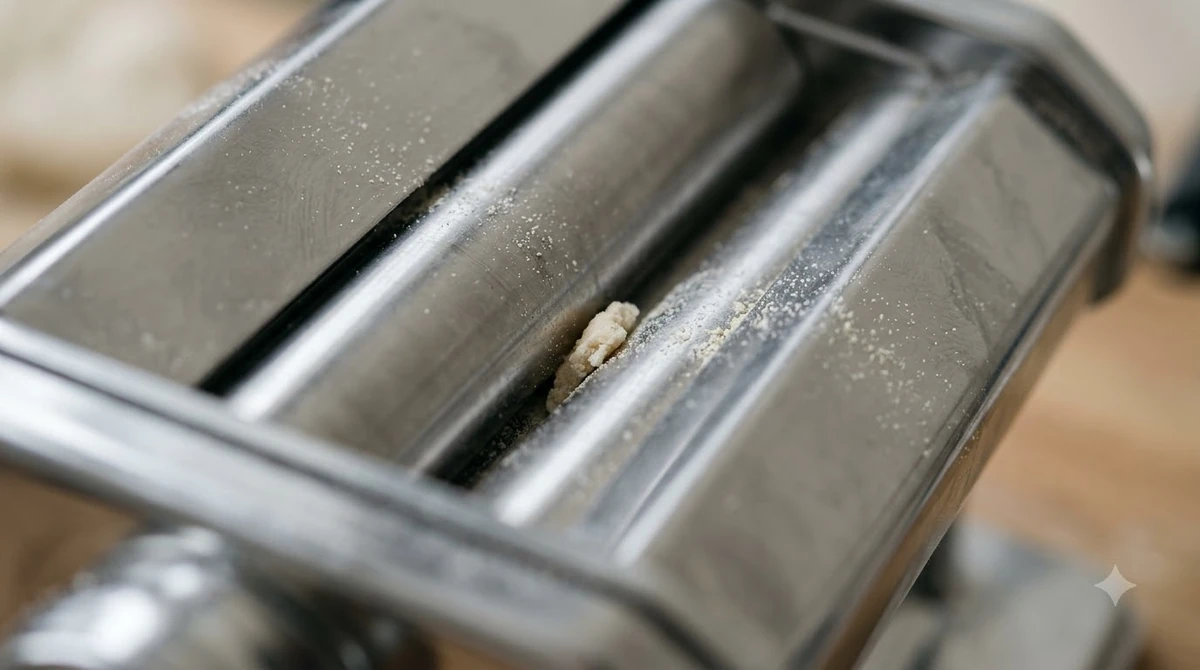

How to clean Marcato Atlas 150 comes down to brushing off dough, wiping the parts dry, and never putting the machine under running water or in the dishwasher. The Marcato instruction booklet sets those rules directly, and they apply to every part of the machine.
This guide on how to clean Marcato Atlas 150 covers the rollers, the cutting combs, oiling, and storage. The booklet is the main source for each step, and a second cleaning guide fills in the storage advice.
Why the Atlas 150 Must Stay Dry
Marcato’s booklet says the machine and its accessories must never be washed in water or in a dishwasher. That single rule shapes every cleaning step that follows. Read the Marcato instruction booklet care section yourself before your first cleaning session, and see the general guide on how to clean a pasta machine for the basics shared by every model.
Water is not the only risk. King Arthur’s pasta maker guide warns that the heat and detergents in a dishwasher can damage the parts. Dried dough is the other problem. Residue left on the rollers keeps them from producing smooth strands, and dough that dries inside the machine can jam it. Other machines have their own rules, and the steps for a stand mixer attachment are in how to clean a KitchenAid pasta roller.
The practical rule for how to clean Marcato Atlas 150 is simple: remove dough while it is still loose, with dry tools, and let nothing soak.
What You Need to Clean Marcato Atlas 150
You need only a dry brush, a soft cloth, and a small scrap of dough to clean the Atlas 150 well. Oil is needed only when the rollers squeak.
King Arthur’s guide suggests a soft toothbrush or a paintbrush for the outer surfaces, and a dish towel or microfiber cloth for the rods and combs. The dough scrap is for the final pass over the rollers, described in the routine below. Fresh dough from a simple fresh pasta dough recipe works well for it.
Avoid any tool that is wet. A damp brush or towel brings back the water the booklet warns about, so dry every tool before you start.
How to Clean Marcato Atlas 150 Rollers and Cutters After Use
To clean Marcato Atlas 150 rollers and cutters, use a cloth and a brush, not water. The booklet calls for brushing the rollers and comb and wiping the parts, which takes the place of any rinse.
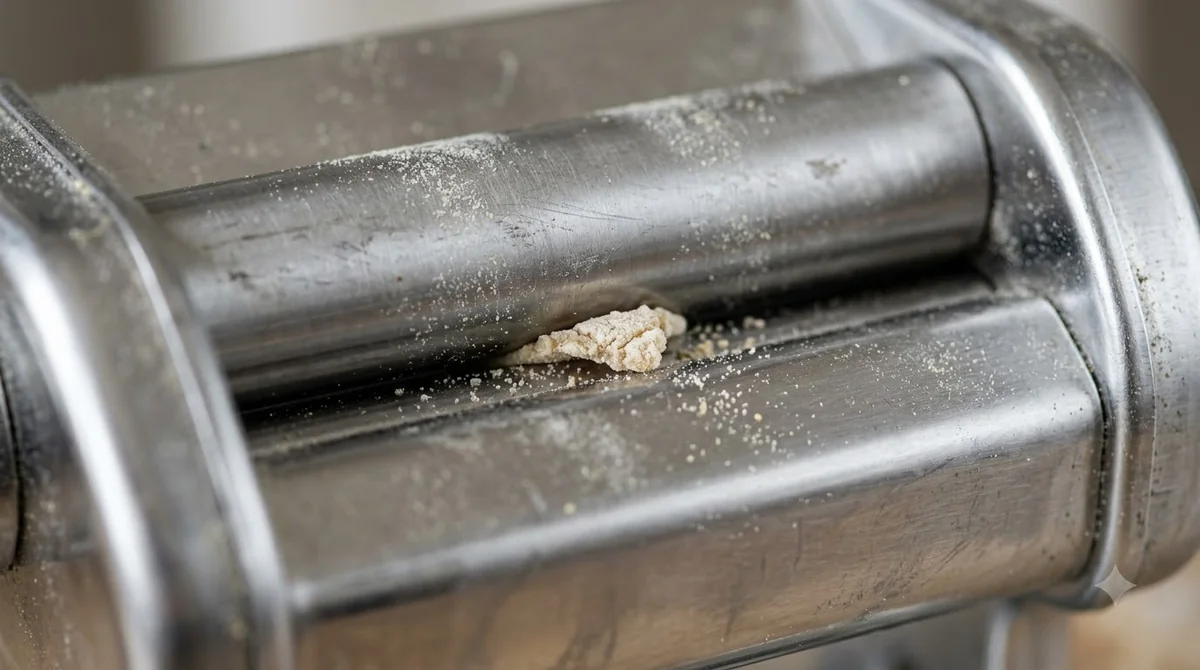
A routine that works for most sessions looks like this:
- Brush the rollers with a dry brush to lift loose flour and dough.
- Wipe the rollers and the outside of the body with a dry cloth.
- Pass a small piece of dough through the rollers to pick up the last residue, then throw that piece away.
The outer surfaces of the body need the same dry treatment. King Arthur’s guide suggests wiping the base and cutter attachment with a dry cloth and a soft toothbrush or paintbrush.
The first time you use the machine, the booklet takes a slightly different route. Clean the rollers with a damp cloth, then pass a little dough through them to remove any residue from manufacturing. Every later session can skip the damp cloth and use the dry routine above.
Removing and Cleaning the Cutting Combs
The cutting combs come out by hand, so you can brush the cutters that a quick wipe misses. Removing them is the only way to reach residue packed between the cutters.
The booklet describes the removal in three moves:
- Press the rod downwards.
- Push the rod sideways.
- Pull the rod out of the central comb hole.
Once the combs are off, brush the rollers and the comb with a dry brush or cloth. Reinsert the rods in the reverse order, one side at a time, so each comb sits back over its matching roller.
King Arthur’s guide also says to let every component dry completely before you put the combs back. The guide mentions a cold-water rinse for the rods and combs, but the booklet rules out water, so stick with dry brushing and wiping.
Oiling the Rollers When They Squeak
If the rollers squeak, the booklet suggests a few drops of Vaseline oil suitable for food contact, placed at the roller ends. Oil only when the squeak appears, not on a fixed schedule. Knowing when to oil keeps the machine running smoothly.
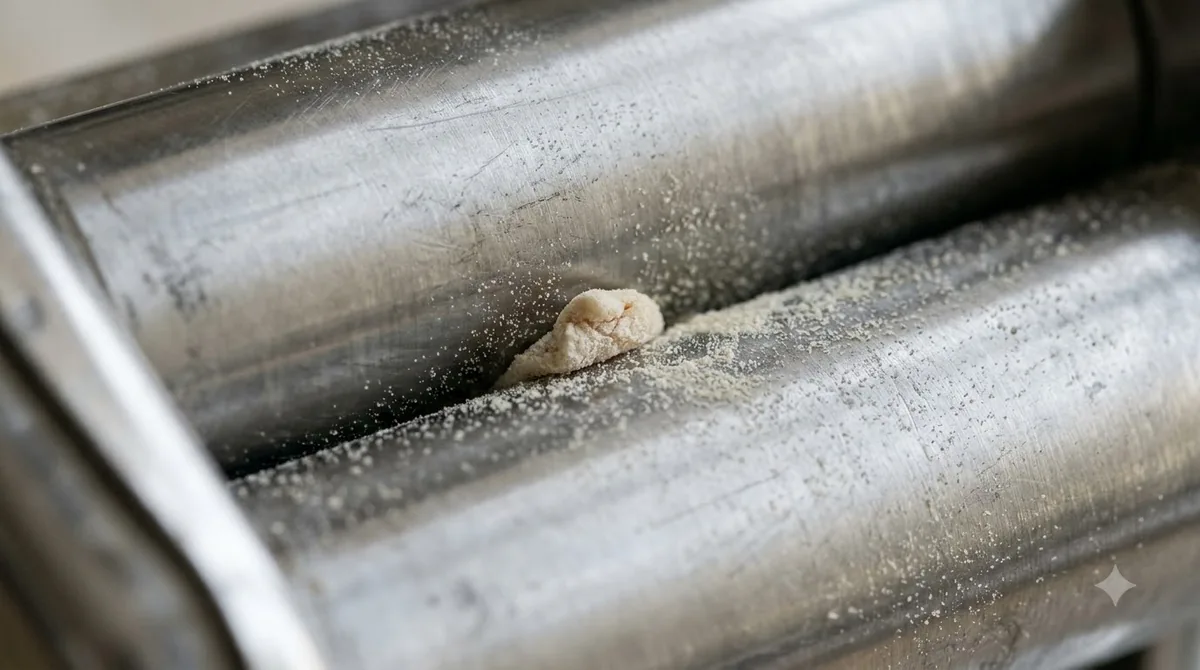
King Arthur’s guide gives the same approach with different wording: a couple of drops of mineral oil or food-grade oil at the ends of the rollers. Either way, the amount is small. Wipe the rollers clean before you oil them, so no dough or flour gets pressed into the oil.
Storing the Machine Between Batches
Store the Atlas 150 in a dry place, and clean it before you put it away. King Arthur’s cleaning guide gives both points.
Moisture is the main concern in storage, and it matters as much as the cleaning itself when you learn how to clean Marcato Atlas 150. Cleaning first keeps leftover pasta crumbs from attracting pests, and it means the machine is ready for the next batch. Keep the machine out of humid spaces, and check that every part is dry before you close the cabinet or drawer. If you have just made a batch, see how to store fresh pasta in the fridge, freezer or by drying.
Common Cleaning Mistakes to Avoid
The most common mistake is treating the Atlas like a kitchen tool you can rinse. The booklet treats it as a machine to brush and wipe dry. Use this quick reference on how to clean Marcato Atlas 150 before each session. It sums up what to do and what to avoid for every part.
| Part | What to do | What to avoid |
|---|---|---|
| Rollers and cutters | Brush with a dry brush or wipe with a cloth | Running water or soaking |
| Cutting combs | Remove, brush, dry, then reinsert in reverse order | Putting them back while damp |
| Dough residue | Brush out while it is loose | Letting it dry inside the cutters |
| Whole machine | Store in a dry place after cleaning | Dishwasher heat and detergent |
| Roller ends | A few drops of food-contact Vaseline oil when squeaking | Oiling on a fixed schedule |
Two mistakes come up most often. The first is rinsing the parts under the tap because they look dirty, which the booklet rules out. The second is putting the combs back before they are dry. King Arthur’s guide asks you to let every component dry completely before reassembly, so take the extra minutes to dry them first.
Checking Your Model’s Booklet
The Marcato booklet used here is titled for the Atlas Ampia, yet its care section lists the steps for the Atlas 150. Marcato sells several Atlas versions, and the details can differ between them. Before you follow the comb steps for how to clean Marcato Atlas 150, confirm them against the booklet packed with your machine.
If your booklet and this guide disagree, follow the booklet. It comes from the manufacturer and covers your exact model.
Frequently Asked Questions
Can I put my Atlas 150 in the dishwasher?
No. The Marcato booklet says the machine and its accessories must never be washed in a dishwasher. King Arthur’s guide adds that the heat and detergents in a dishwasher can damage the parts. Clean the machine by brushing and wiping it dry every time, and keep it out of the dishwasher even when it looks dirty.
Can I rinse the rollers under the tap?
No. The booklet rules out washing the machine in water, including rinsing the rollers under the tap. Use a dry brush or a cloth for regular cleaning. The only damp-cloth step the booklet describes is the first-use cleaning of the rollers, and it is followed by passing dough through, not by a rinse.
What should I do if the rollers squeak?
Put a few drops of food-contact Vaseline oil at the roller ends, as the booklet suggests. King Arthur’s guide mentions mineral oil or food-grade oil for the same problem. Use only a few drops, and only when a squeak appears. Wipe the rollers clean first so that no dough or flour gets into the oil.
Do I need to clean the machine after every use?
Yes. Cleaning the Marcato Atlas 150 after each session means at least a dry brush and a quick wipe. Brushing residue off while it is loose stops it drying on the rollers, where King Arthur’s guide says it can jam the machine. A longer clean with the combs removed makes sense after a big batch or when residue is packed between the cutters.
Is the Atlas 150 covered by a warranty?
The booklet lists a 10-year warranty against manufacturing defects for Atlas hand models. Check the warranty terms that came with your machine for what is covered and how to make a claim. Follow the booklet’s care steps either way, since they are the manufacturer’s own instructions.
Keep a dry brush and a cloth next to the machine, and clean it while the dough is still soft. Oil only when the rollers squeak, and never wash the machine in water. If you own another Marcato model, check its booklet before you follow these steps, because care instructions can differ. The Marcato Atlas 150 manual guide explains the booklet in more detail, and the Imperia pasta machine guide covers a similar hand-crank design. The booklet is the reference to trust most.