
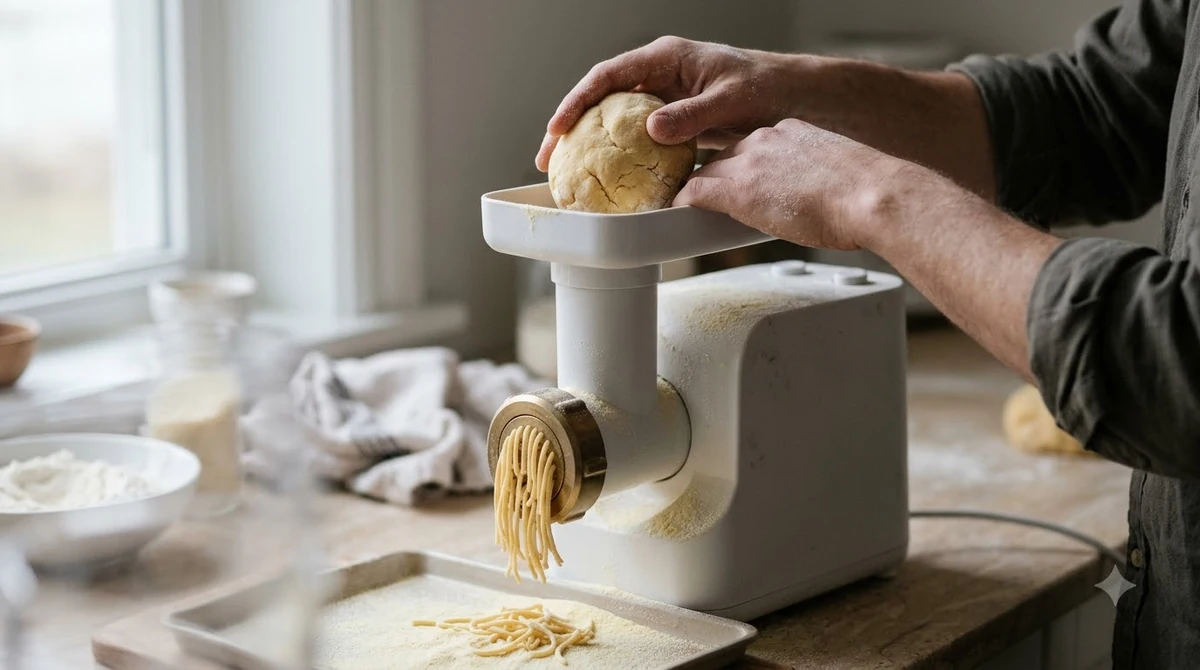

Scialatielli pasta is a short, thick, fresh ribbon from the Amalfi Coast in Campania. It is traditionally made by hand from flour and milk, with eggs in some versions, and it is usually served with seafood or light tomato sauces.
Homemade dough is simple, but it needs a rest and a hand-cut finish. Dried versions are easier to find, though they leave out the milk, basil and cheese of the fresh dough.
What Is Scialatielli Pasta?
Scialatielli pasta is a short, thick pasta with a rectangular cross section and an irregular, slightly curved shape. You may also see the spelling scialatelli, which refers to the same pasta.
Food writer Arthur Schwartz describes its texture as a cross between pasta and gnocchi, which helps explain its soft bite. Unlike spaghetti, scialatielli pasta is not a long strand, so it sits in its own group of hand-cut pastas such as maltagliati pasta.
According to The Pasta Project, the classic piece is about 10 cm long and 10 mm wide, rolled a few millimetres thick before it is cut. Because each strip is cut by hand, the edges are never perfectly even.
The name is uncertain. One theory links it to the Neapolitan verb sciglià, meaning to ruffle. Another combines scialà, meaning to enjoy, with tiella, meaning pan. Neither theory is proven, so treat the name as a clue rather than a fact.
Where Scialatielli Comes From
Scialatielli comes from the Amalfi Coast in Campania, and most accounts credit chef Enrico Cosentino with the modern version.
According to Wikipedia’s entry on scialatielli, Cosentino devised the shape in the late 1960s while working at a local restaurant in Amalfi. The same entry says he gained recognition in 1978 when he won a culinary prize, but it tags that claim as possibly unreliable.
The Pasta Project repeats the 1978 prize date, so the sources do not fully agree on the timeline. Massa Lubrense tourism notes that many sources link the pasta to an earlier, coarser Amalfi Coast pasta. That suggests Cosentino may have popularized the shape rather than invented it.
The Pasta Project describes scialatielli as a Traditional Agri-food Product (PAT) of Campania. Readers who need the official regional listing should check the Campania agriculture website directly.
The Pasta Project also notes that scialatielli pasta is served in Sicily, where it is paired with pistachio pesto. Wikipedia adds that the shape has also reached Catanzaro in Calabria and Potenza in Basilicata, so it has travelled well beyond its home coast.
Scialatielli Compared With Tagliatelle
Scialatielli pasta resembles tagliatelle pasta in shape, but it is shorter, a little wider and cut less evenly by hand. The table shows the main differences.
| Feature | Scialatielli | Compared with tagliatelle |
|---|---|---|
| Length | About 10 cm | Shorter, per The Pasta Project |
| Width | About 10 mm | A bit wider |
| Cut | By hand, slightly uneven | Similar overall shape |
The dimensions above come from one handmade recipe, so the final size depends on how thin you roll the sheet and how you cut it. If a recipe calls for tagliatelle, you can often use scialatielli instead. Expect shorter strands and a slightly wider bite, and check that the sauce still suits that shape before you swap.
Homemade Scialatielli Dough
A classic homemade scialatielli dough uses 200 g of 00 flour, 200 g of durum semolina and 120 ml of milk, according to The Pasta Project.
The The Pasta Project recipe for four also includes 2 tablespoons of extra virgin olive oil, 20 g of grated cheese such as Parmesan, pecorino or caprino, and 4 basil leaves. The milk works out to about 30 ml for every 100 g of flour.
One egg is optional in that recipe, and the original version it describes was egg free. Wikipedia describes the dough as formed with milk and eggs, so you will find both styles in cookbooks and recipe sites.
The Pasta Project notes that the shape is not rolled as thin as tagliatelle. Because the recipes disagree on eggs and liquids, homemade scialatielli pasta varies from house to house, and the recipe you follow decides which ingredients you use.
Knead the dough for 10 to 15 minutes, then rest it for at least 30 minutes before you roll or cut it. Weigh the flour on a kitchen scale so the flour and milk stay close to the recipe ratio. For a version with eggs, compare it with our fresh pasta dough recipe.
How to Shape Scialatielli by Hand
Shape scialatielli pasta by rolling the dough a few millimetres thick, then cutting it into pieces about 10 cm long and 10 mm wide. The pieces should look slightly uneven, which is part of the classic style.
The Pasta Project suggests folding or rolling the dough on itself, then cutting pieces with a knife. Keep each piece close to the 10 cm by 10 mm size so the strands of scialatielli pasta match the traditional proportions.
The Pasta Project says the pieces are cut slightly unevenly, which gives the pasta its rustic look. A light dusting of flour keeps the cut pieces from sticking while you work.
Making Scialatielli With a Pasta Machine
Scialatielli pasta is traditionally hand made, but a pasta machine can roll the sheet to the few-millimetre thickness before you cut by hand. This helps if you want an even sheet with less effort.
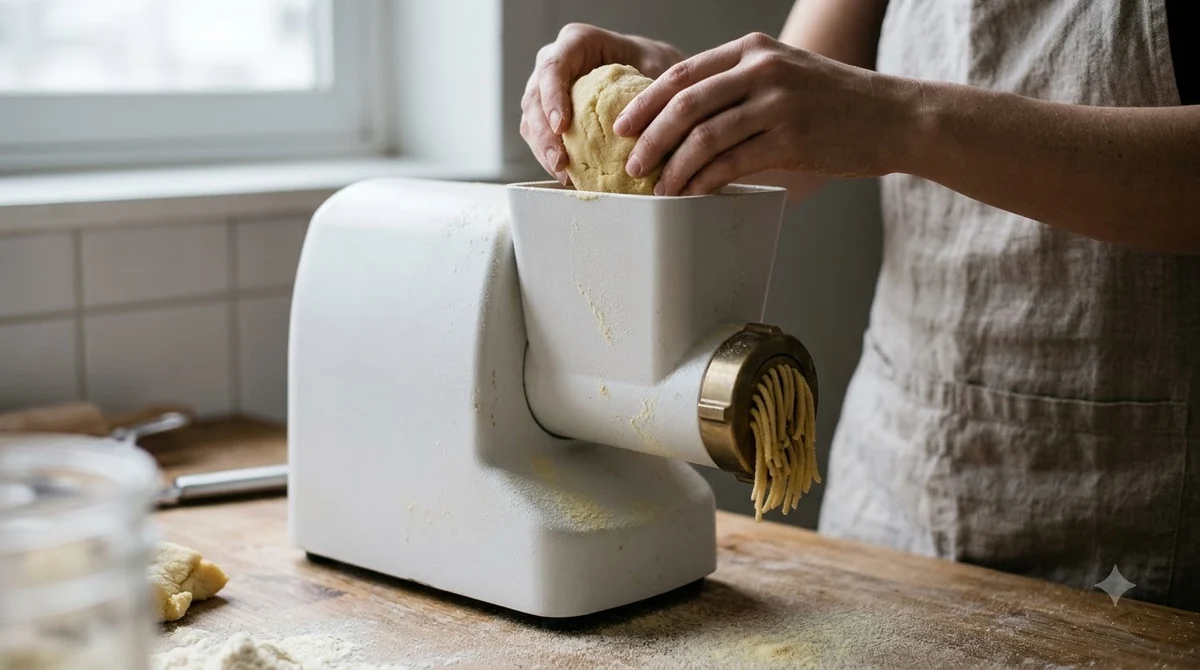
Roll the dough through the machine, stepping down to a thinner setting, until the sheet reaches a few millimetres thick. Then fold it and cut the strips with a knife rather than the machine’s cutter.
Settings and roller guides vary between machines, so check your model’s manual for the thickness scale; our guide to using a pasta machine covers the basics. Keep the sheet dusted with flour as it passes through the rollers so it does not stick.
Classic Scialatielli Sauces
Scialatielli all’amalfitana is the classic seafood version, usually with clams or mussels, prawns and cuttlefish. The sources list several other pairings as well, and each one reflects a different part of the Amalfi Coast table.
- All’amalfitana: clams and/or mussels, prawns and cuttlefish.
- Alla Sorrentina: tomatoes and mozzarella.
- Sicily: pistachio pesto, according to The Pasta Project.
- Home style: sautéed zucchini and onion, or eggplant fried with garlic and moistened with pasta water.
Parsley suits seafood or zucchini, while basil suits eggplant, according to Wikipedia. By the 1990s, scialatielli pasta was more often served with a seafood sauce.
Cooking Scialatielli and Choosing Dried
Fresh scialatielli pasta cooks much faster than dried pasta, so start tasting early and drain it before it turns soft. Check the package or recipe for timing, since dried and fresh shapes need different times.
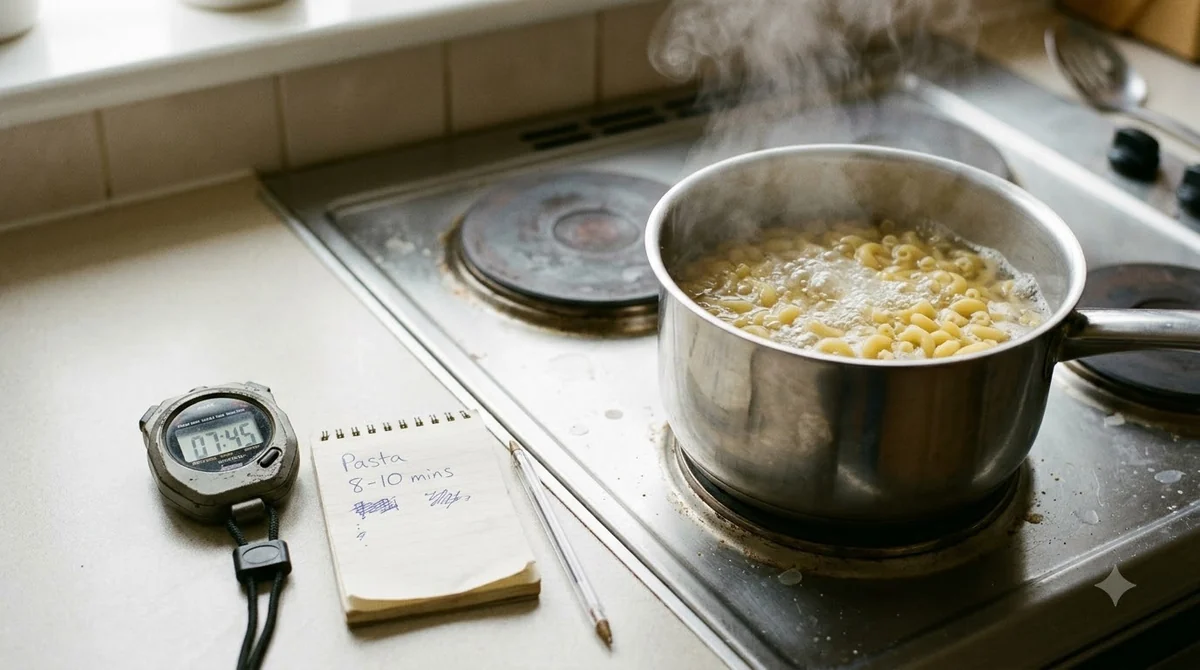
Dried scialatielli pasta is widely sold. According to The Pasta Project, dried versions leave out the milk, basil and cheese found in the fresh dough, so the ingredient list is simpler.
Before you drain the pasta, save a cup of the cooking water. A splash of it loosens the sauce so it coats the uneven strips evenly.
Frequently Asked Questions
Is Scialatelli the Same as Scialatielli?
Yes, scialatelli is another spelling of the same Amalfi Coast pasta, and both spellings appear in published sources. Use whichever spelling your recipe or package prints.
Is Scialatielli Made With Eggs?
Not always. Wikipedia describes the dough as formed with milk and eggs, while The Pasta Project makes the egg optional and says the original recipe was egg free. Check the recipe you follow.
What Does Scialatielli Taste Like?
The taste depends on the dough and the sauce. Arthur Schwartz describes the texture as a cross between pasta and gnocchi, so expect a soft bite rather than a crisp one.
Can I Use Dried Scialatielli for a Homemade Recipe?
Dried scialatielli pasta works for everyday cooking, but it leaves out the milk, basil and cheese of the fresh recipe. Check the package for cooking times before you start.
Do I Need a Pasta Machine to Make Scialatielli?
No. The shape is traditionally hand cut with a knife. A pasta machine only helps you roll an even sheet to a few millimetres thick before you cut.
How Long Should Scialatielli Dough Rest?
The Pasta Project recipe says to knead the dough for 10 to 15 minutes and then rest it for at least 30 minutes. Give the dough the full rest before you roll it out, so the sheet is easier to shape.
If you are new to homemade scialatielli pasta, start with the dough and a knife before you buy any equipment, and browse our pasta and pizza guides for other shapes. The uneven strips are part of the shape, so do not aim for perfect edges. For a quick weeknight meal, dried scialatielli pasta is the practical choice.