

Casoncelli pasta is a stuffed fresh pasta from Lombardy in northern Italy, shaped like a half-moon and most closely linked to the cities of Bergamo and Brescia. Locals also call it casonsei, and it looks a little like ravioli, but the folding and the fillings are different.
What Are Casoncelli?
Casoncelli pasta is a stuffed pasta typical of the Lombardy region, made from two sheets of pasta pressed together at the edges, like ravioli, and about 4 cm long. Wikipedia’s casoncelli entry describes this as the usual shape.
The name is local. In the Eastern Lombard dialect, casoncelli pasta is written casonsèi. Some cooks also describe the shape as a disc folded in two, similar to an old-fashioned sweet wrapper, so the exact outline can vary from kitchen to kitchen.
The main difference from homemade ravioli is how the pasta is closed. Casoncelli are folded over into a half-moon and the edges are pressed shut, so the finished piece has one curved side and one sealed edge. That folding method is what gives casoncelli pasta its own look on the plate, even though the two pastas share the same basic idea of a filled egg dough.
Dough and Pasta Thickness
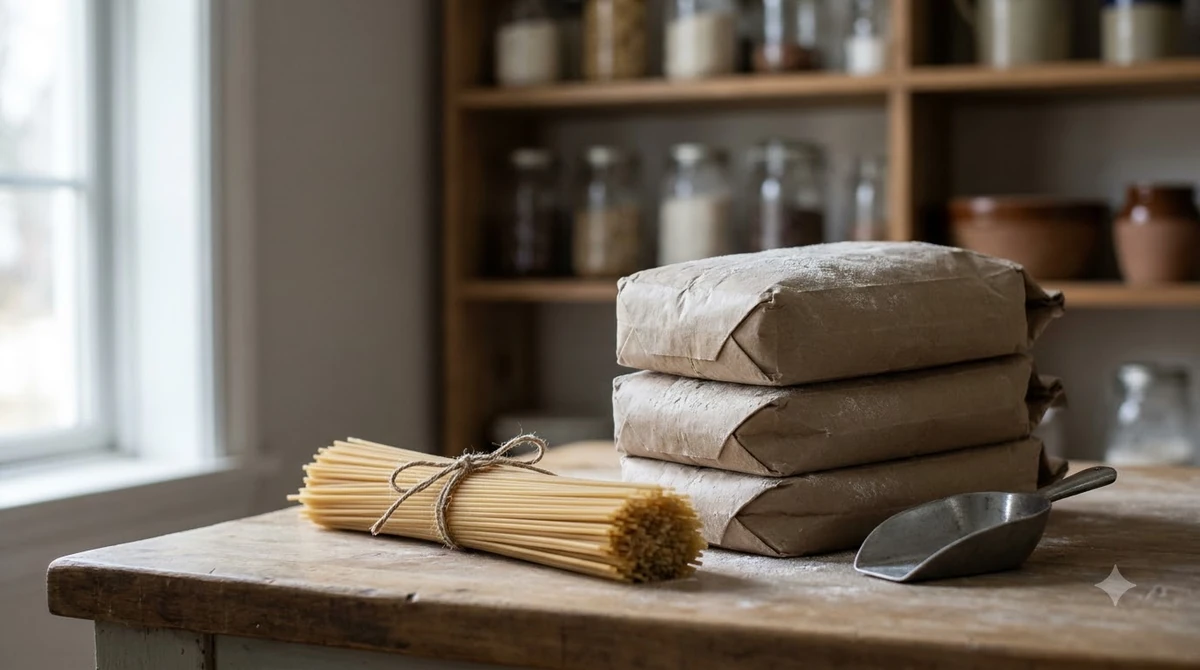
The dough for casoncelli pasta is an egg pasta dough made with soft wheat flour (see our guide to what 00 flour is) and durum semolina, with the semolina making up roughly a third to a half of the flour’s weight.
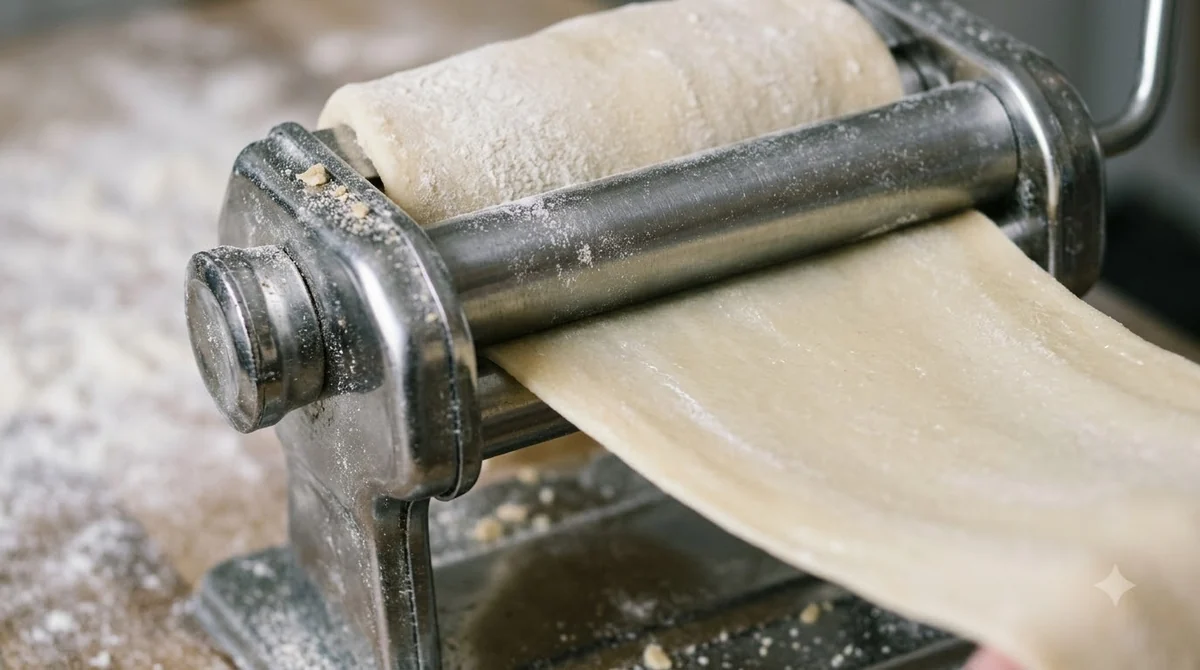
The Visit Italy recipe for four servings uses 280 g of “00” soft wheat flour, 100 g of durum semolina, two eggs, water and salt. The dough then rests for about two hours. The Pasta Project gives a similar base of 7 oz of “00” flour, 3.5 oz of semolina and two large eggs, plus about 2.5 fl oz of water, and suggests kneading for 5 to 10 minutes before a shorter rest of around 30 minutes. In both recipes the semolina is roughly a third to a half of the flour’s weight.
Thickness is where the two cities differ. According to Visit Italy, the Bergamo version uses a thicker pasta, while the Brescia version is rolled thinner so that the flavor of the filling stands out. The Pasta Project adds a practical rule for home cooks: the sheets should not be too thin, because they need to hold the filling without tearing.
Fillings in Bergamo and Brescia
The filling is the clearest way to tell the two versions of casoncelli pasta apart. Bergamo fillings usually combine meat or salami with cheese and breadcrumbs, while Brescia fillings lean on breadcrumbs, Parmesan and herbs.
Bergamo style
Wikipedia lists the Bergamo filling as breadcrumbs, eggs, Parmesan, ground beef, salami or sausage. The Visit Italy recipe for the same city uses veal roast, salami paste, Grana cheese, breadcrumbs, egg, garlic, parsley and nutmeg. The two lists overlap on the cheese and breadcrumb base, but they do not agree on every ingredient, so treat any single list as one cook’s version rather than a fixed rule.
Brescia style and the Valcamonica greens
Wikipedia gives the Brescia filling as breadcrumbs, Parmesan, garlic, parsley, nutmeg and broth. The Valcamonica version, from the Camonica Valley in Brescia province, is built around boiled greens. The Pasta Project uses erbette, a perpetual spinach, and notes that chard can be used instead, mixed with mortadella or salami, sausage, potatoes, Parmesan and breadcrumbs. Some local versions add crushed amaretti and raisins for a sweeter filling. Visit Italy also lists the giant casoncelli of Artogne, in Brescia province, as a local variant.
| Feature | Bergamo style | Brescia style |
|---|---|---|
| Pasta | Thicker sheet | Thinner sheet |
| Filling focus | Meat, salami or sausage with cheese | Breadcrumbs, Parmesan, garlic and herbs |
| Classic condiment | Butter, grated Grana, sage and pancetta | Butter, grated Grana and sage, with no pancetta |
How to Fold Casoncelli Pasta
You fold casoncelli pasta by cutting a round of pasta, placing a ball of filling in the center, bringing the disc over into a half-moon and pressing the edges closed.
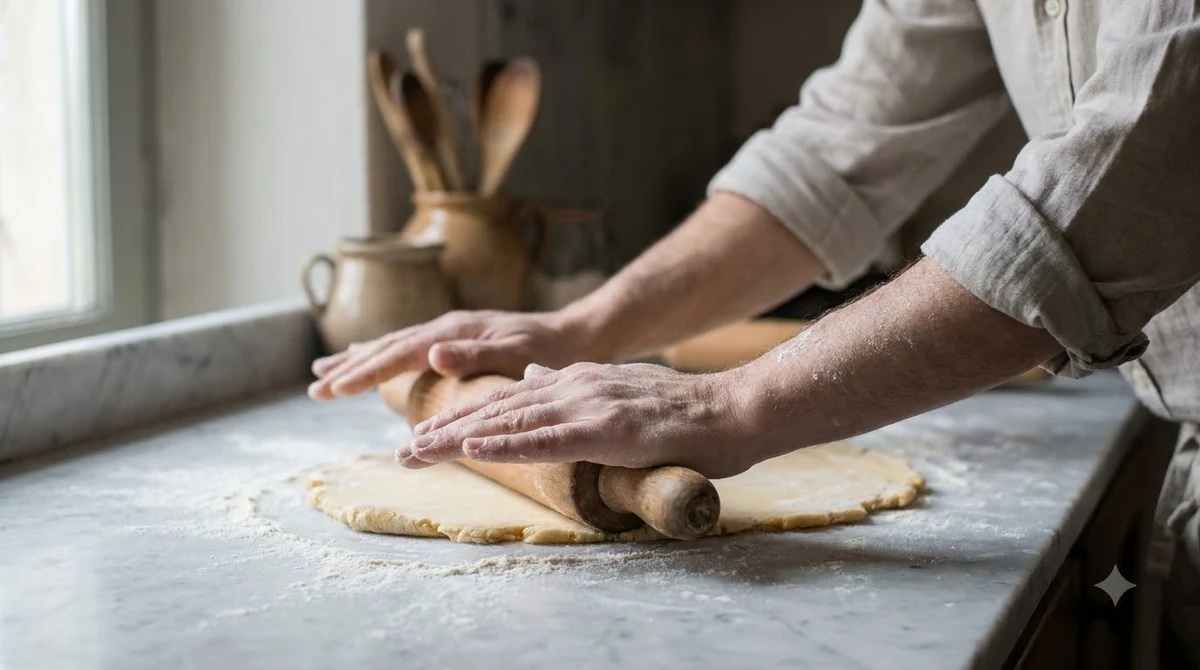
The size of the disc differs between sources. The Pasta Project cuts circles about 7 cm across, while Visit Italy suggests discs of about 6 cm. Either size works as long as the disc is wide enough to fold over the filling without stretching the pasta.
- Roll the dough into a sheet that is not too thin, because it has to hold the filling.
- Cut the discs and place a small ball of filling in the center.
- Fold the disc over the filling into a half-circle and press the edges down with your fingers.
- Fold the smooth part of the pasta up onto the edges so they sit underneath.
- Turn the pasta over and press gently in the middle, where the edges of the half-moon meet.
The filling can be made ahead. The Pasta Project notes that it can rest in the fridge overnight, which helps the flavors meld and makes it easier to shape the balls. Making the filling ahead also spreads the work out when you are preparing a large batch of casoncelli pasta.
Sauce and Cooking
Casoncelli pasta is traditionally served with burro e salvia, a sauce of melted butter flavored with sage leaves, and the Bergamo style adds pancetta.
Visit Italy adds grated Grana cheese to both styles, and pancetta to the Bergamo version. The Pasta Project’s recipe cooks pancetta cubes in butter until they brown, adds the sage, and takes the pan off the heat once the leaves darken.
The Pasta Project’s recipe card lists about 1 hour 10 minutes of prep time. Cook the pasta in boiling salted water. The Pasta Project says to wait until the pasta rises to the surface, give it another minute, then taste one to check. Visit Italy gives a range of about 6 to 8 minutes. Transfer the pasta to the pan with the sauce, toss it gently over low heat, and finish with extra grated cheese.
Where the Tradition Comes From
Casoncelli pasta is an old dish, with references in manuscripts from the second half of the 1300s, and they were long eaten mainly on special occasions.
Visit Italy describes casoncelli as a medieval dish, and says that meat was originally left out of the filling because eggs and flour were valuable. Peasant families made casoncelli mainly for feasts, a tradition that lasted roughly until the 20th century. The Pasta Project describes the pasta as possibly older than tortellini and classic ravioli. Visit Italy adds a local proverb that says those who knead casoncelli squander their house and goods.
Bergamo and Brescia have rivalled each other since the 12th century over territorial disputes. Visit Italy notes that the two cities set that rivalry aside in 2020, during the Covid pandemic, to support each other, and that both were Italian Capitals of Culture in 2023.
The Pasta Project adds that rustic versions used simple, inexpensive ingredients, while richer fillings with cooked meats, dried fruit and Marsala were more common among noble families. Another Italian stuffed pasta with a long history is tortellini, and the Emilian cousin anolini pasta is a close relative of the Lombard filled pastas. Some food historians suggest that stuffed pasta may have originated in Eastern Lombardy, so treat that as a suggestion rather than a firm date.
Storing and Freezing Casoncelli Pasta
Uncooked casoncelli pasta can be frozen for around three months and cooked straight from frozen, while cooked leftovers keep for one to two days in the fridge.
Freezing the uncooked pasta is the simplest way to plan ahead.
Frequently Asked Questions
Are casoncelli the same as ravioli?
Not quite. Casoncelli pasta is a close relative of ravioli and shares the same idea of a filled egg dough, but they are folded into a half-moon with the edges pressed closed. Their fillings are also tied to Lombard recipes, especially those from Bergamo and Brescia.
Where do casoncelli come from?
Casoncelli pasta comes from Lombardy in northern Italy and is most closely associated with Bergamo and Brescia. Some food historians also suggest that stuffed pasta may have started in Eastern Lombardy.
What sauce goes with casoncelli?
The classic sauce is burro e salvia, which is melted butter flavored with sage. The Bergamo style often adds pancetta and grated Grana cheese, while the Brescia style uses butter, cheese and sage.
Can you freeze casoncelli?
Yes. Uncooked casoncelli pasta can be frozen for around three months and cooked from frozen. Cooked leftovers keep for one to two days in the fridge.
What goes inside casoncelli?
The filling varies by city and by family. Bergamo versions often use meat or salami with cheese and breadcrumbs, while Brescia versions rely on breadcrumbs, Parmesan and herbs. Some local recipes add amaretti and raisins for sweetness.
If you are trying casoncelli pasta at home for the first time, start with the classic butter and sage sauce so the filling stays the star. Expect the first folds to take a few tries, so make a small batch and check that the edges are well sealed before you cook. Use the Visit Italy and Pasta Project recipes as starting points, then adjust the filling to your taste. Making one Bergamo-style batch and one Brescia-style batch is a practical way to taste the difference for yourself.