
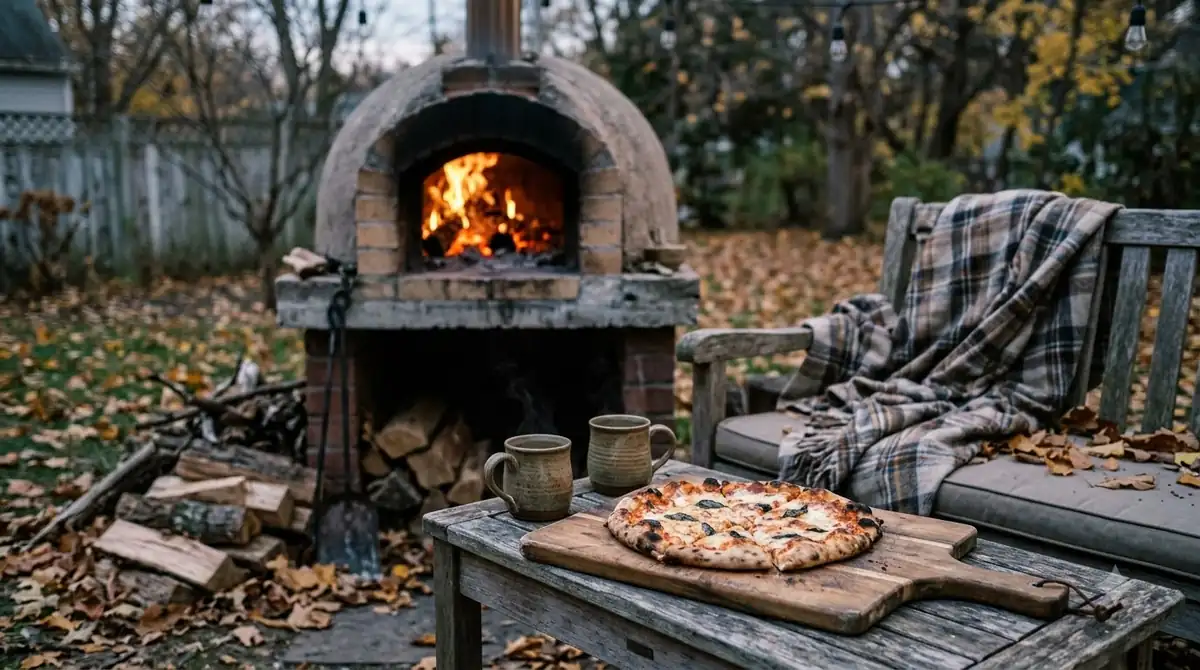

Can you use a pizza oven in winter? Yes, you can, though the cold changes how long the oven takes to heat up and how you protect it. Manufacturers treat cold weather as workable with a longer preheat and a few extra precautions. Snow, moisture and gas supply need more attention than they do in summer.
The steps below follow the winter guides published by Ooni and Gozney. Check your model’s manual for any cold-weather limits it lists, since model details differ.
Can You Use a Pizza Oven in Winter? Yes, With a Longer Preheat
So can you use a pizza oven in winter without trouble? Ooni says cold or windy weather needs a longer preheat, and advises being prepared to wait an extra minute or two before cooking.
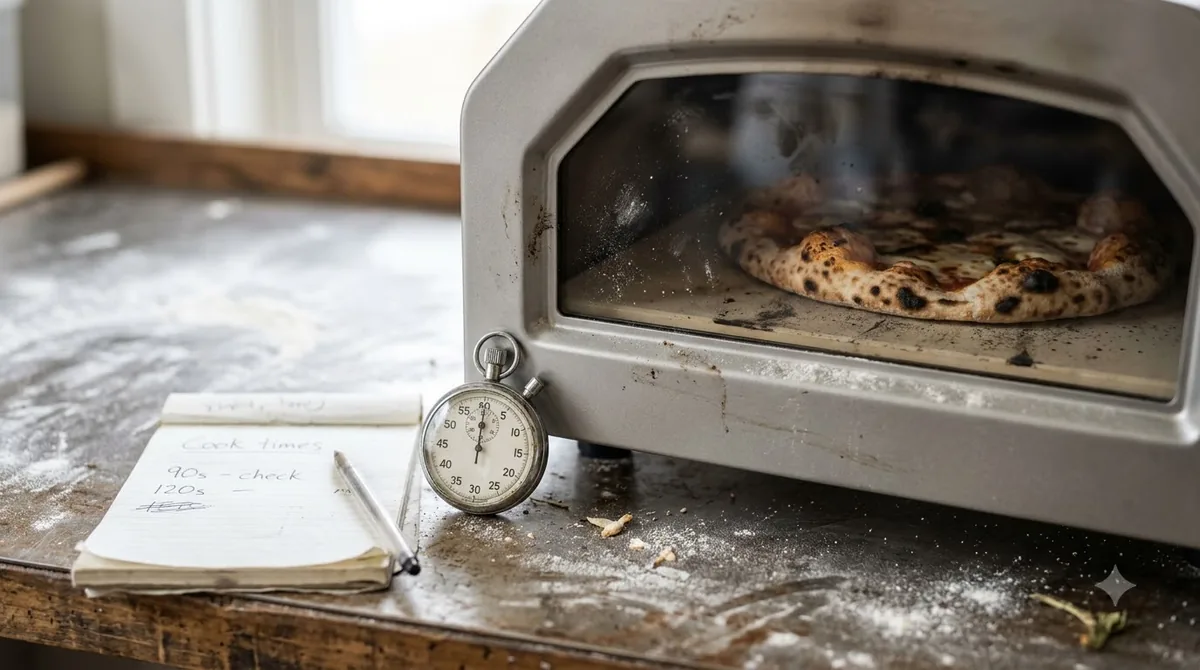
That extra time is mostly a planning issue. Light the oven a little earlier than you would in summer, especially if you plan to cook a full batch of pizzas. Our guide to how to preheat a pizza oven covers the preheat sequence in detail. Once the oven is at temperature, the cooking itself works the same way as in warm weather. The main change is the warm-up, and the Ooni winter care guide is the source for that guidance.
Gozney says its ovens have dense insulation between the inner shell and the outer casing, which helps them retain heat even during cold weather. Insulation does not remove the warm-up, but it helps the oven hold temperature once it gets there. Gozney names its Dome and Tread models as suitable for winter use.
For most home cooks, a winter session is a matter of timing. Plan a little slack into your schedule for the first pizza, and expect the later ones to go more smoothly once the stone is warm. Keep the oven’s fuel and lighting steps the same as in warm weather, so you only change the timing and the protection. If you burn wood, how to light a wood-fired pizza oven explains the fire-building steps.
Why Cold Air Changes the Preheat
Cold air and wind draw heat away from the outside of the oven. The shell and the stone have to absorb more heat before the cooking chamber reaches the temperature you need, so the same fire takes longer to do the same job.
Wind is part of the same problem. Ooni says wind and cold might lengthen the amount of time it takes to get the oven up to top temperature. Turning the oven so the opening faces away from the prevailing wind is a simple fix to try before you adjust the fuel.
Gas models have a second problem. Gozney’s winter guide notes that below freezing, the gas may freeze, which could affect flame size and performance. For gas owners, the cold is a fuel issue as well as a temperature issue.
How to Preheat Safely in Cold Weather
Gozney recommends a low, slow fire in particularly cold weather to prevent thermal shock to the stone. A sudden blast of heat into a cold stone is the main risk of a cold start, so the early part of the warm-up matters most. The Gozney winter guide gives this advice for its own ovens.
- Start with a small, low fire and raise the temperature gradually. Gozney says to increase the temperature slowly, just like the first time you used the oven.
- Do not overload the fuel basket or pellet hopper to speed things up. Ooni warns against overloading when you feel impatient during a cold preheat.
- Allow an extra minute or two of preheat before you judge the stone, since cold or windy weather slows the warm-up.
- Check the cooking chamber against the target temperature in your model’s manual before you launch a pizza.
Once the oven is hot, keep the fire steady rather than pushing the heat up. A stable chamber gives a more even bake than a fire you keep feeding to recover lost temperature. If you see the temperature drop sharply during a cook, let it recover before you launch the next pizza.
Can You Use a Pizza Oven in Winter With Snow on the Ground
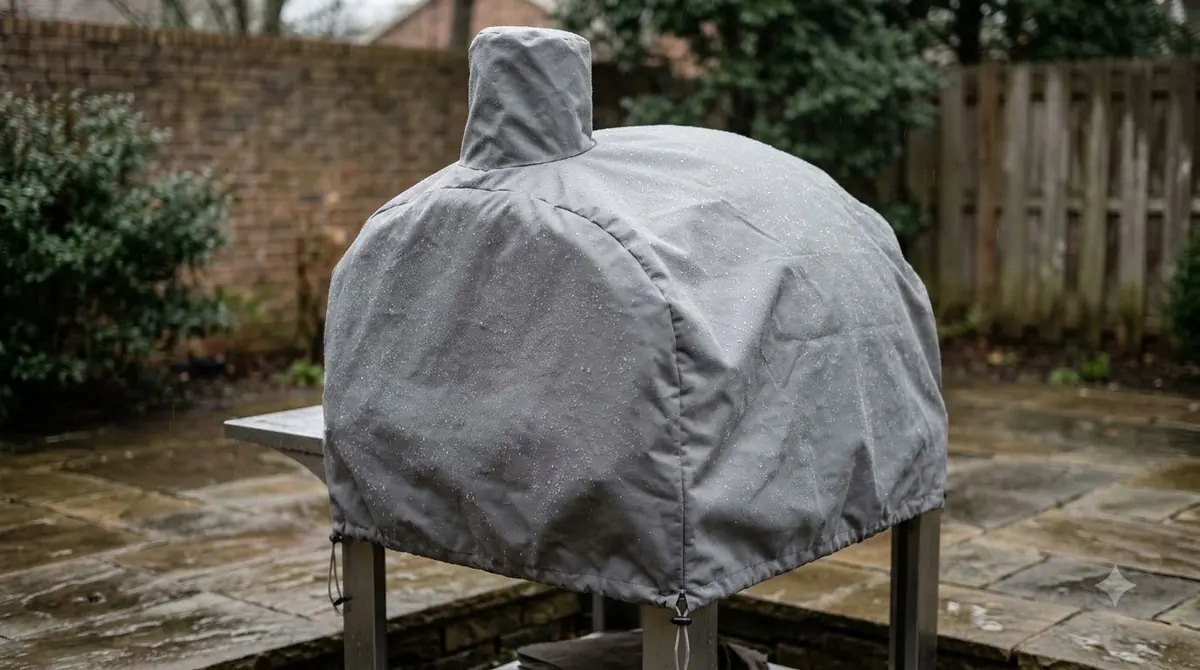
Brush snow off the oven before you cook, because melting snow sends water into the fuel basket. Moisture in the fuel area is the winter problem to avoid, and the steps below cover the usual cases.
| Protection | What to do | Source |
|---|---|---|
| Snow on the oven | Brush it off before lighting | Ooni winter care guide |
| Big storm | Bring the oven indoors for the duration | Ooni winter care guide |
| Everyday outdoor storage | Use the fitted cover | Ooni winter care guide |
| Gozney Dome | Marine-grade, weather-resistant cover that is breathable | Gozney winter guide |
| Gozney Tread | 900D polyester waterproof cover | Gozney winter guide |
Ooni says its cover is rigorously tested for its own oven, so use the cover made for your model rather than a generic sheet. Gozney’s Dome cover is breathable so moisture can escape, which matters because damp trapped under a cover is the problem you want to avoid.
Snow and rain are different problems. Light rain and a dusting of snow are a matter of brushing and covering, while a storm is a reason to move the oven inside until it passes. Ooni’s guide does not give a snowfall depth, so use your judgment and the manual rather than a fixed number.
Storing the Oven and Gas Between Winter Cooks
In very cold regions, Gozney advises keeping the oven in a shed or garage, which helps it heat up faster from room temperature.
Storage is a trade-off. A shed or garage keeps the oven out of the elements, and Gozney says starting from room temperature helps with a faster, more efficient fire-up. An outdoor cover does the job for most days, but a cold, damp spot outside can be harder on the oven than a dry shed. Check the manual before you store any oven indoors, because not every outdoor model is designed for that.
Gas models need separate attention. Check your manual for the temperature range your gas supply and regulator can handle, and do not guess at a threshold. Our roundup of the best propane pizza ovens lists gas models if you are choosing one.
For everyday protection, a fitted cover is the simplest answer to can you use a pizza oven in winter with snow on the way, and our best pizza oven covers roundup compares the options.
Wind and Other Winter Limits to Know
Ooni says wind and cold can lengthen the time to reach top temperature, so place the oven where the wind is least direct.
- Wind: Ooni says it can lengthen the time to reach top temperature.
- Snow, sleet, rain and hail: Ooni says they can still pose a threat, so brush off snow before cooking and bring the oven indoors for a major storm.
- Everyday storage: Ooni says the oven will usually be fine outside most of the time, with its cover on.
- Gas below freezing: follow the manual for the minimum operating temperature.
These limits matter most on the coldest days, and they are the practical answer to can you use a pizza oven in winter safely. On a mild, dry winter day, the process is close to a warm-season cook with a longer warm-up. Use the list above as a go or no-go check before you light the oven.
Frequently Asked Questions
Can you use a pizza oven in winter if it is freezing?
You can, with care. Gozney says that below freezing, the gas may freeze and affect flame size and performance. Ooni says snow, sleet, rain and hail can still pose a threat. Follow the preheat steps above and check your manual for the minimum operating temperature before you light the oven.
Does cold weather damage a pizza oven?
Ooni says its ovens work well year-round, and Gozney publishes winter-use steps for its own ovens. The main risks the guides flag are thermal shock from a fast start, water from snow, and moisture trapped under a cover. Follow the preheat and storage steps above, and check your model’s manual.
Can you use a pizza oven in winter with snow on the ground?
Yes, if you clear the snow first. Ooni says to brush snow off before cooking, because melting snow sends water into the fuel basket. Avoid cooking during a storm, and bring the oven indoors for the duration, as Ooni suggests.
Should I store the pizza stone indoors?
The Ooni and Gozney winter guides cover the oven and its covers, but they do not give a stone storage rule. Gozney’s advice to avoid thermal shock applies to the stone too, so a gradual start is the safer habit. Check your manual for stone care.
How much longer does the preheat take in winter?
Ooni says to be prepared to wait an extra minute or two in cold or windy weather. Treat that as a starting estimate, not a fixed rule, since wind, fuel and the outside temperature all change how fast the oven heats.
So, can you use a pizza oven in winter? Yes, if you plan the warm-up and protect the oven from snow and moisture. Skip cooking in severe weather, and check your model’s manual before you start a cold-weather routine. If the oven still runs cool, see how to get a pizza oven hotter, or browse more guides in By Use & Model.
 9 min readBy Use & ModelHow to Store a Pizza Oven in WinterUpdated Nov 11, 2026
 9 min readBy Use & ModelCan You Use a Pizza Oven in the Rain?Updated Nov 11, 2026
 8 min readBy Use & ModelPizza Oven for Indoor Use: What to Check Before You BuyUpdated Nov 16, 2026
 10 min readBy Use & ModelPizza Oven for Home Use: How to Choose the Right Type and Stay SafeUpdated Nov 16, 2026
 8 min readBy Use & ModelPizza Oven for Camping: How to Choose One and Use It SafelyUpdated Nov 16, 2026
 10 min readBy Use & ModelHow to Use Ninja Woodfire Pizza Oven: A Step-by-Step GuideUpdated Nov 8, 2026