

Culurgiones pasta is a stuffed pasta from Sardinia, Italy, traditionally filled with potato, pecorino and mint. It is sealed by hand into a wheat-ear shape along the edge. Ogliastra, on the island’s central-eastern coast, is its best-known home.
It looks like ravioli, but the dough is made from durum semolina and the closure is a distinctive pinched edge. Recipes vary by village, so the filling and sauce change from one family to the next.
What Culurgiones Are
Culurgiones are small Sardinian stuffed pastas, similar to homemade ravioli, made from fresh durum semolina dough.
The name of culurgiones pasta is spelled in several ways, including culurgionis, culurjones, culijonis and angiulotus. The Italian form is culurgioni, and the singular is culurgione.
The Ogliastra version has held protected geographical indication (PGI) status since 2015, which ties the name to products made in that area. Wikipedia’s culurgiones entry lists the Sardinian variants and this status.
The Wheat-Ear Closure That Defines Them
Compared with agnolotti pasta or pansoti pasta, the defining feature of culurgiones pasta is the spighitta, a wheat-ear closure pinched into the edge of each piece.
According to Wikipedia, the spighitta closure on both sides is typical of Jerzu, Talana, Urzulei, Bari Sardo and Ilbono. In Bari Sardo, the filling uses fiscidu, a sour cheese kept in brine, in place of pecorino.
The edge is closed by pinching from one side to the other, which creates a herringbone pattern, as described in True Italian’s culurgiones feature. The wheat symbolism is cultural as well: Wikipedia notes that the closure stands for wheat, and that culurgiones made at the end of August were meant to bring a good new farming year.
Culurgiones Pasta Filling and Regional Variations
The classic filling is mashed potato, pecorino and mint, but the cheese, herb and flavoring change from village to village.
| Style | Filling | Notable detail |
|---|---|---|
| Classic Ogliastra | Potato, pecorino, mint and garlic | Pecorino is fresh for one or two days, as in Talana |
| Bari Sardo | Fiscidu, a sour brined cheese, instead of pecorino | Spighitta closure on both sides |
| Jerzu | Nepitella (nepidedda) in place of mint | Spighitta closure on both sides |
| Gallura | Flavored with lemon or orange peel | A regional variant listed by Wikipedia |
| Barbagia di Ollolai (culurzones) | Fresh pecorino | Served with tomato sauce, diced pork or fresh sausage, and grated aged pecorino |
| Southern Sardinia and Campidano | Fresh sheep or goat ricotta, egg and saffron | Seasoned with tomato sauce, chilli, basil and grated cheese |
| Teulada | Fresh goat cheese, in a quadrangular shape | Served with tomato sauce and aged goat cheese |
Cheese choice causes the most variation. Wikipedia lists a different cheese or herb for several villages, and Strictly Sardinia says the cheese varies by maker.
The southern version is different. Fresh sheep or goat ricotta, egg and saffron make the filling, and it is seasoned with tomato sauce, chilli, basil and grated cheese.
Other fillings in the same tradition include potatoes with onions, a version common in Tortolì, and plain ricotta or ricotta flavored with lemon or orange. A chard version combines cheese with Swiss chard, onions and saffron, according to True Italian’s feature on Sardinian culurgiones.
For home cooks, the regional fillings are a good way to learn the shape before changing the recipe. A plain potato and pecorino filling is the easiest starting point for culurgiones pasta. For a potato dough instead of a potato filling, see the potato gnocchi recipe.
How to Make Culurgiones Pasta at Home
To make culurgiones pasta at home, knead a semolina dough, mash potatoes into a cheese filling, and seal rounds of dough by hand.
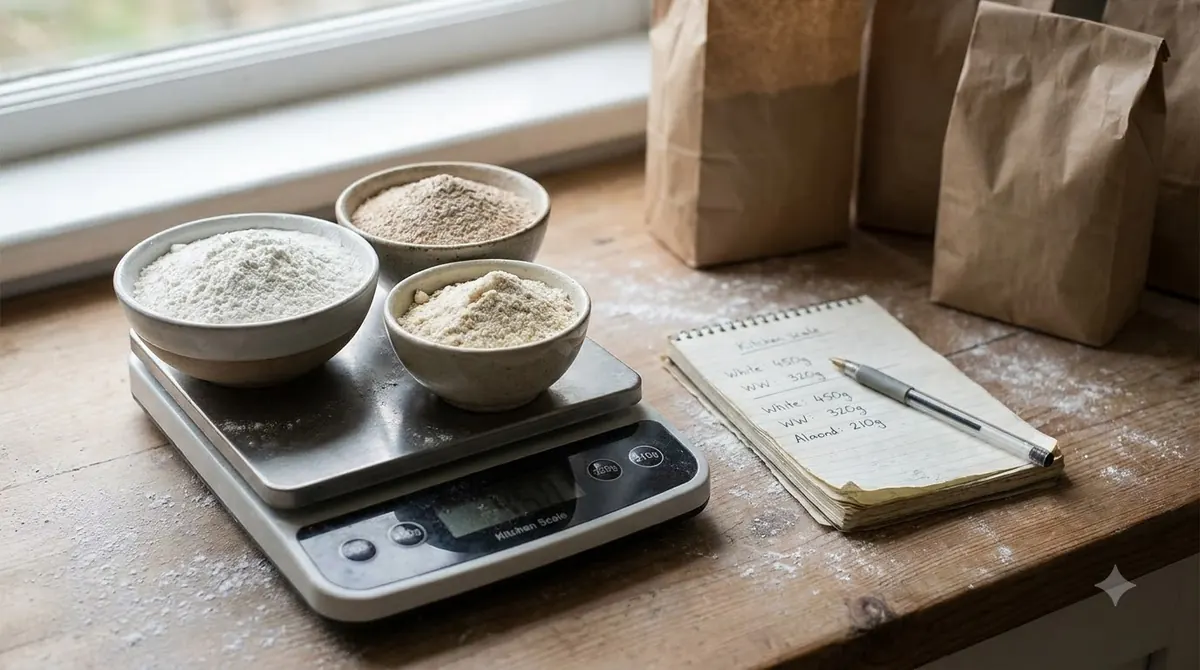
Strictly Sardinia’s culurgiones recipe uses 600 g of re-milled semolina with 300 ml of room-temperature water, about two parts semolina to one part water, plus salt to taste.
True Italian gives a different dough: 300 g of plain flour, 200 g of re-milled durum semolina, 290 g of water and 15 g of oil, rested for 30 minutes and cut into 9 cm discs. Its rounds are larger than the 8 cm rounds in the Strictly Sardinia recipe, so the sources do not agree on size. Either set of proportions is a practical starting point for culurgiones pasta. For a flour-based dough, see the fresh pasta dough recipe.
- Make a soft, lump-free dough from the semolina and water. True Italian rests its dough for 30 minutes under plastic film.
- Boil the red potatoes in their skins until fork-tender, then peel and mash them. Strictly Sardinia uses 3 large red potatoes.
- Mix the mashed potato with finely chopped mint, a finely chopped garlic clove and cheese. Strictly Sardinia uses 10 fresh mint leaves, 120 g of fresh pecorino, 120 g of seasoned pecorino and 100 g of a slightly sour cheese, then covers the filling and refrigerates it for some time.
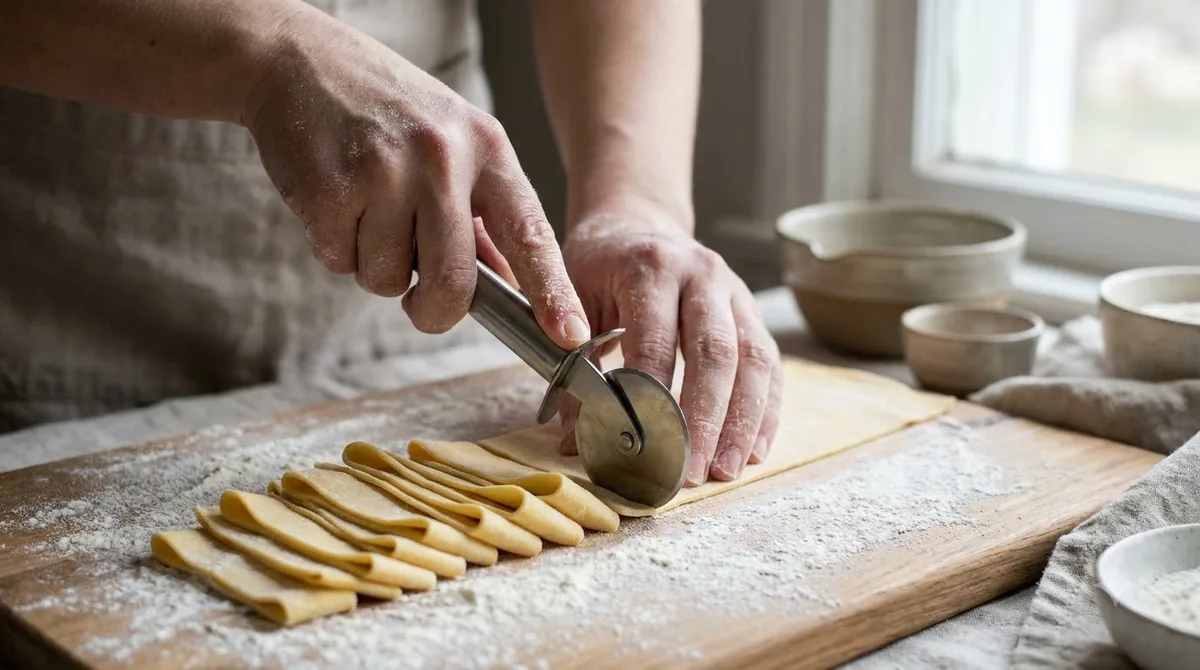
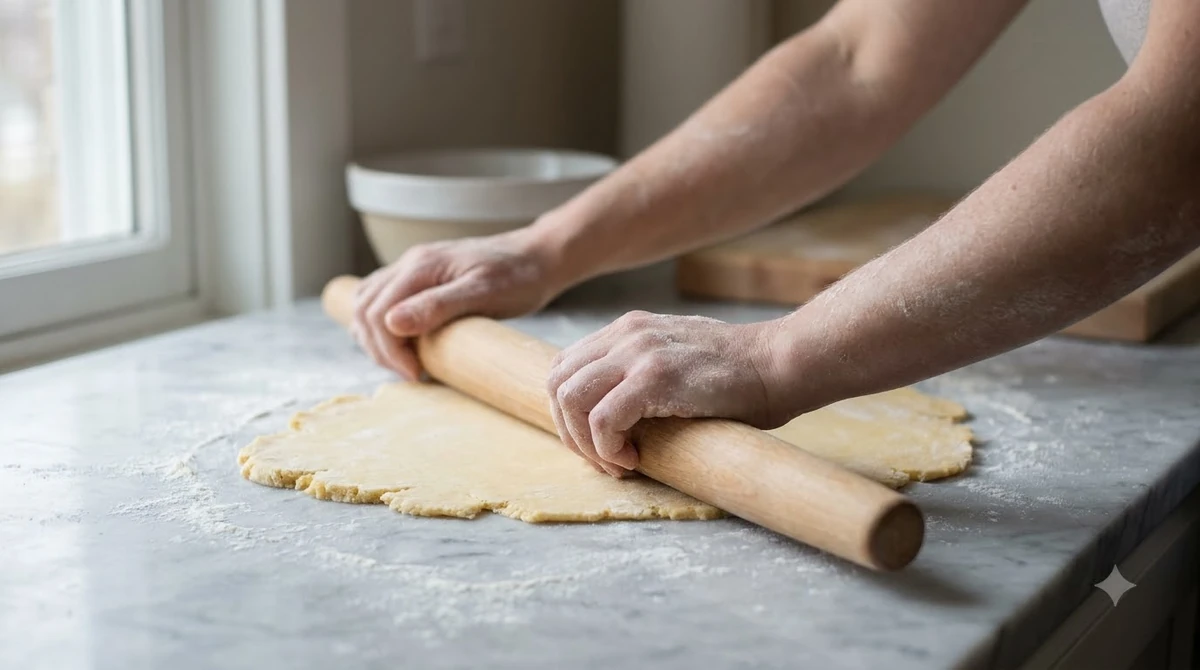
- Roll the dough into a thin sheet about 1 mm thick and cut rounds about 8 cm across.
- Place some filling in the middle of each round, seal the base, then pinch the edge from one side to the other until the open end is shut, which forms the herringbone closure.
Place the finished pieces on a floured surface until you cook them, as Strictly Sardinia advises, and make sure each one is well sealed so it does not fall apart when boiled.
How to Cook and Serve Culurgiones
Culurgiones pasta cooks in about 4 to 5 minutes. Boil them in salted water until they float, then serve them with tomato sauce and grated pecorino.
Strictly Sardinia’s recipe card gives about 4 to 5 minutes in salted water, while its FAQ says to cook until they float, usually 3 to 4 minutes. Frozen culurgiones go straight into boiling water and take about 6 to 7 minutes, or until they float.
True Italian cooks them in boiling salted water for 5 minutes, until they come to the surface. It also notes that they can be baked or fried without seasoning.
Tomato sauce is the usual route. Strictly Sardinia tosses the boiled pieces in simple tomato sauce and tops them with pecorino and fresh mint, and its FAQ suggests a passata and basil sauce. Wikipedia notes that in Jerzu the pasta is seasoned with olive oil, and more recently with tomato sauce and grated pecorino.
Sources disagree about oil. Strictly Sardinia advises against adding oil or butter before or after boiling and serves them plain with grated pecorino, while Wikipedia says Jerzu cooks season them with olive oil. For a crisp finish, Strictly Sardinia fries them in hot sunflower oil.
Common Mistakes When Making Culurgiones
The most common mistakes when making culurgiones pasta are choosing the wrong cheese and sealing the pieces poorly.
- Feta: Strictly Sardinia advises against it, saying feta is saltier than pecorino and has a different texture.
- Aged pecorino: if you use it, choose a mild, softer one, as Strictly Sardinia suggests.
- Weak seals: Strictly Sardinia says to seal each piece well so it does not fall apart when boiled.
Strictly Sardinia is inconsistent about the potatoes: its steps say to peel them, but its tips say to skip peeling because peeling affects texture. Decide which to follow before you start. It also says culurgiones can be frozen raw in a freezer-safe container for up to 3 months.
Culurgiones in Sardinian Tradition
Culurgiones pasta was made for seasonal occasions, and in Ulassai they were eaten only on All Souls’ Day until the 1960s.
According to Wikipedia, they were made with sheep fat for All Souls’ Day and with lard for Carnival. Throughout Ogliastra, and in Sadali and Esterzili, they are considered more than food and are sometimes given as gifts.
Wikipedia says they were considered amulets that protected the family from mourning, though it flags that claim as needing clarification. Treat it as a tradition rather than an established fact.
Frequently Asked Questions
What is culurgiones pasta?
Culurgiones pasta is a Sardinian stuffed pasta, similar to ravioli, made with durum semolina dough and traditionally filled with potato, pecorino and mint. It is sealed with a wheat-ear closure that gives it its distinctive shape.
Is culurgiones pasta the same as ravioli?
They are close relatives, and culurgiones are often described as Sardinian ravioli. The main differences are the semolina dough and the spighitta closure, which is typical of several villages in Ogliastra.
What cheese is best for culurgiones?
Fresh or mild Sardinian pecorino is the usual choice. Strictly Sardinia advises against feta, which it describes as saltier with a different texture. If you use aged pecorino, pick a mild, softer one.
Can you cook culurgiones from frozen?
Yes. Cook culurgiones pasta from frozen, which takes about 6 to 7 minutes in boiling water or until the pieces float, according to Strictly Sardinia. The same page says to freeze them raw for up to 3 months.
What sauce goes with culurgiones?
Tomato sauce with grated pecorino is the most common pairing. Strictly Sardinia’s FAQ suggests a passata and basil sauce with grated pecorino, while in Jerzu they are seasoned with olive oil.
Can you fry culurgiones?
Yes. Strictly Sardinia deep fries them in hot sunflower oil until crispy, and True Italian notes they can be baked or fried without seasoning.
If you are new to culurgiones pasta, start with the classic potato, pecorino and mint filling and a simple tomato sauce. Taste the filling before you seal the rounds, since the cheeses vary from maker to maker. Once the shape feels natural, try a regional version such as the ricotta and saffron filling from southern Sardinia.