
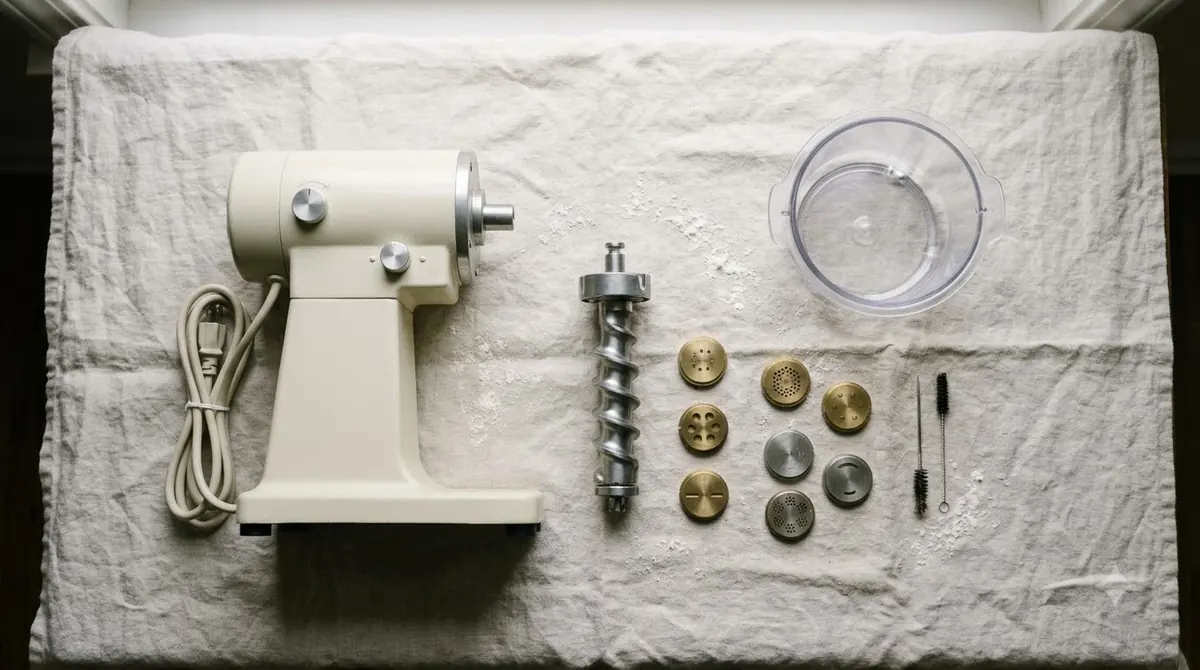

The Hamilton Beach pasta maker, model 86650, is an electric machine that mixes dough, weighs the flour and pushes it through a shaping disc. It suits home cooks who want fresh noodles in small batches with little work. It is a weaker choice for lasagna sheets or large batches.
| Pick | Best for | Key fact |
|---|---|---|
| Hamilton Beach pasta maker (86650) | Casual cooks making short batches of common shapes | Seven shaping discs and two preset programs |
| Hand-crank pasta machine | Thin sheets for lasagna and filled pasta | Rolls dough into sheets by hand |

Hamilton Beach Electric Pasta Maker & Noodle
Pros & ConsViewHide
Reasons to buy
- Model 86650 mixes, weighs flour and extrudes in one machine
- Seven molds for spaghetti, fettuccine and more, per the listing
- Listing says it makes 2-3 servings in about 15 minutes
Reasons to avoid
- 3.8-star average from about 1.5K Amazon ratings, lower than the other picks here
- Extrusion only, so it does not roll thin lasagna sheets

Philips 7000 Series Pasta Maker
Pros & ConsViewHide
Reasons to buy
- Mixes, kneads and extrudes automatically, ready in under 10 minutes per the listing
- Makes up to 8 portions in one go
- Comes with 8 shaping discs
- Parts are listed as dishwasher-safe
Reasons to avoid
- Costs far more than a manual roller
- Needs permanent counter space
- 11% of ratings are 1-star

Imperia Pasta Maker Machine- 100% Made in Italy
Pros & ConsViewHide
Reasons to buy
- Chromed steel rollers make sheets up to 150 mm wide
- Cuts fettuccine (6.5 mm) and tagliolini (2 mm)
- Six roller heights from 0.5 to 5 mm
Reasons to avoid
- Manual hand crank
- Two cut widths only, no extruded shapes
- The optional motor is a separate purchase
Hamilton Beach Pasta Maker at a Glance
The Hamilton Beach 86650 is an electric pasta maker that mixes dough, weighs dry flour and extrudes shapes through interchangeable discs. It runs on 120 V ~ 60 Hz, as stated on its rating label and in the manufacturer’s Use and Care guide. Because the machine handles the mixing, the hands-on work is mostly weighing the flour and loading the disc, which keeps a batch simple. Any Hamilton Beach pasta maker you buy should be set up on a dry, level surface away from the edge of the counter, as the manual advises.
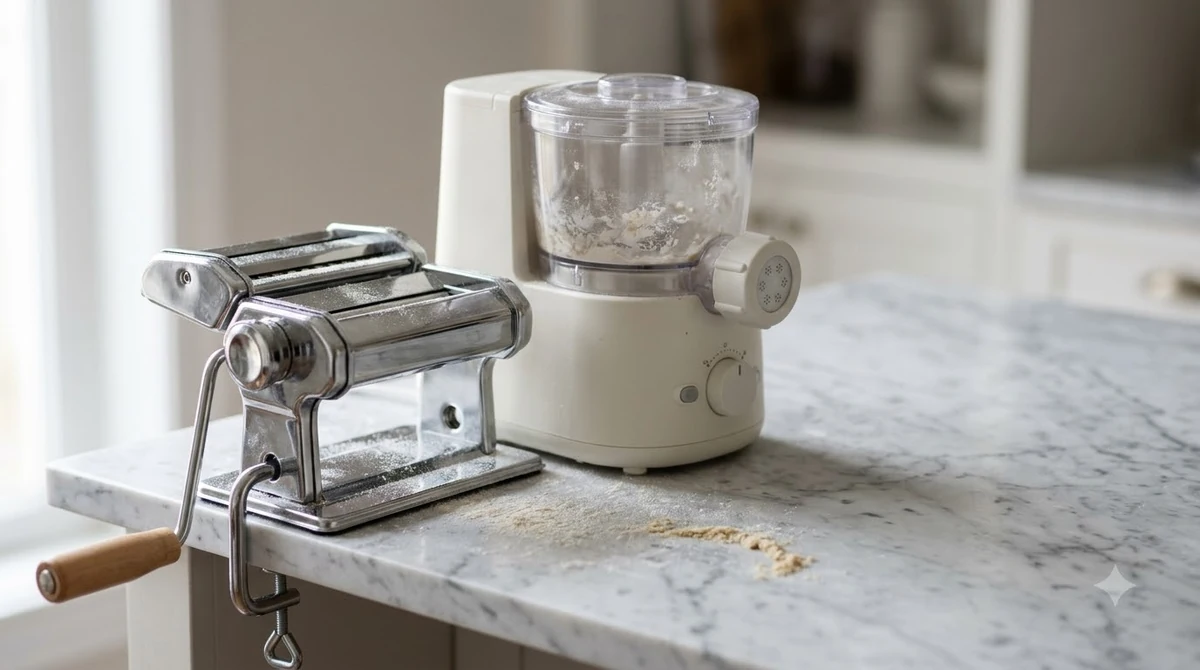
The base has an integrated scale with a Zero Scale button. It weighs dry ingredients such as flour and shows the amount of liquid to add. The scale measures in grams only, so the display reads in grams.
- Mixing bowl and paddle for kneading
- Extruder with a choice of shaping discs
- Liquid cup marked in milliliters
- Cleaning tool and storage drawer

How the Presets and Manual Modes Work
The Quick Pasta program mixes, kneads and extrudes in 15 to 18 minutes, while the Pasta program takes 20 to 30 minutes because it adds a rest period before extruding. Both stop on their own when finished. The manual also offers two manual modes, Knead Dough and Extrude Pasta, for more control.
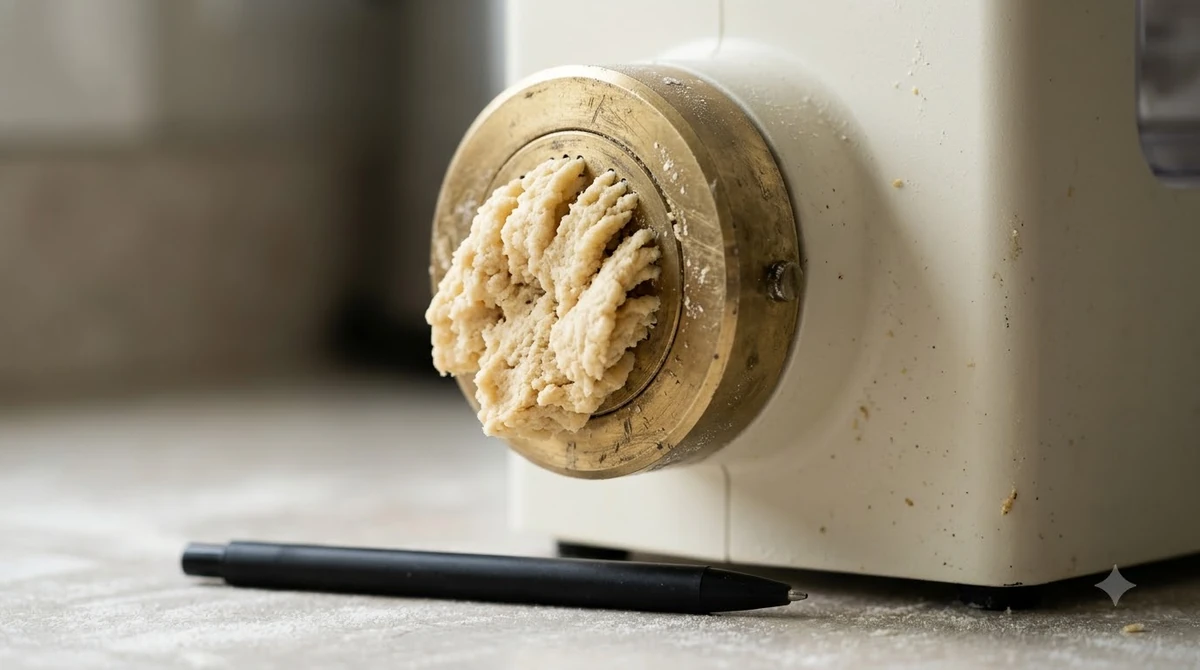
- Weigh the flour on the built-in scale, then add the liquid the display shows.
- Fit the chosen shaping disc into the extruder before turning the machine on. The manual says not to operate without a disc in position.
- Choose a preset, press Start, and stay nearby, because the manual says not to leave the pasta maker unattended while it runs.
Recipes for dough ratios and the four doughs in the guide are covered in the Hamilton Beach pasta maker recipes guide. Plan the first batch around a preset you can watch, because the Quick Pasta program stops on its own and a Hamilton Beach pasta maker can finish while you prepare the sauce. Check the official manual for the exact steps before your first batch, using the Hamilton Beach Use and Care manual.
What It Makes: The Shaping Discs
The manual lists seven shaping discs: angel hair, spaghetti, thick spaghetti, penne, fettuccine, wide noodle and lasagna. Penne and lasagna come as two-piece discs. Each disc changes the cut of the dough as it leaves the extruder, so one machine covers several common shapes.
- Angel hair and spaghetti for quick strands
- Penne as a two-piece disc
- Fettuccine and wide noodle for ribbons
- Lasagna as a two-piece disc, which extrudes a flat, wide shape rather than rolled sheets
A full breakdown of the discs, how to swap them and how to store them is in the Hamilton Beach pasta maker discs guide. Always confirm the disc is seated before you press Start. The disc you pick also decides the shape, so a Hamilton Beach pasta maker is best judged by the shapes you cook most often.
Where It Falls Short
The main limits are the extrusion-only design and the grams-only scale. Because the dough comes out through a disc, you cannot roll a thin sheet for lasagna or filled pasta the way a hand-crank roller does. Owner reports on retail listings also mention that flour type matters, and some say the machine is not built for bulk batches. A Hamilton Beach pasta maker with a damaged paddle, extruder, disc, collar or bowl should not be used at all, according to the manual.
- Grams only on the scale, so measure flour in grams before you start.
- Some owners report dough needs a precise mix of flour and liquid to extrude well (user reports).
- Retail listings describe small batches, not bulk production (user reports, not a manufacturer figure).
Warranty and Support
Hamilton Beach’s limited warranty covers the product for 1 year from the original purchase in the US and 5 years in Canada. The warranty is void if the machine is used for anything other than single-family household use or runs on a voltage other than the one on its label. The warranty text applies to products bought and used in the US and Canada only, so a Hamilton Beach pasta maker bought elsewhere may have different terms.
- Keep the original sales receipt, because proof of purchase is required.
- Do not return the appliance to the store to make a claim.
- Write Customer Service or visit hamiltonbeach.com/customer-service, and have the model number ready.
How It Compares to a Hand-Crank Pasta Machine
An electric extruder like this one trades sheet control for hands-off mixing, while a hand-crank roller gives you thin sheets but asks for more effort at the counter. The table sets out the trade-offs by criterion. The product box above also shows a Philips electric extruder and an Imperia hand-crank machine as examples of each type. Our best pasta rollers guide lists hand-crank options. If you already own a stand-mixer roller attachment, compare its cost and results against a dedicated Hamilton Beach pasta maker before deciding.
| Criterion | Electric extruder | Hand-crank roller |
|---|---|---|
| Mixing the dough | Automatic in the preset programs | Done by hand before rolling |
| Shapes | Set by the shaping disc | Cut by hand or with a cutter attachment |
| Sheets for lasagna | Not made as rolled sheets | Yes, rolled to the thickness you set |
Who Should Buy It and Who Should Skip It
Buy this Hamilton Beach pasta maker if you want quick small batches of common shapes and do not want to knead by hand. For many households, a Hamilton Beach pasta maker is a practical way to add fresh noodles to a weeknight without a full rolling station. Skip it if you need rolled sheets, large batches or specialty flours, because those are the points where owner reports are most mixed.
- Good fit: beginners who want fresh noodles on a weeknight
- Good fit: households that cook pasta for two to four people
- Poor fit: anyone who wants lasagna sheets or ravioli sheets
Retail prices vary between sellers, so check the current price and stock on retailer listings before you buy. The model number on the label tells you whether you have the 86650 or another Hamilton Beach model, and our Hamilton Beach pasta maker manual guide covers the 86650 manual in more detail.
Frequently Asked Questions
Does the Hamilton Beach pasta maker make fresh pasta?
Yes, it makes fresh pasta by mixing the dough and extruding it through a shaping disc. The manual lists the discs for angel hair, spaghetti, penne, fettuccine, wide noodle and lasagna. Use the flour and liquid amounts the display shows, and follow the recipes in the guide for the right dough consistency.
Can it make lasagna sheets?
Not as rolled sheets. The lasagna disc is a two-piece shaping disc that extrudes a flat, wide shape. If you need thin rolled sheets, a hand-crank roller or a roller attachment is the better tool, and this machine is not designed for that job.
How do you clean it?
Unplug the machine before cleaning, then wash the removable parts in hot, soapy water as the manual describes. Wipe the base with a damp, soft towel and never immerse the base in water or other liquid. Use the included cleaning tool for the extruder.
Is it still sold?
Availability differs by seller and region, so check retailer listings and the current Hamilton Beach product pages before buying. The manufacturer’s product page for this model could not be confirmed as live when this guide was written. An Amazon listing for a Hamilton Beach electric pasta maker with seven molds appears in the product box above, but compare its model number with the label on your machine or the 86650 manual before you rely on it. For the wider range, see our Hamilton Beach pasta machine overview.
What does the warranty cover?
The limited warranty covers defects in material and workmanship for 1 year from purchase in the US and 5 years in Canada. The warranty does not cover wear from normal use or damage from misuse, and it requires the original receipt for any claim.
If the extrusion style fits your cooking, this Hamilton Beach pasta maker is an easy way to start making fresh noodles at home. If you want sheets or big batches, buy a roller instead and keep this model for shapes.
 8 min readReviews & VersusHamilton Beach Pasta Machine: Models, Warranty and What to CheckUpdated Nov 15, 2026
 6 min readReviews & VersusIs Ooni Worth It? Who Should Buy One and Who Should Skip ItUpdated Nov 13, 2026
 8 min readReviews & VersusPhilips 7000 Pasta Maker Review: Specs, Cleaning and Who It SuitsUpdated Nov 16, 2026
 8 min readReviews & VersusMarcato vs KitchenAid: Which Pasta Maker Should You Buy?Updated Nov 14, 2026
 5 min readReviews & VersusElectric vs Manual Pasta Maker: Which One Fits Your KitchenUpdated Nov 13, 2026
 10 min readReviews & VersusGozney Dome S1 Review: Specs, Setup and Who Should Buy ItUpdated Nov 15, 2026