
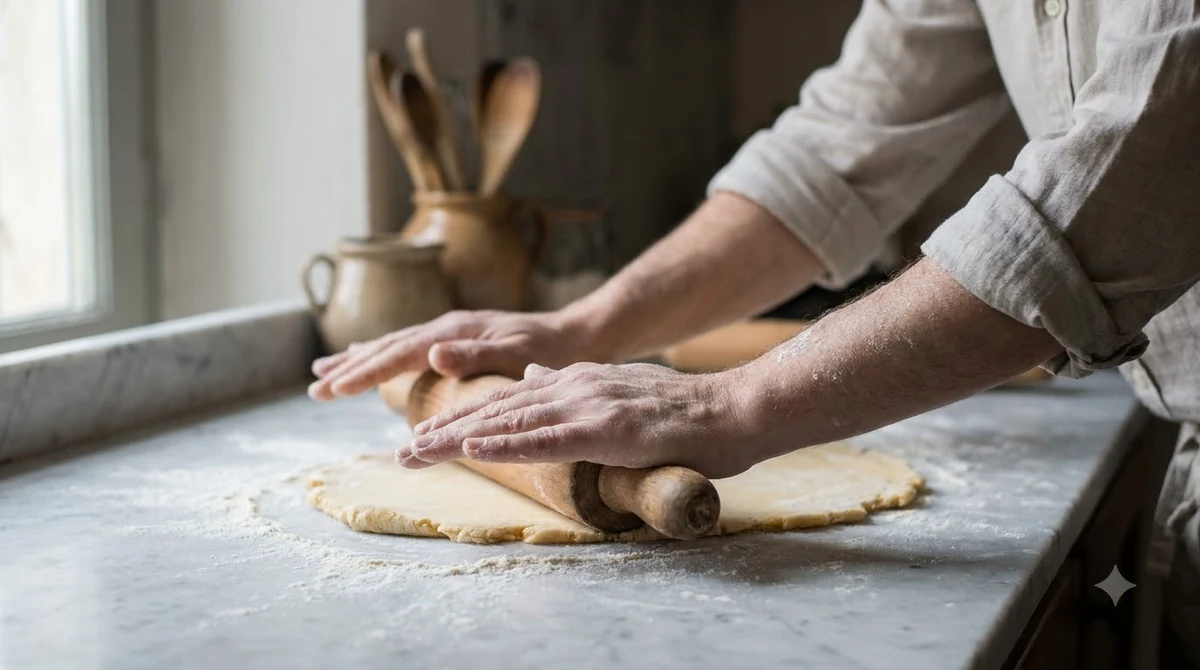

Homemade cavatelli is a simple flour and ricotta dough, rested briefly, then rolled into ropes and pressed into small shells. Two common versions differ on flour, egg, and cream, so weigh your dough and pick the one that suits your kitchen. You can shape the pieces by hand or with a hand-crank roller.
What Goes Into Homemade Cavatelli Dough?
Most cavatelli doughs combine flour with ricotta, which makes a soft dough that is easy to shape without a machine.
Josie and Nina’s handmade ricotta cavatelli uses 3 cups 00 flour (all-purpose also works), 1 pound of whole milk ricotta, and 2 eggs. The recipe lists salt but gives no amount, so add a pinch to taste.
Italian Food Forever’s ricotta cavatelli uses 4 cups all-purpose flour (or 2 cups tipo 00 and 2 cups tipo 0), 1 egg, 1 pound of full-fat ricotta, 1 teaspoon salt, and 1/3 cup heavy cream, serving four.
The two versions differ on egg and cream, and the flour amounts are not interchangeable by volume. If you have a scale, weigh the flour and ricotta so you can repeat the dough exactly.
Italian Food Forever makes a well in the flour, adds the other ingredients, and stirs until the dough comes together before kneading it by hand on a floured surface. Josie and Nina’s version starts the same way with flour in a bowl, so the mixing method is similar even though the ingredient amounts are not.
How Long Should Cavatelli Dough Rest?
Both guides call for a short rest, which lets the dough relax before you cut and shape it.
Josie and Nina cover the dough with a damp cloth and let it rest on the board for about 30 minutes.
Italian Food Forever kneads the dough by hand for 2 to 3 minutes until smooth, covers it with plastic wrap or a damp towel, and rests it for 15 minutes. The author says this rest is necessary for the right texture, and you can refrigerate the wrapped dough until you need it.
Both guides cover the dough while it rests, so the surface does not dry out before you shape it.
How Do You Shape Cavatelli by Hand?
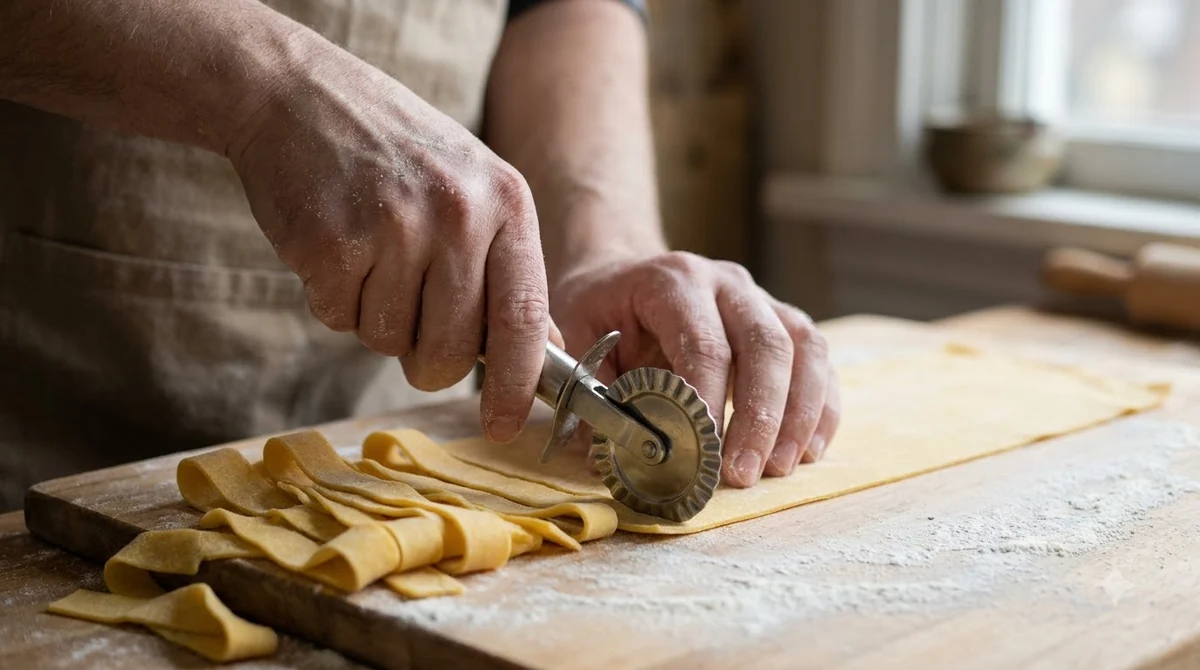
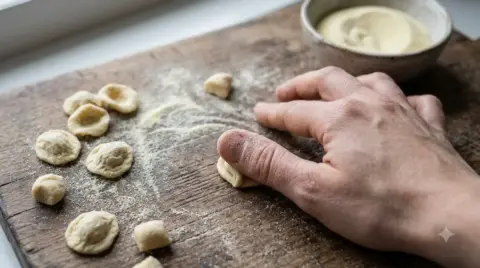
Cut the dough into pieces, roll each one into a rope, cut the rope into short pieces, then press and pull each piece into a shell.
- Cut the dough into quarters, working with one piece at a time and covering the rest with an upside-down bowl or tea towel.
- Roll a piece into a long rope about 1/4 to 1/2 inch thick, then cut the rope into pieces about 1 1/2 inches long.
- Grandma’s method: place your index and middle fingers together on the long side of a piece, press lightly, then pull toward you so the dough flips over itself.
- Hot dog bun method: press your pinky into a cut piece so the dough cups around it, then bring the sides together slightly.
- Ridged paddle method: roll the piece down a gnocchi board to create grooves.
Hand shaping needs no machine, and each method gives a slightly different shell. Josie and Nina present the gnocchi board as one option among several rather than the only way to shape them.
Keep the shaped pieces covered as you work, so the dough does not dry out before the batch is finished.
Work with one quarter at a time, as Josie and Nina advise, so the remaining dough stays covered and easy to handle.
Can You Use a Hand-Crank Roller for Cavatelli?
A hand-crank roller with wooden rollers can shape cavatelli faster, but the strips need plenty of flour so they do not stick.
Italian Food Forever rolls the dough to about 1/3 inch thick, cuts strips about 1/2 to 3/4 inch thick, and dusts each strip with flour. It feeds one strip between the wooden rollers with one hand while turning the crank clockwise with the other. The cavatelli are cut and drop onto the counter.
The same guide says to flour the strips well before rolling them through, to prevent sticking.
How Should You Store Cavatelli Before Cooking?
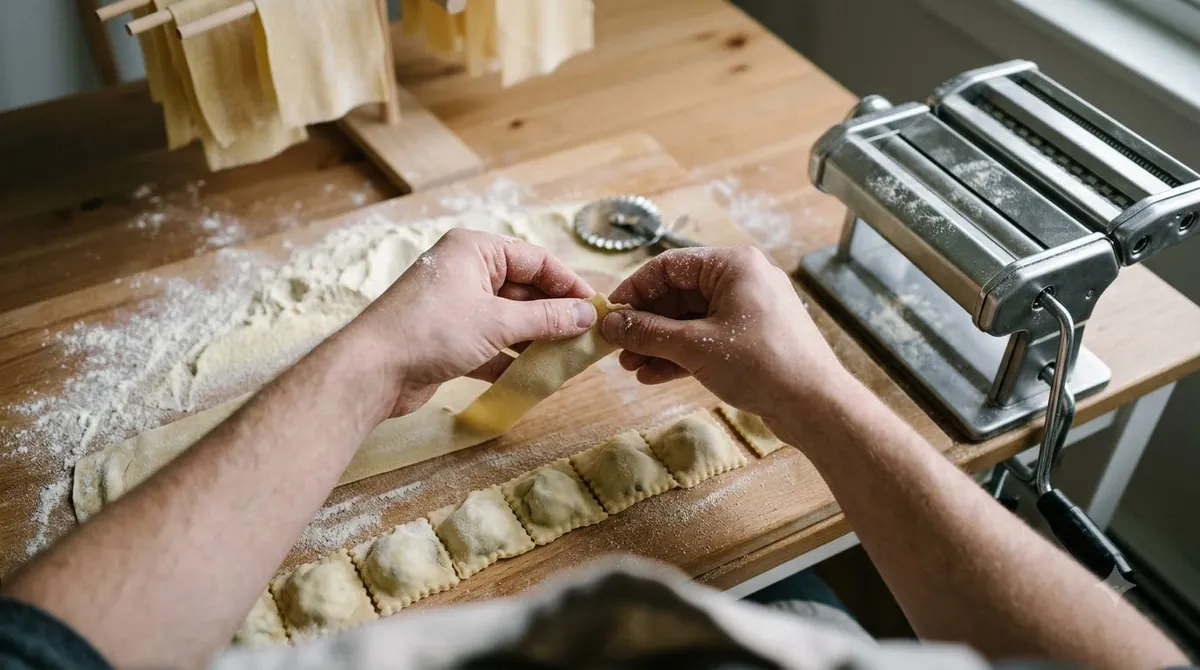
Keep shaped cavatelli floured and chilled until you are ready to cook. The refrigeration step comes from Italian Food Forever, which also tosses the pasta in flour before chilling.
Italian Food Forever tosses the finished cavatelli in a little more flour, places them on a lightly floured baking sheet, and refrigerates them until cooking.
Neither guide gives a cooking time for cavatelli. Cook one piece first, then check its texture before you cook the whole batch.
Frequently Asked Questions
What flour is best for homemade cavatelli?
Josie and Nina say 00 flour works best, and that all-purpose flour also works. Italian Food Forever uses all-purpose flour, or a mix of tipo 00 and tipo 0.
Do you need a cavatelli machine?
No. Josie and Nina shape the cavatelli entirely by hand using fingers, a pinky, or a gnocchi board. The hand-crank roller is an option, not a requirement.
Why does the dough need to rest?
Italian Food Forever says the rest is necessary for the right texture. Josie and Nina rest the dough for about 30 minutes under a damp cloth before shaping.
How much dough should I shape at once?
Josie and Nina cut the dough into quarters and work with one piece at a time, covering the rest, so the remaining dough does not dry out.
How long can shaped cavatelli wait before cooking?
Neither guide gives a fixed time. Italian Food Forever refrigerates the floured pasta on a baking sheet until you cook it, so keep the pieces chilled until then.
Why cover the dough while it rests?
Josie and Nina cover the dough with a damp cloth during its rest, and Italian Food Forever suggests plastic wrap or a damp towel. Both methods keep the surface from drying out.
Homemade cavatelli comes together quickly once the dough is mixed and rested, and keeping the pieces covered helps them hold their shape. Start with the version that matches your flour, shape a small batch first, and refrigerate the finished pasta until you cook it.
 6 min readLearnHow to Make Cavatelli at Home: Ricotta Dough and Hand ShapingUpdated Nov 13, 2026
 6 min readLearnHow to Make Gnocchi by Hand: Potatoes, Dough and ShapingUpdated Nov 13, 2026
 6 min readLearnHow to Make Trofie: Hand-Rolled Dough and Shaping StepsUpdated Nov 13, 2026
 6 min readLearnHow to Make Tortellini by Hand: Dough, Filling and ShapingUpdated Nov 13, 2026
 5 min readLearnBest Sauce for Cavatelli: Ragu, Ricotta and Fresh TomatoUpdated Nov 13, 2026
 6 min readLearnHomemade Casarecce: Semolina Dough and Rod Shaping GuideUpdated Nov 13, 2026