
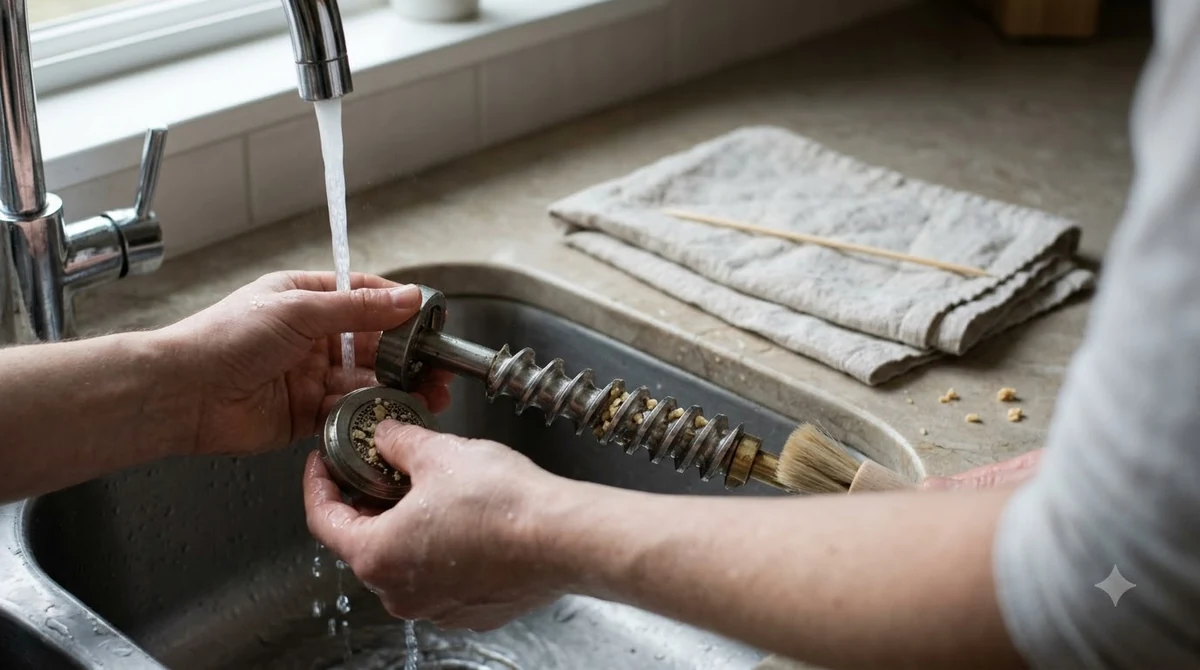

Learning how to clean KitchenAid pasta extruder parts the right way protects the press and keeps every batch smooth. Each part needs different care, so switch the mixer off, unplug it, and let the dough dry before brushing it out.
Dishwasher rules differ by part, and a few common habits can damage the press. Follow the order below after every session, and check the rule for each part before you wash it.
Before You Start, Switch Off and Unplug the Mixer
Set the stand mixer speed control to OFF and unplug the mixer before you touch the pasta press. The booklet lists these two steps first in its cleaning procedure.
Before you learn how to clean KitchenAid pasta extruder parts in detail, have these supplies within reach:
- The cleaning brush, for dough that has fully dried
- A wooden skewer or toothpick, for small bits left in the openings
- Warm sudsy water and a soft cloth, for the parts that are hand washed
The booklet says not to use metal objects during cleaning, so stick to the tools above. Those limits are part of how to clean KitchenAid pasta extruder without damage. Other machines follow different rules, as the guide to how to clean a pasta machine shows.
How to Clean KitchenAid Pasta Extruder: Take It Apart First
Remove the press from the mixer, unscrew the pasta ring, then lift out the plate and pull the auger from the housing.
According to KitchenAid’s disassembly guide, the order is the same for every plate. Work through these steps:
- Turn the mixer off and unplug it.
- Remove the pasta press attachment from the mixer.
- Unscrew the pasta ring. If it is too tight to turn by hand, slip the wrench side of the combo tool over the grooves and turn it.
- Lift out the pasta plate, then use the hook end of the combo tool to pull the auger from the housing.
Once the auger is out, clean any dried dough off it before you go on. Knowing how to clean KitchenAid pasta extruder parts starts with this step, because the auger sits deepest inside the housing and is easy to overlook.
Let Dried Dough Set Overnight, Then Brush It Off
Dough left on the pasta plates should dry overnight before you separate it, then come off with the cleaning brush.
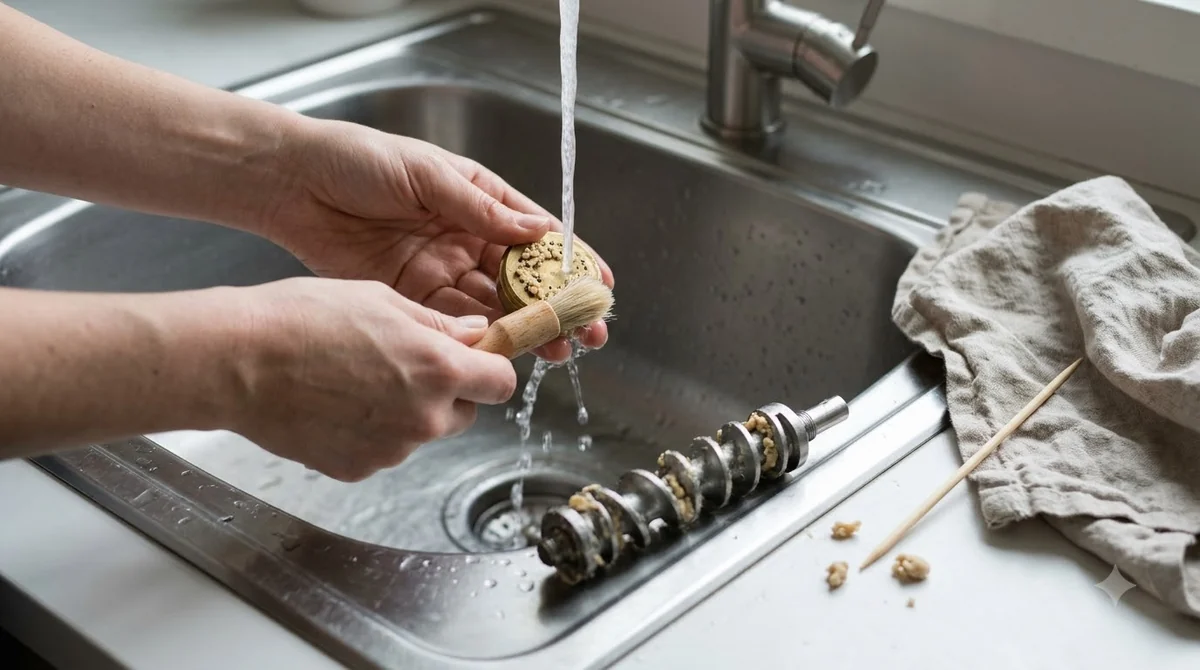
The booklet’s care section tells you to let the dough on the plates dry overnight before separating it. Once it is completely dry, remove it with the cleaning brush, since the booklet specifies completely dried dough for this step.
For small holes and corners, use a wooden skewer or toothpick. Do not use metal objects, and do not put the pasta plates in the dishwasher to clean them, according to the booklet.
Brushing too early is the most common reason this step feels harder than it should. If dough is still soft, wait until the next day rather than scraping at it, and keep the same overnight routine for every batch.
Dishwasher or Hand Wash: Which Parts Go Where
The pasta ring, auger, combo tool and storage case are dishwasher safe, while the housing, cutter and pasta plates need hand washing.
The table below sums up how to clean KitchenAid pasta extruder parts, part by part, so you can check it before each wash.
| Part | Dishwasher | Care notes |
|---|---|---|
| Pasta ring | Yes, top rack | Use the combo tool wrench if it is too tight to turn by hand |
| Auger | Yes, top rack | Clean any dried dough off after pulling it from the housing |
| Combo tool | Yes, top rack | The wrench loosens the ring and the hook pulls out the auger |
| Storage case | Yes | Dishwasher safe according to the booklet |
| Press housing | Never | Do not immerse in water or other liquids; wipe with a damp, soft cloth |
| Cutter | No | Hand wash in warm sudsy water and dry thoroughly |
| Pasta plates | No | Hand wash in warm sudsy water and dry thoroughly |
The online care page confirms the top-rack rule and the wipe-down method for the housing. According to KitchenAid’s cleaning page for the pasta press, you wipe the housing with a damp, soft cloth and then dry it thoroughly with a soft, dry cloth.
Plate by Plate: The Same Cleaning Rule for Every Shape
Every plate in the booklet is cleaned the same way, so the shape you extrude does not change the routine. The plates are hand washed and dried thoroughly, and they never go in the dishwasher. That makes how to clean KitchenAid pasta extruder plates a simple hand-wash job.
The shape does not change the cleanup. Whether you finish with spaghetti or small macaroni, brush off the dried dough, wash the plate by hand, and dry it before storing. For dishes to make with each plate, see these KitchenAid pasta extruder recipes.
If you switch plates in the middle of a session, use the change sequence from the booklet. Turn the mixer off, unplug it, remove the press, take out the cutter, ring and auger, and clean the dough out of the housing before you reassemble.
Mistakes That Can Damage the KitchenAid Pasta Press
The booklet warns against three cleaning habits: immersing the housing, using metal objects, and putting the housing or plates in the dishwasher.
- Immersing the press housing in water or other liquids
- Putting the housing or the pasta plates in the dishwasher
- Using metal objects to remove dried dough
The booklet also says the accessory is designed for pasta dough only, and it warns not to insert anything other than pasta dough. Avoiding these habits matters as much as how to clean KitchenAid pasta extruder parts correctly. The roller attachment has its own routine, covered in how to clean a KitchenAid pasta roller.
Reassemble the Press and Rest the Mixer
Reassemble the press only when every part is dry, and let the mixer rest for at least 1 hour after extruding two consecutive pasta dough recipes.
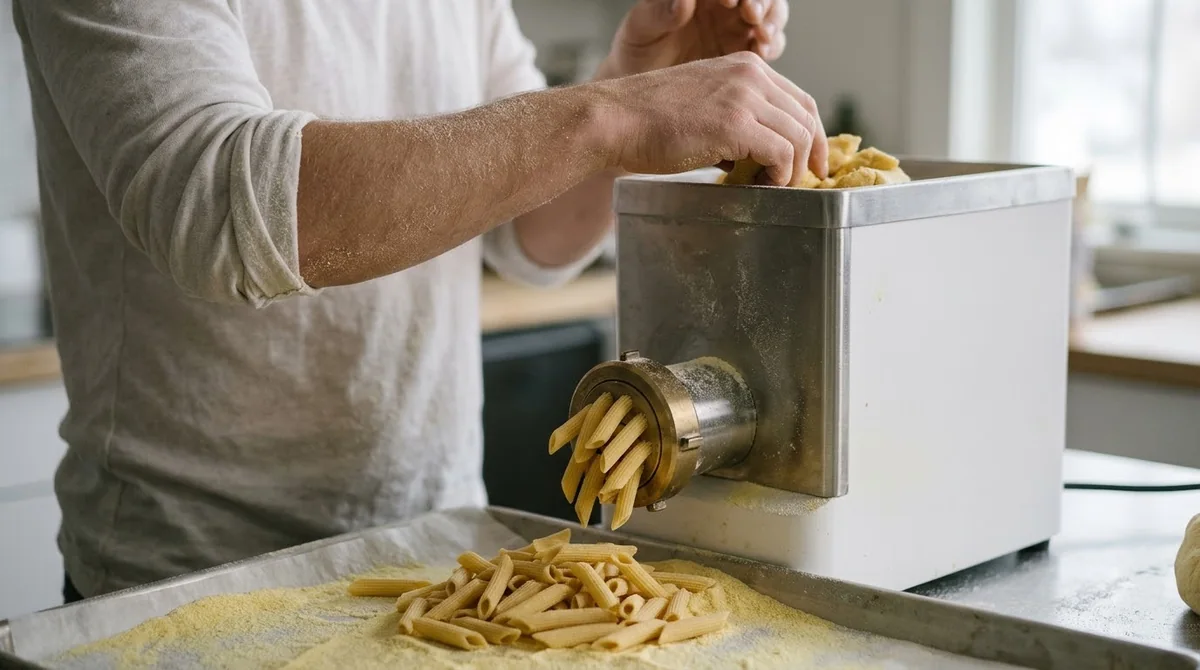
After you finish how to clean KitchenAid pasta extruder, the press goes back onto the mixer once every part is dry. Keep the speed control at OFF and the mixer unplugged while you reassemble, and follow the KitchenAid pasta extruder manual for attaching the press.
Food safety matters too. The booklet says perishable ingredients such as eggs, dairy products and meat should not stay unrefrigerated for more than one hour, so keep that timing in mind while you work through how to clean KitchenAid pasta extruder parts.
Frequently Asked Questions
Can I put the KitchenAid pasta press in the dishwasher?
Not as a whole. The booklet says the press housing must never go in the dishwasher. The pasta ring, auger, combo tool and storage case are dishwasher safe, while the cutter and pasta plates should be hand washed in warm sudsy water and dried thoroughly. Keep that split in mind for how to clean KitchenAid pasta extruder parts after every batch.
How do I get dried dough out of the pasta plates?
Let the dough dry overnight, then remove it with the cleaning brush. Use a wooden skewer or toothpick to pick out what remains. Avoid metal objects, and do not put the plates in the dishwasher, because the booklet rules out both. That is the core of how to clean KitchenAid pasta extruder plates.
Can I rinse the press housing under water?
No. The booklet says not to immerse the press housing in water or other liquids, and that is one of the main rules for how to clean KitchenAid pasta extruder. Wipe it with a damp, soft cloth, then dry it thoroughly with a soft, dry cloth, as KitchenAid’s care guidance describes.
Do I need to unplug the mixer before cleaning?
Yes. Turn the speed control to OFF and unplug the mixer before you remove the press or clean any part. These are the first two steps in the booklet’s cleaning procedure, and they apply even when you only plan to wipe the housing. Safety comes first in how to clean KitchenAid pasta extruder.
How long should the mixer rest after making pasta?
The booklet says the mixer must rest at least 1 hour after extruding two consecutive pasta dough recipes. Plan your cleanup around that break, since the press needs to be dry before you reassemble it.
Follow the same order every time you handle how to clean KitchenAid pasta extruder: power off, take it apart, let the dough dry overnight, brush it out, then wash each part by hand or in the dishwasher as listed above. Keep metal tools away from the plates, and give the mixer its one-hour rest after two batches.
 8 min readBy Use & ModelHow to Clean Ooni Fyra 12 After Every CookUpdated Nov 7, 2026
 8 min readBy Use & ModelHow to Clean Ooni Karu 16 Safely After Every CookUpdated Nov 7, 2026
 8 min readBy Use & ModelHow to Clean Ooni Koda 16 Safely After Every CookUpdated Nov 7, 2026
 8 min readBy Use & ModelKitchenAid Pasta Extruder Manual: Assembly, Speeds and CleaningUpdated Nov 7, 2026
 8 min readBy Use & ModelKitchenAid Pasta Extruder Recipes: 3 Easy Doughs for Homemade PastaUpdated Nov 7, 2026
 9 min readBy Use & ModelHow to Clean KitchenAid Pasta RollerUpdated Nov 10, 2026