
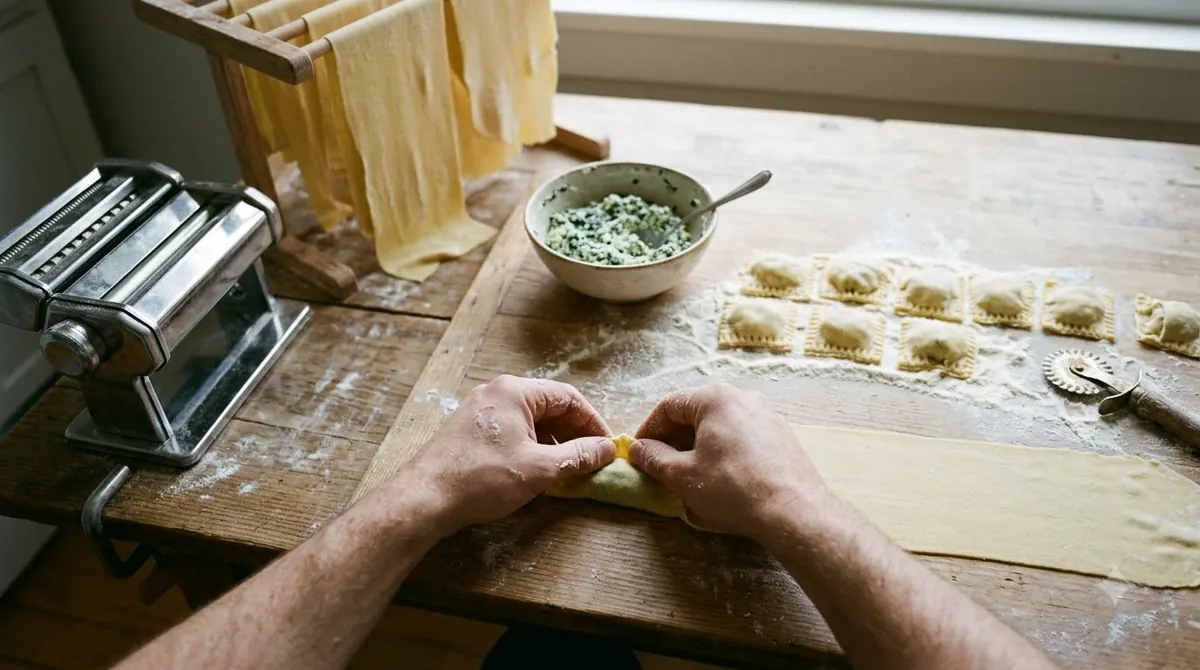

How to freeze ravioli starts with flash-freezing the pieces in a single layer on a dusted tray until firm, then moving them to an airtight bag. Freezing keeps the pieces from sticking together and lets you cook them straight from the freezer. The steps are simple, but the details matter: dust the pieces well, keep them in one layer, and label the bag with the date before it goes in.
Prepare the Ravioli Before Freezing
Start with fresh ravioli that are sealed all the way around, with no gaps where the filling can escape. Handle them gently, because a torn edge will let the filling leak in the freezer.
One guide, the Home Cooking Collective article on storing fresh pasta, suggests a short blanch for stuffed pasta before freezing. It describes blanching the pasta in boiling water for 30 seconds, then draining it and letting it air dry on a kitchen towel for 15 minutes. The same guide notes that stuffed shapes need this step to keep the filling from bursting. Not every source agrees, so decide whether to blanch based on how delicate your filling is.
Dust the ravioli with a little flour or semolina so they do not stick to each other or to the tray. Dusting is the first habit in how to freeze ravioli, and it costs almost nothing. Do not let the pieces overlap.
How to Freeze Ravioli on a Tray First
The tray step is what keeps the pieces separate when you learn how to freeze ravioli at home. Once they are firm, they can go into a bag without fusing into one lump.
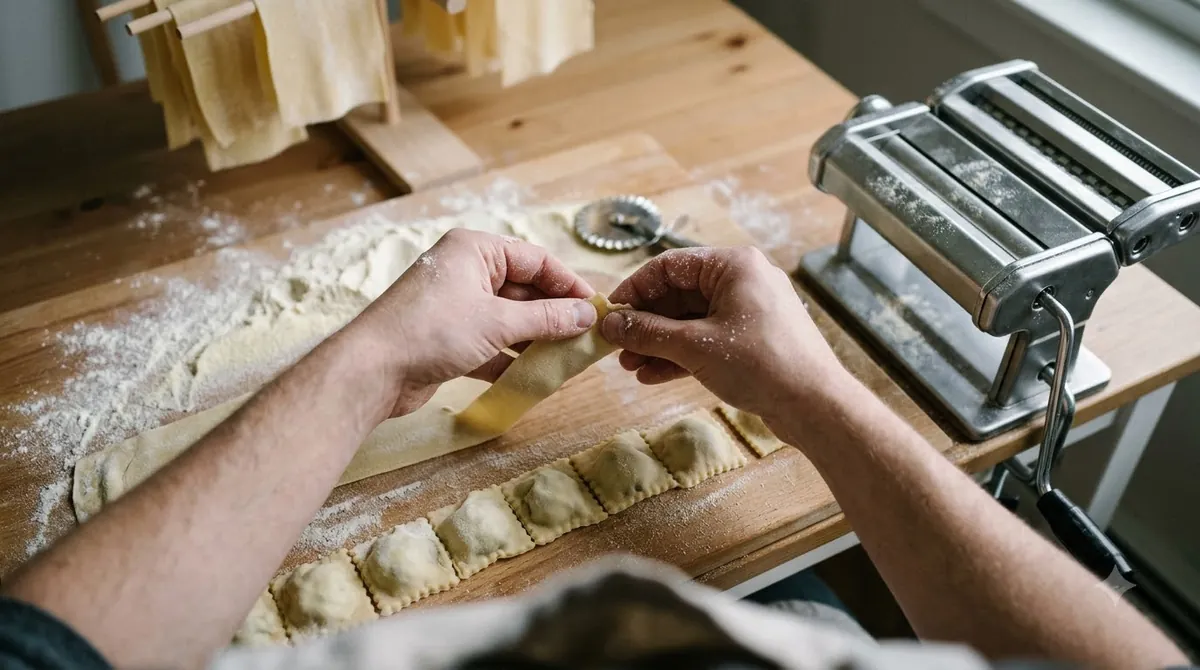
The Home Cooking Collective guide arranges the ravioli on a parchment-lined baking sheet dusted with semolina flour and freezes them uncovered for 1 hour. A second source, Storables on storing fresh uncooked ravioli, describes the same flash-freeze on a parchment-lined sheet for about an hour before moving the pieces to a container.
- Line a baking sheet with parchment and dust it lightly with semolina or flour.
- Arrange the ravioli in a single layer with space between each piece.
- Freeze uncovered for about 1 hour, until the pieces feel firm to the touch.
- Transfer them to an airtight freezer bag or container, press out the air, and label with the date.
How Long Frozen Ravioli Keeps
Quality is the main concern when you learn how to freeze ravioli. The guides do not agree on exact storage times, so treat the figures below as a range rather than a rule.
| Source | Freezer time given |
|---|---|
| Home Cooking Collective (general frozen pasta) | 1 to 2 months, with 1 month for best quality |
| Storables (freezing section) | Up to 3 months |
| Storables (summary section) | Up to 2 months |
A practical plan is to cook the ravioli within about a month for the best texture, and no later than the shortest window any source lists. Write the date on the bag so you can check it at a glance.
Cooking Ravioli From Frozen
You do not need to thaw frozen ravioli. Drop them into boiling, well-salted water and cook until they are tender. The Home Cooking Collective guide says to “cook from frozen (do not thaw)” and that frozen shapes take “30 to 60 seconds longer” than fresh or refrigerated ones.
Cooking is the last part of how to freeze ravioli well. Stir gently in the first minute so the pieces do not stick to the bottom of the pot. Taste one at the time the fresh package suggests, then add time in short steps until the dough is tender.
Tips for Freezing Ravioli Without Sticking
The best results from how to freeze ravioli come down to three habits: keep the pieces dry, keep them separate and keep them cold. Moisture is the enemy, so pat the tray dry if the ravioli look damp after blanching or dusting.
When you learn how to freeze ravioli in batches, work with a few trays rather than one crowded sheet. Crowded pieces fuse at the edges, while a separated batch thaws evenly later. A little extra flour between the pieces does more than you might expect.
Think about the sauce before you freeze. Ravioli frozen plain are the most flexible, because they can be cooked and served with butter and sage, a tomato sauce or a cream sauce. Freezing them without sauce also keeps the filling from picking up off flavors in the freezer.
Finally, label each bag with the filling and the date. If you freeze several fillings at once, a clear label saves you from opening every bag to find the one you want. Clear labels make how to freeze ravioli a repeatable habit rather than a one-time project.
Frequently Asked Questions
Can I freeze ravioli without cooking them first?
Yes. The guides describe how to freeze ravioli before cooking, on a tray, then bagging them. Cook them from frozen when you are ready to eat.
Do I need to thaw ravioli before boiling?
No. The Home Cooking Collective guide says to cook from frozen and do not thaw, and frozen shapes take 30 to 60 seconds longer to cook than fresh ones.
Why do my frozen ravioli stick together?
They were probably not fully firm before bagging, or they were crowded on the tray. Freeze them in one layer until they feel solid, then bag them.
How long can fresh ravioli sit out before freezing?
Do not leave them out for long. Storables advises not to leave ravioli out at room temperature for an extended period, so move them to the freezer soon after shaping.
Does freezing change how ravioli taste?
Some change in texture is normal, which is why the guides suggest using the frozen batch within about a month for the best quality. Keep the bag sealed and cook the ravioli straight from the freezer.
Learning how to freeze ravioli is a small step that saves a lot of time later. Flash-freeze on a dusted tray, bag and label the pieces, and cook them straight from the freezer. Keep a note of the date so the batch gets used while it still tastes its best.
 8 min readLearnHow to Freeze Pesto: Ice Cube Trays, Storage and ThawingUpdated Nov 11, 2026
 8 min readLearnCan You Freeze Cooked Pasta? Storage Times and Reheating TipsUpdated Nov 10, 2026
 8 min readLearnLasagna Noodles: Types, Cooking Tips and StorageUpdated Nov 10, 2026
 9 min readLearnFresh Pasta vs Dried Pasta: How They Differ in Cooking, Storage and SauceUpdated Nov 12, 2026
 8 min readLearnRicotta Ravioli Recipe: Egg Dough, Filling and Cooking StepsUpdated Nov 11, 2026
 8 min readLearnTortellini vs Ravioli: Shape, Filling and Cooking ComparedUpdated Nov 12, 2026