
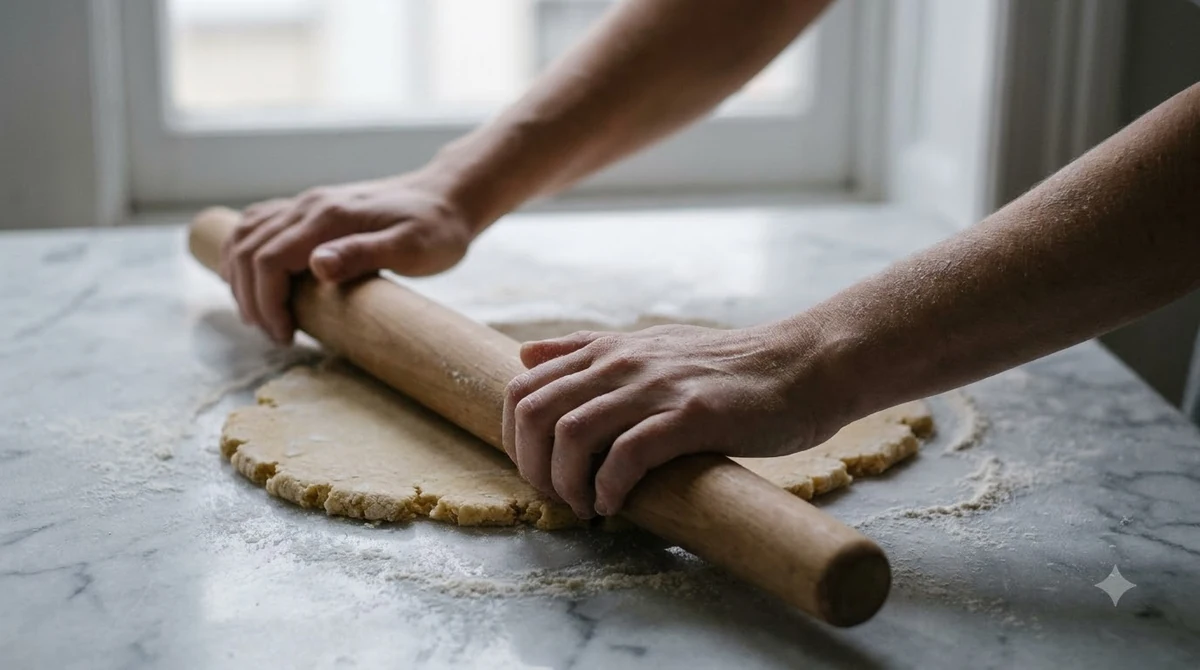

Learning how to make crescia means making a soft milk dough, rolling it thin with lard, coiling it into a spiral and chilling it before the final cook. Cook each flatbread in a hot skillet for about one minute per side until deep brown spots form. The layers of lard give the flatbread its flaky, tender texture.
Crescia is a flatbread from central Italy, and the flaky version is the one most home cooks make first. The technique takes some patience, mostly during the chilling step, but the hands-on work is simple: a soft dough, a thin layer of fat and a hot pan.
What Ingredients Go Into Crescia?
The dough is built from all-purpose flour, salt, black pepper, olive oil, milk, one egg and lard. The milk gives the dough a softer, richer crumb than water, and the lard does the work of separating the layers.
The Pasta Grammar crescia sfogliata recipe uses 500 grams of all-purpose flour, 20 grams of salt, 2 teaspoons of black pepper, 50 grams of extra virgin olive oil, about 320 milliliters of whole milk added gradually, one large egg and 3 to 4 tablespoons of lard. It makes six flatbreads about 10 inches across.
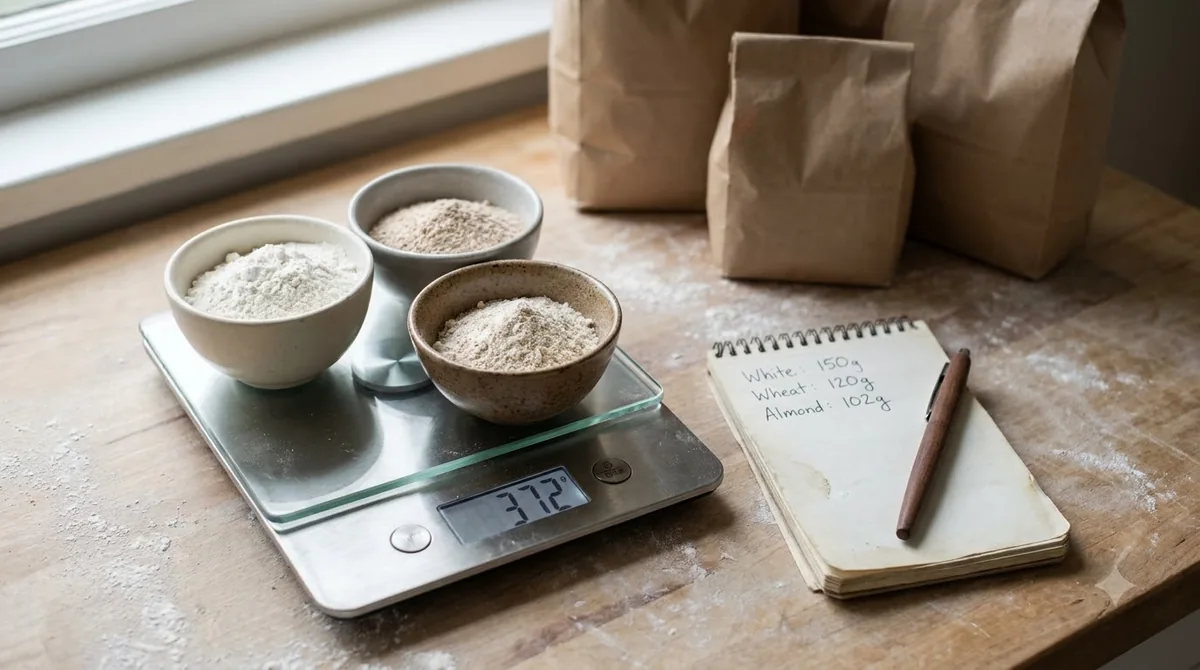
Add the milk a little at a time. The right amount depends on the flour and the humidity in your kitchen, so the dough should feel soft and smooth but not sticky when you stop.
How to Make Crescia Dough
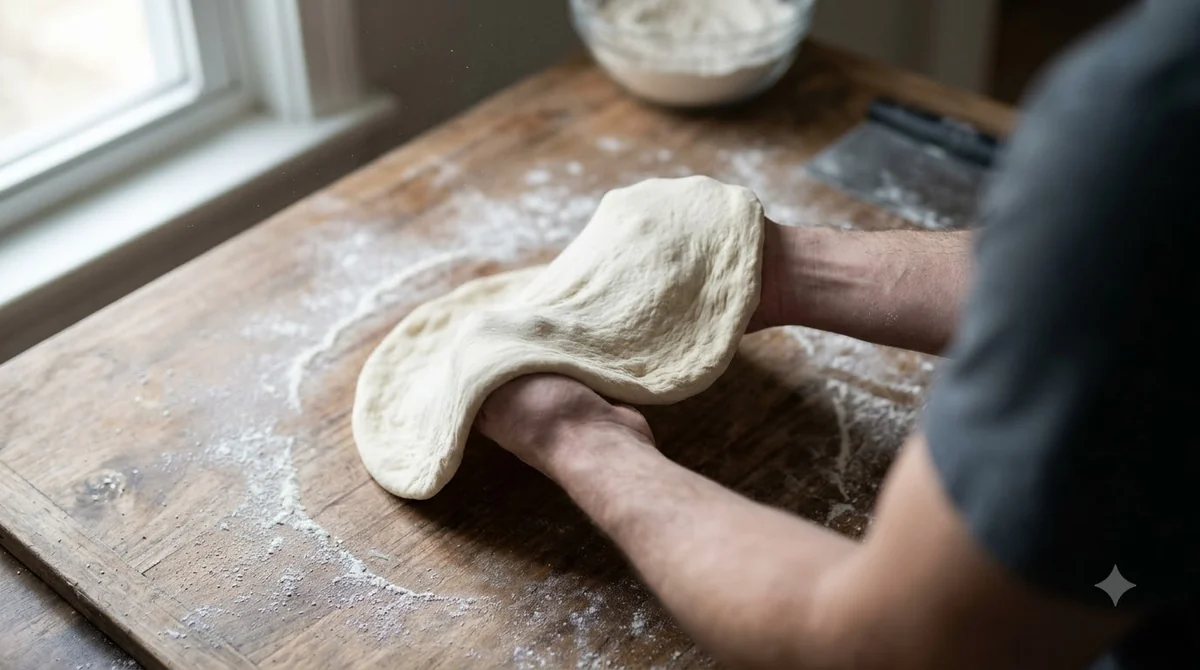
Mix the dry ingredients, add the wet ingredients and knead until smooth. Let the dough rest briefly before dividing it, so it relaxes and rolls out without springing back.
- Mix the flour, salt and pepper, then form a well in the center.
- Add the olive oil, a little milk and the beaten egg, then draw in the flour with a fork.
- Add the rest of the milk slowly and knead until the dough is soft and smooth.
- Cover and rest at room temperature for 15 to 20 minutes, then knead again and cut into six equal pieces.
How Do You Layer Crescia With Lard?
Roll each piece into a circle about 10 inches across, spread a very thin layer of lard over it, then roll it up tightly. The rolled tube is what creates the flaky layers when the flatbread cooks.
Rub a little more lard on the outside of the tube, then coil it into a tight spiral, much like a cinnamon roll. Wrap each spiral in plastic and refrigerate it. The recipe calls for at least five hours, and overnight is better, because the cold dough is easier to roll out and keeps its layers.
How Long Should Crescia Chill Before Cooking?
Chill the spirals for at least five hours before cooking, and overnight if you can plan ahead. The chill firms the lard so the layers hold, and it makes the dough much easier to flatten.
Keep the spirals wrapped until you are ready to cook. Take one out, unwrap it and roll it flat again to about 10 inches. Cold dough tears less than warm dough, so do not let it sit out for long.
A simple timeline helps. Mix the dough and make the spirals in the afternoon, wrap them and refrigerate them overnight, then cook them the next day. Because the chill is the step you cannot rush, planning the schedule around it is the easiest way to get the flaky layers the recipe is after.
How Do You Cook Crescia in a Skillet?
Cook crescia in a large non-stick skillet. Preheat the pan over high heat, then lower it to medium-high before the first flatbread goes in.
- Lay the flattened dough in the dry pan and cook for about one minute.
- Flip and cook about one minute on the other side.
- Keep flipping roughly every minute, about three times per side, until deep brown spots form.
- Stack the finished flatbreads and cook the rest, one at a time.
Why Is My Crescia Tough or Not Flaky?
Tough crescia usually means the dough was overworked, rolled too thick or cooked too long. Flaky layers depend on the lard being spread thin and the dough being cold when you roll it.
Why Did the Layers Not Separate?
The lard layer was probably too thick or the spiral was too loose. Spread only a very thin layer, roll the tube tightly and chill it fully before rolling it out again.
Why Is the Flatbread Pale?
The pan may not have been hot enough. Preheat over high heat, then lower to medium-high so the bread browns without burning before the center cooks.
Frequently Asked Questions
Can I use water instead of milk in crescia?
The recipe uses milk, which keeps the dough soft and tender. Water would give a leaner, less rich flatbread and may need different amounts, so change one thing at a time if you try it.
Can I make crescia dough ahead of time?
Yes. The layered spirals are meant to chill, and the recipe calls for at least five hours, preferably overnight. Keep them wrapped in plastic in the refrigerator until you cook them.
How many crescia does one batch make?
The Pasta Grammar recipe makes six flatbreads, each about 10 inches across. Divide the dough into equal pieces if you want more, smaller flatbreads. Smaller rounds cook a little faster, so start checking for brown spots sooner.
How Should I Serve Crescia?
Serve crescia warm, while the outside is still crisp and the layers are tender. Cut it into wedges or tear it at the table, and fill it with cured meat, soft cheese or simple vegetables if you like a sandwich-style meal. Wrap cooked flatbreads loosely in a clean towel while you finish the rest, so they stay soft instead of drying out.
Do I need lard for crescia?
The lard is what builds the layers in this version, so it is an important step rather than a garnish. Use the amount in the recipe for the flaky texture described above.
Crescia rewards the chilling step more than any other part of the recipe. Make the dough, roll it with a thin layer of lard, coil it and leave it cold until you are ready. Then cook it hot and fast until the spots are deep brown, and serve it warm while the layers are still tender.
 6 min readLearnHow to Make Flatbread in a Pizza OvenUpdated Nov 13, 2026
 7 min readLearnNaan Pizza Recipe: A Quick Homemade Flatbread PizzaUpdated Nov 11, 2026
 9 min readLearnPizza Bianca Recipe: Roman Olive Oil Flatbread at HomeUpdated Nov 10, 2026
 7 min readLearnWhat Is Pinsa? The Oval Roman Flatbread ExplainedUpdated Nov 6, 2026
 6 min readLearnHow to Make Risotto: Arborio Rice, Warm Stock and Stirring TipsUpdated Nov 13, 2026
 6 min readLearnHow to Make Cacio e Pepe Without ClumpingUpdated Nov 13, 2026