
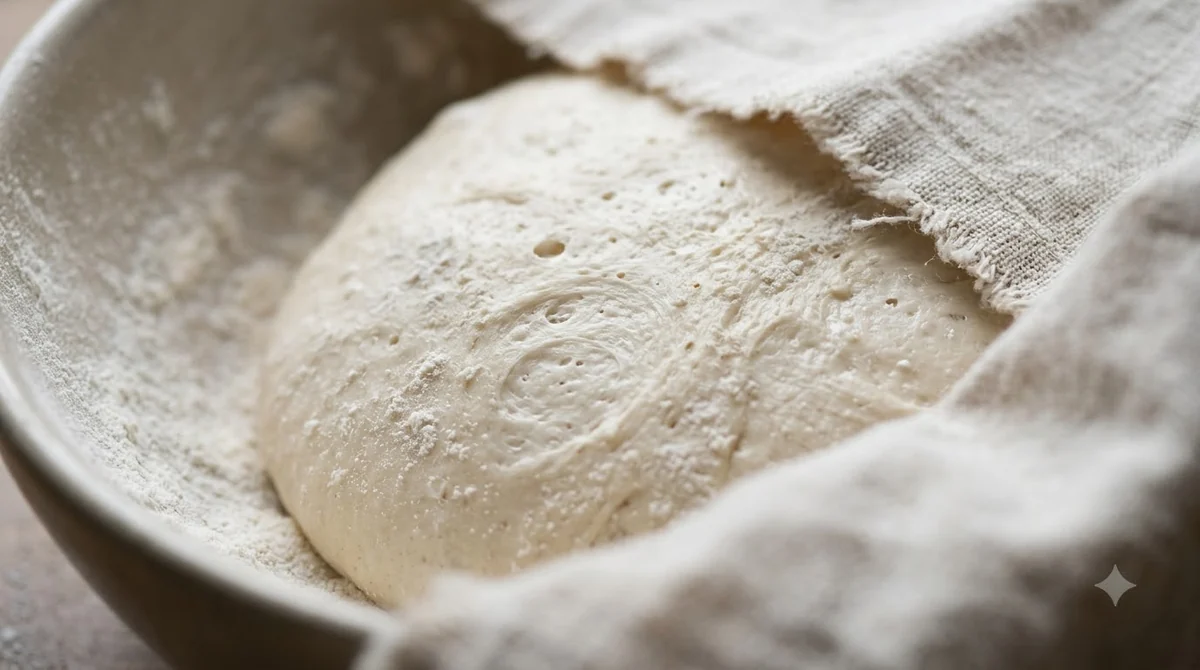

A pizza bianca recipe makes a plain Roman flatbread with olive oil and salt, with no tomato sauce and no cheese on top. It comes from Rome, Lazio, in Italy, and Wikipedia describes it as a plain yeast flatbread that more closely resembles focaccia than typical cheese-topped pizza. The method for this pizza bianca recipe is mostly about a soft dough, a long enough rise, and a very hot oven.
What Pizza Bianca Is
This is a white Roman flatbread: its name means “white pizza” in Italian, but the look and the flavor are closer to focaccia. According to the Wikipedia entry on pizza bianca, it is a plain yeast flatbread, and it is often split open and filled with prosciutto, Parmesan or arugula. It is usually eaten hot.
The history is older than most people expect. The same reference notes a 1666 mention of a version made with lard-coated dough topped with cheese and basil, and several 19th-century mentions alongside pizza rossa. In 2019 the Italian government recognized “Pizza Bianca Romana alla Pala del Fornaio” as a traditional agri-food product of Italy, which is a useful sign that the bread is still a living tradition in Rome and not only a historical curiosity.
If you have only had American-style white pizza, the first thing to know is that this is a different food. The two names are easy to mix up, and the next section explains the difference in plain terms.
Pizza Bianca vs White Pizza
The Roman bread is plain, with oil and salt, while American white pizza is a pie built on a garlic and ricotta base with mozzarella on top. Wikipedia includes a hatnote warning that pizza bianca is not to be confused with white pizza, and the two should be treated as separate recipes. For the American version, see this American-style white pizza method.
| Feature | Pizza bianca | American white pizza |
|---|---|---|
| Origin | Rome, Lazio, Italy | United States |
| Base | Yeast dough brushed with olive oil | Pizza dough with a garlic and ricotta base |
| Toppings | Salt, olive oil, sometimes herbs; often filled after baking | Mozzarella and Parmesan |
| Texture | Soft, airy, closer to focaccia | Crisp pie with melted cheese |
Choose the Roman bread if you want a bread to tear, split and fill. For another Roman option, see Roman pizza sold by the slice. Choose white pizza if you want a pie that is topped and sliced like a cheese pizza.
How to Make This Pizza Bianca Recipe at Home
Every pizza bianca recipe starts with a simple yeast dough: flour, water, yeast and salt, with olive oil worked in or added later. Because the bread is not topped heavily, the dough itself carries most of the flavor, so take time with the mixing and rise rather than rushing to the oven.
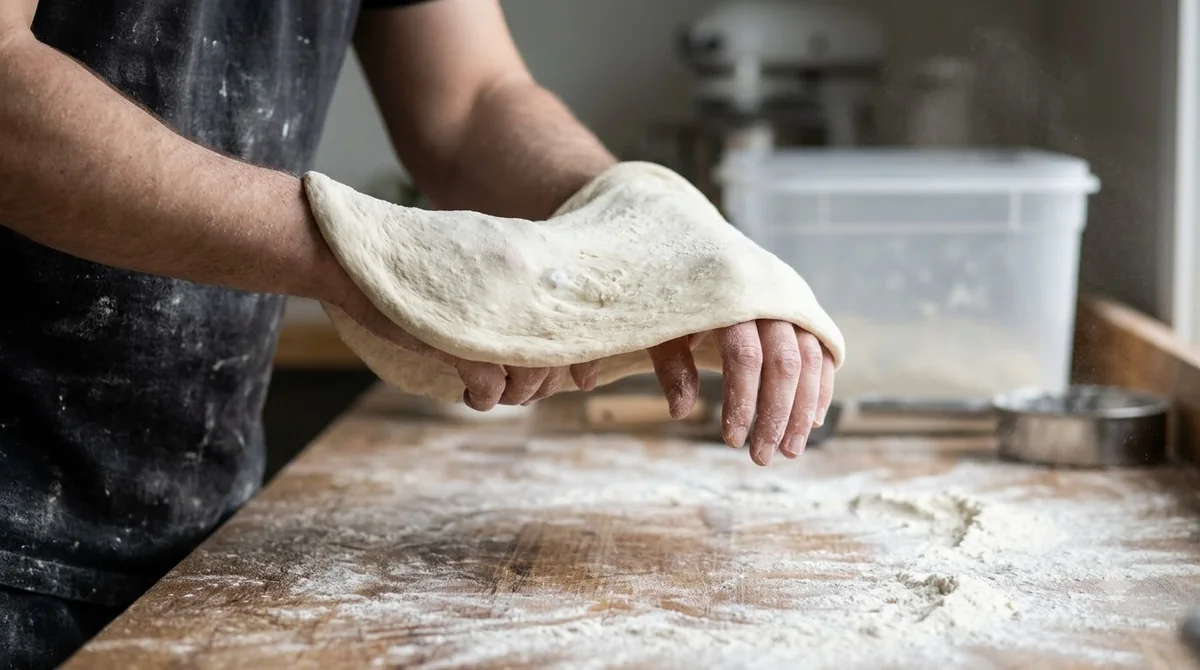
Wikipedia’s focaccia article points out the key difference from a pizza: focaccia is left to rise again after it is flattened, while pizza is baked straight away. This bread sits between the two, so the rise after shaping is worth taking seriously. Work the dough gently, let it relax, then press it out in the pan or on the peel without tearing the surface.
The King Arthur Baking pizza bianca recipe makes two 15-inch flatbreads and takes about 15 hours 30 minutes in total, most of it hands-off rising. Its dough uses these amounts:
- 360 g (3 cups) unbleached all-purpose flour
- 21 g (2 tablespoons) semolina flour, plus more for shaping
- 9 g (1 1/2 teaspoons) table salt
- 2 g (3/4 teaspoon) instant yeast
- 303 g (1 cup plus 1/3 cup) room-temperature water
- 25 g (2 tablespoons) extra-virgin olive oil, plus about 1 tablespoon per pizza
- Flaky sea salt for sprinkling
The method for this pizza bianca recipe follows these steps:
- Combine the flours, salt and yeast, add the water, and mix for about 1 minute until a shaggy, sticky dough forms. Cover and rest for 30 minutes.
- Stretch and fold the dough in the bowl 10 to 15 times, turning the bowl a quarter turn between folds, then rest it at room temperature for 1 to 2 hours.
- Fold the dough 6 to 8 more times, cover it, and refrigerate for 12 to 24 hours.
- Divide the dough in half (about 340 g each), stretch each piece into a rough 7 by 5 inch rectangle, fold it, and rest it on semolina for 1 1/2 to 2 hours.
- About 1 hour before baking, heat the oven to 500°F with a baking stone or steel on the center rack.
- Dust each piece heavily with semolina, dimple it end to end, and let gravity stretch it to about 16 inches, then shape it into a 16 by 5 inch rectangle on parchment.
- Drizzle each piece with about 1 tablespoon of olive oil, sprinkle with sea salt, and bake for 12 to 14 minutes, until golden brown and crispy.
Those times come from one tested source. Other recipes use different flour, hydration and rise times, so treat this pizza bianca recipe as a reliable starting point and check your own oven’s manual for its maximum temperature. A long cold rise is a common way to build flavor, as in this one-day cold fermentation timeline, and you can read how to choose and preheat a pizza steel for the baking surface.

Finishing with Olive Oil and Salt
The oil and salt are what make pizza bianca taste finished. The Wikipedia focaccia article describes the Ligurian version as brushed or sprinkled with olive oil and coarse salt before the final rise, and the same idea carries over to the Roman flatbread.
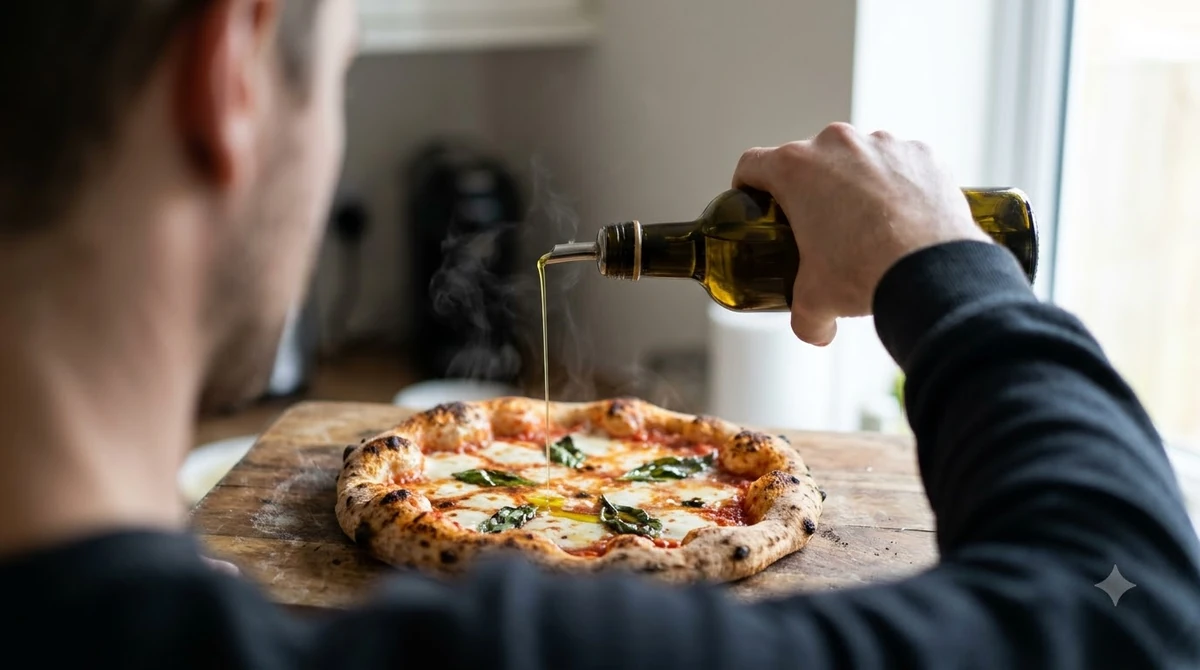
Use a good extra-virgin olive oil for the finish of any pizza bianca recipe, since the oil is one of the few flavors on the bread. Coarse salt gives small bursts of salt that plain table salt does not, and you should add it just before baking so it stays on the surface.
- Brush the oil on evenly so the bread browns without dry patches.
- Add the salt after dimpling so it settles into the holes.
- Hold back a little oil to drizzle over the bread when it comes out hot.
What to Serve with This Pizza Bianca Recipe
The bread is often split open while still warm and filled. Wikipedia lists prosciutto, Parmesan and rocket (arugula) as common fillings, which makes it a sandwich-style bread rather than a topped pie.
Serve this pizza bianca recipe warm, cut into strips or wedges, next to a bowl of olive oil for dipping. For a simple lunch, split it, add thin prosciutto and a handful of arugula, then finish with a few shavings of Parmesan.
Common Mistakes
Most problems with a pizza bianca recipe come from the dough, not the topping. A dough that is too stiff bakes dense, and a dough that is shaped too hard before its rise tears and loses the airy crumb.
- Rushing the rise, so the crumb stays tight.
- Pressing the dough flat with force, which knocks out the air you built up.
- Baking in an oven that is not hot enough, so the bread dries before it browns.
- Adding too much topping. The bread is meant to stay simple.
Too much oil on the surface can also make the base greasy and heavy, so keep a little back for drizzling after the bread comes out of the oven. Leftovers are best reheated in a hot oven or a dry pan rather than a microwave, which tends to soften the crust.
A Quick Pizza Bianca Recipe With Store-Bought Dough
If you do not want a 15-hour timeline, the Giada De Laurentiis pizza bianca recipe on Food Network starts from 1 pound of purchased pizza dough and has no rise step. It serves 6, with 10 minutes of prep and 15 minutes of baking.
- 1 pound purchased pizza dough, plus flour for the work surface
- 2 teaspoons extra-virgin olive oil
- 1 tablespoon chopped fresh thyme leaves
- 3/4 teaspoon good quality coarse salt
Heat the oven to 450°F with the rack in the center. Roll the dough to 1/2 inch thick on a lightly floured surface, move it to a heavy large baking sheet, and pierce it all over with a fork. Drizzle with the oil, sprinkle with the thyme and salt, and bake until golden, about 15 minutes.
The two recipes differ a lot: one is a slow, wet dough baked at 500°F on a stone, and the other is a thicker, fast sheet-pan bread baked at 450°F. Pick the long pizza bianca recipe for an airy crumb and the quick one for a weeknight. The numbers above come only from these two named sources, because the Wikipedia entry gives no quantities.
Frequently Asked Questions
Is this pizza bianca recipe the same as white pizza?
No. It is a plain Roman flatbread with olive oil and salt. American white pizza is a tomato-free pie usually built on ricotta, garlic and mozzarella.
What does pizza bianca mean?
The name means “white pizza” in Italian, because it has no tomato sauce.
Is pizza bianca like focaccia?
Wikipedia describes pizza bianca as closer to focaccia than to cheese pizza. Focaccia is usually left to rise after it is flattened, while pizza is baked right away.
What do you put on pizza bianca?
The classic finish for a pizza bianca recipe is olive oil and coarse salt. Wikipedia also lists prosciutto, Parmesan and arugula as common fillings when the bread is split.
Can you make a pizza bianca recipe without a pizza oven?
Yes. The King Arthur version bakes at 500°F on a baking stone or steel, and the Food Network version bakes at 450°F on a heavy baking sheet, so a home oven is enough. Check your oven’s maximum temperature in its manual before you start.
How long does a pizza bianca recipe take?
The King Arthur pizza bianca recipe takes about 15 hours 30 minutes in total because of a 12 to 24 hour cold rise, while the Food Network version with store-bought dough takes about 25 minutes.
Can I use the same dough for regular pizza?
The dough in a pizza bianca recipe is a yeast dough like other pizza doughs, so the same care with mixing and rising applies. The difference is the finish: this bread is meant to be plain and oily, so a heavy load of sauce and cheese changes what you end up with. Keep the topping light if you want the Roman result.
This bread rewards patience more than skill. Get the dough soft, let it rise properly, and keep the topping simple, and the bread will taste the way it does in Rome. Start with one of the two tested pizza bianca recipes above, bake it once, then adjust the rise and the oven heat on the next batch.
 8 min readLearnPizza Dough with Olive Oil: Simple Recipe and MethodUpdated Nov 11, 2026
 7 min readLearnWhat Is Pinsa? The Oval Roman Flatbread ExplainedUpdated Nov 6, 2026
 9 min readLearnTypes of Olive Oil: Grades, Uses, and How to ChooseUpdated Nov 10, 2026
 8 min readLearnOlive Oil Smoke Point: What the Numbers Mean for Your CookingUpdated Nov 10, 2026
 9 min readLearnHow Long Does Olive Oil Last?Updated Nov 11, 2026
 8 min readLearnHow to Tell If Olive Oil Is Real: Label, Grade, and Taste ChecksUpdated Nov 11, 2026