
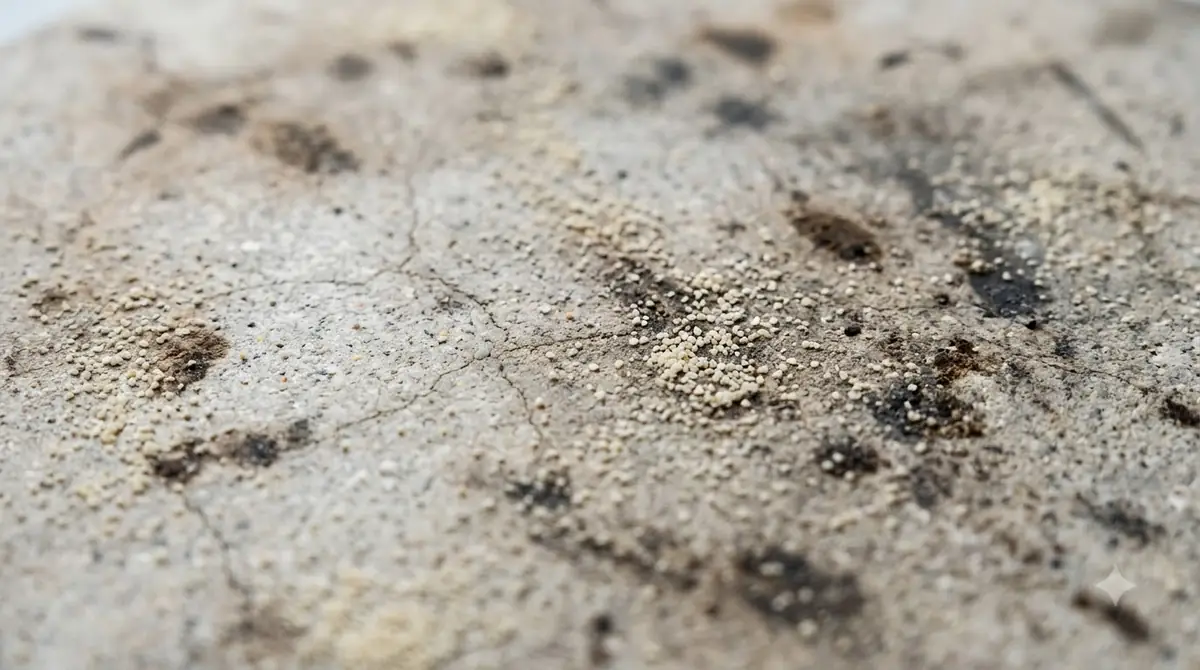

Learning how to make crispy bottom pizza in a home oven comes down to two things: a fully preheated hot surface and a dry base. The dough has to meet a surface hot enough to set the bottom quickly, before sauce and cheese release their water. Home ovens run cooler than pizza ovens, so the surface has to store the heat in advance.
It is mostly a timing job. Preheat for a full hour, set the oven to its highest setting, then par-bake or use a perforated pan if the base still goes soft. Sources give different preheat times, so aim for the longer one.
Why the Bottom Stays Pale and Soft at Home
Knowing how to make crispy bottom pizza in a home oven starts with the cause. A pale, soft base usually means the surface was not hot enough when the dough landed, or the base picked up too much water from sauce or cheese. If that sounds familiar, the guide to how to fix soggy pizza covers the same problem from the other side.
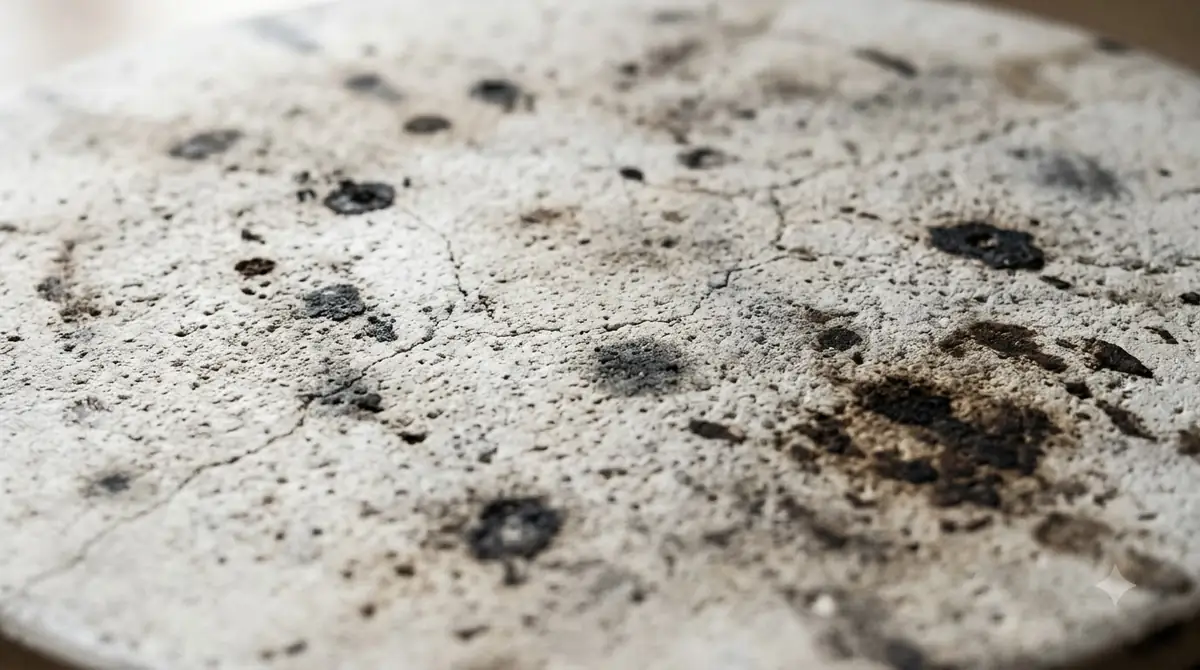
Heat moves into dough fastest through direct contact with a hot solid. A rack that is heated only by the air in the oven hands heat to the dough much more slowly, so the top can cook while the bottom stays pale.
A stone also changes how moisture behaves, which matters for any plan on how to make crispy bottom pizza in a home oven. According to Wikipedia’s baking stone entry, the porous nature of the stone absorbs moisture, which makes the crust crisper.
Oven air alone rarely gives the base enough heat in a short bake. A dense surface that has been soaking up heat for an hour holds far more energy than the air around it, and that stored energy is what sets the crust.
The steam from wet sauce and cheese is what keeps the bottom soft. Dry the surface, keep the toppings light and give the base a hot, dry surface to set on.
How to Make Crispy Bottom Pizza in a Home Oven: Preheat for a Full Hour
Preheat a baking steel or stone for one hour before the first pizza goes in, because that stored heat is the core of how to make crispy bottom pizza in a home oven.
America’s Test Kitchen’s method uses a baking stone set about 4 inches from the broiler, heated with the oven at 500 degrees for one hour. Follow these steps:
- Place the steel or stone on the upper rack, about 4 inches from the broiler.
- Set the oven to its highest setting and close the door.
- Preheat for a full hour. Wikipedia cites at least 45 minutes for a stone that starts in a cold oven, so one hour gives a safe margin. The how long to preheat a pizza stone guide goes deeper on timing.
- Heat the broiler for 10 minutes before you shape the dough, as the same method suggests.
Wikipedia also describes a stone that is preheated in a cold oven over at least 45 minutes and then left to cool slowly in the oven after it is switched off. Steel conducts heat better than stone, so it gives the fastest bottom crust. Wikipedia also notes that steel can give off too much heat for bread, cookies and croissants, so it suits pizza better than most baking.
Set the Oven to Its Highest Setting
Set the oven to its highest setting, usually between 475°F and 500°F, and leave it there for the whole bake.
The oven setting matters as much as the surface. Breville’s guide advises preheating for at least 30 minutes at the highest setting, which it puts at usually 475°F to 500°F. That is a minimum. It does not replace the longer surface preheat described above. Our guide to the best temperature to bake pizza in a home oven compares settings.
If your oven has a probe or thermometer, check that it has reached the setting before you slide the pizza in. A preheat that finishes early leaves the surface cooler than the dial suggests.
Par-Bake the Base or Use a Perforated Pan
Par-baking the bare base at 450°F for 8 to 14 minutes is the most reliable way to make crispy bottom pizza in a home oven when the dough is thick. It sets the crust before any wet toppings go on, and a perforated pan lets moisture escape from below. The full method is in how to par-bake pizza crust.
King Arthur Baking’s parbake method bakes the unladen crust at 450°F until it looks pale and matte with slight browning at the edges. The time depends on thickness: about 8 minutes for thin crust, 10 to 12 minutes for medium and 12 to 14 minutes for thick.
- Parbake the plain base until it looks and feels set on top.
- Add sauce, cheese and toppings to the parbaked base.
- Return it to the upper rack for about 10 to 15 minutes to finish.
Breville’s shorter method, useful when you want to learn how to make crispy bottom pizza in a home oven quickly, parbakes for 3 to 5 minutes before adding sauce. The two sources differ, so start with King Arthur’s times if your dough is thick.
If you skip the par-bake, a perforated pan allows moisture to escape while it bakes, which Breville says promotes a crispier bottom crust. A half-sheet pan is another option, but King Arthur notes that its low thermal mass means it cools quickly once the pizza is placed on it. Denser, heavier materials hold more heat, provided they are preheated.
Keep Sauce, Cheese and Toppings From Soaking the Dough
A thin, even layer of sauce and low-moisture mozzarella keeps the base dry enough to crisp in the oven, and it is a core part of how to make crispy bottom pizza in a home oven.
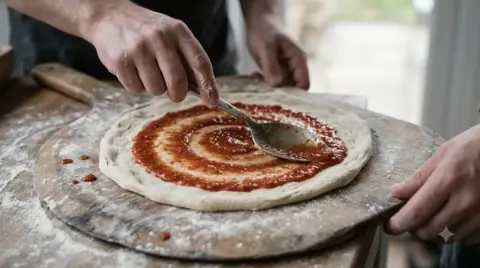
- Spread the sauce in a thin, even layer. Breville warns that too much sauce can weigh down the crust and make it soggy.
- Choose low-moisture mozzarella, which Breville says helps prevent sogginess. See low-moisture vs fresh mozzarella for pizza for the trade-offs.
- Pre-roast or lightly dry wet vegetables to reduce their water content before they go on.
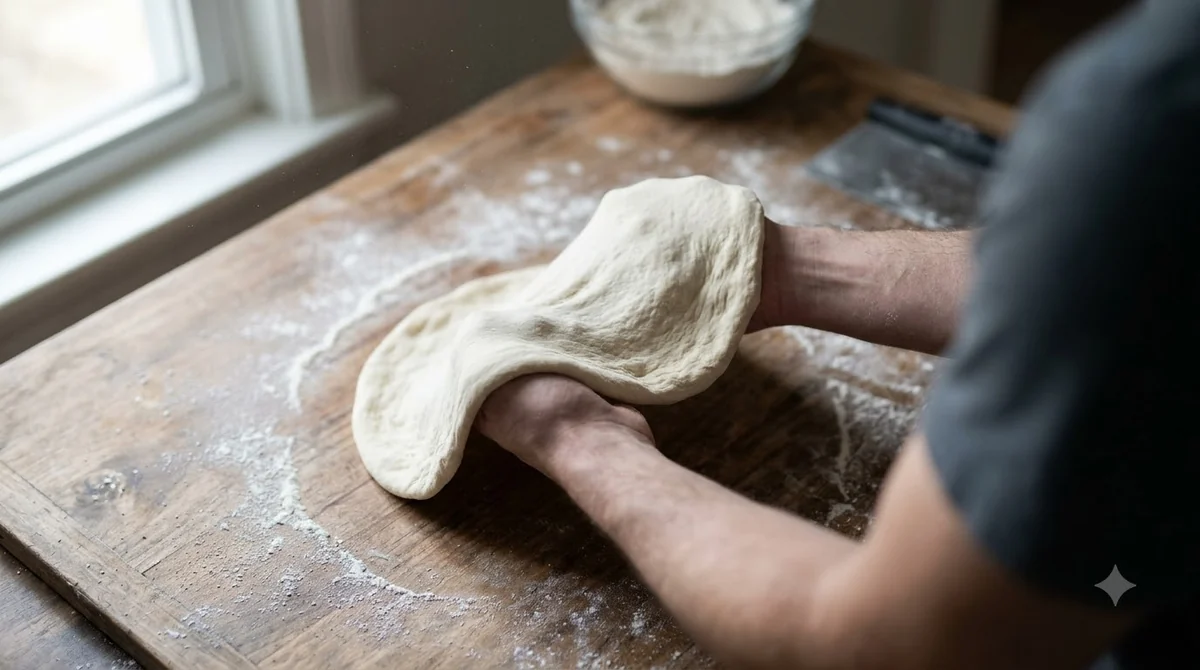
- Hand-stretch the dough rather than rolling it. Breville says rolling can push out the gas pockets formed during fermentation.
- For thin, crisp dough, Breville suggests a hydration between 60% and 65%.
Thin dough and a dry topping layer do most of the work. A thick, saucy pizza will stay soft on the bottom even on a well-heated stone, so match the amount of sauce to the surface you have.
Stone, Steel, Sheet Pan, or Perforated Pan: Which Works Best
Choosing the right surface is part of how to make crispy bottom pizza in a home oven. A steel transfers heat fastest, a stone stores heat and absorbs moisture, and a preheated sheet pan works but cools quickly once the pizza is on it.
| Surface | Preheat (source) | How it helps the bottom | Watch for |
|---|---|---|---|
| Baking steel | One hour (King Arthur) | Conducts heat better than stone (Wikipedia) | Gives off too much heat for bread, cookies and croissants (Wikipedia) |
| Baking stone | At least one hour (King Arthur); at least 45 minutes from a cold oven (Wikipedia) | Porous, absorbs moisture for a crisper crust (Wikipedia) | Absorbs any fluid it contacts, so do not clean it with detergent (Wikipedia) |
| Half-sheet pan | Preheat it fully before the pizza goes on (King Arthur) | Heats the base directly | Low thermal mass, cools quickly (King Arthur) |
| Perforated pan | Not stated in the source | Lets moisture escape, promotes a crispier bottom (Breville) | Preheat with the oven so the base still starts hot |
If you bake pizza often, a steel gives the fastest bottom and is worth the longer preheat. If you bake occasionally, a preheated stone or perforated pan with the full preheat is a practical start. Both options rely on the same habits: a hot surface, a thin layer of sauce and a dry base.
Frequently Asked Questions
How to make crispy bottom pizza in a home oven without a stone?
Yes. A heavy pan or a perforated pan, preheated fully with the oven, can work without a stone. Breville says a perforated pan lets moisture escape, so the base dries as it bakes. King Arthur notes that a half-sheet pan cools quickly once the pizza is on it, so choose a heavier pan where you can.
Why is the bottom still soft after 15 minutes?
Usually the surface was not hot enough when the dough went down, or the base picked up water from sauce, cheese or vegetables. Check the preheat time, the sauce layer and the cheese first, since those decide how much moisture reaches the base. Those three checks are the fastest route to crispy bottom pizza in a home oven.
Should I par-bake every time?
Not always. For most home bakes, par-baking is a tool for how to make crispy bottom pizza in a home oven when the base is heavy. It helps most with wet sauce, heavy toppings or thick dough. Breville suggests 3 to 5 minutes before adding sauce, while King Arthur’s times run from 8 to 14 minutes depending on thickness, so follow the one that matches your dough.
Which mozzarella is best for a crisp base?
Breville recommends low-moisture mozzarella, which helps prevent sogginess. If you use a wetter cheese, dry it thoroughly before it goes on the dough.
What temperature should I bake at?
For how to make crispy bottom pizza in a home oven, use the highest setting your oven offers, usually between 475°F and 500°F according to Breville. America’s Test Kitchen’s stone method also uses 500 degrees.
If you bake pizza often, a baking steel gives the fastest bottom crust and justifies the longer preheat. If you bake occasionally, a preheated perforated pan, a thin layer of sauce and a full hour of preheat are a practical start. Change one thing at a time so you can see which fix made the difference.
 6 min readLearnHow to Make Chicken Parmesan in the Oven with a Crispy CoatingUpdated Nov 13, 2026
 7 min readLearnWhy Is My Pizza Burning on the Bottom?Updated Nov 6, 2026
 6 min readLearnHow to Make Arancini: Crispy Fried Risotto Rice BallsUpdated Nov 13, 2026
 6 min readLearnHow to Make Flatbread in a Pizza OvenUpdated Nov 13, 2026
 5 min readLearnHow to Make S’mores in a Pizza OvenUpdated Nov 13, 2026
 8 min readLearnPotato Pizza Recipe: How to Make It at Home in a Hot OvenUpdated Nov 7, 2026