
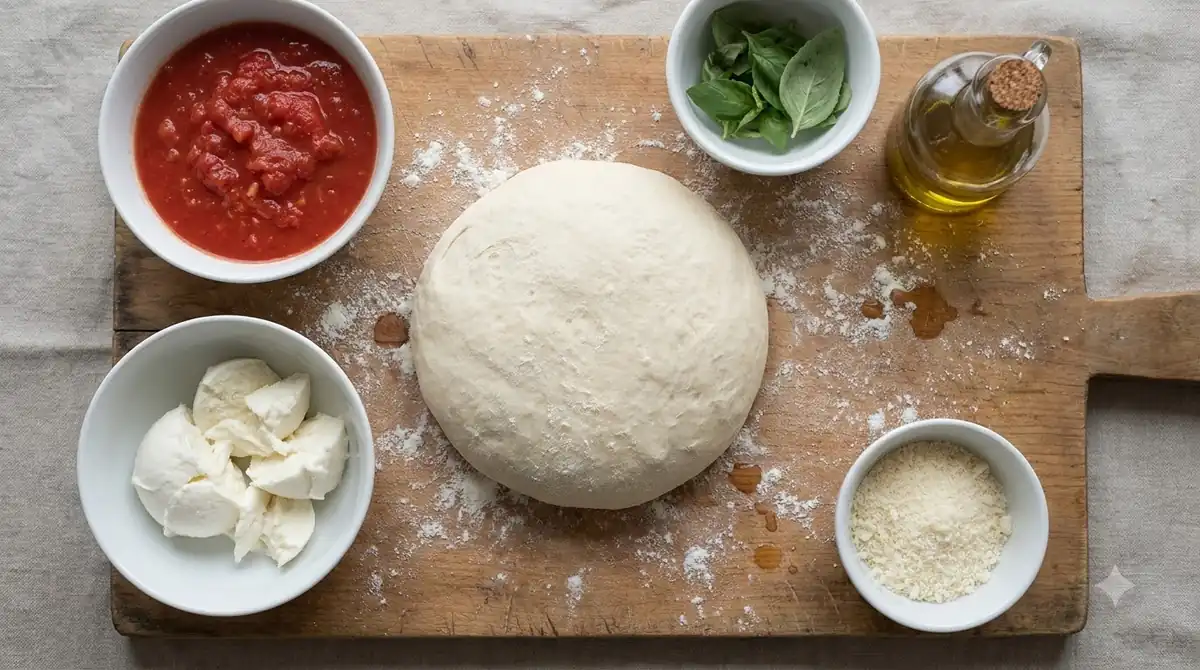

Low moisture vs fresh mozzarella for pizza comes down to how much water the cheese carries into the oven. Low moisture mozzarella is the denser, drier cheese made for baking, while fresh mozzarella is a soft ball stored in brine or whey. Three factors decide low moisture vs fresh mozzarella for pizza: water content, browning and storage.
Low Moisture vs Fresh Mozzarella for Pizza: Key Differences
In low moisture vs fresh mozzarella for pizza, the water difference matters most. Fresh mozzarella holds much more water, while low moisture mozzarella is partly dried and denser. Fresh mozzarella is usually sold as balls of about 90 g, stored in brine or whey.
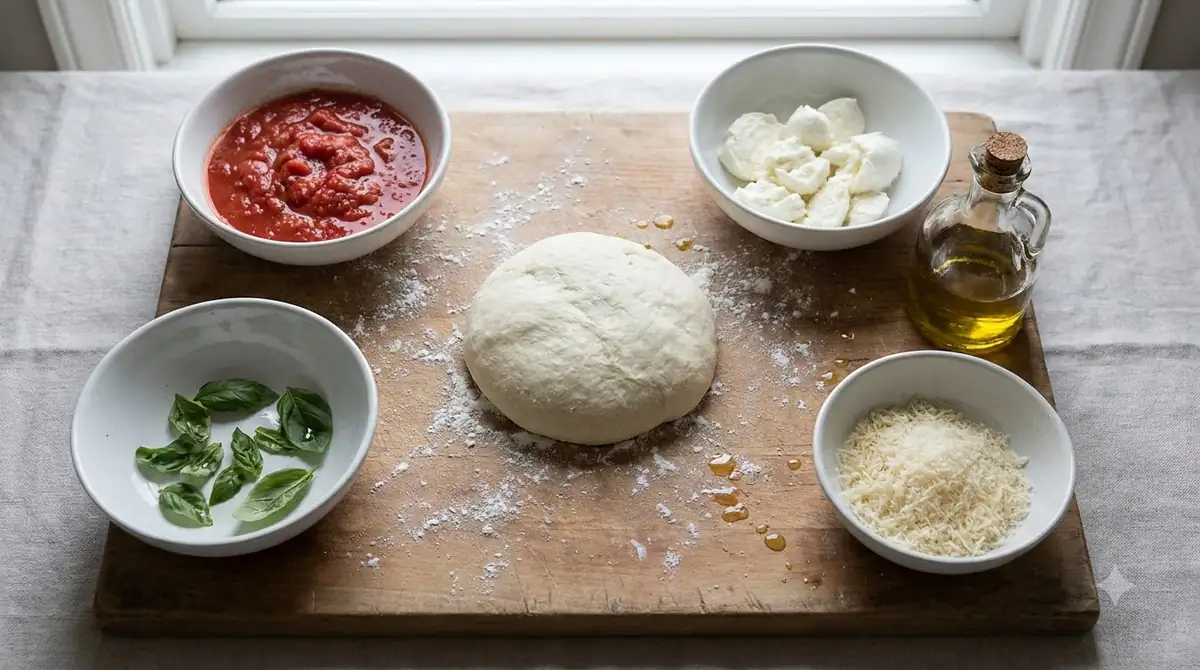
According to Wikipedia’s mozzarella entry, mozzarella is a semi-soft, non-aged Italian cheese made by the pasta filata, or stretched-curd, method. The fresh form is the soft ball, while the low moisture form is the version bred for cooking.
Low moisture mozzarella is made differently. Producers add citric acid and partly dry the curd, which makes the cheese denser. The International Dictionary of Food and Cooking describes it as used particularly for pizzas, with somewhat less water than real mozzarella.
| Feature | Fresh mozzarella | Low moisture mozzarella |
|---|---|---|
| Form | Soft balls, usually about 90 g, in brine or whey | Denser block or shreds |
| Water | High; a whole-milk nutrition table lists 50 g water per 100 g | Less water than fresh, per the dictionary description |
| Texture | Soft, with a squeaky feel when chewed | Firm and dense before baking |
| Shelf life | Eat the day it is made or the day after; sealed brine packs can last up to a week | Refrigerated up to a month; some shredded versions up to six months |
The nutrition figures come from Wikipedia’s whole-milk table and do not match every product. Its infobox gives a different fat value, so check the label on your brand before you compare numbers.
Size and appearance also differ. Wikipedia says a fresh ball usually weighs around 90 g and measures about 6 cm across, although balls can be as large as 1 kg. Fresh mozzarella is generally white but may be light yellow depending on the animal’s diet, and it makes a distinct squeaky sound when chewed or rubbed. Small fresh balls such as ciliegine and perlene have a spongy texture and absorb flavors, which is one reason they suit salads more than a hot pizza.
The cheese-making steps explain the split. In the pasta filata method, the curds are cut into pieces of 1 to 1.5 cm, stirred and heated, then drained and left until the pH reaches about 5.2 to 5.5, when the mass can be stretched and kneaded. For low moisture vs fresh mozzarella for pizza, the extra citric acid and partial drying come after that stage and are what make the denser cheese.

How Each Mozzarella Behaves on a Hot Pizza
Low moisture mozzarella melts into an even layer with less surface water, while fresh mozzarella puts more liquid onto the crust as it heats. In low moisture vs fresh mozzarella for pizza, the difference follows from water content: more water means more liquid to cook off during baking.
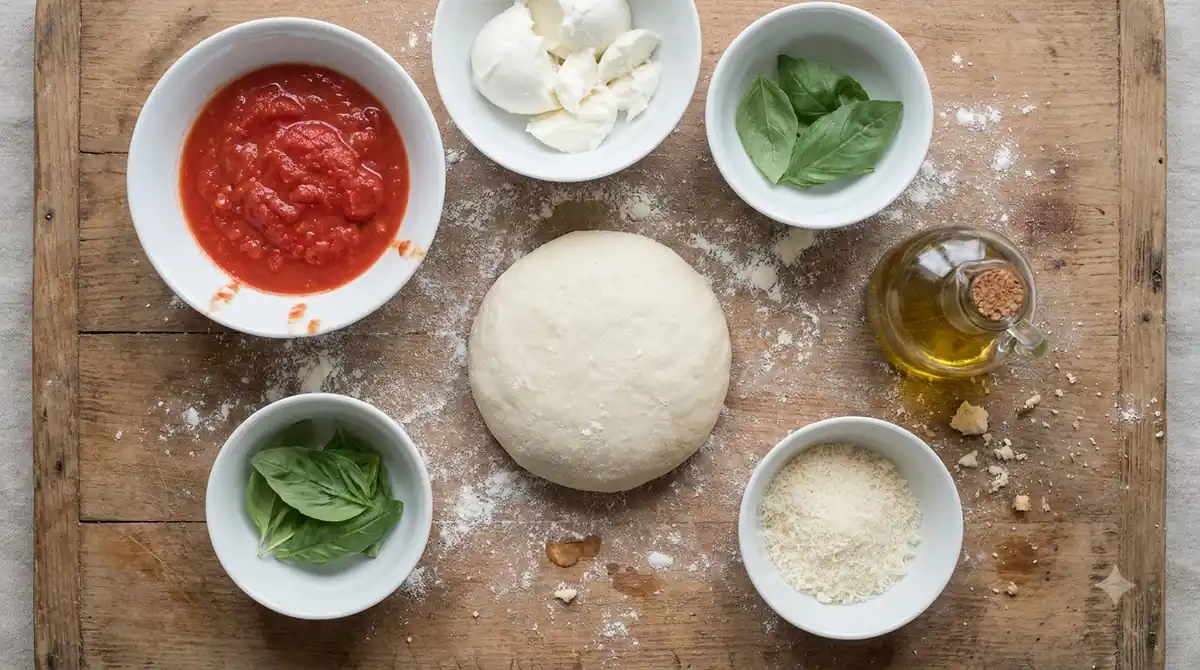
Fresh mozzarella can leave pools of whey on the dough, so the top may look softer and wetter than a low moisture pie, which is the same cause behind a soggy pizza. This is the practical side of low moisture vs fresh mozzarella for pizza that most readers notice first. Smaller fresh balls are described as spongy and as absorbing flavors, which can help a light topping but can also soak up sauce.
Browning is the other difference to plan for. Part-skim low moisture versions have a low galactose content, and some consumers prefer them because they brown less.
Storage changes low moisture vs fresh mozzarella for pizza as well. Fresh mozzarella turns sour and softer over time, and the Wikipedia entry notes that the process is slower in larger cheeses. Traditionally, fresh mozzarella is eaten the day it is made or the day after, while low moisture mozzarella keeps longer in the refrigerator.
Food writer Arthur Schwartz, quoted in the same entry, says a Neapolitan will not eat day-old mozzarella without further processing, such as frying it or baking it into a casserole or pasta dish. That hint matters for low moisture vs fresh mozzarella for pizza: fresh mozzarella that is a day or two old is better cooked than eaten on its own. The entry also says manufacturers market the cheese with a week-long shelf life, so the traditional and commercial advice differ.
The sources used here do not confirm how long to drain fresh mozzarella, how thick to slice it, or how much cheese to use on a single pizza. Check your recipe and the package for those amounts rather than relying on a general rule.
Choosing Between Low Moisture and Fresh Mozzarella for Pizza
Choose low moisture vs fresh mozzarella for pizza based on the bake you plan: low moisture for a predictable home bake, and fresh mozzarella when you want a soft, milky topping and will use it quickly.
A Neapolitan pizza is traditionally made with either buffalo mozzarella or fior di latte, the cow’s-milk version. Mozzarella di bufala campana carries a protected designation and is made from buffalo raised in Campania, Lazio, Apulia and Molise, according to Wikipedia’s pizza entry.
Wikipedia also notes that some pizza cheeses derived from skim mozzarella were designed not to require aging or a starter, and others are made by direct acidification of the milk. These are the products sold as pizza cheese in many stores, so read the label for the cheese type. If you like the creamy side of fresh cheese, burrata is a related stretched-curd cheese with a soft filling.
Mass-market pizzas often use processed cheeses or cheese analogues, which sit outside the low moisture vs fresh mozzarella for pizza comparison. The same Wikipedia entry says these were developed to give browning, melting, stretchiness and consistent fat and moisture content.
In low moisture vs fresh mozzarella for pizza, pick low moisture mozzarella when:
- You want an even, stretchy layer of cheese on the crust.
- You plan to store the cheese for more than a day or two.
- You want a more predictable topping with less surface water.
In low moisture vs fresh mozzarella for pizza, pick fresh mozzarella when:
- You want soft, milky pools of cheese on a Neapolitan-style pie.
- You can use the cheese the day it is bought or the day after.
- You accept a wetter top and a softer bake.
Frequently Asked Questions
Can you use fresh mozzarella on pizza?
Yes. Fresh mozzarella works on pizza, but it holds much more water than low moisture mozzarella. Expect a softer, wetter topping, and plan to use the cheese the day it is bought or the day after.
Which is better, low moisture vs fresh mozzarella for pizza?
Neither is better in every case. Low moisture mozzarella suits a predictable, longer-keeping bake, while fresh mozzarella suits a soft, milky pie you plan to eat soon after it is made.
Is low moisture mozzarella the same as pizza mozzarella?
In practice, yes. The International Dictionary of Food and Cooking describes low moisture mozzarella as used particularly for pizzas, with somewhat less water than real mozzarella. Texture still varies by brand, so check the label before you buy.
What is fior di latte?
Fior di latte is the cow’s-milk version of mozzarella. Neapolitan pizza uses either buffalo mozzarella or fior di latte, so the choice comes down to the milk you prefer and what your pizzeria or recipe calls for.
How long does fresh mozzarella keep?
Traditionally it is eaten the day it is made or the day after, because of its high moisture. Vacuum-sealed packs kept in brine can last up to a week or longer, but the cheese becomes sour and softer over time.
How long does low moisture mozzarella keep?
According to the Wikipedia mozzarella entry, low moisture mozzarella can be refrigerated for up to a month. Some shredded versions have a shelf life of up to six months, but always check the date printed on your package.
When you weigh low moisture vs fresh mozzarella for pizza, an even, stretchy melt and some flexibility on storage point to low moisture mozzarella as the safer choice. If you want a soft, milky pizza and will use the cheese within a day or two, fresh mozzarella is worth the extra water. Check your recipe for drying steps and amounts, since the sources used here do not confirm them.
 9 min readLearnHow to Freeze Fresh Mozzarella: 3 Simple StepsUpdated Nov 11, 2026
 9 min readLearnHow to Store Fresh Mozzarella at HomeUpdated Nov 11, 2026
 8 min readLearnWhat Is Bocconcini? Small Fresh Mozzarella Balls ExplainedUpdated Nov 11, 2026
 5 min readLearnHow to Make Fresh Mozzarella at Home: Step-by-Step MethodUpdated Nov 13, 2026
 9 min readLearnKeto Pizza Crust Recipe: Two Low-Carb VersionsUpdated Nov 12, 2026
 6 min readLearnHow to Make Low Carb Pizza Crust With Almond Flour and CheeseUpdated Nov 13, 2026