
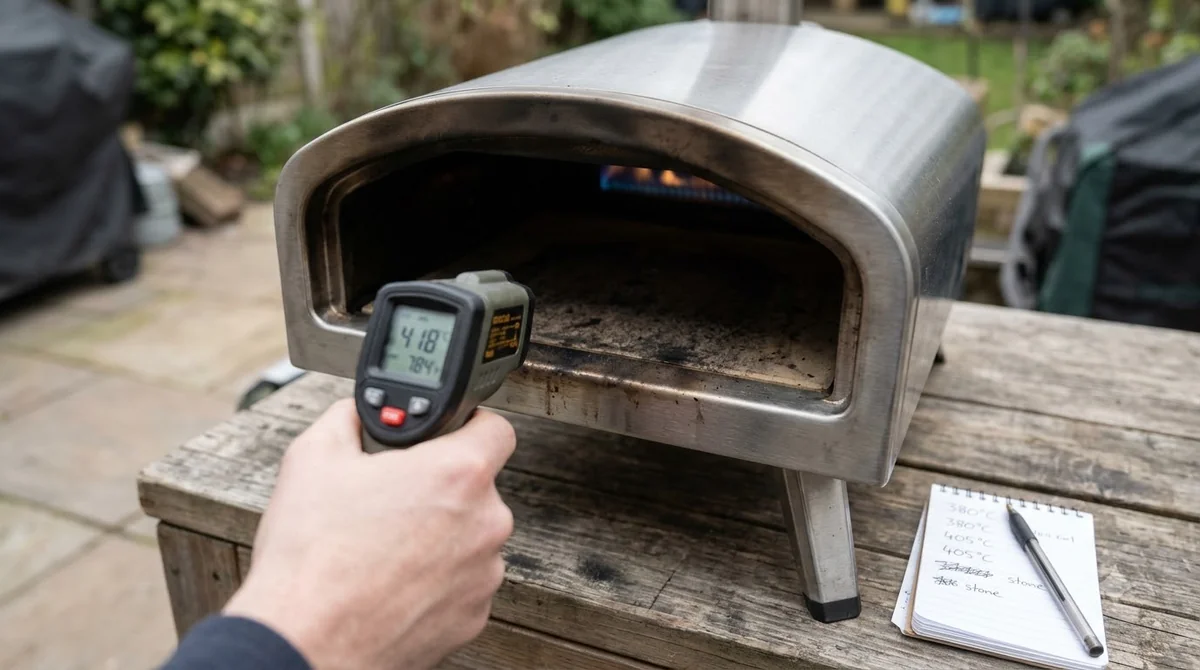

Pizza burning on bottom usually means the base is getting more heat than the top can match, so the crust scorches before the cheese sets. The most common causes are a stone or hearth that runs too hot, loose flour on the stone, and too much oil or sugar in the dough. Most fixes take only a few changes to your preheat and launch routine, and you can test them one at a time.
Why the Stone Matters for Pizza Burning on Bottom
A baking stone conducts heat slowly, so the base cooks more evenly than it would on metal. That slow heat transfer is also why a stone that is too hot can scorch a crust quickly once the heat builds up in it.
According to the Wikipedia overview of pizza stones, baking stones have high thermal mass and are a poor heat conductor, which makes food less likely to burn than on metal or glass. Stone is still a heat store, though. Once it is saturated, the bottom can darken faster than the top.
Preheat time matters for the same reason. The same source notes that some bakers heat a stone in a cold oven for at least 45 minutes. Launching early can leave the stone uneven, which is a common route to pizza burning on bottom. Our guide to how to launch a pizza covers the next step.
Check Your Preheat and Hearth Temperature
Bottoms often burn when the stone is hotter than the top heat, so preheat the stone fully and watch the hearth temperature rather than only the dial. One forum adviser suggested avoiding hearth temperatures over about 775°F.
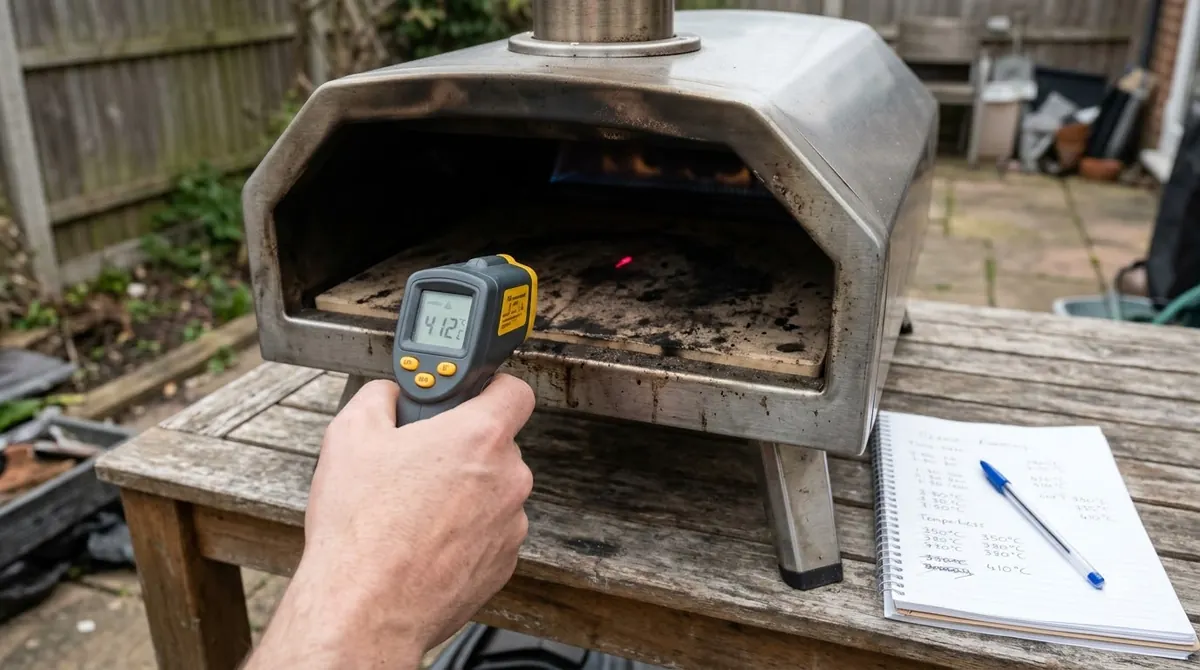
In one forum thread, a home baker ran a hearth between about 700°F and 825°F. He saw burnt bottoms at both 650°F and above 800°F, and The advice in that thread was to avoid running the hearth over about 775°F, or below about 700°F, when possible. These are user reports from one oven, so treat them as a starting range, not a rule. When pizza burning on bottom shows up, check the hearth before you change the dough.
Use an infrared thermometer on the stone or hearth before you launch, since a reading tells you more than the dial when you are chasing a burnt base. If the surface reads well above your target while the top of the oven still looks pale, the bottom will likely darken first. Give the stone time to settle, then launch.
Move the Fire and Let the Hearth Cool
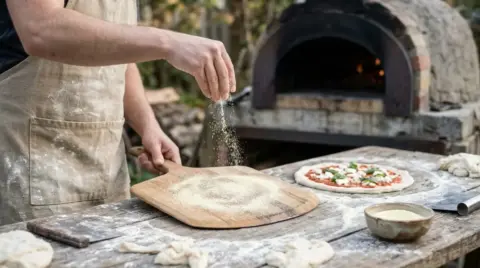
In a wood-fired or gas oven, a floor that stays red hot under the flame will scorch the base, and that is a classic source of pizza burning on bottom. Moving the fire to one side and letting the floor settle is often the quickest fix for a scorched base.
- Push the flame or fire to one side of the oven, away from where the pizza will sit.
- Wait for the floor under the flame to cool a little, then check the surface before launching.
- Keep feeding the fire on its own side of the oven rather than under the spot where the pizza bakes.
- Watch the first pizza closely and adjust the fire position for the next one.
In one user report from a wood oven, the floor under the fire stayed red hot. After the fire was moved aside and the floor cooled, cook times dropped to under a minute with no burning. Your oven will behave differently, so judge the result on your own bake.
Clear Flour and Debris Before Each Bake
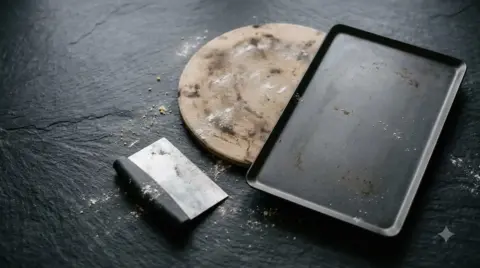
Loose flour and black grit on the stone can scorch and leave dark spots on the base, so brush the stone and shake off extra flour before every launch.
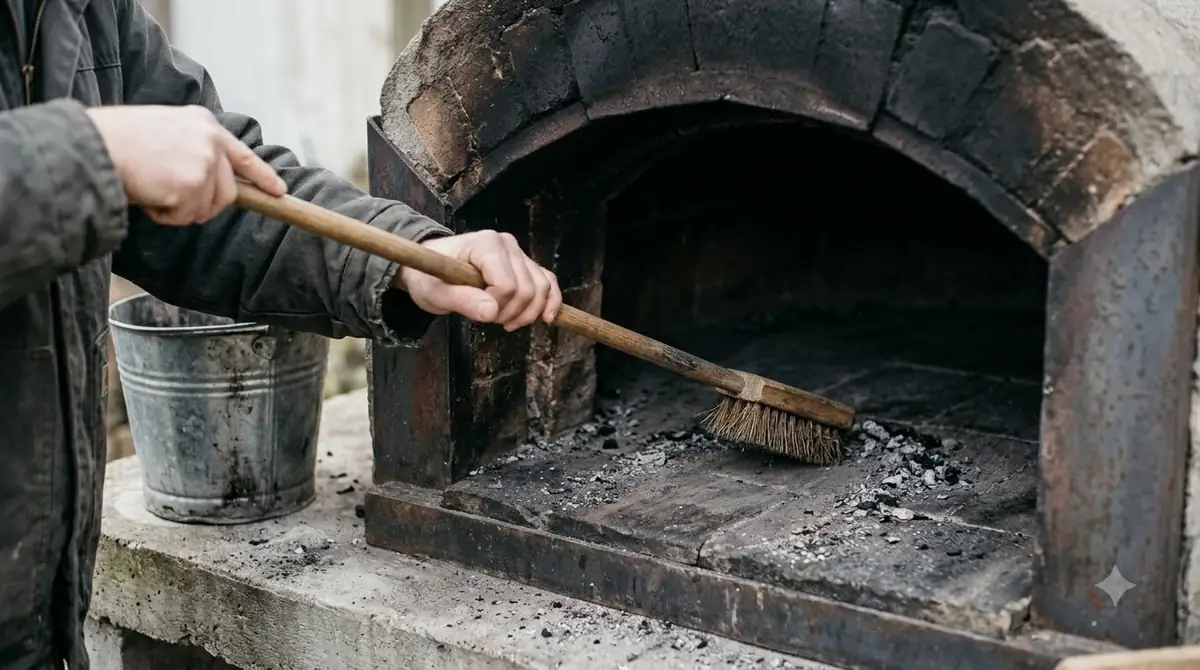
One baker found black grit on the bottoms of pizzas after about 18 bakes and suspected burnt flour. Another forum adviser suggested brushing the floor after a couple of pizzas. If the stone already looks dark, our page on a pizza stone turned black explains what is normal. Loose flour is a common cause of pizza burning on bottom, so this habit is cheap insurance.
- Tap off excess flour from the dough before it touches the peel.
- Use a peel that releases the pizza cleanly, so you launch with less flour (see pizza sticking to peel if it will not slide).
- Brush the stone or floor between bakes to remove burnt bits.
The peel itself matters too. A well-floured peel moves the pizza easily, but it also adds flour to the stone. Keep the pizza on the peel only as long as needed.
Cleaning method matters as well. The Wikipedia overview advises against running the oven in self-cleaning mode with a pizza stone inside, so remove the stone first and clean it by hand.
Adjust Dough, Toppings and Rack Position
Oil and sugar can speed browning on the base, so trim them if pizza burning on bottom continues while the top looks pale. Dough changes are the last step, not the first.
| Cause | Sign | Fix |
|---|---|---|
| Stone or hearth too hot | Dark base, pale top | Preheat fully, then launch once the surface settles |
| Loose flour on stone | Black grit or spots | Tap off flour and brush the stone between bakes |
| Oil or sugar in dough | Base darkens quickly | Reduce oil, for example from 3% toward 2%, and test one change at a time |
| Stone too close to heat source | Base finishes before top | Check the oven manual for rack guidance and change one position at a time |
Rack or stone position is the last lever, but the sources read for this article give no fixed rule, so check your oven manual. If the fixes above do not stop pizza burning on bottom, change one variable at a time and log the result.
Oil and sugar are the easiest ingredients to change. One forum adviser suggested cutting oil from 3% to about 2% rather than removing it. Change only one thing per bake, so you can tell which fix worked for your pizza burning on bottom problem.
Frequently Asked Questions
Why is the bottom of my pizza burning but the top is pale?
Pizza burning on bottom with a pale top usually means the stone or hearth is hotter than the top heat. Preheat the stone fully and check the hearth temperature before you launch, since the top heat may not be keeping up with the base.
How long should I preheat a pizza stone?
The Wikipedia overview of pizza stones notes that some bakers heat a stone in a cold oven for at least 45 minutes. Check your oven and stone manufacturer for specific guidance, since results vary by model.
Should the stone go higher or lower in the oven?
The sources read for this article give no fixed rule for stone height, so check your oven manual. Test one position change at a time so you can see which way helps your oven.
Does oil in the dough make the bottom burn faster?
Oil can speed browning on the base. One forum adviser suggested cutting oil from 3% to about 2%, not removing it, which is a reasonable test if your pizza burning on bottom keeps coming back.
Is flour on the peel a cause of burnt bottoms?
Yes, loose flour can scorch on a hot stone and leave dark spots. Tap off excess flour before launching and brush the stone between bakes.
Burnt bottoms usually come down to heat balance, not a recipe failure. For target heat in general, see our pizza oven temperature guide. If pizza burning on bottom persists, fix the stone and hearth first, then adjust dough and rack position. Keep a short log of temperature, preheat time and rack position so the next bake is easier to tune.
 8 min readLearnWhy Is My Pizza Crust Hard? Causes and FixesUpdated Nov 10, 2026
 8 min readLearnWhy Did My Pizza Stone Crack, and Can You Still Use It?Updated Nov 10, 2026
 10 min readLearnWhy Is My Pizza Crust Gummy? Causes and FixesUpdated Nov 10, 2026
 9 min readLearnWhy Is My Pizza Dough Tough? Causes and Easy FixesUpdated Nov 12, 2026
 6 min readLearnWhy Is My Pizza Greasy? Causes and Easy FixesUpdated Nov 13, 2026
 5 min readLearnWhy Is My Pizza Cheese Rubbery? Causes and FixesUpdated Nov 13, 2026