
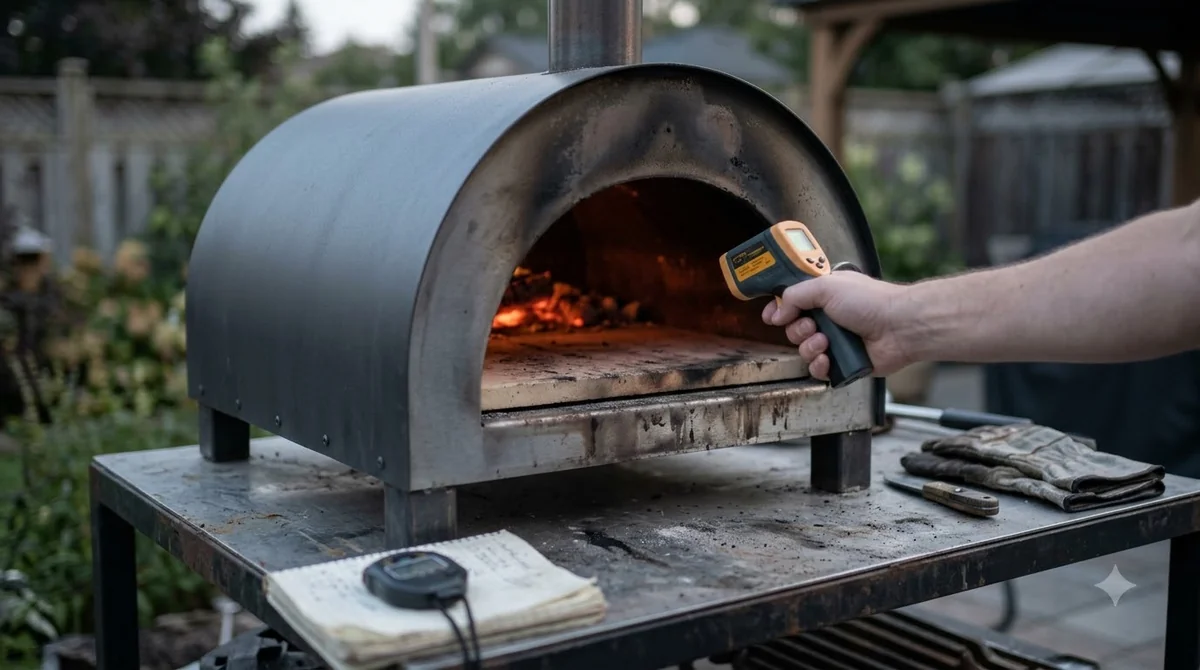

Knowing how to use a pizza oven thermometer comes down to aiming an infrared gun at the cooking stone and reading its surface temperature. Most built-in oven gauges show the air, and the stone heats more slowly than the air, so the stone reading is the one that matters for the base of your pizza. Read a few spots, check the emissivity setting if your model has one, and take the number before you launch.
What a Pizza Oven Thermometer Actually Reads
An infrared pizza oven thermometer reads the surface temperature of the stone or floor, not the air around it or the inside of the oven.
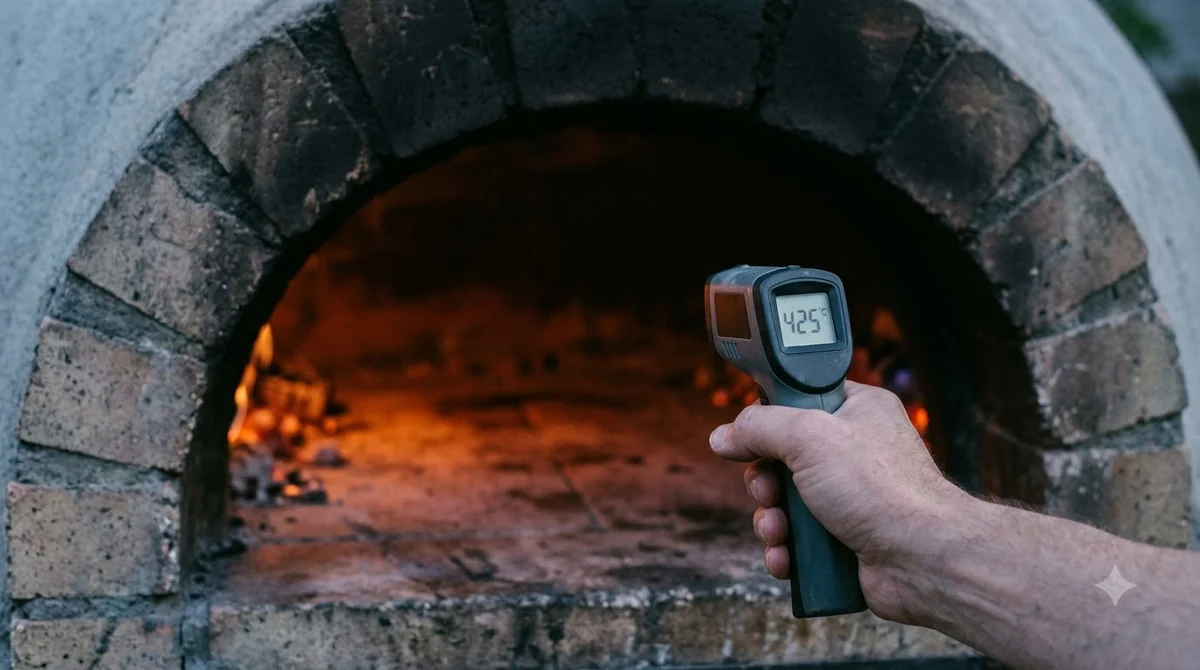
According to the overview of infrared thermometers on Wikipedia, the device infers temperature from the thermal radiation a surface emits. It measures a spot on that surface and cannot see the core of an object. That is why the aim and the distance matter so much when you read a pizza stone.
The heat behaves differently in the stone and the air. ThermoWorks notes that the heavy stone takes longer to heat than the air in the oven. A gauge that reads air can look ready while the stone is still catching up, so the stone reading is the one to trust before a bake.
Choose the Right Tool for Your Oven
Use an infrared gun for the stone and floor, and a probe thermometer for food, because each one reads a different thing.
| Tool | What it reads | Best use | Limit |
|---|---|---|---|
| Infrared gun | Surface temperature of the stone, floor or dome | Checking the cooking surface before a bake | Cannot read inside food or the air |
| Built-in oven gauge | Air temperature near the gauge | A rough check of the oven air | Does not show stone temperature |
| Probe thermometer | Internal temperature of food | Checking that cooked food is done | Not meant for the oven surface |
If you are learning how to use a pizza oven thermometer, start by checking the distance-to-spot ratio of your infrared gun. Wikipedia gives the example of a 12:1 device that can sense a 1-inch circle from one foot away. A higher ratio measures a smaller spot from farther away, so the ratio tells you how close you must hold the gun. A probe thermometer still earns its place in the kitchen, but it belongs to the food, not the oven. If you still need a gun, our guide to the best pizza oven thermometers covers what to look for.
How to Use a Pizza Oven Thermometer on the Stone
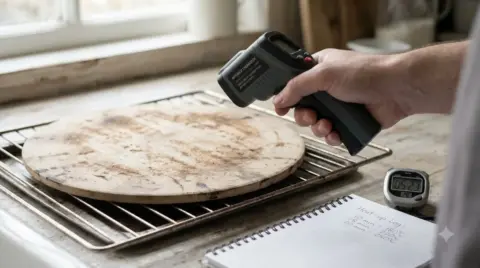
Aim the gun straight down at the center of the stone, keep the distance within your model’s ratio, and read a stable number before you decide the oven is ready.
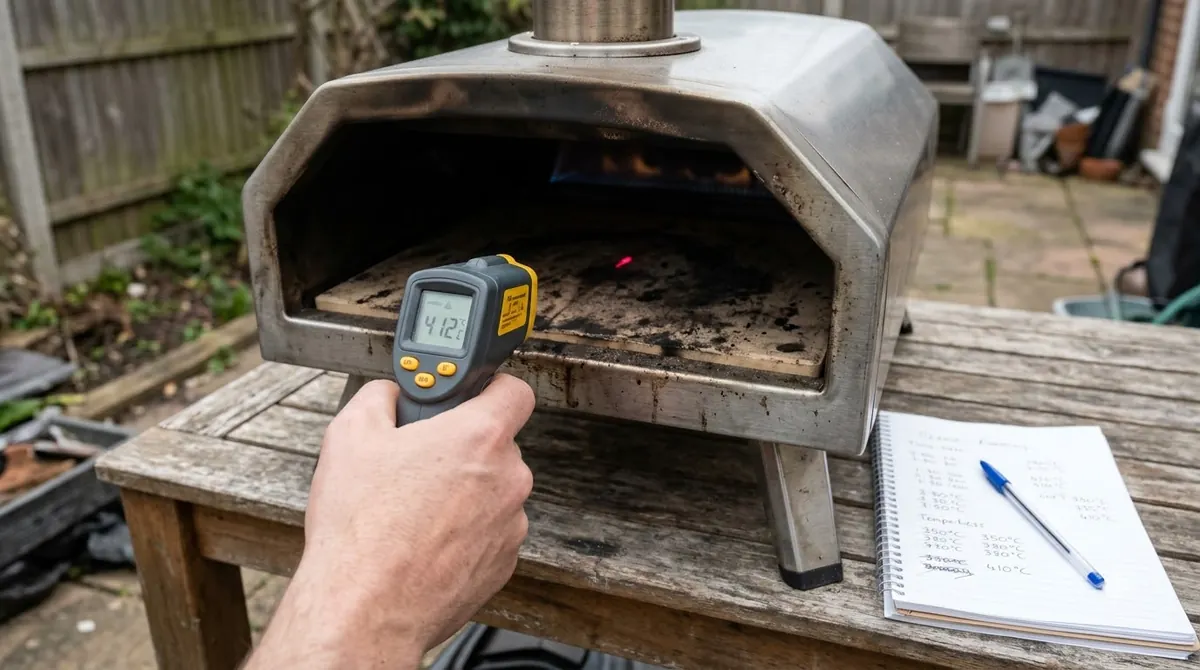
Follow these steps each time you check the stone.
- Open the oven door briefly and point the gun straight down at the center of the stone.
- Check the distance against the ratio. The target circle should be at least twice the size of the spot at that distance, as Wikipedia recommends.
- If your model has an emissivity setting, check it before you read the stone, as ThermoWorks advises.
- Keep the gun clear of the hot opening and the oven body. Heat can build up in the housing and damage the sensor if the gun sits too close to a hot target.
- Read the center, then check two or three other spots on the stone, and compare the numbers.
An infrared reading describes only the spot inside the target circle. One number tells you little about the rest of the stone, so a few readings give a better picture of how even the heat is. Repeating the same aim and distance each time keeps your readings comparable from one bake to the next. For a general walkthrough of the tool itself, see how to use an infrared thermometer.

Target Temperatures for Pizza
ThermoWorks gives a carbon burn-off range of 700 to 900°F (370 to 482°C) and a radiant stone range of 800 to 950°F (426 to 510°C) during cooking.
| Stage | Stone range (ThermoWorks) |
|---|---|
| Carbon burn-off | 700 to 900°F (370 to 482°C) |
| During the cook | 800 to 950°F (426 to 510°C) |
| Typical home oven ceiling | About 525°F (274°C) |
ThermoWorks points out that most home ovens only go up to about 525°F (274°C), so a home oven may never reach the top of the cooking range. The same source notes that a brick oven can take several hours to saturate, depending on how thick the dome is. For a home oven stone, how long to preheat a pizza stone covers the wait.
Once you know how to use a pizza oven thermometer correctly, you can compare each reading against these ranges instead of guessing from the flame or the color of the dome.
These figures come from one manufacturer’s blog, not from the maker of your oven. Check your oven manufacturer’s temperature guidance for your model before you treat any single number as your target.
Common Mistakes That Skew the Reading
The most common errors are holding the gun too close to a hot target, reading a reflective surface without adjusting for it, and trusting a single spot.
- Holding the gun too close to a hot target, which can damage the sensor.
- Ignoring reflective surfaces. Wikipedia notes that reflective surfaces have lower emissivity, so readings need adjustment or non-reflective tape.
- Mixing hot and cold areas in one reading. The indicated temperature may then be higher than the actual average.
- Reading only one spot. Check several points on the stone and the dome, since the heat is not always even.
Most of these mistakes come down to aim and distance, so a short check before each bake pays off.
Most surfaces have high emissivity, which is why many infrared readings are reliable. Reflective surfaces are the exception, so the emissivity setting on your model matters when you read a stone that reflects.
Reading the Oven During a Bake
Check the floor and dome before each launch, and recheck the cooler spots as you rotate the pizza.
ThermoWorks suggests checking the top and middle of the dome and the oven floor during burn-off, since the readings can differ from one area to another. Use the same method during the cook so the numbers are comparable. If you bake on a stone, how to use a pizza stone explains the rest of the routine.
If one area reads noticeably cooler than the center, turn the pizza so that area gets more direct heat during the next stage of the bake. Practising how to use a pizza oven thermometer on each bake turns the readings into a routine step rather than a guess.
Surface readings can change after you launch a pizza onto the stone. Recheck the spot after a short wait rather than acting on the first number. The sources used for this guide do not give a recovery time, so follow your oven manual for that.
Frequently Asked Questions
What does a pizza oven thermometer measure?
It measures the surface temperature, usually of the stone or floor, from the infrared energy the surface emits. It does not read the air or the inside of food, so use a separate probe for meat and other foods.
Is an infrared thermometer accurate on a pizza stone?
Yes, for the stone surface, once you have learned how to use a pizza oven thermometer correctly. It is useful for the stone surface when you aim it correctly and set the emissivity if your model has that setting. Errors come from distance, reflective surfaces and mixed hot and cold areas, so take several readings before you decide the oven is ready.
How far should I hold the thermometer from the stone?
Use the distance-to-spot ratio printed for your model, and keep the target area at least twice the spot size at that distance. Do not hold it so close that the hot oven heats the housing.
Can I use the thermometer to check the inside of a pizza?
No. An infrared gun reads only the surface, so a probe thermometer is the right tool for the inside of food.
What temperature should a home oven reach for pizza?
ThermoWorks gives a stone range of 800 to 950°F (426 to 510°C) during cooking, but notes that most home ovens only reach about 525°F (274°C). Check your manufacturer’s guidance for your own model before you rely on those figures.
Why does the reading change after I launch a pizza?
A cooler pizza landing on the stone changes the surface reading, so recheck the spot after a short wait. Compare it with the other areas, and use your oven manual for guidance on recovery.
Use the infrared gun for the stone and the probe for the food, and read more than one spot before each bake. Treat the figures here as a starting point, and follow your oven manufacturer’s safety and heat-up instructions every time.
 8 min readGear & PantryPizza Oven Thermometer: Best Picks and How to Choose OneUpdated Nov 17, 2026
 10 min readGear & PantryInfrared Thermometer: What It Measures and How to Use It for Pizza and PastaUpdated Nov 16, 2026
 8 min readGear & PantryHow to Use an Infrared Thermometer for Accurate Readings at HomeUpdated Nov 10, 2026
 8 min readGear & PantryHow to Use a Pizza Oven Brush the Right WayUpdated Nov 11, 2026
 9 min readGear & PantryHow to Use a Baking Steel in a Home OvenUpdated Nov 10, 2026
 8 min readGear & PantryBest Instant Read Thermometer: Top Picks for Home CooksUpdated Nov 12, 2026