
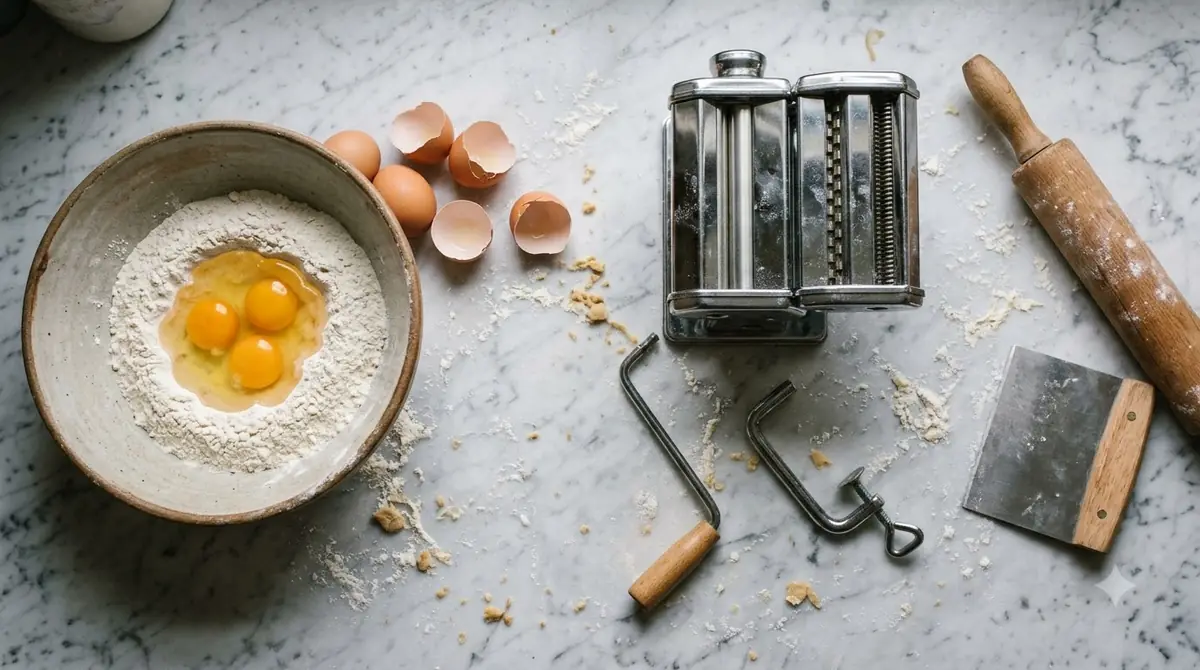

A manicotti dough recipe is a simple egg pasta dough, rolled into thin sheets and cut into rectangles that wrap around a filling. Mix about 2 cups of flour with 2 to 3 eggs, knead until smooth, rest it, then roll it thin enough to see color through the sheet. You can use the dough fresh, and the tubes are boiled briefly before they are stuffed and baked.
Homemade manicotti is more forgiving than most fresh pasta. The dough only needs to be firm enough to roll and sturdy enough to hold ricotta filling, so small changes in flour or water will not ruin the batch. The steps below cover the dough, the shaping, and the cooking that comes before filling.
What Is Manicotti Dough?
Manicotti dough is a soft, eggy pasta dough that is rolled flat, filled, and rolled again into a tube before baking under sauce.
Manicotti are described as large tubes of pasta, stuffed, covered with a sauce, and baked. The filling is often ricotta-based and the sauce is usually tomato, though béchamel is also common, according to the Cook’s Info manicotti guide. That guide describes two ways to get the tubes: buy pre-formed shells, or use long, wide, flat strips of pasta that you roll around the filling yourself. Homemade dough is the second option.
Compared with dried shells, homemade dough is thinner, softer and more tender when baked. It also soaks up sauce well, which suits a tray that bakes for a long time in the oven.
How to Make Manicotti Dough at Home
Combine about 2 cups of all-purpose flour with 2 to 3 eggs, add a pinch of salt, and bring the dough together with a little water only if it feels dry.
Across several home recipes, the common pattern is 2 cups of flour, 2 to 3 eggs, enough water to form a soft dough, 8 to 10 minutes of kneading, and a rest of at least 30 minutes. Some cooks add a spoonful of olive oil, and others add grated Parmesan. Use these as a starting point, because flour varies by brand and by humidity.
- Make a well in the flour on a clean counter, crack in the eggs, and beat them with a fork while slowly pulling in flour from the edges.
- When the mixture forms a shaggy dough, knead it by hand for 8 to 10 minutes until smooth, elastic and only slightly tacky. Add water a teaspoon at a time if it cracks, or a pinch of flour if it sticks to your hands.
- Wrap the dough tightly in plastic wrap and rest it at room temperature for at least 30 minutes. A full hour makes it easier to roll.
- Cut the dough into four pieces and keep the ones you are not rolling covered, so they do not dry out.
If you have a stand mixer with a dough hook, you can mix for about 2 minutes on low, then knead for 4 to 5 minutes. Hand kneading gives you more feel for the dough, so use the texture as your guide instead of the clock.
How to Roll and Cut Manicotti Sheets
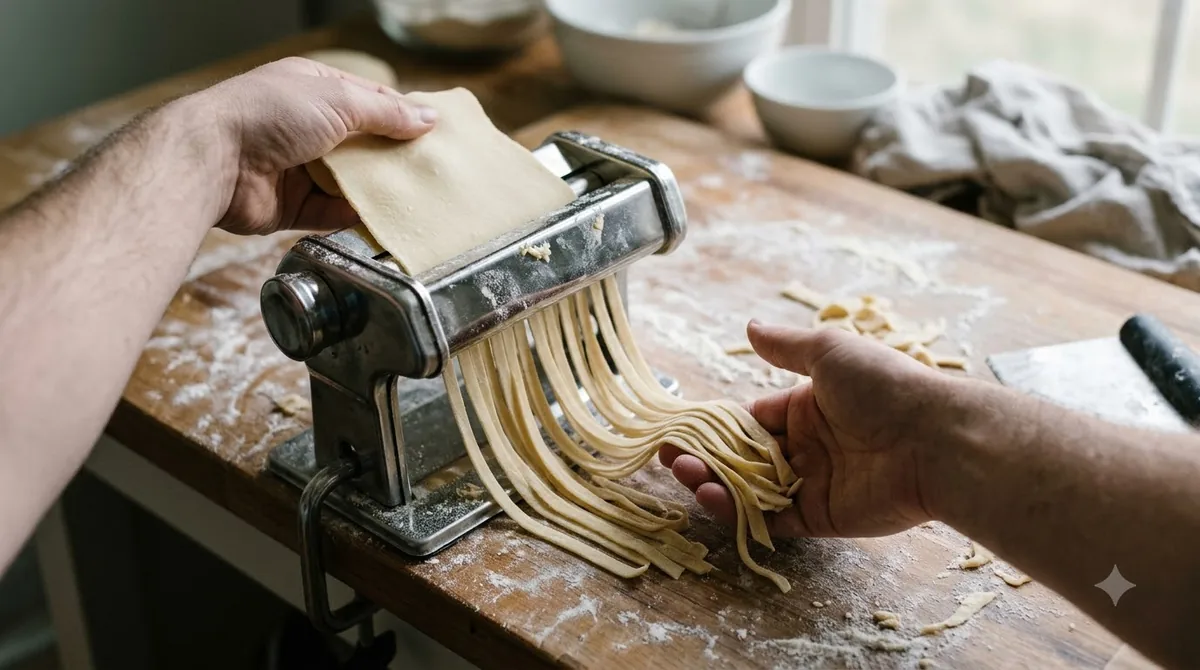
Roll the dough through a pasta machine from the widest setting, folding and re-rolling until it is smooth, then narrow the setting until the sheet is thin enough to show color through it.
The Marcellina in Cucina fresh pasta method uses the same approach: start at the widest setting, fold and re-roll until smooth, then narrow the setting in steps. Stop at a thin setting, because manicotti sheets need to be sturdy enough to hold filling without tearing.
- Lay the sheet on a floured board and cut it into rectangles about 4 inches (10 cm) long and 3 to 4 inches wide.
- Dust the rectangles with a little semolina or flour and stack them with parchment between layers so they do not stick.
- Work on the sheets you are going to fill right away, since dry edges crack when you roll them.
Cooking Manicotti Before You Fill Them
Fresh manicotti should be boiled briefly until just flexible before they are filled, because raw dough tears and stays stiff in the oven.
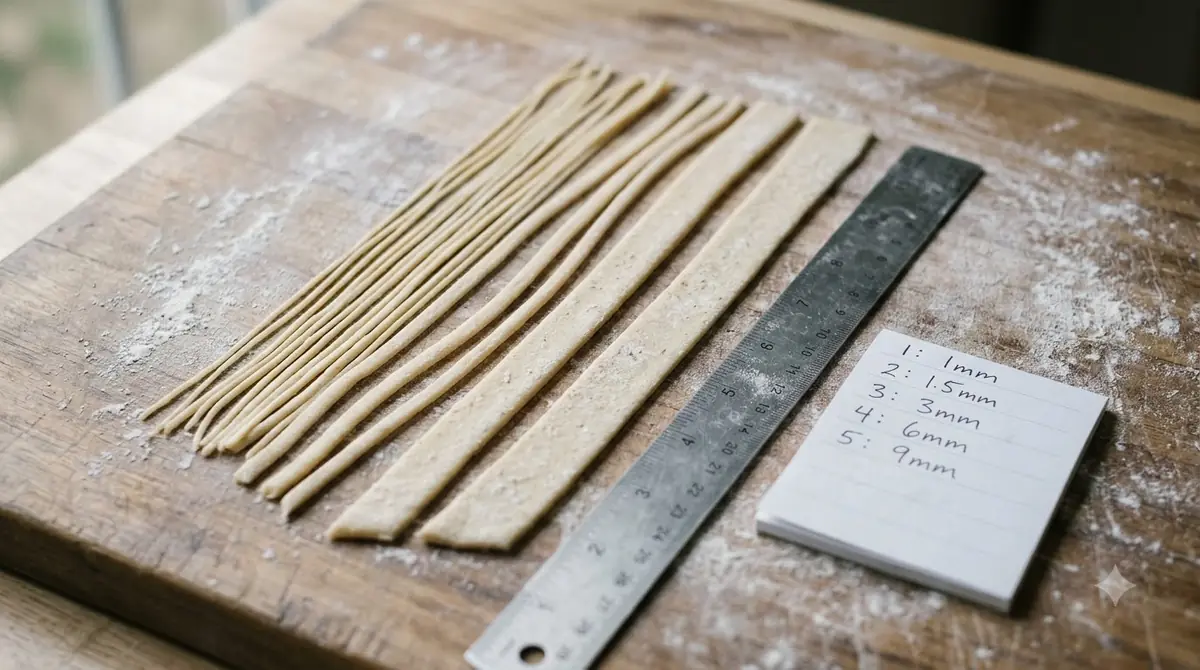
Cook’s Info says to boil pasta in salted water for about 5 minutes, or until it is just flexible, unless the tubes are labeled oven-ready. Homemade dough is thinner than dried shells, so start checking at 2 minutes and pull a test piece as soon as it bends without cracking.
Cook in single layers, even if that means several batches, so the tubes do not stick together. Drain them, lay them flat on a towel or a lightly oiled tray, and let them cool until you can handle them without tearing.
| Problem | Likely cause | Fix |
|---|---|---|
| Dough cracks when rolled | Too dry or not rested | Add water a teaspoon at a time and rest longer |
| Sheets tear in the machine | Setting too thin too fast | Step down one setting at a time |
| Tubes stick together | Cooked in a crowded pot | Cook in single layers and oil the tray |
| Filling leaks out | Tubes were too thin or overcooked | Boil until just flexible and fill when cool |
Common Mistakes With Manicotti Dough
Most problems come from dough that is too dry, too wet, or rolled too thin before it has rested.
Skipping the rest is the most common error. Gluten relaxes during the rest, so the dough stretches without springing back. Rolling it straight after kneading makes thin sheets shrink and tear, which is why the 30-minute rest matters.
Filling warm tubes is the second mistake. Warm pasta is fragile, and a cool tube holds its shape while you pipe in the ricotta mixture.
Frequently Asked Questions
Can I make manicotti dough without a pasta machine?
Yes. Roll the dough by hand with a rolling pin on a floured surface, working from the center outward and turning the dough often. It takes longer, and the sheets will be thicker, so the tubes will need a little more cooking time.
How far ahead can I make manicotti dough?
You can wrap the dough and refrigerate it for up to a day. Bring it back to room temperature for about 30 minutes before rolling, because cold dough is stiff and hard to stretch.
Is manicotti dough the same as lasagna dough?
They are close. Both are egg doughs, but manicotti sheets are cut into small rectangles and rolled, while lasagna sheets are laid flat in layers. Manicotti dough is often rolled a little thinner so the tubes stay tender.
Can I use store-bought manicotti shells instead?
Yes. Dried or oven-ready shells are a practical choice when time is short. Check the package for cooking instructions, because oven-ready tubes do not need to be boiled first. A 14-tube box is often around 250 grams, or about 18 grams per tube, according to Cook’s Info.
A good manicotti dough is smooth, rested and rolled thin enough to hold filling without tearing. Mix it with a little patience, cook the tubes until they are just flexible, and fill them once they cool. The result is tender pasta that holds ricotta and sauce well in the oven.
 6 min readLearnHomemade Ziti: How the Tube Is Made, Cooked and ServedUpdated Nov 13, 2026
 8 min readLearnManicotti Pasta: Shape, Size, Cooking Times and SubstitutesUpdated Nov 10, 2026
 8 min readLearnWhat Is Manicotti? A Simple Guide to Stuffed PastaUpdated Nov 10, 2026
 6 min readLearnTubetti Substitute: Ditali, Pennette and Other Small Tube PastaUpdated Nov 13, 2026
 8 min readLearnPizza Pockets Recipe: Homemade Dough, Filling and Baking TimesUpdated Nov 11, 2026
 8 min readLearnHomemade Ravioli: Easy 3-Egg Dough Recipe and TipsUpdated Nov 10, 2026