
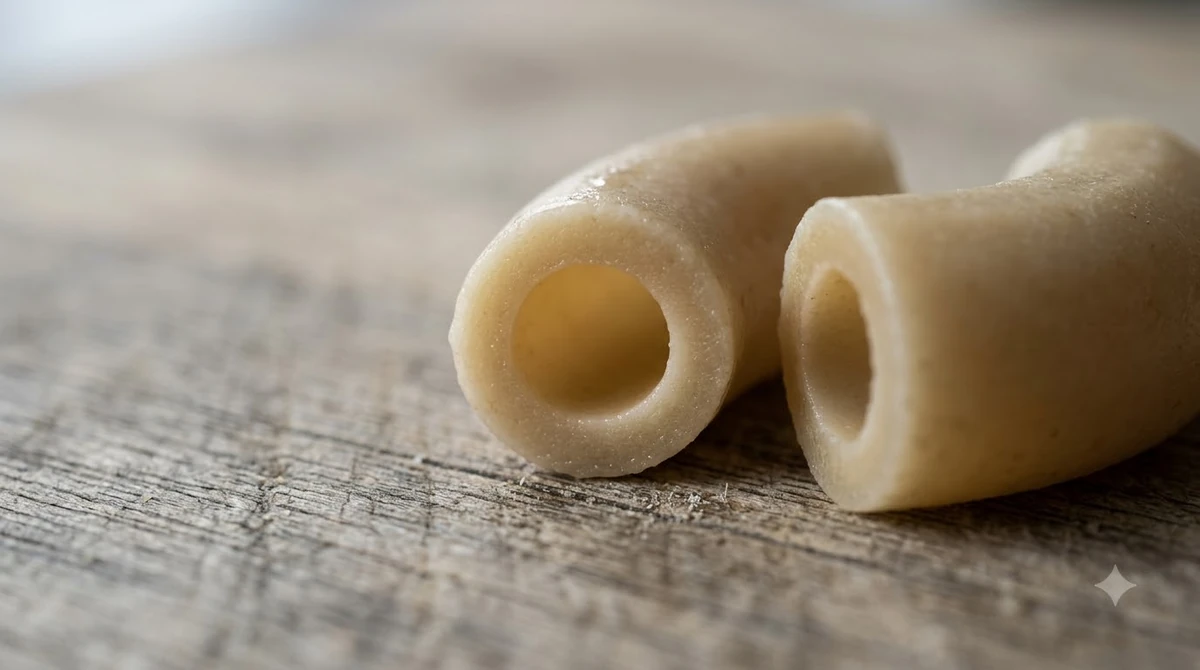

Homemade ziti is a short, hollow tube of pasta dough pushed through a die, not a shape you can easily roll by hand. Most commercial ziti is machine-extruded, so the practical home route is a pasta extruder with a tube-style die. Ziti is also the name of the baked pasta dish, which is a separate thing.
This guide explains how ziti is shaped, what that means for a home cook, how to cook it and how it differs from the baked ziti dish that many people mean when they search the name.
How Ziti Is Shaped: Extruder, Not Hands
Ziti is shaped by pushing dough through a die that forms the hollow tube, not by rolling or wrapping the dough by hand.
The DeLallo guide to ziti says the shape is extruded by a machine using a die, and describes ziti as a slender, hollow tube with straight-cut ends. That description matches the way most dried ziti is produced.
By hand, a hollow tube is difficult to form reliably. A thin sheet wrapped around a rod can make a tube, but the seam and the wall thickness are hard to control, and the result looks more like garganelli than ziti. For a clean tube at home, the extruder route is the better choice.
If you own a manual or electric extruder, check the manual for the tube die and for the dough consistency it expects. Many machines are built for a firmer dough than a soft egg dough, so the instructions decide how much water to add.
How to Make the Dough for Homemade Ziti
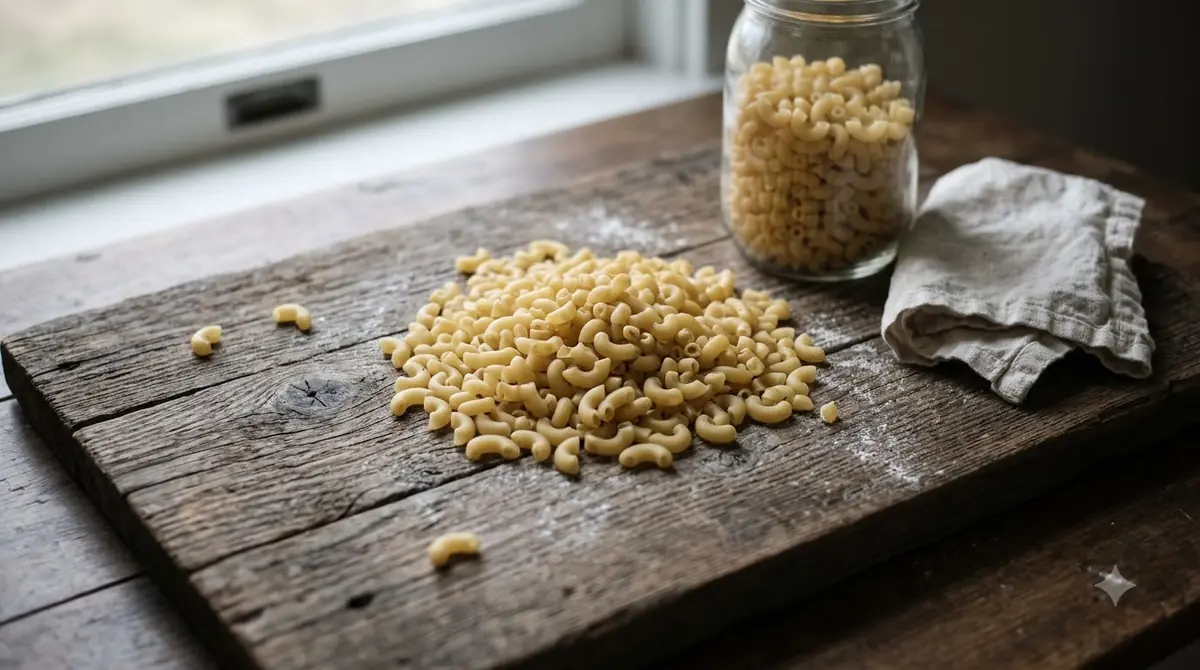
Use a firm, low-moisture dough that holds its shape in the die, and add water gradually so you do not overshoot. The tube itself is explained in ziti tube shape explained.
Mix the flour and any eggs or water in a bowl until a stiff dough forms, then knead until it is smooth. A semolina dough gives the classic bite, while an all-purpose or 00 dough is softer. Wrap the dough and let it rest before you load it into the extruder.
The exact amount of water depends on your flour and the humidity in your kitchen. Add it a little at a time, and stop when the dough feels crumbly but holds together when you squeeze a handful.
How to Extrude Ziti at Home
Load the dough into the extruder, fit the tube die, and press the dough through slowly while you cut the tubes to length. If you are choosing between tubes, see ziti compared with rigatoni. If you would rather roll tubes by hand, see rolled garganelli quills.
Fit the Die and Load the Machine
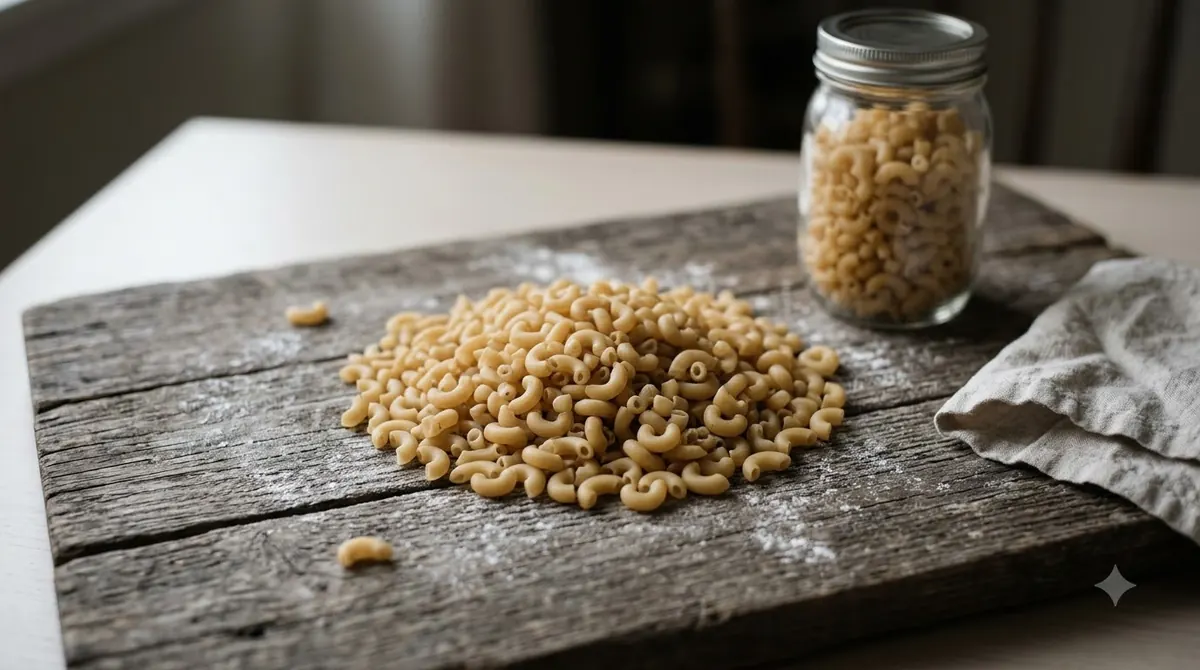
Attach the tube die according to the manual, and check that the die is clean and dry before you start. Pack the dough into the barrel in small amounts so the air does not get trapped in the tubes.
Press Slowly and Cut to Length
Turn the crank or press the lever at a steady, moderate pace. Pushing too fast can deform the tube. Cut the strands into pieces as they emerge, and lay them on a floured tray in a single layer.
Ziti is often described as about 2 inches long. The Prince pasta listing for ziti gives that length and describes a slightly curved, tubular shape. Cut your pieces to a similar size so they cook evenly.
How Long to Cook Ziti
Dried ziti is cooked by the package, and homemade ziti should be tested rather than timed from a fixed number. One brand of ziti-style pasta from DeLallo lists 10 to 11 minutes, and the same guide advises checking the pasta before that time, since doneness varies. The dish most people mean by the name is covered in the classic baked ziti dish.
For fresh homemade tubes, start tasting early and drain when the pasta is tender with a slight bite. Fresh pasta cooks faster than dried, and thicker tubes need a few more moments in the water.
Salt the water well, add the ziti once the water is boiling again, and stir once so the tubes do not stick together.
Ziti Pasta Versus the Baked Ziti Dish
Ziti the pasta is the tube shape. Baked ziti is the dish: cooked tubes tossed with tomato sauce and cheese, then baked in a dish until bubbling. A look-alike shape is covered in penne versus ziti.
If you are making baked ziti, you can use either dried or homemade tubes. Homemade ziti is firmer and more absorbent than a fresh egg pasta, so cook it a little less than you would for a salad or a plain sauce, since it will keep cooking in the oven.
For the baked dish, the pasta should be tender but not soft, so the tubes hold their shape under the sauce and cheese. Make sure the sauce is loose enough to coat every tube, because the pasta keeps absorbing liquid as it sits in the dish before it goes into the oven.
Frequently Asked Questions
Can I make ziti without a pasta extruder?
A hollow tube is hard to form reliably by hand, so most home cooks either buy dried ziti or use an extruder. If you do not have a machine, a shape such as penne or garganelli is a more practical homemade substitute.
Is ziti the same as penne?
They are close in size. The DeLallo guide says ziti is nearly the same size as penne rigate and closer in size to penne than to rigatoni. The main difference is that penne is cut at a slant, while ziti usually has straight-cut ends.
Where does ziti come from?
Ziti is generally linked to Southern Italy. The DeLallo guide says it is most certainly a Southern Italian pasta cut, but it is not sure where it began, and it names Campania or Sicily as possible birthplaces.
Why does my homemade ziti split or crack?
The dough is usually too dry or pressed too fast. Add a little more water, press more slowly and dry the tubes on a floured tray rather than stacking them.
Homemade ziti is a project for a home cook with an extruder, but the result is a firm, hollow tube that works well in both simple sauces and baked dishes. Test a small batch, cook a few pieces and adjust the dough until the tubes hold their shape.
 6 min readLearnManicotti Dough Recipe for Homemade Pasta TubesUpdated Nov 13, 2026
 7 min readLearnPillus Pasta: A Sardinian Ribbon Pasta Served in BrothUpdated Nov 11, 2026
 8 min readLearnPansoti Pasta: The Ligurian Triangles Served With Walnut SauceUpdated Nov 6, 2026
 8 min readLearnCappelletti vs Tortellini: Shape, Filling and How They Are ServedUpdated Nov 6, 2026
 6 min readLearnTubetti Substitute: Ditali, Pennette and Other Small Tube PastaUpdated Nov 13, 2026
 5 min readLearnBest Sauce for Penne: Pairings That Cling to TubesUpdated Nov 13, 2026