

Manicotti pasta is a large, hollow tube made to be stuffed, covered with sauce and baked. Dried tubes are usually about 2.5 cm by 10 cm, and they are often ridged and cut on a diagonal.
The shape sets it apart from cannelloni and ziti, and the cooking steps change depending on whether your tubes are dried or oven-ready. This guide covers the size, how the pasta is made, how to cook it before filling, and what to use instead.
What Manicotti Pasta Is and Where the Name Comes From
Manicotti pasta is a large tube intended to be stuffed and baked, and its name is the plural of an Italian word meaning sleeve.
According to Wikipedia’s manicotti entry, the word is the plural of manicotto, which comes from manica (sleeve) plus an augmentative suffix. The ridges and diagonal cut give the tubes a look close to giant penne, which is the easiest way to picture the shape.
Older Italian-American recipes often skipped dried tubes and rolled crespelle, which are Italian crepes, around the filling instead. DeLallo calls manicotti pasta an Italian-American invention based on cannelloni, a nearly identical Italian pasta, and says both might be more popular in countries such as the US than in Italy.

Manicotti Pasta Versus Cannelloni and Ziti
Manicotti pasta is several times bigger than ziti and is usually ridged, while cannelloni typically has smooth sides and straight-cut ends.
| Pasta | Sides | Cut ends | Size |
|---|---|---|---|
| Manicotti | Often ridged | Cut on a diagonal | Several times bigger than ziti |
| Cannelloni | Usually smooth | Straight cut | Not sized in the sources read |
| Ziti | Not stated in the sources read | Not stated in the sources read | Small enough to toss with sauce and eat with a fork |
Dried manicotti tubes measure about 2.5 cm by 10 cm, or 1 inch by 4 inch, according to Cook’s Info’s manicotti guide. Fourteen uncooked, unstuffed tubes weigh 250 g, or about 18 g each, so a single box holds a modest number of stuffed portions. DeLallo also notes that manicotti tends to have thinner walls than ziti (see our ziti pasta guide), so cooked tubes need gentle handling when you fill them.
Many home cooks use the two names interchangeably. Wikipedia’s cannelloni article explains the older difference: cannelloni were rolled from pasta sheets around the filling, while manicotti were machine-extruded cylinders filled from one end. Today the names overlap, and the shape you buy matters more than the label.
How Manicotti Pasta Is Made
Factory-made manicotti is produced by pushing semolina dough through a large tube-shaped die, then cutting, drying and packaging it.
That extrusion route is the one described in DeLallo’s explainer on the pasta, which also notes how the dried tubes are sized for stuffing. The base ingredient is semolina, so the dough holds its shape through boiling and baking.
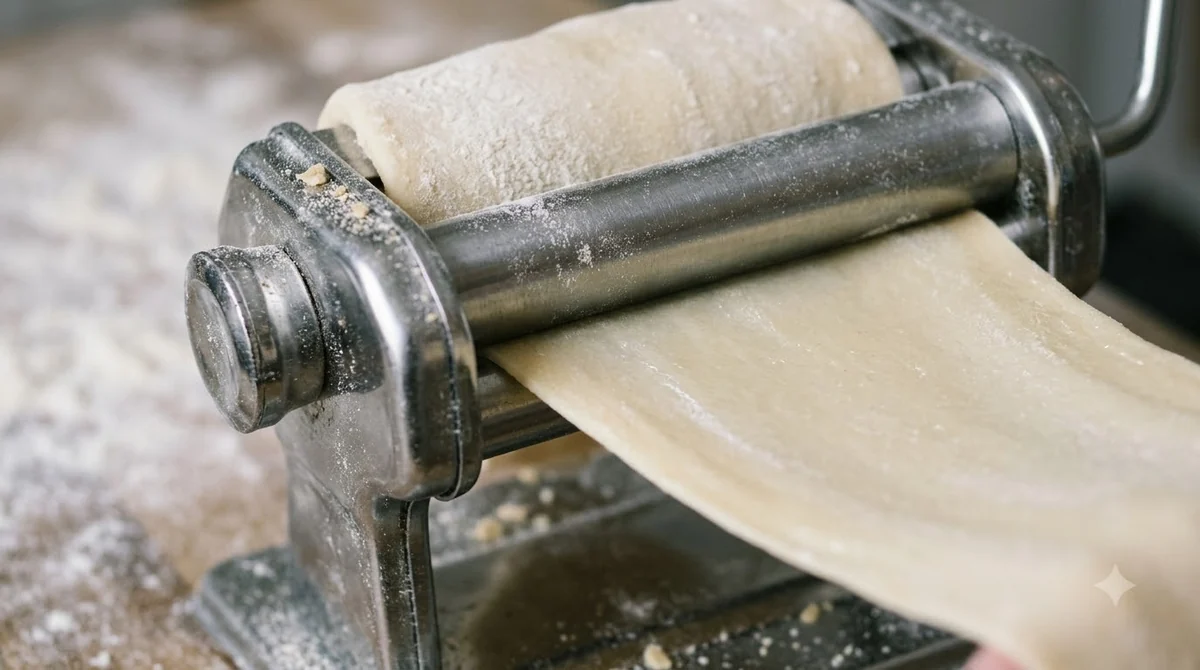
Homemade manicotti works differently. You roll semolina dough into thin sheets, cut them and wrap them around a filling. Some cooks instead use long, wide, flat pasta strips, spread the filling on each strip and roll it into a tube.
Expect more handling with homemade tubes than with boxed shells, because each one is rolled and wrapped by hand. That extra work is the main trade-off for a fresher texture and a shape you control.
Cooking Manicotti Pasta Before You Fill It
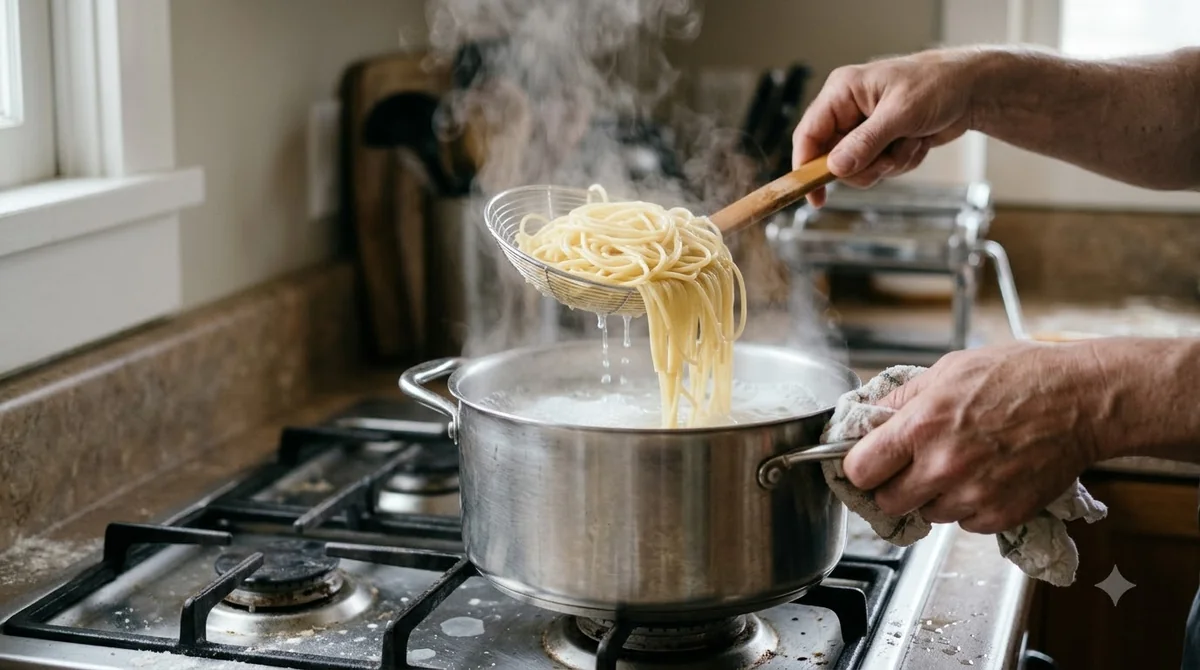
Boil dried manicotti pasta until it is just flexible, about 5 minutes in one source, or 7 to 8 minutes to al dente in another, and check the package for the exact time.
- Bring a large pot of heavily salted water to a boil.
- Add the tubes in a single layer, in batches if needed, and stir briefly so they do not stick or tear.
- Cook until just flexible, about 5 minutes per Cook’s Info, or until al dente in 7 to 8 minutes per DeLallo.
- Drain thoroughly and spread the tubes on a clean kitchen towel in a single layer.
- Let them cool until you can handle them, then fill through either end.
Cook the pasta to a firm, slightly chewy texture, because it softens further in the oven. Boiling before stuffing matters too: raw pasta lets the filling leak into the water, so the tubes should be cooked first.
Oven-ready manicotti skips the pot entirely. Cook’s Info says boiling is not needed for oven-ready tubes, so follow the instructions on that box rather than boiling them a second time.
For a pressure cooker, Cook’s Info gives 3 minutes on high with just enough water to cover, followed by a natural release. A piping bag is the most efficient way to fill the tubes, though a spoon works as well.
Fillings and Sauces That Pair Well With Manicotti Pasta
Ricotta, often mixed with spinach, is the most common filling for manicotti pasta, and a simple tomato marinara is the usual sauce.
- Ricotta, sometimes mixed with chopped parsley and spinach
- Ground veal or beef, used in some classic versions
- Chicken, seafood or vegetables for lighter fillings
- Simple marinara, which does not overpower the filling
- Béchamel, a white sauce that gives a creamy finish
- Ragù or pesto, or two sauces layered before baking
Spinach adds volume to a ricotta filling, and ground meat makes the result heartier. Because the tubes are wide, a piping bag makes filling each end quicker.
The sauce should not overwhelm the filling. For a first batch of manicotti, a plain marinara is the safest choice, and you can move to béchamel or ragù once you know how the filling sets. Our how to make marinara sauce guide covers the basic sauce. Our homemade béchamel sauce is a good place to start for a white sauce.
Substitutes When You Cannot Find Manicotti Pasta
Cannelloni is the closest substitute for manicotti, and cooked lasagna noodles cut in half lengthwise are the common fallback.
- Cannelloni, which does the same job with smoother sides (see our cannelloni pasta guide)
- Cooked lasagna noodles, cut in half lengthwise and wrapped around the filling (see lasagna noodles)
- Cooked jumbo shells, stuffed in the same way (see jumbo shells pasta)
- Egg-roll wrappers, an unusual option listed by Cook’s Info
Choose a substitute that matches the job: long pasta suits rolled dishes, while shells hold a spoonful of filling. Substitutes change the bite and the ratio of filling to pasta, so taste as you go and adjust the sauce. Cooked shells and noodles also soften faster than dried tubes, so check them early.
What This Guide Does Not Confirm
The sources read for this guide did not confirm an oven temperature or bake time for manicotti, so take those figures from the recipe you follow.
Bake times in published recipes vary widely. This guide does not give a temperature or a bake time because none could be verified from a readable source.
If the box and the recipe disagree, follow the box for boiling and the recipe for the bake, since they answer different questions.
Check the cooking instructions printed on your box of manicotti and in the recipe, since together they set how long the tubes need before they are ready to eat.
Frequently Asked Questions
What size is manicotti pasta?
Dried manicotti tubes are about 2.5 cm by 10 cm, or 1 inch by 4 inch, according to Cook’s Info. Fourteen uncooked tubes weigh about 250 g, which works out to roughly 18 g each.
Is manicotti pasta the same as cannelloni?
They are close relatives. Cannelloni usually has smooth sides and straight-cut ends, while manicotti is often ridged and cut on a diagonal. The two names overlap in everyday use, so check the shape on the package.
Do you have to boil manicotti pasta before filling it?
Dried tubes need boiling first, because raw pasta lets the filling leak into the water. Oven-ready manicotti does not need boiling, according to Cook’s Info.
How long do you boil manicotti pasta?
Sources differ. One says about 5 minutes until just flexible, and another says 7 to 8 minutes to al dente. Use the time on your box as the final guide.
Can you make manicotti pasta at home?
Yes. Roll semolina dough into thin sheets, cut them and wrap them around a filling, or roll long flat strips into a tube around the filling.
If you want the easiest route, buy oven-ready manicotti and follow the box for cooking. If you cook from dried tubes, boil them only until just flexible and handle them gently so they stay intact for filling.
 8 min readLearnTubetti Pasta: Size, Uses and Cook Time ExplainedUpdated Nov 10, 2026
 8 min readLearnSpaghetti alla Chitarra: Shape, Sauces and Cooking Time ExplainedUpdated Nov 10, 2026
 8 min readLearnChifferi Pasta: Shape, Cooking and 1 Simple RecipeUpdated Nov 10, 2026
 7 min readLearnLasagnette Pasta: Shape, Uses and Cooking TipsUpdated Nov 11, 2026
 8 min readLearnCasarecce Pasta: Simple Guide to Shape, Sauce and CookingUpdated Nov 10, 2026
 6 min readLearnMacaroni Substitute: Best Pasta Shapes That WorkUpdated Nov 13, 2026