
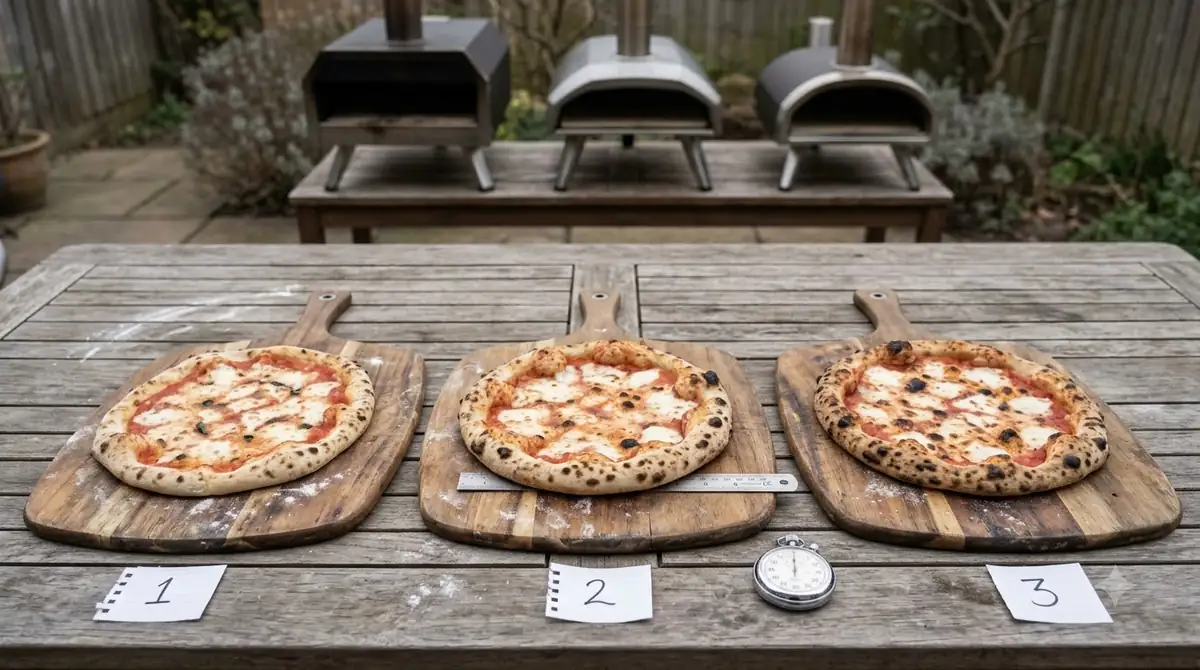

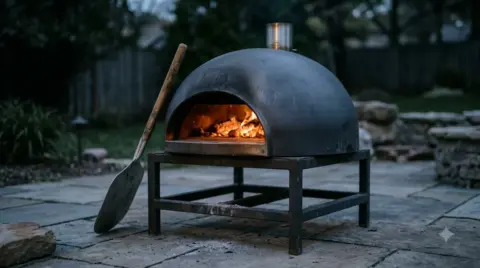
The neapolitan pizza baking time is usually 60 to 90 seconds in an oven at 430 to 500 °C (800 to 930 °F). That speed is what gives the classic leopard-spotted crust and soft centre. A home oven runs much cooler, so the same pizza takes several minutes and needs a different approach.
Most people searching for neapolitan pizza baking time want one number, but the real answer depends on the oven. Temperature, the baking surface, and the thickness of the dough all change how long the pizza needs. This guide explains the typical times, why they differ between a wood-fired oven and a home oven, and how to tell when your pizza is done.
How Long Does Neapolitan Pizza Take to Bake?
In a properly hot oven, a Neapolitan pizza bakes in 60 to 90 seconds.
The Alfa Forni guide to the ideal temperature for baking Neapolitan pizza gives 60 to 90 seconds as the bake time and a target oven range of 430 to 500 °C (800 to 930 °F). That short bake is possible because the intense heat from the floor and roof sets the crust almost at once, while the top cheese and sauce cook through without burning.
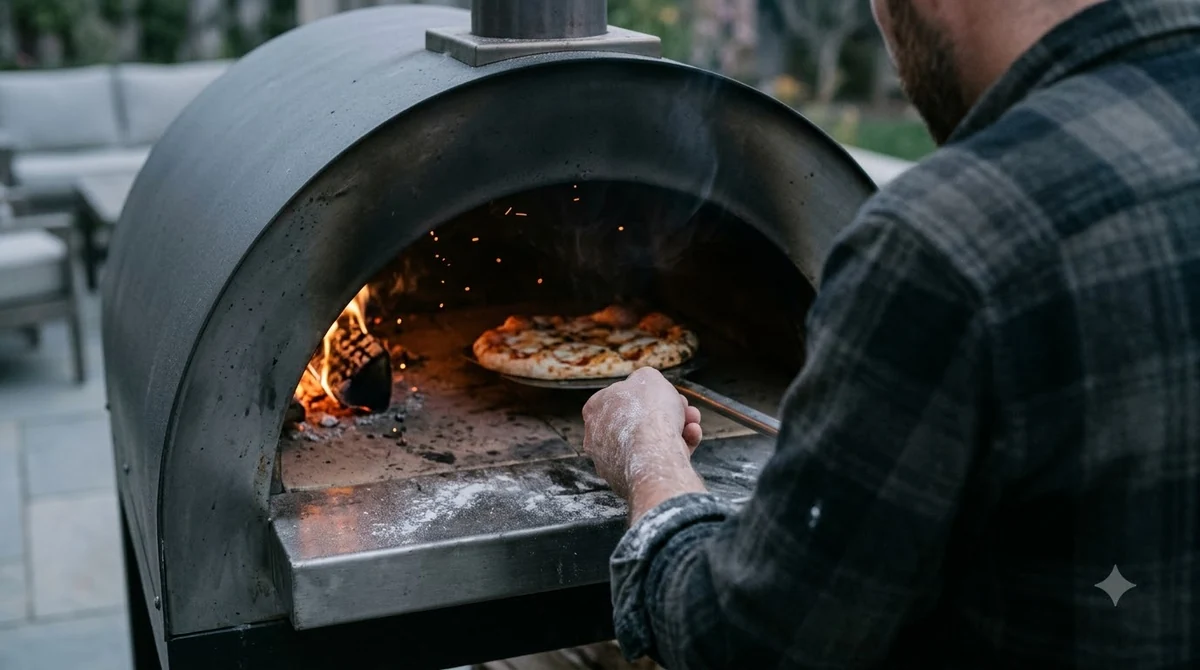
The same guide notes that a home oven may need 2 to 3 minutes for the neapolitan pizza baking time, which is a clear sign that a standard oven cannot copy the professional result exactly.
Why Does a Home Oven Take Longer?
A home oven takes longer because it cannot reach the same temperature, and it loses heat every time the door opens.
Gozney’s guide to pizza oven temperature says a regular home oven tops out around 500 to 550 °F (260 to 290 °C), and it lists a typical home-oven pizza bake time of 8 to 15 minutes. Breville’s pizza oven temperature guide adds that a residential oven drops in temperature quickly when the door is open. The gap between 60 seconds and 8 to 15 minutes is the difference between a pizza cooked by radiant heat from a dome and one cooked by a much cooler, slower oven.
Because of this, a 500 °F home oven will give you a pizza that is pale, soft, and less charred. That is not a failure. It is a different style of pizza, and it can still be very good if you adjust the dough and toppings to suit the slower bake.
How Do You Keep a Neapolitan Pizza Turning Evenly?
At very high heat, a pizza can burn on one side in seconds, so rotating it is part of the bake.
The Alfa Forni guide recommends turning the pizza 180 degrees every 20 to 30 seconds so it browns evenly. Use a turning peel with a short, confident motion, and keep the pizza moving rather than leaving it still over the hottest part of the floor. Over a 60 to 90 second bake, that means two or three turns.
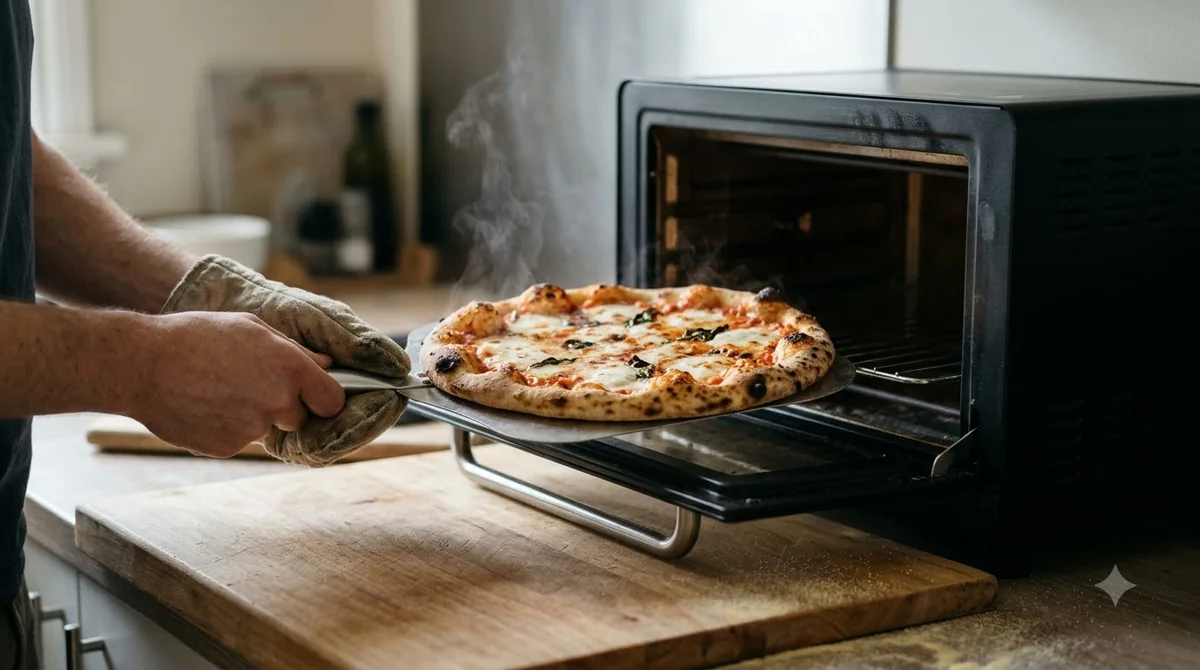
If the top is still pale when the base is ready, lift the pizza slightly toward the roof of the oven for a few seconds rather than leaving it on the floor.
How Can You Tell a Neapolitan Pizza Is Done?
A finished Neapolitan pizza has a puffed, blistered edge, charred spots on the base, and a cheese layer that is melted and bubbling.
Check the base as well as the top. The underside should be firm and lightly browned, with no raw dough visible when you lift the slice. If the cheese is still wet and the base is pale, the pizza needs more time or a hotter floor, not a longer stay on the peel.
What Affects Neapolitan Pizza Baking Time?
Four things change how long the pizza needs in the oven, and each one can shift the neapolitan pizza baking time by seconds or minutes.
Oven design matters too. A dome oven built around a wood or gas fire holds heat differently from a countertop electric unit, so the same dough can finish at different speeds. Learn your own oven with a few test bakes, and write down the time and the look of the crust each time.
- Oven temperature: the hotter the floor and roof, the shorter the bake.
- Baking surface: a fully preheated stone or steel delivers heat faster than a cold one.
- Dough thickness: a thin base cooks quickly, while a thicker edge takes longer to set.
- Toppings: wet or heavy toppings slow the cook and can leave the centre soft.
Preheating matters more than most people expect. The Baking Steel guide to pizza temperature recommends allowing a full 60 minutes for a steel to heat, and warns that 10 or 20 minutes is not enough. Rushing the preheat is the most common reason a home pizza takes too long.
Frequently Asked Questions
How long does neapolitan pizza take in a home oven?
In a standard home oven, expect several minutes. Gozney lists 8 to 15 minutes for a home-oven pizza, and the exact time depends on the oven and the pizza’s thickness.
What temperature should a neapolitan pizza bake at?
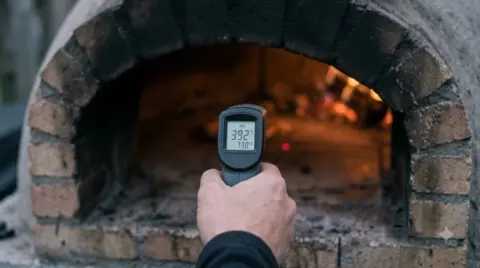
The Alfa Forni guide gives a target of 430 to 500 °C, which is 800 to 930 °F. Most home ovens cannot reach that range, so use the highest setting your oven allows and preheat it fully.
Do I need to turn a neapolitan pizza while it bakes?
Yes, in a very hot oven. Turning it 180 degrees every 20 to 30 seconds helps the crust brown evenly and keeps one side from burning.
Why is my neapolitan pizza soggy in the middle?
A soggy centre usually means the base was not hot enough or the toppings were too wet. Preheat the baking surface fully, use less sauce and fresh mozzarella that has been drained, and bake until the base is firm.
Neapolitan pizza is fast because the oven is very hot, and a home oven will always be slower. Set your expectations for the oven you have, preheat the surface fully, and turn the pizza during the bake. Once you know your oven’s timing, adjust by feel and by the look of the crust.
 9 min readLearnNeapolitan vs Sicilian Pizza: Shape, Crust and Baking ComparedUpdated Nov 7, 2026
 8 min readLearnNeapolitan Pizza Recipe: Dough, Temperature and Baking at HomeUpdated Nov 10, 2026
 8 min readLearnPizza Pockets Recipe: Homemade Dough, Filling and Baking TimesUpdated Nov 11, 2026
 5 min readLearnPizza Oven Chicken Wings: Temperature, Time and DonenessUpdated Nov 13, 2026
 9 min readLearnNew York Style Pizza Recipe: Dough Ratios, Rise Times and Oven SettingsUpdated Nov 10, 2026
 8 min readLearnCalzone Recipe: Dough, Filling and Bake Times for Home and Pizza OvensUpdated Nov 10, 2026