
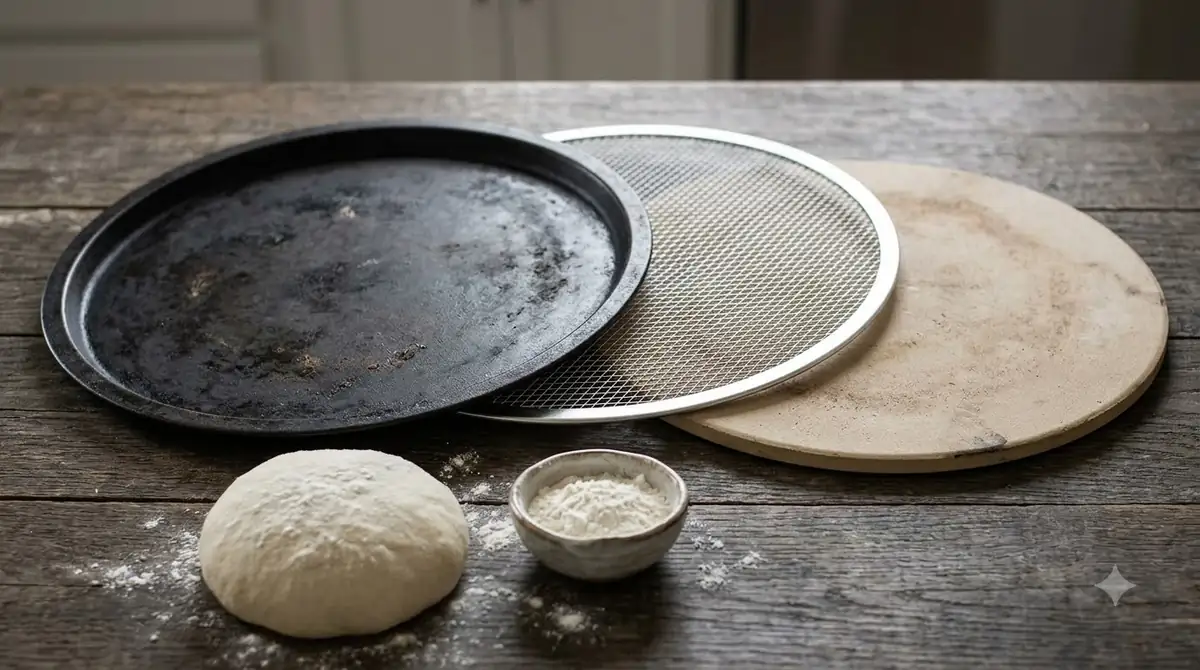

New York style vs Detroit style pizza comes down to shape and crust. New York style is a thin, round pie you can fold to eat, while Detroit style is a thick, rectangular pie baked in a steel pan.
The two styles also differ in origin, toppings and how the crust holds up after baking. So when you weigh New York style vs Detroit style pizza, the better pick depends on what you want to make at home.
New York Style vs Detroit Style Pizza: Shape and Crust
New York style is a thin, round pie with a pliable crust that is crisp only at the edge, while Detroit style is a thick, rectangular pie with an airy crust baked in a steel pan.
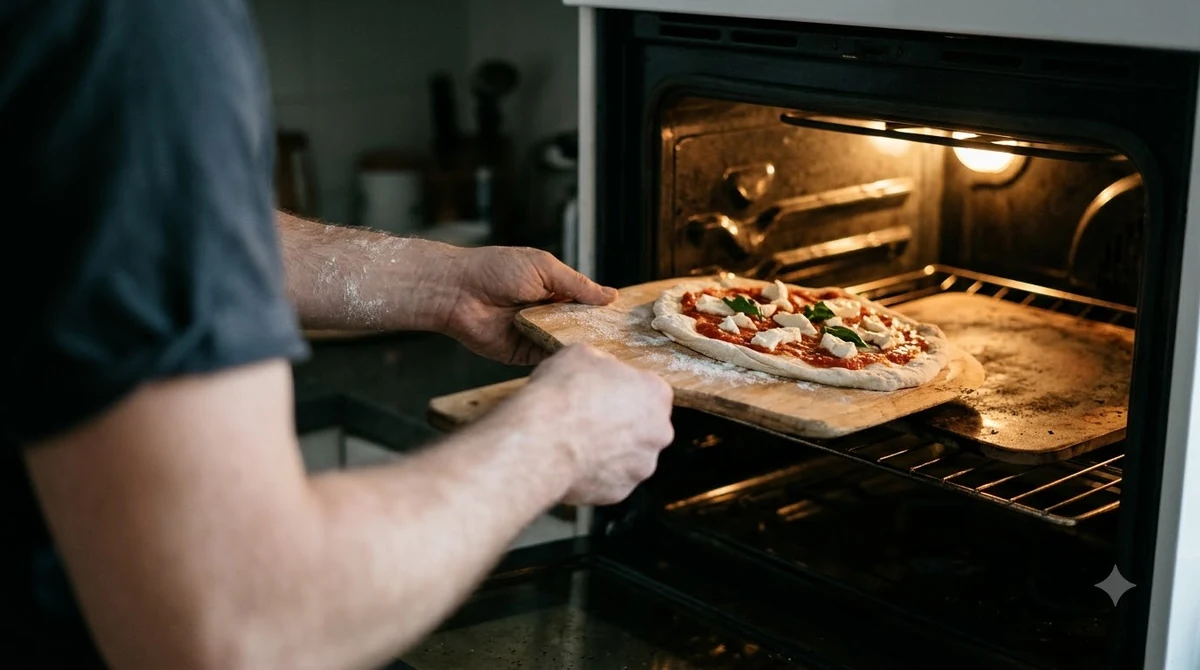
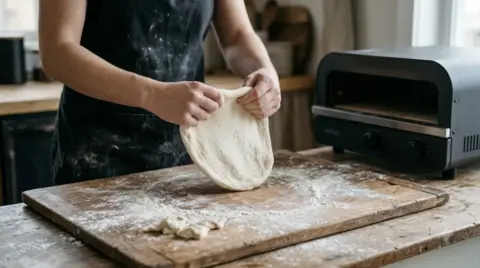
The New York pie is traditionally hand-tossed. It is usually 18 to 24 inches (45 to 60 cm) across and commonly cut into eight slices, according to Wikipedia’s New York-style pizza article. Its dough is made with high-gluten bread flour, and the base is soft enough beneath the toppings to be folded.
Detroit style starts with dough that is double proofed and stretched by hand to the corners of a square pan (our Detroit style pizza recipe walks through it). Hydration is typically 70 percent or higher, which gives the crust an open, chewy inside and a crisp outside.
Baking temperatures also vary by shop. Wikipedia’s Detroit-style article cites one pizzeria that bakes at 440 °F (225 °C) for 13 minutes and another that bakes at 700 °F (370 °C), so no single setting is the one true method.
The table below sums up the main differences in New York style vs Detroit style pizza.
| Feature | New York style | Detroit style |
|---|---|---|
| Shape | Round | Rectangular or square, in a pan |
| Typical size | 18 to 24 inches (45 to 60 cm), commonly 8 slices | Set by the pan; sources give no standard size |
| Base | Hand-tossed, thin and pliable | Double proofed, stretched to pan corners, thick |
| Edge | Crisp only at the edge | Cheese caramelizes against the steel walls |
| Cheese | Dry, grated, full-fat mozzarella | Brick cheese or mozzarella spread to the edges |
| Sauce | Light layer under the cheese | Cooked sauce on top, in stripes |
| Origin | Italian immigrants in New York City, early 1900s | Buddy’s Rendezvous, Detroit, 1946 |

Where Each Style Came From
In New York style vs Detroit style pizza, New York style grew from Neapolitan pizza that Italian immigrants brought to New York City in the early 1900s, while Detroit style was developed in 1946 at Buddy’s Rendezvous.
New York style evolved in the United States from the pizza that Italian immigrants made in New York City, which itself came from Neapolitan pizza in Italy (see Neapolitan vs New York style pizza and our New York style pizza explainer). Lombardi’s, founded in 1905, is credited as the first licensed pizzeria in the country, although author Peter Regas has challenged that claim.
Detroit style has a more local origin. Buddy’s Rendezvous was a former speakeasy at Six Mile Road and Conant Street, owned by Gus and Anna Guerra. The restaurant’s Buddy’s own history page says Gus Guerra made the first square pizza there in 1946, using forged steel pans borrowed from local automotive plants.
Sicilian roots are part of the story too. Buddy’s says its square pizza was influenced by Sicilian-style pizza, and Wikipedia notes that historical accounts credit the original Sicilian-style base either to Anna Guerra’s mother’s recipe or to a Sicilian employee. For the full contrast, read Detroit style vs Sicilian pizza, or start with what Sicilian pizza is.
How the Pan and Dough Shape the Crust
In New York style vs Detroit style pizza, the steel pan gives Detroit style its crisp, caramelized edge, while New York style relies on a thin base that is stretched by hand and folded when eaten.
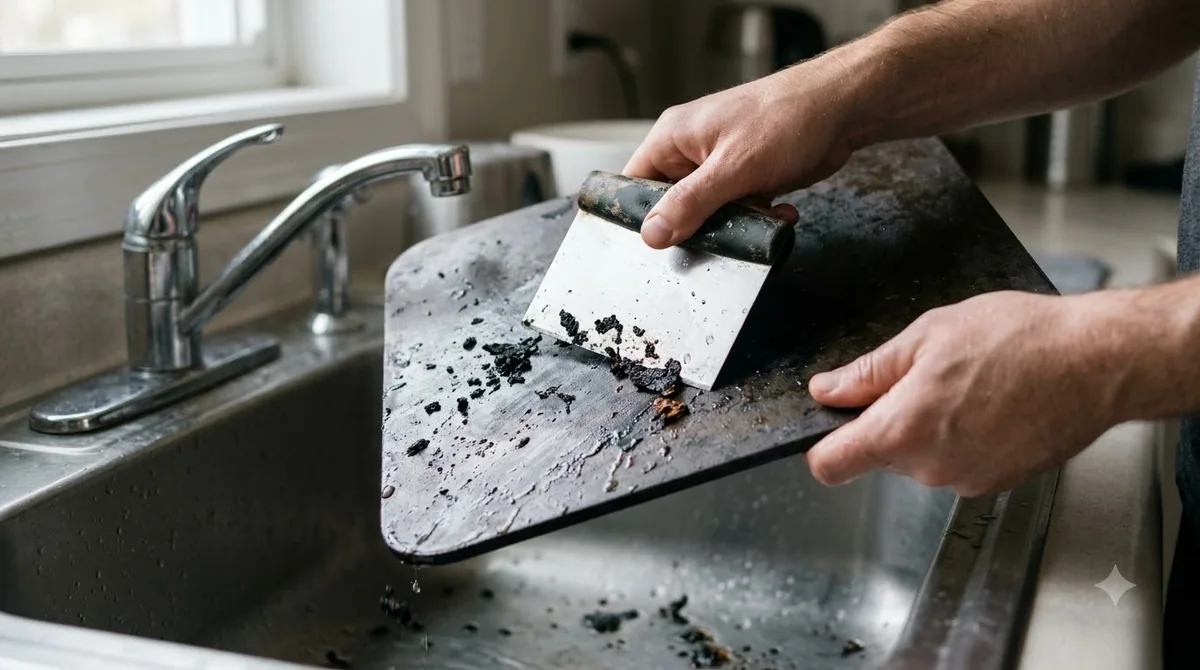
Pure Michigan’s history of the style describes the pans as thick steel, more similar to a cast iron skillet than a cake pan, with deep sides. That pan is the main reason a Detroit pie looks so different from a New York pie.
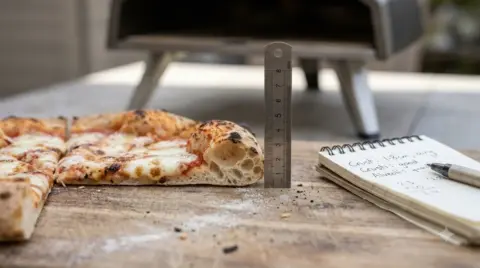
As the dough bakes, cheese spreads to the walls of the pan and caramelizes against the steel, forming a lacy, crisp edge that is often called frico. Wikipedia’s Detroit-style article says new steel pans are dry-baked with 10 to 18 ounces (280 to 510 grams) of dough per pan.
The New York base works differently. It is thin enough to fold, and its crispness is mostly at the outer edge, so the middle stays soft. That is why a New York slice bends in the hand rather than holding its shape.
Neither source gives one oven setting that every home cook must match, so treat any temperature as a starting point and adjust by how the crust looks. If you want to try the New York side at home in an Ooni gas oven, our Koda 16 New York pie guide walks through dough and heat.
New York Style vs Detroit Style Pizza: Cheese, Sauce and Toppings
New York style uses a light tomato sauce under dry, grated, full-fat mozzarella, while Detroit style spreads brick cheese or mozzarella to the edges and finishes with sauce on top.
On a New York pie, a light layer of tomato sauce goes down first, followed by dry, grated, full-fat mozzarella. Other toppings go over the cheese, which keeps the cheese in direct contact with the dough.
Detroit style reverses much of that order. Wisconsin brick cheese, or mozzarella, is spread to the edges of the pan, and cooked tomato sauce is added last in stripes, a finish sometimes called red top.
Brick cheese can withstand high heat because of its butterfat content, according to Wikipedia’s Detroit-style article. One Detroit pizzeria it describes places almost one pound of brick cheese under its pepperoni, so the cheese layer is substantial.
Which Style Holds Up Better After Baking
In New York style vs Detroit style pizza, Detroit style is described as sturdier than New York slices, because the sauce on top helps keep its crust from going soggy.
Wikipedia’s Detroit-style article makes that comparison, saying the style is sturdier than floppy New York slices. That is a description of how the style is built, not a measured test, so judge it by eating both.
New York slices are built to be folded and eaten while warm, and that fold is part of the style. A Detroit square is cut and eaten without folding, since the thick crust holds its shape on its own.
Claims about leftovers or delivery times are often opinion, so treat them with care before you plan a party around them.
Which Style Should You Make at Home?
For new york style vs detroit style pizza at home, make New York style if you want a thin, foldable round with light sauce and dry mozzarella, and make Detroit style if you want a thick square with a cheese-caramelized edge.
- Choose New York style for a round, thin base that you stretch by hand and fold to eat.
- Choose Detroit style for a thick, square crust made with dough at 70 percent hydration or higher.
- Choose Detroit style if you like cheese crisped at the edges and tomato sauce in stripes on top.
- Choose New York style if you want a larger round pie cut into about eight slices.
The pan decides most of the Detroit result. Wikipedia credits the high steel walls with forming the cheese edge, so a shallow tray will give a different result. The New York style depends more on the dough and how you stretch it.
Frequently Asked Questions
Is Detroit style pizza the same as Sicilian pizza?
No. Buddy’s says Detroit style was influenced by square Sicilian-style pizza, but the steel pan and the cheese-caramelized edge make it its own American style.
New York style vs Detroit style pizza: which came first?
New York style has the earlier roots, reaching back to Neapolitan pizza and to Italian immigrants in New York City in the early 1900s. Detroit style was developed in 1946 at Buddy’s Rendezvous, so the two traditions are separated by several decades.
Do I need a special pan for Detroit style?
A thick, high-sided steel pan is the closest match to the traditional version, because the walls are what let cheese caramelize into an edge. Pure Michigan compares the pan to a cast iron skillet, so a deep, heavy pan is the place to start.
Why does a New York slice fold so easily?
The base is thin and pliable enough to fold beneath its toppings, and it is crisp mainly at the edge. Wikipedia’s New York-style article credits high-gluten bread flour, and some accounts also credit the minerals in New York City’s tap water.
Does Detroit style have sauce on top?
Yes. The cooked tomato sauce goes on last, in stripes, and that is why the style is sometimes called red top. Some recipes add the sauce after baking instead, so check which method your recipe uses.
When you weigh New York style vs Detroit style pizza, pick the style you enjoy eating most, because that choice tells you which dough, pan and cheese are worth buying. Test one recipe in your own oven, and adjust the heat by how the crust looks rather than by a single number from a recipe or a pizzeria.
 8 min readLearnNeapolitan vs New York Style Pizza: How They DifferUpdated Nov 14, 2026
 8 min readLearnNew York Style vs Sicilian Pizza: Crust, Shape and Cheese ComparedUpdated Nov 7, 2026
 9 min readLearnWhat Is New York Style Pizza? A Simple Guide for Home CooksUpdated Nov 7, 2026
 9 min readLearnNew York Style Pizza Recipe: Dough Ratios, Rise Times and Oven SettingsUpdated Nov 10, 2026
 8 min readLearnDetroit Style vs Sicilian Pizza: What Sets the Two Styles ApartUpdated Nov 14, 2026
 8 min readLearnDetroit Style Pizza Recipe: Crispy Edges at HomeUpdated Nov 7, 2026