
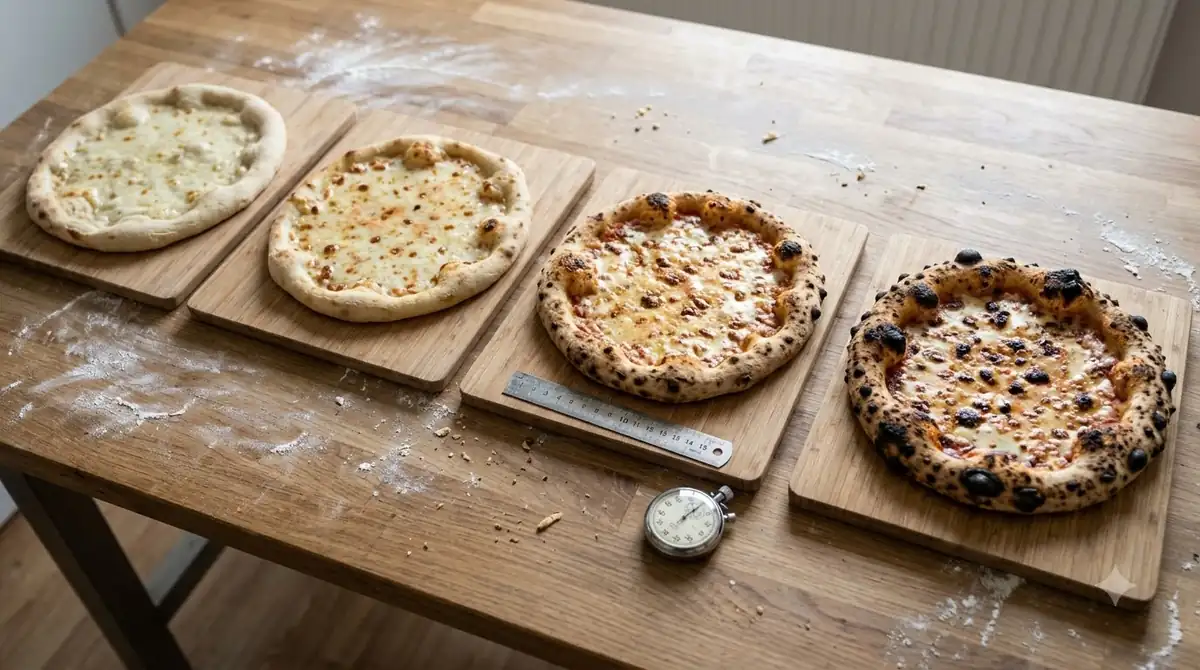

The main difference in Detroit style vs Sicilian pizza is the pan and the cheese. Detroit style is baked in a high-sided blue steel pan with brick cheese spread to the edges, while Sicilian pizza is a thick, airy, rectangular pie. Both styles are often rectangular, which is why people mix them up.
Detroit style vs Sicilian pizza is a comparison of close relatives, since Detroit style grew out of a Sicilian-style base. The differences in pan, cheese and sauce placement change the final slice, so check each one before you choose a method at home.
Detroit Style vs Sicilian Pizza: Where Each Style Comes From
Detroit style pizza was developed in 1946 at Buddy’s Rendezvous, and its base is attributed to a Sicilian-style recipe. The style took its shape in Detroit rather than in Sicily.
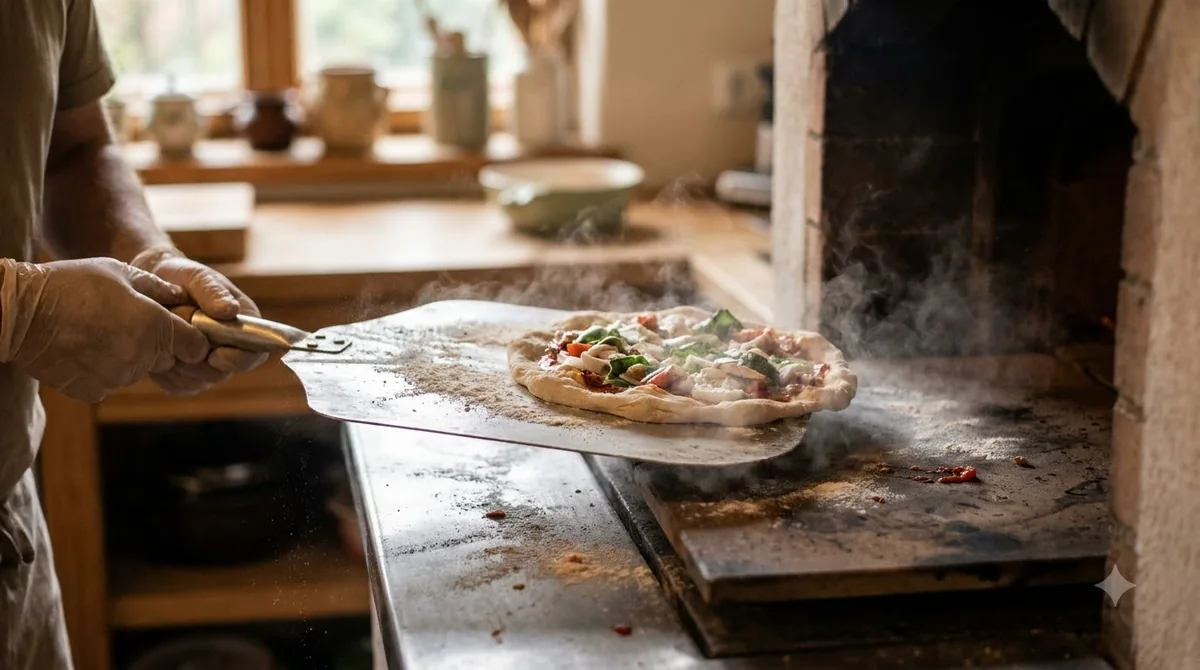
Buddy’s Rendezvous was a former speakeasy owned by Gus and Anna Guerra, at the corner of Six Mile Road and Conant Street. According to Wikipedia’s Detroit-style pizza entry, the original base came from either Anna Guerra’s mother’s sfincione recipe or one from employee Connie Piccinato, and it produced a focaccia-like crust.
Sfincione originated in the province of Palermo in western Sicily. Pizza from Sicily became popular in the western part of the island by the mid-19th century, and it reached North America with a thicker crust and a rectangular shape.
The American Sicilian-style pie is described as having a crunchy base and an airy interior. Michigan’s Sicilian-style pizza is noted as an influence on Detroit style, which is why Detroit style vs Sicilian pizza keeps getting compared.
As late as 2007, some local media still called Detroit style “Sicilian-style,” which shows how the naming of Detroit style vs Sicilian pizza overlapped for years.

The Pan: Blue Steel vs a Sicilian Tray
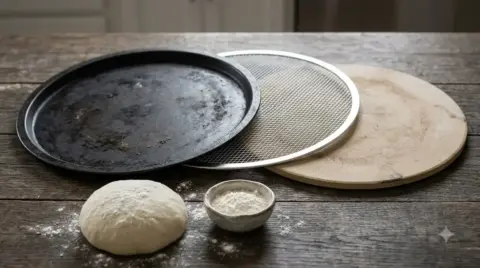
In Detroit style vs Sicilian pizza, the pan is the feature most sources call defining: a high-sided, heavyweight, rectangular blue steel pan.
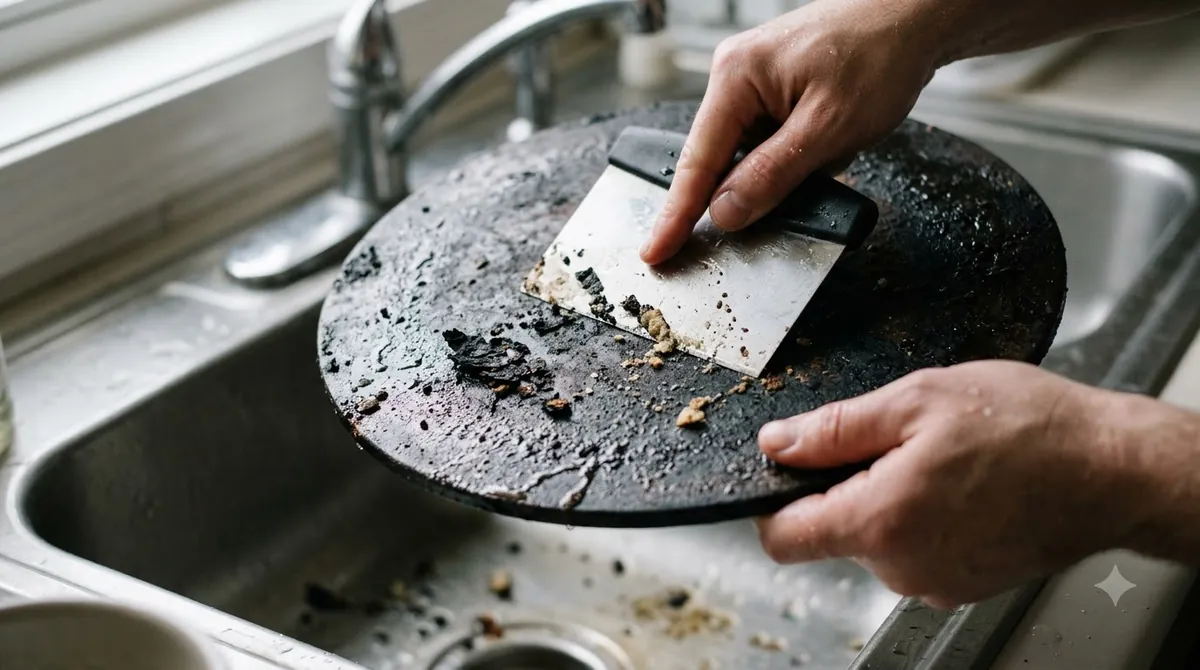
The first pans came from local automotive suppliers, because the baking pans of the time were not suitable. Dover Parkersburg made these steel pans in the 1930s and 1940s, and they were originally used as drip trays or to hold small parts in auto factories.
The Takeout describes the steel rectangular pan as the key difference and notes that it retains heat well. Its explanation of the Sicilian side is less specific, so the cited sources do not name one standard Sicilian pan.
For Detroit style vs Sicilian pizza, the shape alone does not separate the two styles, since Sicilian pizza is also often described as thick and rectangular. The pan material and depth do most of the work.
Dough, Thickness and Texture
Dough is another point of difference in Detroit style vs Sicilian pizza. Detroit style dough runs at 70 percent hydration or higher and bakes into an open, chewy crust with a crisp exterior. The American Sicilian-style base is thicker, with dough over an inch thick.
Detroit dough is double-proofed and stretched by hand to the corners of the pan, as in this Detroit style pizza recipe. Shawn Randazzo says a true Detroit style crust should be about 1.5 inches (40 mm) thick, which puts it well above the Sicilian measurement in the cited sources.
Sfincione is usually a rectangle with a heavier base than Neapolitan pizza, with more dough and sauce and less cheese, a contrast covered in Neapolitan vs Sicilian pizza. The table below compares Detroit style vs Sicilian pizza side by side.
| Feature | Detroit style | Sicilian (American style) |
|---|---|---|
| Pan | High-sided rectangular blue steel pan | Thick rectangular base, pan type not named in the sources |
| Dough | 70 percent hydration or higher, double-proofed | Airy interior, crunchy base |
| Thickness | About 1.5 inches (40 mm), per Shawn Randazzo | Over 1 inch |
| Cheese | Wisconsin brick, spread to the edges | Traditional versions use strong cheeses such as caciocavallo and toma |
| Edge | Dark and caramelized where it touches the pan | No caramelized edge, per The Takeout |
| Sauce | Usually the final layer, in dollops or stripes | Sometimes layered over the toppings, as in sfincione |
The thickness numbers come from different types of sources, so read them as a guide rather than a rule. Use the table as a checklist when you compare recipes.
Cheese and the Caramelized Edge
Detroit style traditionally uses Wisconsin brick cheese, spread to the edges where it caramelizes against the steel pan.
Brick cheese has been produced in Wisconsin since 1877, and it is described as the traditional cheese for Detroit style pizza. Unaged brick is sweet and mild and suitable for melting, and its fat content helps it handle high oven heat. Aged brick develops a stronger smell and a nuttier taste, while unaged brick is ready to eat after two weeks.
The Takeout notes that Detroit style often uses mozzarella when brick is unavailable. The cheese reaching the edge is what creates the dark, crisp border that many people look for in this style.
Cheese placement is a clear split in Detroit style vs Sicilian pizza: The Takeout says Sicilian pizza does not form the same dark edge. Traditional Palermo sfincione uses strong cheeses such as caciocavallo and toma, and some versions have no cheese at all. Some Sicilian-style home recipes use provolone, which our guide to what provolone is explains.
Sauce Placement and Why It Matters
Detroit style sauce usually sits on top, often in dollops or stripes, and some recipes add it after baking.
According to The Takeout, sauce that goes on after baking keeps the dough from getting soggy. Wikipedia notes that the style is sometimes called “red top” because the sauce is the final topping.
Sauce order is also different in Detroit style vs Sicilian pizza, because sfincione is sometimes built differently. The sauce is layered over the toppings so it does not soak into the thick dough, which is a practical reason for the order of layers in Sicilian pies.
Baking Temperatures and Times
Detroit style recipes in the cited sources range from 440 F for 13 minutes to 700 F with no time given, so oven settings vary widely.
One Detroit recipe cited on Wikipedia bakes at 440 F (225 C) for 13 minutes. Another uses 700 F (370 C) with no time stated, which shows how far home recipes can differ.
For Detroit style vs Sicilian pizza, the cited sources give no verified temperature or baking time for the Sicilian side, and The Takeout gives no figures for either style. Check your oven’s maximum before following a 700 F recipe, and use a Sicilian recipe that states its own oven settings.
Which Style Suits You
Choose Detroit style for a crisp, caramelized cheese edge, and choose Sicilian for a thick, airy base that is closer to focaccia.
- Pick Detroit style if you want a crisp, caramelized edge and can use a high-sided steel pan.
- Pick Detroit style if you can find Wisconsin brick cheese, or accept mozzarella as a substitute.
- Pick Sicilian style if you want a thick, airy base and no dark edge.
- Pick Sicilian style if you prefer sauce layered over the toppings, as in sfincione.
Both styles are rectangular, so the pan alone will not settle Detroit style vs Sicilian pizza for you. Decide on the crust and cheese first, then match the pan and oven settings to that choice. If New York slices are also on your list, compare New York style vs Detroit style pizza, and for another rectangular pie see Roman vs Sicilian pizza.
Frequently Asked Questions
Is Detroit style pizza the same as Sicilian pizza?
No, but Detroit style vs Sicilian pizza are closely related. Detroit style is thought to descend from a Sicilian-style base, and Michigan’s Sicilian-style pizza is noted as an influence. The main differences are the blue steel pan, the brick cheese spread to the edges and the way the sauce is applied.
What cheese is used on Detroit style pizza?
Wisconsin brick cheese is the traditional choice. Mozzarella is often used when brick is unavailable, and the cheese is spread to the edges, where it caramelizes against the pan.
Does Sicilian pizza have a caramelized edge?
According to The Takeout, Detroit style vs Sicilian pizza differs on the edge: Sicilian pizza does not form the dark, caramelized edge typical of Detroit style. Sicilian pizza has an airy, crunchy base.
How thick is Sicilian pizza dough?
The American Sicilian-style base is described as having dough over an inch thick, with a crunchy base and an airy interior. Palermo sfincione has more dough and sauce than Neapolitan pizza and less cheese.
How thick should Detroit style crust be?
Shawn Randazzo says a true Detroit style crust should be about 1.5 inches (40 mm) thick. The dough is at least 70 percent hydration, double-proofed and hand-stretched to the corners of the pan.
If you are choosing between Detroit style vs Sicilian pizza, start with the texture you want. Detroit style suits anyone who wants a crisp, cheesy edge and is ready to source brick cheese and a steel pan. Sicilian suits anyone who wants a thick, airy base closer to focaccia.
 8 min readLearnPizza Dough Flour to Water Ratio: How to Set It for Each StyleUpdated Nov 11, 2026
 8 min readLearnNew York Style vs Detroit Style Pizza: How They DifferUpdated Nov 14, 2026
 8 min readLearnDetroit Style Pizza Recipe: Crispy Edges at HomeUpdated Nov 7, 2026
 8 min readLearnNew York Style vs Sicilian Pizza: Crust, Shape and Cheese ComparedUpdated Nov 7, 2026
 8 min readLearnWhat Is Sicilian Pizza? A Simple Guide to the StyleUpdated Nov 10, 2026
 8 min readLearnOrecchiette vs Cavatelli: How to Tell These Southern Italian Shapes ApartUpdated Nov 11, 2026