

No separate Viva-branded file was located, so the official Philips recipe booklet for the Pasta and Noodle Maker, model HR2357, is the verified reference for this philips viva pasta maker manual. It sets out the basic operating steps, cup amounts and dough ratios. Check the model number on your machine before you follow any amount.
The booklet’s cup markings apply to the matching machine. Model details for Viva Collection products were not confirmed in this check.
What the Philips Viva Pasta Maker Manual Covers
The Philips booklet for the Pasta and Noodle Maker, model HR2357, combines a recipe book with basic user instructions. It is a 41-page document with recipes, dough tables and shaping information.
The Philips recipe book for the Pasta and Noodle Maker says its recipes have been tested for success. It also warns that other recipes need flour and water or egg ratios adjusted to the cups included with the machine, or the machine will not operate successfully.
The Philips Viva pasta maker manual reference sends troubleshooting and further information to the user manual and to philips.com/kitchen. The troubleshooting, cleaning and safety sections were not read in this check, so they are not summarized here.
How to Load and Run the Machine
You add flour, close the lid, select volume 1 or 2, press start, and pour the liquid slowly through the lid opening. In the Philips Viva pasta maker manual reference, these steps apply to both basic doughs.
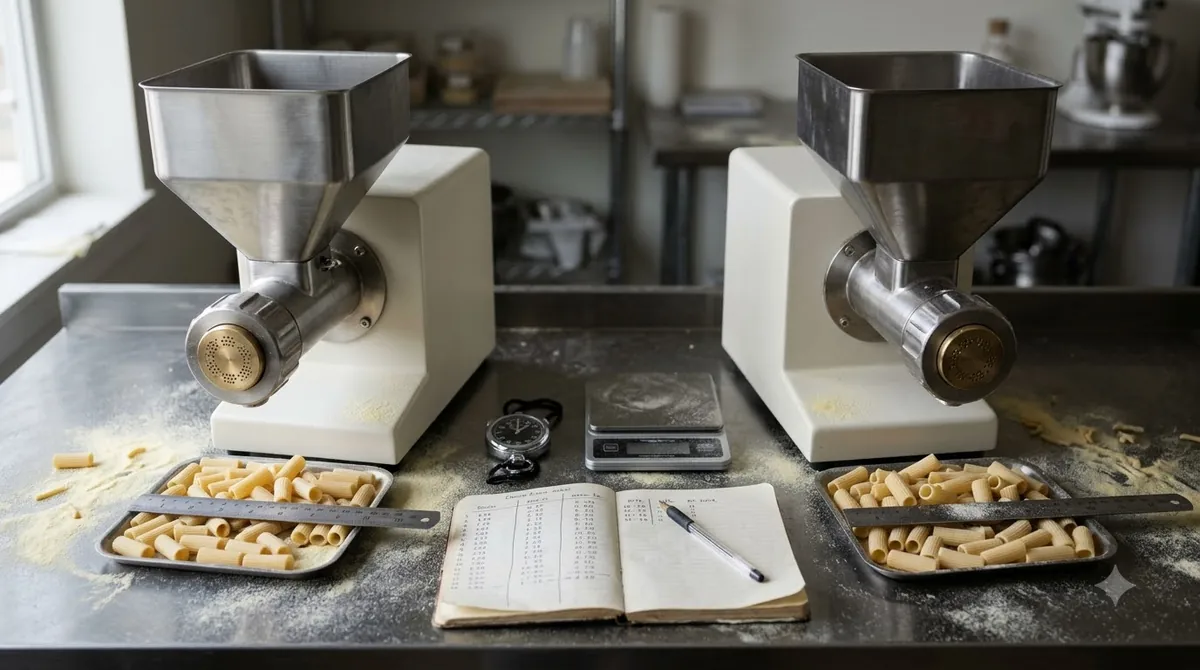
- Open the lid, add the flour, and close the lid.
- Turn on the appliance, select volume 1 or 2, and press start.
- Slowly pour the liquid into the opening on the lid.
- Wait about 3 minutes for the pasta or noodles to appear, then cut them to the size you want.
Volume 1 is for one cup of flour (about 250 g) and makes about 300 g of fresh pasta or noodles. Volume 2 is for two cups and makes about 600 g. The Philips Viva pasta maker manual says to use volume 1 for one cup of flour and volume 2 for two cups.
Cooking time depends on the shape. Thin pasta or noodles need about 4 to 5 minutes, and thick pasta about 6 to 8 minutes. The booklet lists a processing time of 10 minutes for volume 1 and 15 minutes for volume 2.
Flour and Water Amounts From the Cup Markings
For plain pasta, one full cup of flour (about 250 g) takes about 90 ml of water, and two cups take about 180 ml. The Philips Viva pasta maker manual asks you to measure flour and liquid precisely and to pour the water as slowly as you can.
| Dough | Flour | Liquid | Output |
|---|---|---|---|
| Wheat pasta | 250 g all-purpose flour | 95 ml (1 egg plus water) | 300 g |
| Wheat noodle | 250 g all-purpose flour | 90 g water | 300 g |
| Durum pasta | 200 g semolina plus 50 g all-purpose flour | 95 ml (1 egg plus water) | 300 g |
| Ramen | 250 g bread flour plus 3 g salt | 90 g water | 300 g |
| Soba | 170 g buckwheat flour plus 80 g all-purpose flour | 95 ml (1 egg plus water) | 300 g |
Egg doughs use a water and egg mixture of about 95 ml per cup of flour, or about 190 ml for two cups. The markings on the side of the measuring cup show these amounts.
Flour choice changes the dough. The Philips Viva pasta maker manual recommends a mix of durum semolina and all-purpose flour (type 405) for best results. It notes that fine type 00 flour contains less protein, so eggs are recommended with it.
Choosing Flour and Why Type 00 Needs an Egg
The booklet recommends a strong flour for this machine. It suggests durum semolina, with type 405 as a second option, because the dough needs enough structure to press through the shaping discs. Type 00 flour is low in protein, so the booklet asks you to add an egg to a 00 dough rather than relying on water alone.
If you use a flour the philips viva pasta maker manual does not name, expect the dough to behave differently. Keep the flour and liquid in the ratio the cups show, rather than adjusting by feel.
Cooking Times for Thin and Thick Pasta
Once the dough is ready and the machine is running, the booklet gives two cooking ranges. Thin pasta takes about 4 to 5 minutes, and thick pasta takes about 6 to 8 minutes. The booklet gives these ranges without more detail, so start with the low end and check the texture.
- Thin pasta: 4 to 5 minutes.
- Thick pasta: 6 to 8 minutes.
- Fresh output from the machine: about 3 minutes after you press start, as the booklet describes.
When the Machine Will Not Run Properly
The philips viva pasta maker manual gives one warning that matters most for new owners. Recipes from other sources need flour and liquid ratios matched to the cups included with the machine, or the machine will not run successfully. Do not replace the cup measures with a rough guess, and do not assume a recipe written for another machine will fit this one.
If the machine does not run, check the flour and liquid first, then the disc set and the lid. The booklet points you to the full user manual and to the Philips kitchen support site for anything the booklet does not cover, which is the right place for warranty and fault questions.
Shaping Discs That Come With the Machine
The machine comes with penne, spaghetti, fettuccine, and lasagna or dumpling skin shaping discs, and any of them can be used with any recipe in the booklet.
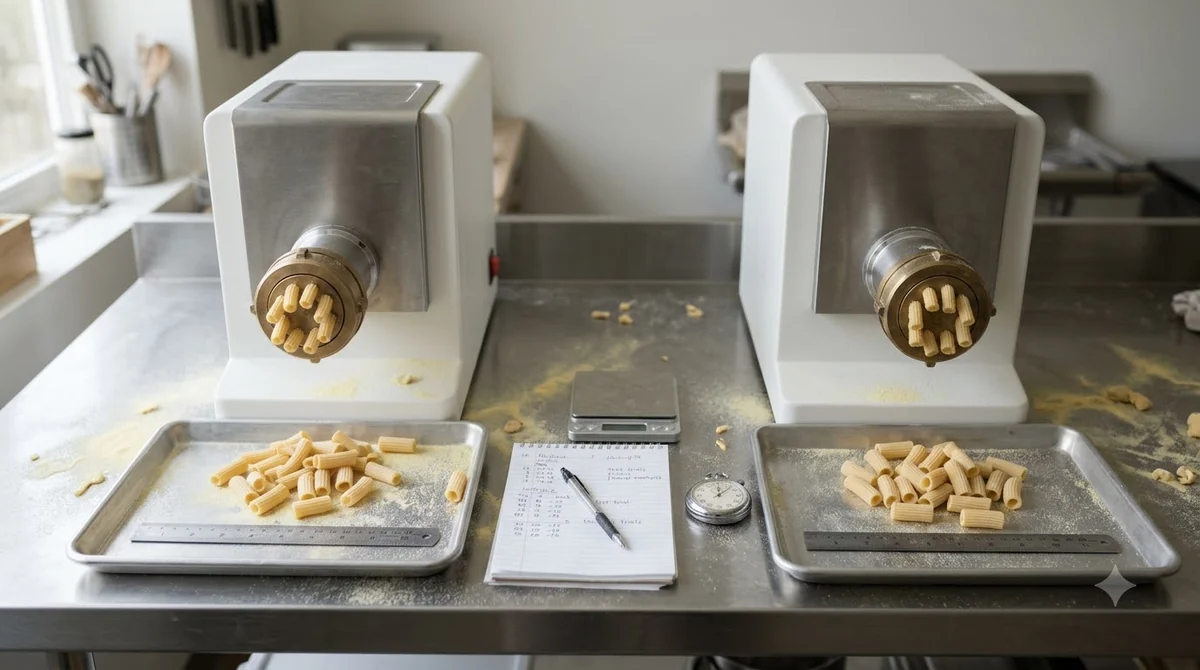
- Penne
- Spaghetti
- Fettuccine
- Lasagna or dumpling skin
The Philips Viva pasta maker manual says the discs in the box can differ by country. Its recipes suggest a specific disc, but other shapes are also possible for the same dough.
Other shaping discs are listed on the Philips kitchen site. This check did not confirm which discs are sold for the Viva model, so check the box contents and the Philips site before you buy. For dishes to make with the machine, see these Philips Viva pasta maker recipes.
Storing and Drying Fresh Pasta
Fresh pasta keeps in the fridge for a few days when you dust it with a little flour to prevent sticking. The booklet also covers freezing and drying, and the guide on how to store fresh pasta adds general storage background.
- Fridge: keep for a few days, dusted with flour.
- Freezer: fresh pasta and noodles freeze.
- Drying: hang on a wire or pasta rack in a dry place.
For best results, the Philips Viva pasta maker manual suggests part cooking pasta before storage and finishing the cooking when you need it.
Checking Your Model Number Before You Follow Any Manual
Match the model number on your machine to the booklet before you use its amounts, because the booklet verified in this check covers model HR2357. Use this philips viva pasta maker manual reference only for the matching model. A recipe written for one model may not suit another, and the Philips 7000 pasta maker manual covers a different machine.
A Viva-branded Philips Viva pasta maker manual was not found in this check, and it is not confirmed that Viva Collection products use model HR2357. The HR2357 product page did not load, so the model match should come from the label on your machine or the box. For the machine itself, see our guide to the Philips Viva pasta maker specs and what to check.
Details this article could not confirm include the cleaning steps, safety warnings, warranty terms and the full troubleshooting list. Check the printed user manual that came with your machine or the Philips support site for those sections.
Frequently Asked Questions
Where is the Philips Viva pasta maker manual?
No separate Viva-branded manual was located in this check. The verified source is the Philips recipe booklet for the Pasta and Noodle Maker, model HR2357, which includes basic user instructions. Compare its model number with the label on your machine before you use it.
How much water do I need for one cup of flour?
For plain pasta, one full cup of flour (about 250 g) takes about 90 ml of water. Egg doughs use a water and egg mixture of about 95 ml. Two cups of flour take about 180 ml of water, or about 190 ml with egg.
What is the difference between volume 1 and volume 2?
Volume 1 is for one cup of flour and makes about 300 g of fresh pasta or noodles. Volume 2 is for two cups and makes about 600 g. Both use the same steps, and the volume you select must match the amount of flour you add.
How long does the machine take to make pasta?
Pasta or noodles appear after about 3 minutes, according to the Philips Viva pasta maker manual. Cooking time then depends on shape, at about 4 to 5 minutes for thin pasta and 6 to 8 minutes for thick pasta. The booklet lists processing times of 10 minutes for volume 1 and 15 minutes for volume 2.
Can I use other pasta recipes?
You can, but the booklet says the flour and water or egg ratios must be adjusted to the cups included with the machine. Without that adjustment, the machine will not operate successfully. Start from the booklet’s dough table when you adapt a recipe, or compare it with this fresh pasta dough recipe.
Which model number should I check on my Philips pasta maker?
The booklet is for the HR2357 model. Third-party manual listings show HR2357/05 and HR2357/06 suffixes, so check the label on your unit before you use the philips viva pasta maker manual, because the electrical rating may differ by version.
Before you follow any recipe from this philips viva pasta maker manual booklet, confirm the model number on your machine and match it with the official booklet. Measure flour and water with the included cup, because that cup ratio is what the machine is built around. For cleaning, safety or warranty questions, use the printed user manual or Philips support.
 8 min readBy Use & ModelPhilips 7000 Pasta Maker Recipes: Where to Find ThemUpdated Nov 8, 2026
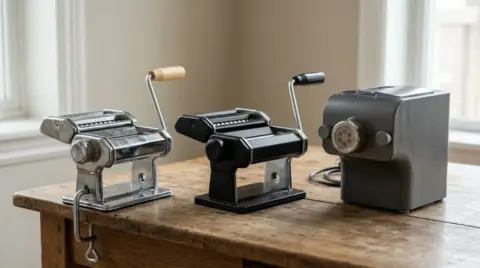 7 min readBy Use & ModelPhilips 7000 Pasta Maker Manual: How to Find It and Use ItUpdated Nov 8, 2026
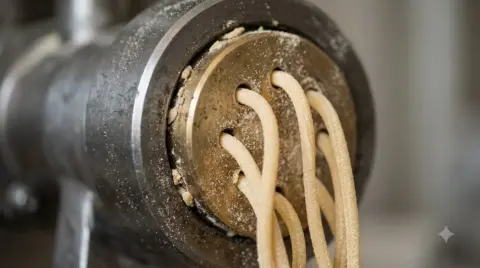 7 min readBy Use & ModelPhilips Viva Pasta Maker Recipes: Basic Doughs and DishesUpdated Nov 10, 2026
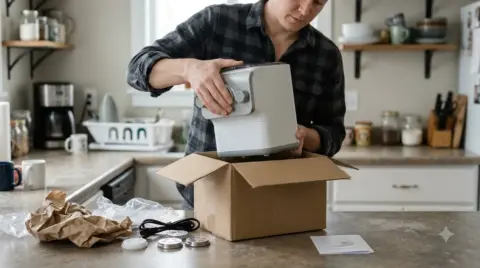 8 min readBy Use & ModelPhilips Viva Pasta Maker Discs: What Comes in the Box and What to CheckUpdated Nov 10, 2026
 6 min readBy Use & ModelCuisinart 3 in 1 Pizza Oven Manual: Where to Find It and What It CoversUpdated Nov 6, 2026
 8 min readBy Use & ModelPhilips Avance Pasta Maker Manual: Model HR2375/06 GuideUpdated Nov 10, 2026