
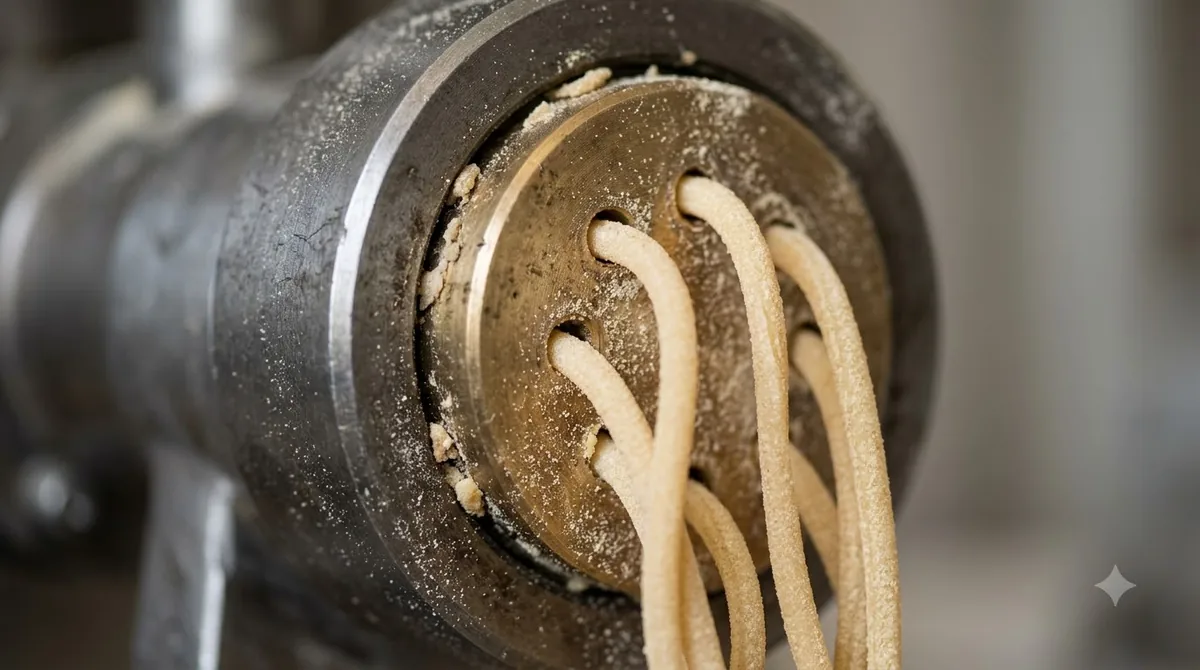

Philips Viva pasta maker recipes start from two basic doughs, and Philips sets the amounts by the included measuring cup. For plain pasta, one full cup of flour (about 250 g) takes about 90 ml of water. The official booklet is the reference as of November 6, 2026.
The booklet behind these Philips Viva pasta maker recipes is for the Philips Pasta and Noodle Maker, model HR2357. Viva Collection product pages use the same kind of cup system, but check your model number before you follow any recipe. For specs and buyer feedback on the machine, see our review of the Philips Viva pasta maker.
What the Philips Viva Pasta Maker Recipes Are Based On
The Philips recipe booklet sets every dough by the cup markings on the included measuring cup, with one cup of flour at about 250 g. The symbols on the side of the cup show the flour amount and the matching water amount for each dough. Each of these Philips Viva pasta maker recipes starts from those marks, so you measure the flour and water with the same cup. Our Philips Viva pasta maker manual guide covers the controls and parts.
Philips says the recipes in its recipe booklet for the Pasta and Noodle Maker have been tested for success. It also warns that if you use other pasta recipes, the flour and water or egg ratios must be adjusted to the cups included with the machine, or the machine will not operate successfully.
- Volume 1 is for one cup of flour and makes about 300 g of fresh pasta.
- Volume 2 is for two cups of flour and makes about 600 g of fresh pasta.
- The booklet is titled Pasta and Noodle Maker with model HR2357, so match the model number on your machine to the recipe source.
How Much Flour and Water for Plain Pasta
For plain pasta in these Philips Viva pasta maker recipes, one full cup of flour (about 250 g) takes about 90 ml of water, and two cups (about 500 g) take about 180 ml. Philips asks you to measure the flour and water precisely and to pour the water as slowly as you can.
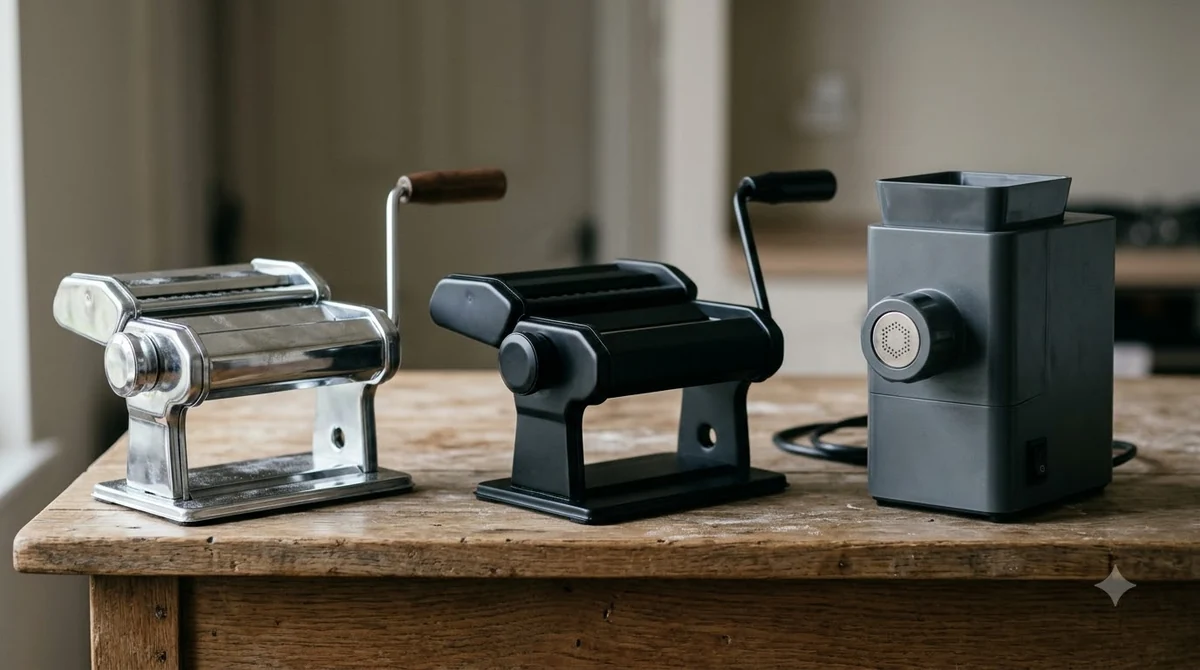
The table below sums up the plain dough settings for the Philips Viva pasta maker recipes in the booklet. For a dough you can make without the machine, see our fresh pasta dough recipe. Use the volume button that matches the flour amount, so the output stays close to the 300 g or 600 g the booklet lists.
| Dough | Flour | Water | Volume setting and output |
|---|---|---|---|
| Plain, 1 cup | 1 full cup (about 250 g) | about 90 ml | Volume 1, about 300 g |
| Plain, 2 cups | 2 full cups (about 500 g) | about 180 ml | Volume 2, about 600 g |
The Egg Pasta Dough Ratio
For egg pasta, the booklet uses about 95 ml of water plus egg mixture per cup of flour, and about 190 ml for two cups. The liquid is slightly more than the plain dough, because the egg adds moisture to the flour.
The same cup setup applies to every egg recipe in the booklet, so you still measure one or two full cups of flour before you start. Some buyers of the HR2371/05 model report that one cup of flour was not enough and that they needed about 1.5 cups, so treat that as a user report and check the texture of your own dough.
Step by Step: Running the Machine
You add the flour, select volume 1 or 2, then pour the liquid slowly through the lid opening. Pasta appears after about 3 minutes, and the Philips Viva pasta maker recipes list processing times of 10 minutes for one cup and 15 minutes for two cups. The booklet describes the machine as fully automatic, so once the liquid is in, it mixes and extrudes the dough for you.
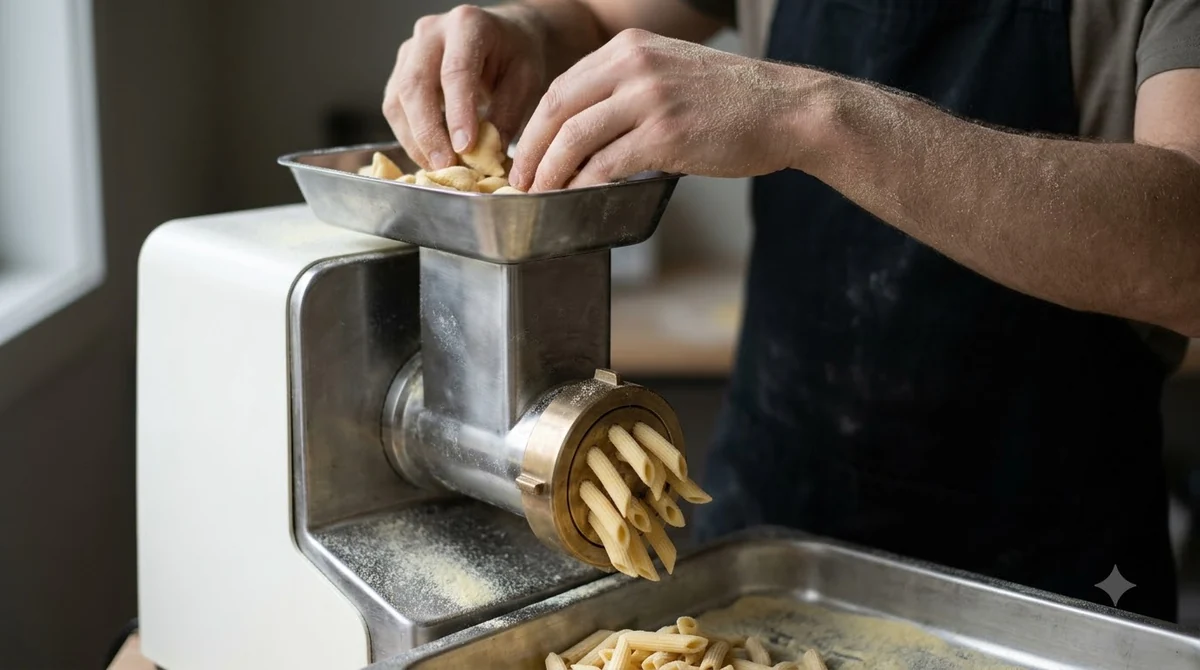
- Open the lid, add the flour, and close the lid.
- Turn the machine on, select volume 1 for one cup of flour or volume 2 for two cups, then press start.
- Slowly pour the liquid into the opening on the lid.
- After about 3 minutes, the pasta or noodles appear. Cut them to the size you want.
Cooking Times, Storage and Freezing for Philips Viva Pasta Maker Recipes
Thin fresh pasta cooks in 4 to 5 minutes, and thick pasta takes 6 to 8 minutes. Fresh pasta from these Philips Viva pasta maker recipes keeps in the fridge for a few days, so plan to cook it within that window. For more options, read how to store fresh pasta, and see fresh pasta vs dried pasta for how the cooking differs.
- Fridge: keep for a few days and sprinkle with a little flour to prevent sticking.
- Part cooking: the booklet suggests part cooking before storage, then finishing when needed.
- Freezing: the booklet says pastas and noodles will freeze.
- Drying: hang the pasta on a wire or pasta rack in a dry place.
Recipes From the Booklet: Lasagne and Primavera
The booklet’s lasagne Bolognese bakes for about 40 minutes at 180°C, and its pasta primavera starts from 300 g of herb pappardelle pasta. Both show how the Philips Viva pasta maker recipes pair fresh pasta with a sauce and a short ingredient list. The booklet also says that pastas and noodles are made with flour and water or egg, and that spices, herbs and vegetable extracts can add colour and flavour.
The lasagne recipe uses 600 g of spinach lasagne sheets bought in, not sheets made in the machine. It builds 4 or 5 layers of pasta, Bolognese, béchamel and cheese, using 500 g of ground beef, 250 ml of beef stock and 1 litre of milk for the béchamel.
The primavera recipe uses 300 g of herb pappardelle with 100 g of fresh peas, 100 g of green asparagus and 100 g of ricotta. Blanch the peas and asparagus for 3 minutes, then fry them with garlic and olive oil for about 5 minutes before tossing with the pasta.
Output, Capacity and Model Check
Philips product pages claim 450 g of fresh pasta in 18 minutes, while the booklet lists batches of about 300 g and 600 g. The booklet notes that the 300 g and 600 g amounts can differ slightly, and cooking time depends on the shape. Check the manual for your own model before you judge the output of any Philips Viva pasta maker recipe.
| Source | Model | Output | Time |
|---|---|---|---|
| Recipe booklet | HR2357 | about 300 g or 600 g | about 3 minutes for pasta to appear |
| Philips Canada product page | HR2371/05 | 450 g | 18 minutes |
| Philips Indonesia product page | HR2332/12 (discontinued) | 450 g | 18 minutes |
The HR2371/05 page lists three shaping discs for spaghetti, penne and fettuccine, plus a measuring cup, a cleaning tool and a recipe booklet. The booklet also notes that some shaping discs are sold separately, so check which discs your set includes.
Frequently Asked Questions
Do I need to change the Philips Viva pasta maker recipes?
Yes, if you use recipes from other sources. Philips says the flour and water or egg ratios must match the cups included with the machine, or the machine will not work properly. Stick to the booklet ratios when you start out.
How much flour is one cup in the Philips booklet?
The Philips Viva pasta maker recipes use one full cup of flour as about 250 g, and two full cups as about 500 g. The measuring cup has these symbols on its side, so you can measure without a scale.
How long does the machine take to make pasta?
Pasta appears after about 3 minutes once the liquid is poured in. The booklet lists processing times of 10 minutes for one cup of flour and 15 minutes for two cups.
Which shapes come with the Viva Collection machine?
For the Philips Viva pasta maker recipes on the HR2371/05, the product page lists three discs: spaghetti, penne and fettuccine. Some other shapes in the booklet use discs that are sold separately.
Can I freeze fresh pasta from the Philips Viva pasta maker recipes?
The booklet says pastas and noodles will freeze. For drying, hang the pasta on a wire or pasta rack in a dry place. Sprinkle fresh pasta with a little flour before storing it in the fridge.
Before you cook any of the Philips Viva pasta maker recipes, match the model number on your machine to the recipe source, because the booklet and product pages do not cover every model. Start the plain dough at one cup of flour, then adjust only after you have seen how the dough behaves.
 9 min readBy Use & ModelPhilips Viva Pasta Maker Manual: Where to Find It and How to Use ItUpdated Nov 10, 2026
 8 min readBy Use & ModelPhilips Viva Pasta Maker Discs: What Comes in the Box and What to CheckUpdated Nov 10, 2026
 8 min readBy Use & ModelPhilips 7000 Pasta Maker Recipes: Where to Find ThemUpdated Nov 8, 2026
 9 min readBy Use & ModelHamilton Beach Pasta Maker Recipes: 4 Simple Doughs for 2026Updated Nov 7, 2026
 9 min readBy Use & ModelPhilips Avance Pasta Maker Gluten Free: How to Make It at HomeUpdated Nov 10, 2026
 8 min readBy Use & ModelPhilips Avance Pasta Maker Manual: Model HR2375/06 GuideUpdated Nov 10, 2026