
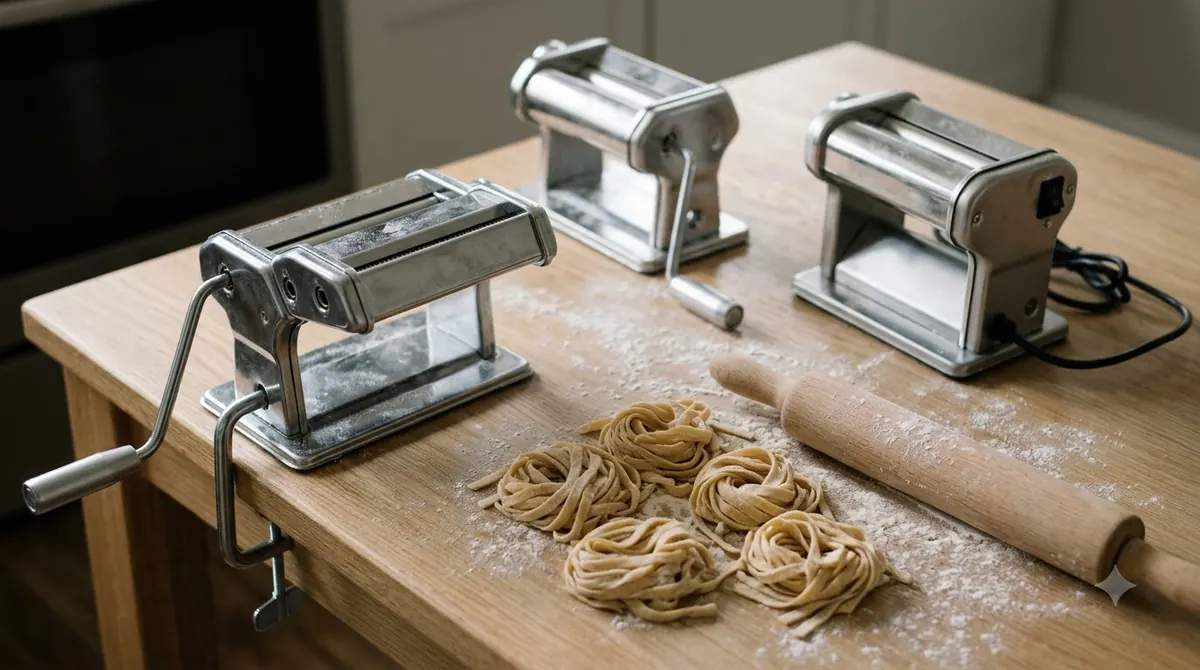

The Philips Viva pasta maker is a fully automatic countertop machine that mixes, kneads and extrudes fresh pasta, and Philips rates it at 450 grams per batch in 18 minutes. Its product sheet lists a 150 W motor, three shaping discs and a compact body, but model numbers differ by region, so check the label on your machine before comparing specs.

Philips Kitchen Appliances Compact Pasta
Pros & ConsViewHide
Reasons to buy
- Fully automatic: kneads and extrudes 2-3 servings in about 18 minutes, per the listing
- Three classic discs included: spaghetti, penne and fettuccine
- Built-in storage for the shaping discs
- 68% of 2.1K+ Amazon ratings are 5-star
Reasons to avoid
- Only three discs in the box, so other shapes mean extra purchases
- 2-3 servings per run is small for a crowd
- 9% of ratings are 1-star, a higher share than most kitchen tools

Philips 7000 Series Pasta Maker
Pros & ConsViewHide
Reasons to buy
- Mixes, kneads and extrudes automatically, ready in under 10 minutes per the listing
- Makes up to 8 portions in one go
- Comes with 8 shaping discs
- Parts are listed as dishwasher-safe
Reasons to avoid
- Costs far more than a manual roller
- Needs permanent counter space
- 11% of ratings are 1-star
What the Philips Viva Pasta Maker Does
The Philips Viva pasta maker mixes flour and liquid, kneads the dough and extrudes it through a shaping disc with little hands-on work. Philips describes it as a fully automatic unit built for the kitchen countertop.
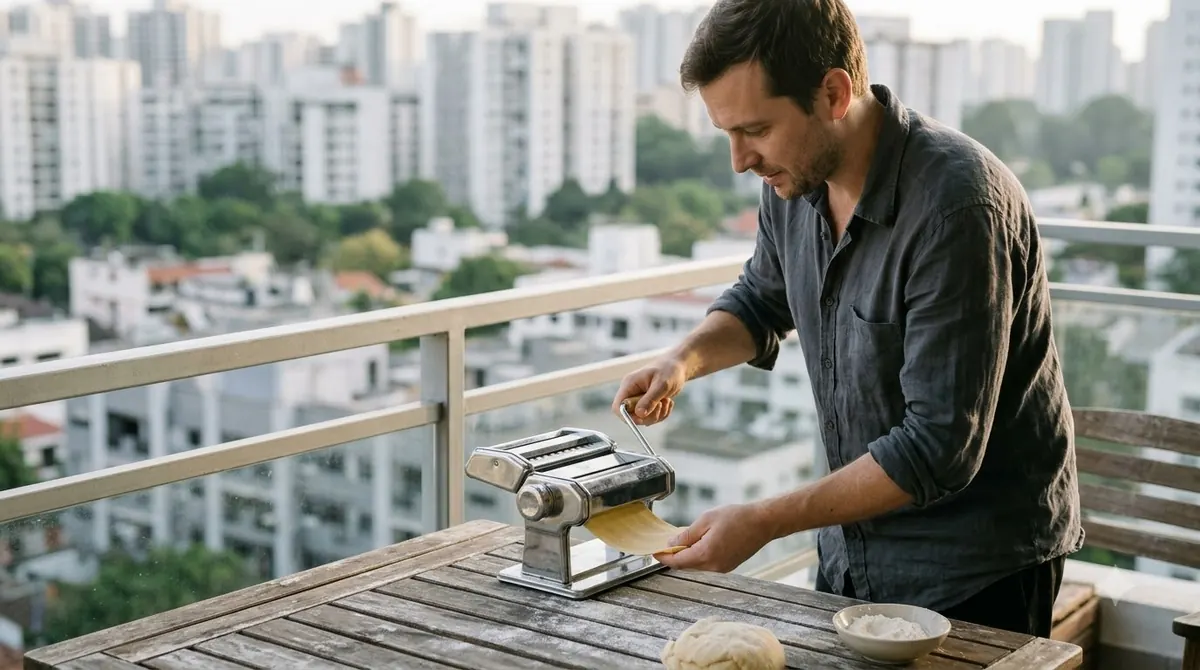
According to Philips’ product sheet for model HR2370/05, a stirring bar mixes the flour and liquid from every corner of the mixing chamber. A long kneading tube then produces what Philips calls smooth, bouncy dough. Those two parts handle the work a home cook would otherwise do by hand before the dough reaches the die.
Philips also says you can change the flour. The same sheet suggests whole wheat, durum or spelt flour for a different texture and says these flours can make pasta healthier. It adds that vegetable juices such as carrot, beet or spinach can give the dough extra flavor. These are Philips’ suggestions for the Philips Viva pasta maker, not measured results, so change one ingredient at a time and note how the dough behaves. Our Philips Viva pasta maker recipes collect ideas to try.
The machine also has a storage drawer for the shaping discs and the power cord. That keeps the counter clear on a compact unit, and it is one of the practical features Philips lists alongside the detachable parts.

Philips Viva Pasta Maker Specifications
The HR2370/05 product sheet lists a 150 W motor, a 1 m cord, and a machine that measures 350 x 135 x 287 mm and weighs 4.7 kg.
| Spec | Philips HR2370/05 sheet | Notes |
|---|---|---|
| Output per batch | 450 g of fresh pasta and noodles | Philips gives 18 minutes for this batch |
| Power | 150 W | Rated power on the sheet |
| Voltage and frequency | 120 V, 60 Hz | EU sheet HR2332/12 lists 220 to 240 V, 50 Hz; check the label on your unit |
| Cord length | 1 m | Stored in the drawer with the discs |
| Product size (L x W x H) | 350 x 135 x 287 mm | Packaging 400 x 230 x 323 mm |
| Product weight | 4.7 kg | 6.4 kg with packaging |
| Shaping mouths | 3 | EU sheet HR2332/12 lists 4 |
| Body material | Plastic body and accessories | Made in China, per the sheet |
The table follows the HR2370/05 sheet. The Philips US product page for the Viva Collection uses model number HR2371/05 and states that the machine makes 1 lb of fresh pasta and noodles in 18 minutes. Voltage, frequency and the number of shaping mouths change between regional models, so compare the table with the label on your unit rather than with a listing from another country.
The packaging measurements matter for planning storage. The box is 400 x 230 x 323 mm and weighs 6.4 kg, which is heavier than the machine itself, so measure your cabinet or shelf before you order.
How the Machine Makes Fresh Pasta
The machine runs in three stages: it mixes the dough, kneads it in a long tube, and then pushes it through the disc you have fitted.
- Add flour and liquid to the mixing chamber, where the stirring bar combines them from every corner.
- The dough moves through the long kneading tube, which Philips says gives an optimal kneading process.
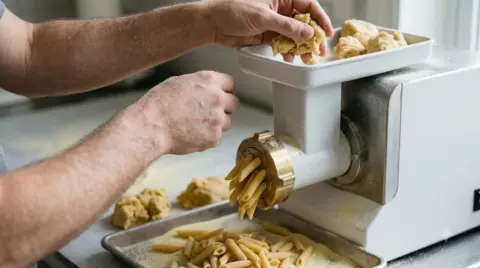
- The dough is extruded through the shaping disc you have attached, and the pasta comes out in the shape of that disc.
Philips states an output of 450 grams in 18 minutes, but the sheets read for this article do not give a liquid ratio for each flour. Use the measuring cup in the box and the recipe booklet as your starting point. Expect the first batch to show whether your flour and liquid amounts suit the Philips Viva pasta maker.
The product sheet lists a safety lock as a feature, but it does not explain how the lock works. Read the manual before the first run to learn how the lock works; our Philips Viva pasta maker manual page points to where it is published.
Shaping Discs and Pasta Types
The HR2370/05 sheet lists three classic discs for spaghetti, penne and fettuccine, and the storage drawer keeps those discs with the cord.
The EU sheet for model HR2332/12 lists four discs, adding lasagna. The US page for HR2371/05 mentions a lasagna disc and an angel hair disc, but presents them as a separate accessory set, HR2481/00, rather than as part of the base machine.
- Spaghetti, penne and fettuccine: included on the HR2370/05 sheet
- Lasagna: included on the HR2332/12 EU sheet, and a separate accessory on the US page
- Angel hair: listed on the US page as part of the HR2481/00 accessory set
Because disc sets vary, check the box contents before you plan a menu around one shape, and see our Philips Viva pasta maker discs overview for extra shapes. A missing disc changes which pasta you can make, but it does not change how the machine mixes and kneads the dough.
Cleaning, Storage and Warranty
Philips lists the parts as detachable and dishwasher safe, and its US listing states a 2 year warranty for the Viva Collection.
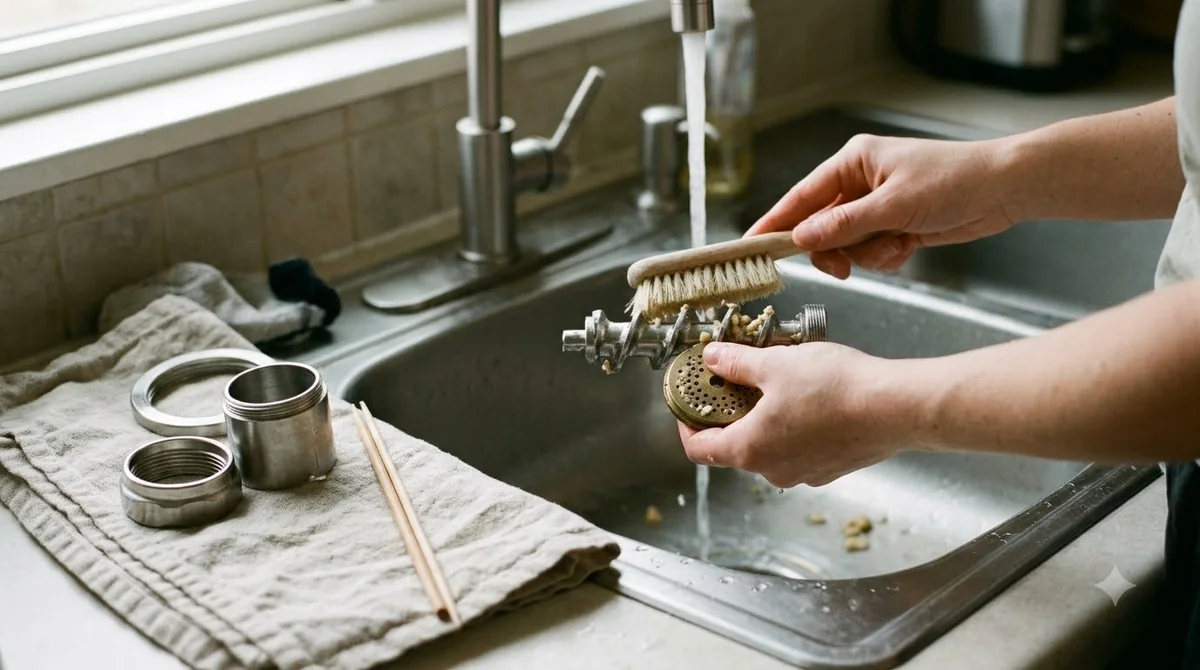
The Philips HR2370/05 product sheet lists detachable parts for easy assembly and cleaning, a cleaning tool in the box, and dishwasher safe as a product feature. It does not say which parts go in the dishwasher, so check the manual before loading anything.
Storage is simple on the Philips Viva pasta maker because it has an integrated drawer for the shaping discs and the power cord. Keeping the discs in that drawer means fewer loose parts on the counter, which helps on a compact unit.
The US listing for the Philips Viva pasta maker states a 2 year warranty. Warranty terms depend on the country and retailer where you bought the unit, so read the warranty card in the box and check the regional Philips website for the current terms.
Who the Philips Viva Pasta Maker Suits
The Philips Viva pasta maker suits a home cook who wants fresh extruded pasta with little hands-on kneading and has room for a compact countertop appliance.
It fits well in these situations:
- You want fresh spaghetti, penne or fettuccine without rolling dough by hand
- Your kitchen is small, and the machine needs to live on the counter or in a cabinet
- You are comfortable checking regional model numbers and voltage before ordering
Skip it if you plan to make stuffed pasta or roll sheets by hand (our guide on how to choose a pasta maker compares the options). The listed outputs are extruded shapes, and the sheets do not mention a sheet-rolling function. Skip it too if you want a metal body, because the sheet lists plastic for the body and accessories.
The trade-off is control. The machine makes one fixed batch size, and the sheets do not describe adjustable thickness, so it suits a simple weekly routine better than a shape-by-shape project.
What the Official Documents Do Not Confirm
The Philips sheets do not show a current price, buyer ratings or a cooking time for each shape, so those points need a check before you decide.
- Current price: retailer prices vary, so check the seller’s page on the day you decide
- Buyer feedback: this page does not quote ratings or reviews because none were read for it
- Cooking time per shape: Philips gives one 18 minute figure for a 450 g batch
- Full cleaning procedure: the sheets list features but not a step-by-step routine
- Model number on your unit: match the label to the table above
Treat these gaps as checks for the Philips Viva pasta maker rather than as facts. Where a figure affects your purchase, the official Philips page or the manual that ships with the machine is the place to confirm it.
Frequently Asked Questions
What is the Philips Viva pasta maker?
The Philips Viva pasta maker is a fully automatic countertop unit that mixes, kneads and extrudes fresh pasta from flour and liquid. Philips rates it at 450 grams of fresh pasta and noodles in 18 minutes. The HR2370/05 product sheet also lists a cleaning tool, a measuring cup and a recipe booklet in the box.
How much pasta does the Philips Viva pasta maker make?
The Philips HR2370/05 product sheet lists 450 grams of fresh pasta and noodles per batch. The US listing for model HR2371/05 describes the same output as 1 lb in 18 minutes. Both figures come from Philips, so confirm the number for your model on the label or the regional product page.
Does the Philips Viva pasta maker include a lasagna disc?
It depends on the model. The HR2370/05 product sheet lists three discs for spaghetti, penne and fettuccine. The EU sheet for HR2332/12 lists four discs, including lasagna. The US page treats the lasagna disc as part of a separate accessory set, so check the box contents before you order.
Are the parts of the Philips Viva pasta maker dishwasher safe?
Philips lists dishwasher safe as a product feature on the HR2370/05 sheet, and it says the parts detach for cleaning. The sheet does not say which parts go in the dishwasher, so read the manual that comes with your machine before you load it.
What warranty comes with the Philips Viva pasta maker?
The US listing for the Viva Collection, model HR2371/05, states a 2 year warranty. Warranty terms can differ by country and by retailer, so read the warranty card in the box and check the regional Philips website for the current terms.
If you compare the Philips Viva pasta maker with other machines, such as the Philips 7000 series, which lists eight discs (see our Philips 7000 pasta maker review), start with batch size, disc count and voltage, since those are the specs that change across regional models. Confirm the model number on the label, then check the current price and warranty on the official site before you order.
 8 min readReviews & VersusPhilips Avance Pasta Maker Review: Specs, Pros and ConsUpdated Nov 17, 2026
 8 min readReviews & VersusPhilips 7000 Pasta Maker Review: Specs, Cleaning and Who It SuitsUpdated Nov 16, 2026
 8 min readReviews & VersusVEVOR Electric Pasta Maker Review: Specs, Ratings and What to CheckUpdated Nov 15, 2026
 8 min readReviews & VersusPhilips Pasta Maker: Models, Features and How to ChooseUpdated Nov 15, 2026
 8 min readReviews & VersusCucinaPro Pasta Maker: What to Check Before You BuyUpdated Nov 8, 2026
 8 min readReviews & VersusImperia Pasta Maker: Lines, Model Codes and What to CheckUpdated Nov 15, 2026