
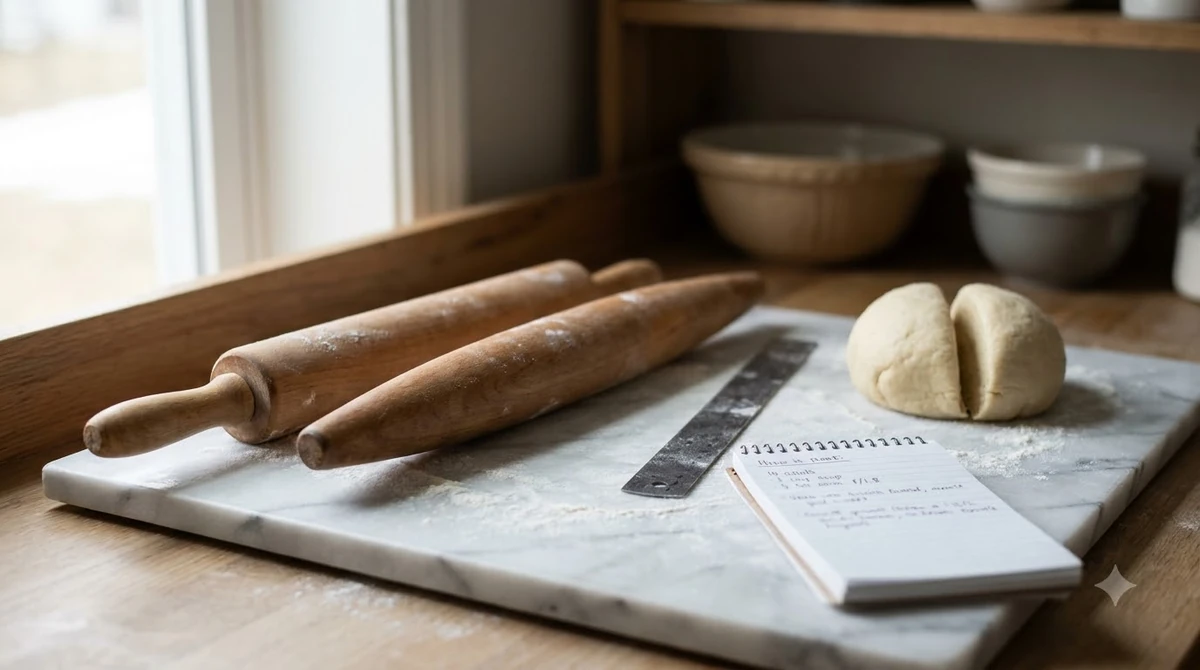

The roman pizza dough recipe starts with a firm, low-hydration dough, usually 55 to 60 percent water by flour weight. Tonda romana uses 00 or 0 flour, while the pan-baked al taglio style often runs wetter and airier.
Roman dough is firmer than many home doughs and often needs a rolling pin. If you want a light, airy pan slice instead, the al taglio method is the better match.
What Makes a Roman Pizza Dough Recipe Different
Roman pizza dough is firmer than many home doughs, with tonda romana usually at 55 to 60 percent hydration, made from 00 or 0 flour.
Italian Wikipedia describes the roman pizza dough recipe as made from type 0 or 00 flour, water, yeast, extra-virgin olive oil or seed oil, and salt. Neapolitan dough, by contrast, contains no fat at all, so the oil is one of the clearest differences between the two styles. For the broader family of pizza doughs, see the Italian Wikipedia entry on pizza.
The same source says Roman dough is firmer and more consistent than Neapolitan dough. It is often rolled out with a rolling pin rather than stretched by hand alone. That texture is the reason a roman pizza dough recipe is worked differently from a soft Neapolitan ball, and it changes how you shape the base before it goes into the oven.
Decide on the style before you mix. Using one roman pizza dough recipe for both styles is the fastest way to end up with a base that does not match the pizza you planned to make.
Flour, Water and Oil in the Dough
A roman pizza dough recipe uses 00 or 0 medium-strength wheat flour and water at 55 to 60 percent of the flour weight, plus oil.
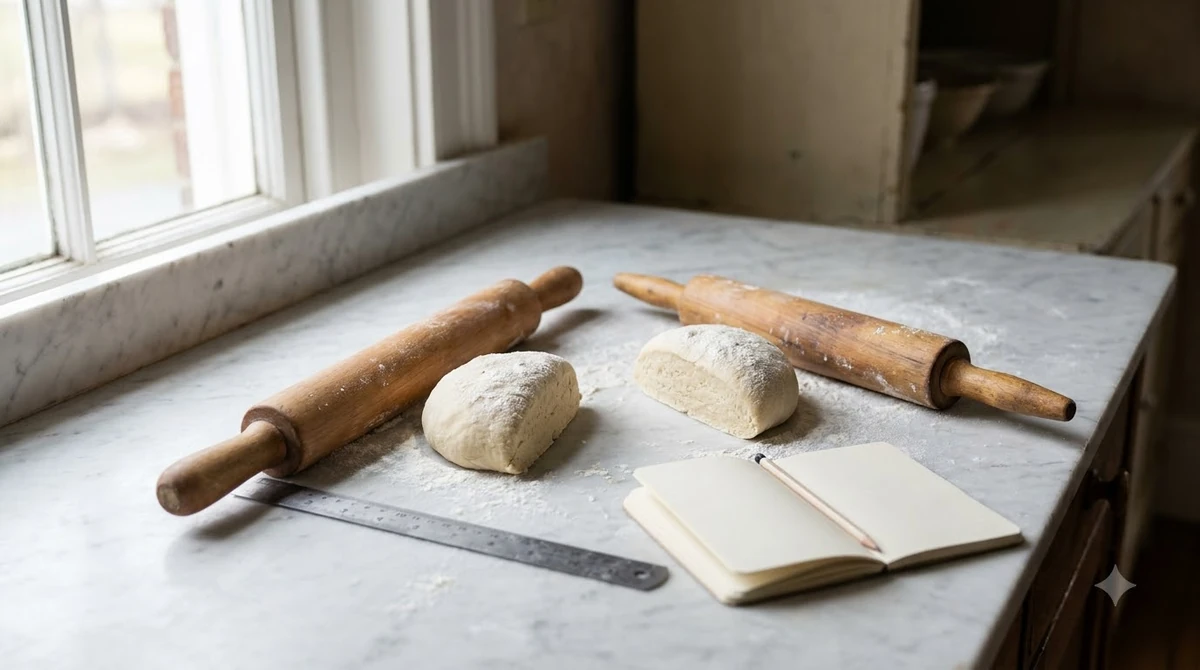
Dissapore, an Italian food magazine, gives 55 to 60 percent for the Roman style and says both 00 and 0 flour of medium strength are used. For a batch with 1,000 grams of flour, that works out to 550 to 600 grams of water. If your flour absorbs water quickly, start near 55 percent and add the rest slowly until the dough comes together. You can read the original comparison in Dissapore’s guide to Roman and Neapolitan pizza.
In a roman pizza dough recipe, bakers often build the dough with a preferment, a starter of flour, water and yeast made hours before the final mix. Dissapore notes that a poolish or a liquid biga is customary for the Roman style. The sources used for this guide did not give salt or yeast amounts, so use a tested formula for those and treat the water ratio as the main decision.
Extra-virgin olive oil is the usual fat in the Italian description, and seed oil is also mentioned for a crunchier result. The oil goes in with the salt and yeast, so it is distributed evenly through the dough before the first rise.
Step-by-Step Roman Pizza Dough Recipe Method
The method for any roman pizza dough recipe is simple: mix, knead, rest, ferment slowly, then shape and roll. Each stage builds the texture of the finished base, so do not shorten the rest periods to save time.
Work in this order for a firm, even dough. Rushing the rest periods in a roman pizza dough recipe shows up in the final base as a dough that resists stretching and springs back.
- Mix the flour and water with the preferment until no dry flour remains.
- Add the oil, salt and yeast, then knead until the dough is smooth and holds its shape.
- Cover the dough and let it rise until it looks airy and has grown in volume.
- Divide and shape the dough into balls, then chill them for a slow cold fermentation.
- Bring the dough back to room temperature, then roll it into a thin round with a pin.
The cold rest in step four slows the yeast, so the flavor can develop over a longer window. It also gives you a dough that is easier to judge the next day, because you can see how it has risen before you commit to shaping.
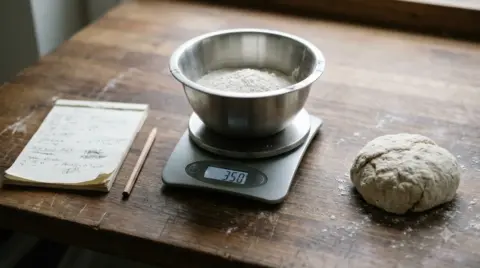
Flour and oil change how the dough rolls, so keep a short note on each batch. Small changes in water are easier to judge when you can compare results from one bake to the next.
Shaping Roman Dough by Hand or in a Pan
Tonda is rolled thin with a pin, while al taglio is proofed in a pan and then turned out onto an oiled sheet.
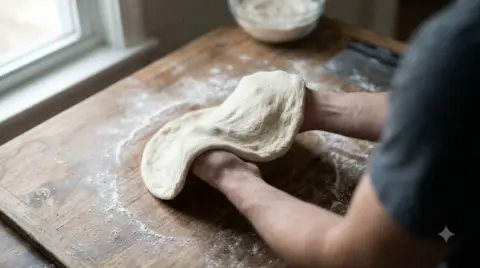
For a round tonda, the goal in any roman pizza dough recipe is a thin, even disc that holds its shape on the peel. Roll from the center outward, rotate the dough often, and let it rest briefly if it pulls back. A rolling pin gives more control than hand stretching when the dough is firm.
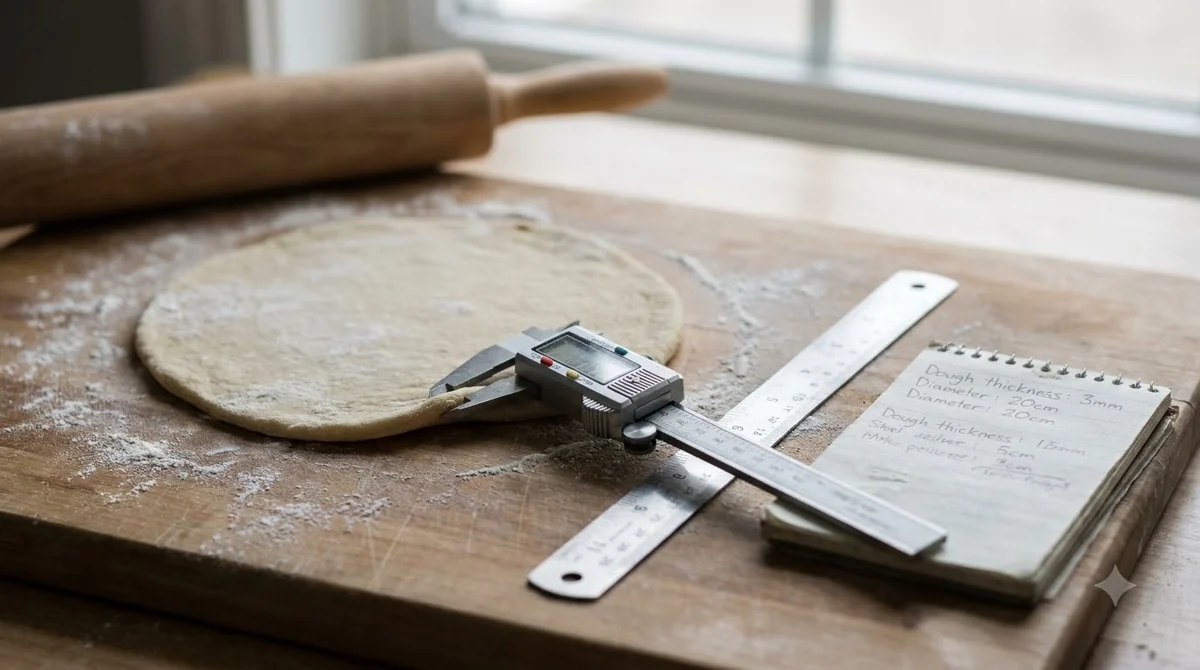
Pan styles follow a different path. America’s Test Kitchen proofed its dough in a baking pan in the refrigerator, then inverted it onto an oiled baking sheet the next day. Oil is also brushed over the top of the dough before baking, which helps the surface brown and keeps it from drying. If you are weighing Roman pan styles against thick Sicilian pies, our guide to Roman versus Sicilian pan styles breaks down dough and thickness.
Hydration and Fermentation for Pizza al Taglio
Pizza al taglio uses a wetter dough, and America’s Test Kitchen settled on 82 percent hydration in its own test, with an overnight cool ferment.
That article is one test kitchen recipe, not a Roman standard. Its final test used 12 ounces of water and 14 2/3 ounces of flour, which works out to 82 percent. The author raised the olive oil from 1 to 2 tablespoons and let the dough ferment overnight in the refrigerator. The article also recommends a long, cool fermentation of at least 16 hours. You can read the full test in America’s Test Kitchen’s article on pizza al taglio.
Italian Wikipedia says al taglio dough is very wet so that it stays soft in the display case, but it gives no percentage for the style. A pizza-style guide, Mortadellahead, links higher hydration with a lighter, airier dough and credits the airy crust of al taglio to its longer fermentation. Those points agree with the test kitchen approach, even though none of these sources gives a Roman number for al taglio.
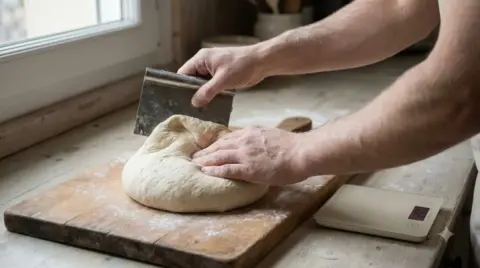
Because the wetter dough is softer to handle, you may need to work with flour on your hands and the board. Keep the dough cool while it rests so the fermentation stays slow and even.
Oven Temperature and Bake Time
A roman pizza dough recipe performs best in a very hot oven, about 380 to 400 degrees Celsius according to Dissapore, which is roughly 716 to 752 degrees Fahrenheit.
The Fahrenheit conversion is ours; the Celsius range comes from the source. Those figures describe a professional oven, so a home oven usually needs a preheated stone or steel to get closer to them.
Al taglio is baked differently. Mortadellahead gives 500 to 600 degrees Fahrenheit for the al taglio dough, which is baked once before topping and again after. The same source says tonda cooks very quickly but gives no exact time, so watch the crust rather than the clock.
These numbers apply to a pizza baked directly on a stone or steel. A pan pizza baked in a tray will brown differently, so judge the bake by color and crust firmness.
Common Mistakes With Roman Dough
The most common mistake with a roman pizza dough recipe is adding extra water to a tonda dough, which moves it toward the wetter al taglio texture.
Roman tonda relies on a firm dough that holds its shape, so add water slowly and stop before the dough turns slack. These mistakes come up most often when the two styles are mixed together:
- Using a wet al taglio dough for a round tonda, which is harder to shape by hand.
- Leaving out the oil, which removes the fat that the Roman style uses.
- Baking without preheating the stone or steel, so the base does not get the heat it needs.
Each mistake changes the texture of the finished base, so check each one before you start mixing.
Frequently Asked Questions
Is roman pizza dough the same as Neapolitan dough?
No. A roman pizza dough recipe includes olive oil or seed oil and is firmer, often rolled with a pin. Neapolitan dough contains only water, flour, yeast and salt, according to Italian Wikipedia. The two styles also differ in how thin and crisp the base is, with the Roman base described as very thin and crisp.
What hydration should I use for tonda romana?
Dissapore gives 55 to 60 percent of flour weight for the Roman style. Start near the lower end if your flour absorbs water quickly, then add water in small amounts until the dough comes together and feels manageable.
Can I use bread flour in a roman pizza dough recipe?
The sources used for this guide name 00 or 0 medium-strength flour for Roman dough. Bread flour is a higher-protein product, so the crust will likely be chewier. Test one batch before you bake for guests.
How long should a roman pizza dough recipe ferment?
The sources do not give one fixed time for the Roman style. The America’s Test Kitchen article recommends a cool fermentation of at least 16 hours for its al taglio dough. For tonda, use a tested roman pizza dough recipe and watch how the dough feels as it rests.
Should I make the dough a day ahead?
Yes, if you want a slow, cool rest. The test kitchen article used an overnight refrigerator ferment for its al taglio dough. Bring the dough back to room temperature before you roll or shape it, so it is easier to work.
Choose the style before you start this roman pizza dough recipe. For a thin, crisp round, keep hydration near 55 to 60 percent and roll the dough firmly. For a lighter slice, use the wetter al taglio approach and plan a cool overnight ferment. Test one batch first, then adjust the water.
 8 min readLearn70 Hydration Pizza Dough Recipe: What 70% Water Does to Your CrustUpdated Nov 10, 2026
 8 min readLearnPizza Dough with 00 Flour: Recipe, Timing and TipsUpdated Nov 11, 2026
 9 min readLearnPizza Dough with All Purpose Flour: A Home Recipe That WorksUpdated Nov 11, 2026
 8 min readLearnHigh Hydration Pizza Dough: What It Is and How to Handle ItUpdated Nov 10, 2026
 7 min readLearnPizza Dough Hydration Chart: What Each Percentage MeansUpdated Nov 11, 2026
 8 min readLearnPizza Dough with Olive Oil: Simple Recipe and MethodUpdated Nov 11, 2026