
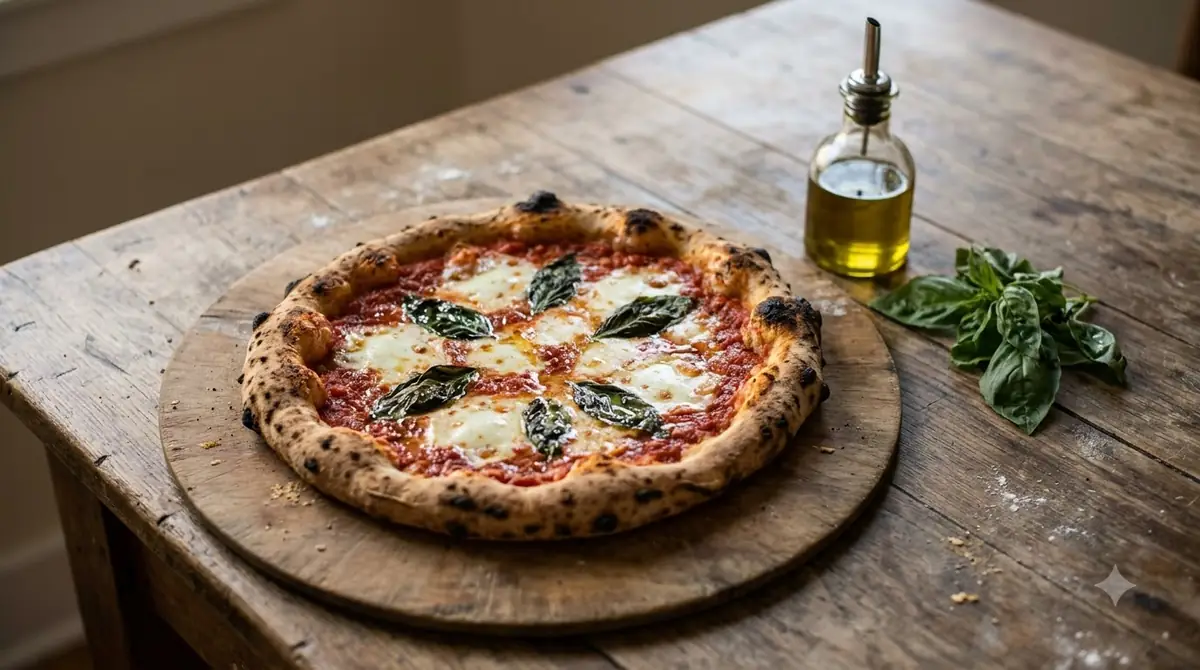

The main difference in Roman vs Sicilian pizza is the dough and how each one is baked. Roman pizza uses a very wet dough that rises for days, while Sicilian pizza uses a stiffer, chewy dough baked in an oiled rectangular pan. Both styles can be square or rectangular, so shape alone does not tell them apart.
Roman pizza also comes as a thin round, so the name covers more than one shape. Use the dough, thickness and pan details below to decide which Roman vs Sicilian pizza suits your kitchen.
What Is Roman Pizza?
Roman pizza is a style from Rome that comes in two forms: a thick rectangular slice sold by weight and a thin round pizza.
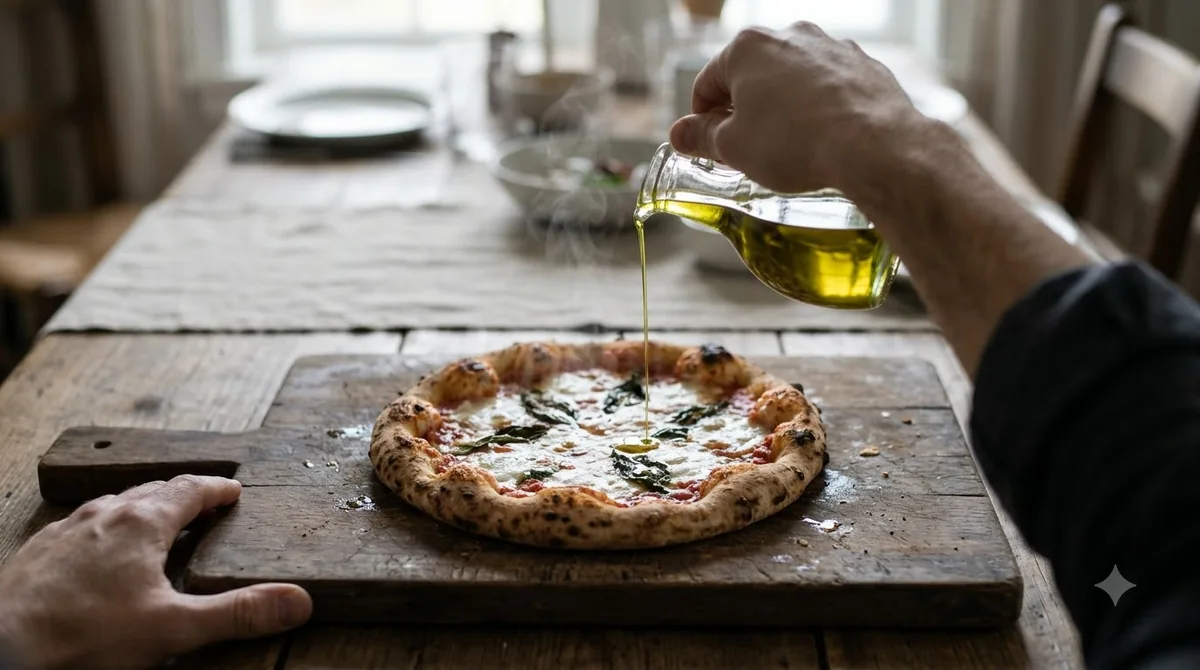
Roman pizza originated in Rome and is now widespread across central Italy. According to Wikipedia’s Roman pizza entry, the round style is sometimes called pizza bassa, or short pizza, in contrast with the tall Neapolitan style.
The first form is pizza al taglio, or pizza by the slice. It is sold by weight as street food and has a thicker base, similar to focaccia. The second form is pizza tonda, a whole round pizza with a thin base that most sit-down restaurants in Rome serve.
Roman pizza has no officially agreed definition. Neapolitan pizza, by contrast, holds EU TSG and UNESCO recognition, so Roman style has no formal standard to point to. Sources also give no origin dates for Roman pizza, so the history side of Roman vs Sicilian pizza is harder to pin down than the Sicilian side.
What Is Sicilian Pizza?
Sicilian pizza is a thick, often rectangular pizza from western Sicily, and it is linked to sfincione, a specialty of Palermo.
According to Wikipedia’s Sicilian pizza entry, the style became popular in western Sicily by the mid-19th century. It reached North America in an altered form, with a thicker crust and a rectangular shape.
The Sicilian side of Roman vs Sicilian pizza also has a US history. Tasting Table notes that sfincione arrived with early Sicilian immigrants to New York, that Detroit-style pizza evolved from it, and that immigrants began using mozzarella in the early 1900s. Wikipedia adds that in coastal Massachusetts and New Hampshire the style is often called beach pizza.
A Tasting Table comparison describes the traditional Palermo version as topped with tomato sauce, cheese, anchovies, onions, olive oil, toasted breadcrumbs and oregano. Some versions have no cheese at all, so the sauce and toppings carry the flavor.
Roman vs Sicilian Pizza: Dough and Hydration Compared
Roman dough is wetter and rises for days, with hydration of 75% to 100% of the flour weight. Sicilian dough is less hydrated and can be made in a single day.
| Feature | Roman pizza | Sicilian pizza |
|---|---|---|
| Dough texture | Lighter and airier | Chewy and spongy |
| Hydration | 75% to 100% water per weight of flour | Lower than Roman, no figure given |
| Rise time | Roughly 72 hours, or three days or more in the fridge | Double-risen, can be made in one day |
| Crust | Plush but totally dry | Compared to focaccia, between pizza and bread |
Dough is the biggest gap in Roman vs Sicilian pizza, and the figures come from Tasting Table’s side-by-side comparison. To work out hydration for your own flour, try a pizza dough calculator. Treat the hydration range as a guide, because Sicilian dough has no published figure in that source and the Roman range is wide.
Thickness and Shape
Roman pizza is usually 1/2 to 1 inch thick, while Sicilian pizza runs a full inch or slightly more.
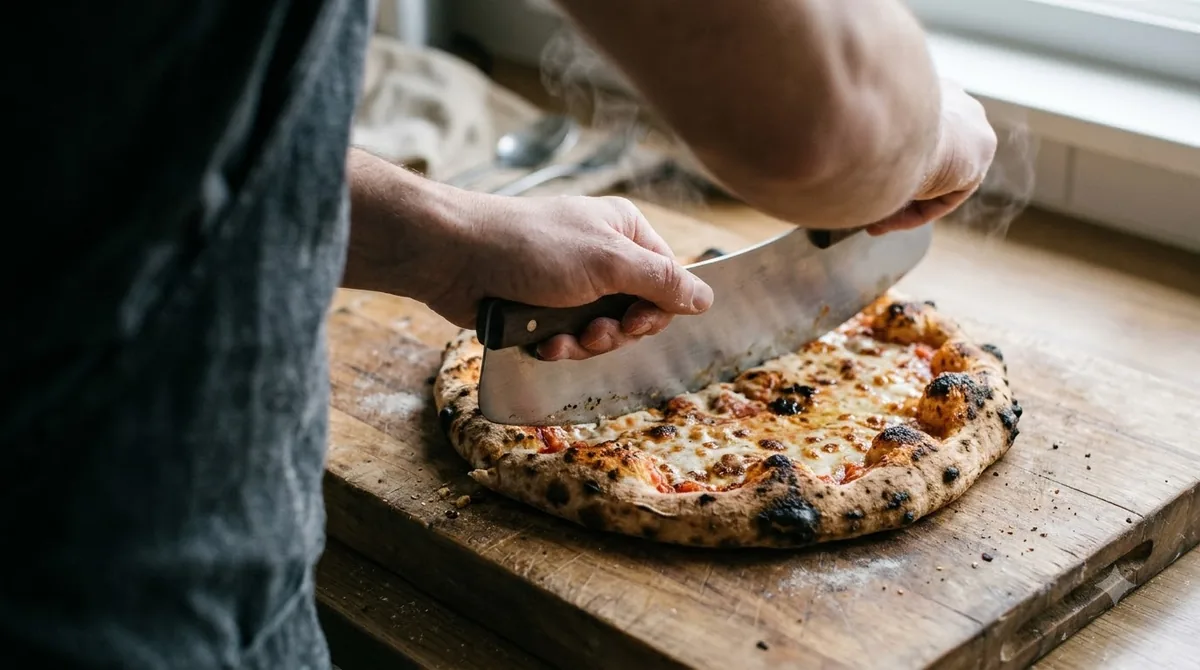
Thickness is the easiest visible difference in Roman vs Sicilian pizza. Roman thickness varies by style. The al taglio slice has a thicker base, while the tonda has a thin base, so one thickness number does not describe every Roman pizza.
In the United States, Sicilian pizza usually means a square cheese pizza with dough over an inch thick, a crunchy base and an airy interior. For a thin-slice contrast, read New York style vs Sicilian pizza.
- Roman al taglio: rectangular slices, sold by weight
- Roman tonda: whole round, thin base
- Sicilian classic: typically rectangular, can be round
- US Sicilian: square, over an inch thick
Pan, Oil and Crust
Roman dough is baked in a heat-retaining square steel pan, while Sicilian dough goes into a rectangular sheet pan coated with olive oil.
The pan is where Roman vs Sicilian pizza differs most in method. The oil in the Sicilian pan gives the bottom a charred finish and leaves the interior moist. Roman dough also takes oil in the dough itself, which Wikipedia names as one of the key differences from Neapolitan dough, along with the crispness called scrocchiarella.
Results for Roman vs Sicilian pizza depend on your oven, pan and stone, so treat the pan as a starting point rather than a rule.
Toppings and Sauce
Sicilian pizza puts its tomato sauce first, often made with Pachino or Rosso Sicilian tomatoes, while Roman pizza can be as simple as cheese and tomato.
Toppings matter less than dough in Roman vs Sicilian pizza. Roman pizza ranges from a plain cheese and tomato layer to heavier toppings such as ricotta, buffalo chicken and meatballs, according to the same comparison. Sicilian cheeses are traditionally sheep or goat milk cheeses such as caciocavallo or toma.
Some Sicilian versions place the sauce over the toppings so it does not soak into the thick dough, as Wikipedia notes. A traditional Palermo pie uses:
- Tomato sauce
- Cheese
- Anchovies
- Onions
- Olive oil
- Toasted breadcrumbs
- Oregano
How to Choose Between Them
Choose Roman pizza for a light, airy and dry crust, and Sicilian pizza for a thick, chewy square with plenty of sauce.
When you weigh Roman vs Sicilian pizza for a home kitchen, pick the Roman style if you like a light crumb, thinner slices or a whole round with a thin base. Pick the Sicilian style if you want a sturdy, saucy slice with a crunchy base and an airy interior.
Schedule matters too. Roman dough can rest for roughly 72 hours, while Sicilian dough can be ready in a day, so your timing may settle the question for a home cook. If you lean toward the Roman style, our Roman dough recipe covers the hydration, flour and method for a home batch.
These are classic patterns. Many modern pizzerias mix techniques, so check the dough description on a menu before assuming a style.
Frequently Asked Questions
Is Roman pizza the same as Neapolitan pizza?
No. Neapolitan pizza has EU TSG and UNESCO recognition, while Roman pizza has no officially agreed definition (see Neapolitan vs Roman pizza for the full comparison). The two differ in shape and dough, and Roman pizza includes a rectangular slice sold by weight as well as a thin round.
Is Sicilian pizza always square?
No. Traditional Sicilian pizza is often thick and rectangular, but Wikipedia notes it can be round and similar to Neapolitan pizza, a contrast covered in Neapolitan vs Sicilian pizza. In the United States, the name usually refers to a square cheese pizza. For Roman vs Sicilian pizza, dough matters more than shape.
Which dough has more water, Roman or Sicilian?
Roman dough usually has more water, which is the first gap to check in Roman vs Sicilian pizza. Tasting Table gives a range of 75% to 100% water per weight of flour for Roman dough, while Sicilian dough has lower hydration with no figure given.
Can you make Sicilian pizza in one day?
Yes, according to the same comparison. Sicilian dough can be made from start to finish in a single day, but it must be double-risen. Roman dough usually needs roughly 72 hours.
What is pizza al taglio?
Pizza al taglio means pizza by the slice. It is a Roman street food sold by weight, with rectangular slices and a thicker base similar to focaccia. It differs from the thin round pizza that most restaurants in Rome serve.
If you cook at home, decide between Roman vs Sicilian pizza by dough first. A very wet, long-rested dough suits the Roman style, while a stiffer dough baked in an oiled pan suits the Sicilian. Check the hydration and the pan before you start, because those two details change the result more than the topping does.
 9 min readLearnNeapolitan vs Roman Pizza: Shape, Dough and Heat ComparedUpdated Nov 14, 2026
 8 min readLearnPizza Al Taglio Recipe: Roman Sheet-Pan Pizza You Can Make at HomeUpdated Nov 10, 2026
 8 min readLearnNew York Style vs Sicilian Pizza: Crust, Shape and Cheese ComparedUpdated Nov 7, 2026
 9 min readLearnNeapolitan vs Sicilian Pizza: Shape, Crust and Baking ComparedUpdated Nov 7, 2026
 6 min readLearnDough Ball Weight for 14 Inch Pizza by Crust ThicknessUpdated Nov 13, 2026
 10 min readLearnSheet Pan Pizza Recipe: Three Doughs, Exact Amounts and Bake TimesUpdated Nov 11, 2026