
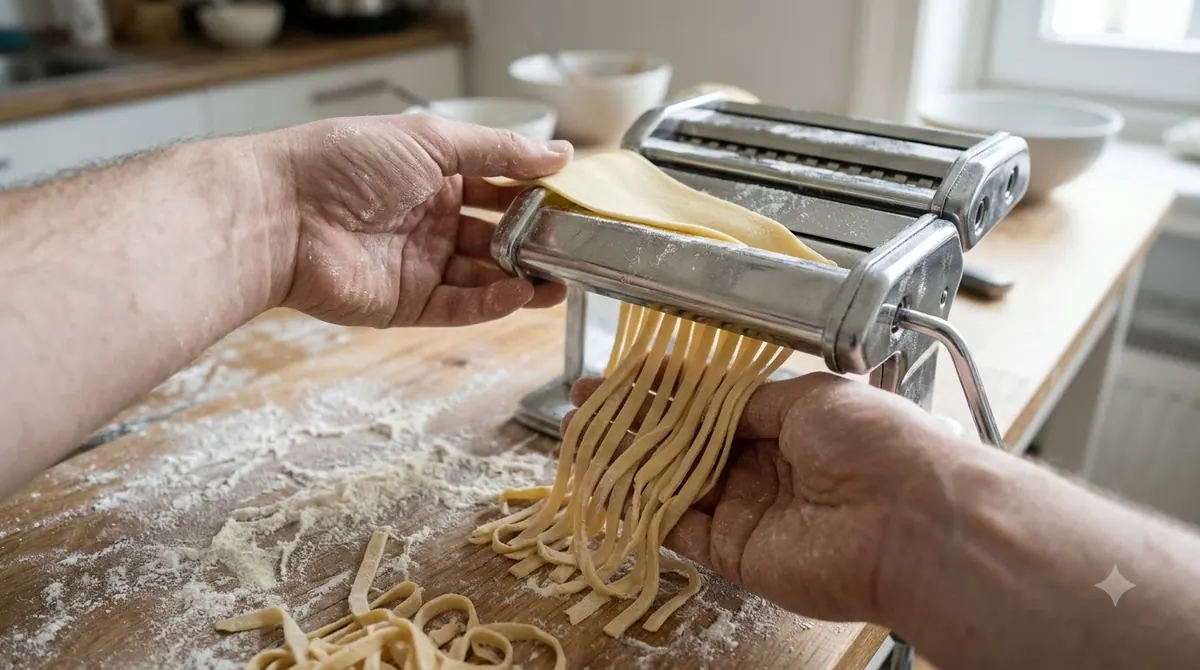

Tagliatelle vs pappardelle comes down to width, and width decides which sauce clings to the pasta. Pappardelle is a broad ribbon, 2 to 3 cm across, from Tuscany. Tagliatelle is a narrower egg ribbon, 8 mm cooked, from Bologna.
Use the sauce as your first test. Both ribbons can carry a meat sauce, but chunky sauces suit pappardelle better, while smooth, thin-to-medium sauces suit tagliatelle. Some cooks treat tagliatelle vs pappardelle as a matter of degree rather than a hard rule.
| Pick | Best for | Key fact |
|---|---|---|
| Tagliatelle | Bologna-style ragù and fine meat or cream sauces | 8 mm wide when cooked |
| Pappardelle | Chunky, rich or rustic ragù | 2 to 3 cm wide |
Tagliatelle vs Pappardelle at a Glance
Pappardelle is roughly 2 to 3 cm wide, while tagliatelle is 8 mm cooked under the Bologna standard, so the width gap drives almost every sauce decision in tagliatelle vs pappardelle.
| Attribute | Tagliatelle | Pappardelle |
|---|---|---|
| Width | 8 mm cooked | 2 to 3 cm |
| Origin | Bologna, Emilia-Romagna | Tuscany |
| Dough base | Flour with one egg per 100 g | 00 flour or semolina with eggs |
| Best sauce | Fine meat, cream or butter sauces | Rich, chunky and meaty sauces |
When you put tagliatelle vs pappardelle side by side, most of the other differences follow from width. A broad ribbon has more surface for sauce and more room for chunks, while a narrow ribbon slides through a thin sauce and clings evenly.
Tagliatelle Holds Fine Ragù Sauces
Tagliatelle is the ribbon of Bologna’s ragù, and its 8 mm cooked width grips a thin meat sauce without drowning it.
DeLallo describes tagliatelle at about 6 mm, so sizes vary by brand. The Bologna standard sets the cooked width at 8 mm, and the recipe was deposited with the Bologna Chamber of Commerce in 1972, according to Emilia Delizia’s guide to tagliatelle al ragù. That fixed measure is why a Bologna cook plans the sauce around the ribbon.
The fresh egg dough matters for this sauce. A Tasting Table article on ragù notes that the egg and the flat shape let the sauce be absorbed and captured, which is why it names fresh tagliatelle or pappardelle over dry pasta for this sauce.
Thin meat sauces, cream sauces and butter sauces coat an 8 mm ribbon evenly. The ribbon is narrow enough that the sauce reaches each strand, so you get sauce in every bite rather than a pool at the bottom of the bowl.
Cooking time matters as much as the sauce. Fresh egg ribbons cook quickly, so pull the pasta when it is just tender and move it straight into the sauce to finish. For more on the narrower cut, see the guide to tagliatelle pasta.
The sauce comes first and the ribbon follows. A cook who starts from a fine Bolognese will reach for tagliatelle, while a cook starting from a heavy, chunky ragù will reach for the wider cut.
Pappardelle Carries Heavy, Chunky Sauces
Pappardelle’s 2 to 3 cm width suits rich, meaty sauces and ragù, because its wide surface holds chunks that thin ribbons cannot carry.
DeLallo, a food producer with a pappardelle guide, says the ribbon is paired with rich, meaty sauces and ragù, and that its wide, rough surface suits thick sauces. DeLallo’s pappardelle guide lists the traditional Tuscan pairings as wild boar ragù and creamy sauces with mushrooms, rabbit or grated cheese.
Sauces that fit this ribbon well:
- Wild boar ragù, the traditional Tuscan pairing
- A slow short rib ragù with plenty of meat pieces
- A tomato and mushroom sauce with body
DeLallo gives about 9 minutes for dried pappardelle and 3 to 7 minutes for fresh, so taste a strand early. The width is the reason to watch it: a broad ribbon can look done on the outside while the center is still firm. The full profile is in the pappardelle pasta guide.
Pappardelle’s width also changes the bite: each forkful carries more sauce and more pasta, which is the practical side of tagliatelle vs pappardelle at the table.
Dough Base and Egg Ratio in Tagliatelle vs Pappardelle
Classic tagliatelle dough uses one egg per 100 g of flour, while pappardelle dough is usually 00 flour or semolina enriched with eggs. Both give you a sound starting point for a batch at home.
- Weigh the flour at 100 g for each egg, using 00 flour or fine durum semolina.
- Work the eggs into the flour until a smooth, firm dough forms, then rest it under a cover.
- Roll the sheet thin and cut it to width: about 8 mm for tagliatelle, or 2 to 3 cm for pappardelle.
DeLallo says its own pappardelle is made with 28% egg, while the classic tagliatelle ratio is one egg per 100 g of flour. Both are rich egg doughs, so the real difference at home is the cutter, not the recipe.
A pasta machine with a cutting attachment handles both widths once the sheet is rolled, and a basic fresh pasta dough recipe explains the method. Making either ribbon at home means the decision happens at the cutter, not at the mixing bowl.
Can You Swap One for the Other?
In tagliatelle vs pappardelle, you can usually swap one for the other with a medium-weight sauce, but chunky ragù fits pappardelle better and a fine sauce fits tagliatelle better when you make the swap.
If fettuccine is also on your list, the fettuccine vs tagliatelle comparison covers that pair. Tasting Table calls the two pastas interchangeable because they share a flat, egg-based shape and structure. That is one writer’s view, and it holds for the ribbon shape more than for the bite. If you are comparing wide tubes instead of ribbons, paccheri vs rigatoni works through size, ridges and sauce.
- Swap freely for cream or butter sauces, where both ribbons carry the sauce well.
- Keep tagliatelle for the classic Bologna ragù, which is built around its 8 mm ribbon.
- Choose pappardelle when the sauce has large chunks of meat or mushroom.
- Expect a different mouthful, because the 2 to 3 cm ribbon is far wider than the 8 mm one.
This swap rule does not apply to a recipe that names a specific pasta or cites the Bologna standard, since the cook expects that exact width. If a recipe names only one of the two, read its sauce list before you substitute, because the sauce shows which tagliatelle vs pappardelle choice the cook intended.
How to Choose in the Shop
For tagliatelle vs pappardelle in the shop, pick tagliatelle for a fine meat or cream sauce and pappardelle for a chunky one, then check the label for the width before you buy either shape.
- Read the sauce first: a smooth, thin sauce points to tagliatelle, and a chunky, rich sauce points to pappardelle.
- Check the label for the width, since brands do not always name these shapes the same way.
- Give a wide ribbon room in the bowl so the sauce tosses evenly.
Shoppers see both shapes in fresh and dried forms, and labels do not always match the cut. Compare the width line on the pack, then apply the sauce test to finish the decision, and browse the pasta learn guides for other shapes.
Frequently Asked Questions
Is pappardelle wider than tagliatelle?
Yes. Pappardelle is 2 to 3 cm wide, while tagliatelle is 8 mm wide when cooked under the Bologna standard. That gap of several times is the main reason tagliatelle vs pappardelle matters for sauce. Check the width before you pick a ribbon for a dish.
Which pasta goes with ragù bolognese?
Tagliatelle is the traditional partner for ragù bolognese in Bologna. Tasting Table also names pappardelle as a suitable fresh ribbon for this sauce, because the egg dough and flat shape help it hold the meat sauce. For this sauce, tagliatelle vs pappardelle is less of a contest, since both ribbons appear in the same advice.
Where does each ribbon come from?
Pappardelle originated in Tuscany, according to DeLallo’s guide. Tagliatelle belongs to the Emilia-Romagna tradition, and its official recipe is tied to Bologna, where the standard was deposited with the Chamber of Commerce in 1972. Origin is a useful tiebreaker in tagliatelle vs pappardelle, although it does not change the cooking.
How much egg goes into tagliatelle dough?
The classic ratio is one egg per 100 g of flour, as given in the Emilia Delizia recipe. This ratio is the starting point for a homemade batch. Use 00 flour or fine semolina, and adjust a little flour if the dough feels sticky, since flour absorbs water differently from one brand to another.
Can you use the same dough for pappardelle?
Yes. Pappardelle dough is also a flour and egg dough, usually 00 flour or semolina enriched with eggs. In tagliatelle vs pappardelle, the main change is the cut, so roll the sheet and cut a wider ribbon when you want pappardelle. A richer egg ratio is common in published recipes.
Are they the same pasta?
No. The short version of tagliatelle vs pappardelle is that they are close cousins, not twins. They differ in width and in the sauces they carry best, although some cooks treat them as close substitutes. Choose by the sauce on your plate, and the ribbon choice follows from that.
For most dinners, the tagliatelle vs pappardelle choice takes one question: how chunky is the sauce? Match the ribbon to the sauce, not to the name on the box. If the sauce is chunky, pappardelle carries it. If the sauce is fine and smooth, tagliatelle is the easier pick for most home cooks.