
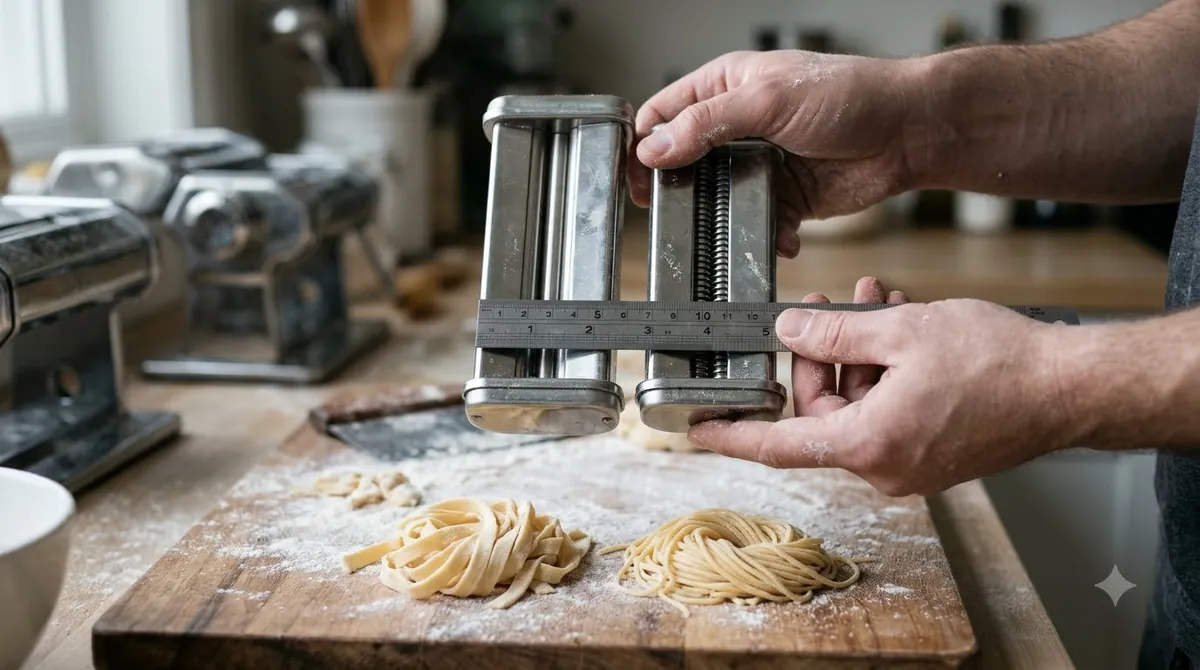

Tagliolini vs tagliatelle comes down mainly to width. Tagliolini is a thin egg ribbon, while traditional tagliatelle is about three times wider, so the two look alike but eat differently.
Both are long ribbons cut from rolled egg dough. The cut, the regional tradition behind each name and the sauces that suit them are where the two really separate.
Tagliolini vs Tagliatelle: Width Is the Main Difference
Tagliolini is roughly 2 to 3 mm wide, while traditional tagliatelle is about 6 mm wide, and that single measurement explains most of the difference between the two.
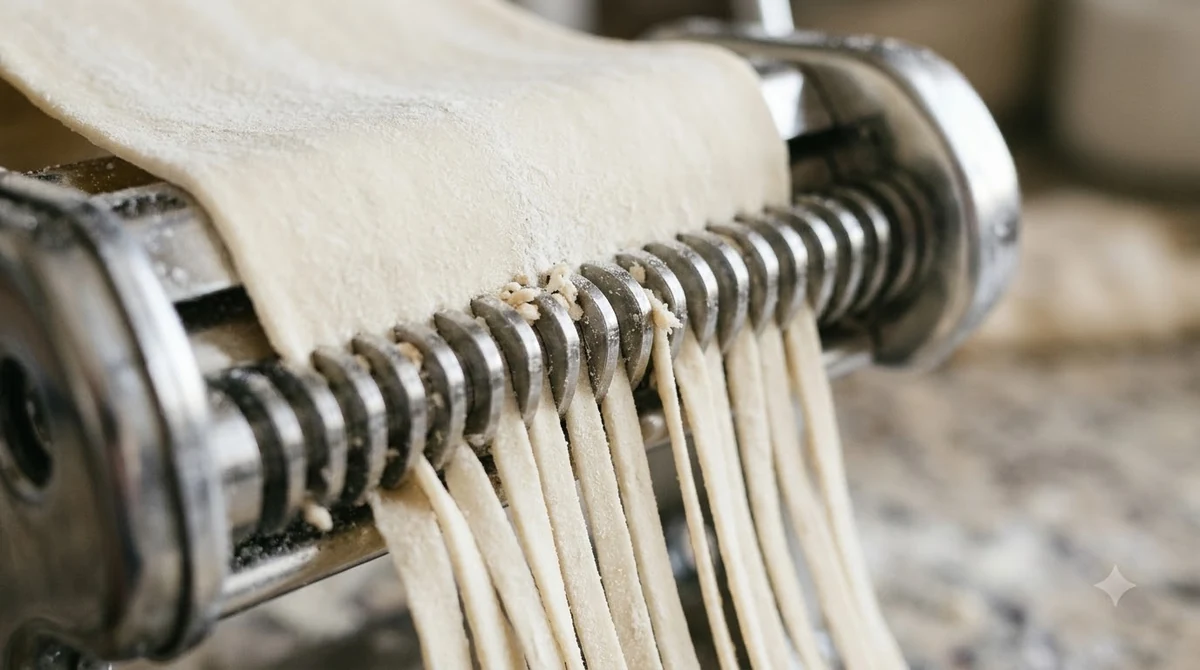
According to Wikipedia’s tagliolini entry, the ribbon measures 2 to 3 mm, or 3/32 to 1/8 of an inch. Tagliatelle is a broader cut. Its traditional width is about 6 mm, or 1/4 of an inch.
Width matters most when you compare tagliolini vs tagliatelle on the fork. A strand of 2 to 3 mm carries a light coating of sauce, while a 6 mm ribbon has enough surface to hold a heavier one. That trade-off is the reason the two pastas are paired with different sauces.
Shape adds another layer. Tagliolini strands are sometimes cylindrical rather than flat, while tagliatelle is a flat ribbon. The Pasta Project places tagliolini somewhere between capellini and tagliatelle in width, which gives a useful sense of scale. Our tagliolini pasta guide and capellini pasta guide cover the thinner end of the range.
Thickness is the weak spot in the sources. The Pasta Project says Piedmontese tajarin can be around 1 mm, but it does not say whether that figure is width or thickness, so treat it with caution. If you need a precise number for a recipe, use a measured width from the package or the maker’s instructions instead.
Here is a practical way to picture tagliolini vs tagliatelle on a cutting board. A strand of tagliolini is two to three times narrower than a tagliatelle ribbon, so a row of one next to the other shows the gap at a glance, even though both start as the same rolled egg sheet.
Side by Side Comparison: Tagliolini and Tagliatelle
In a tagliolini vs tagliatelle table, tagliolini is the narrower ribbon and can be cylindrical, while tagliatelle is a flat ribbon about 6 mm wide with a heavier sauce tradition.
| Feature | Tagliolini | Tagliatelle |
|---|---|---|
| Typical width | 2 to 3 mm | About 6 mm (1/4 in) |
| Shape | Flat, sometimes cylindrical | Flat ribbon |
| Dough | Egg dough, sometimes with semolina | About one egg per 100 g of flour |
| Regions named | Piedmont, Molise, Liguria, Emilia-Romagna | Emilia-Romagna and Marche |
| Classic pairing | Butter and truffles, light seafood or vegetable sauces | Thick meat sauces such as Bolognese |
The table shows why the names matter less at the stove than the width does. A thin ribbon and a broad ribbon ask for different sauces, even when both are called long egg pasta.
When a shop or menu uses both names, the width is the better guide. The Pasta Project notes that the two names overlap in practice, so a label that states millimeters tells you more than the word on the front of the box.
When people search for tagliolini vs tagliatelle, they usually want to know which to buy. The honest answer is that both are useful if you cook fresh pasta regularly, because each one suits a different plate. Buying one first is a matter of the sauces you cook most often.
Egg Dough and Regional Roots
In tagliolini vs tagliatelle, both are traditionally egg pasta, but tagliatelle is tied to Emilia-Romagna, while tagliolini is tied to Piedmont and several other northern and central regions.
The Wikipedia entry on tagliatelle gives a standard ratio of one egg to 100 grams of flour. It places the pasta in Emilia-Romagna and Marche, and a Bologna chamber of commerce display shows a cooked width of 8 mm.
Tagliolini has its own history in Piedmont, where it is called tajarin. Wikipedia describes its dough as egg dough that can include semolina, flour and salt. Piedmontese versions often use many egg yolks, especially orange yolks, which gives the dough a richer color and flavor.
The egg content is where home cooks often assume the two differ. Both come from egg dough, so the choice between them rarely changes the basic method. Start from a standard egg dough and change the cut, and you have the other pasta. Our fresh pasta dough recipe shows the base method.
For the egg question alone, tagliolini vs tagliatelle is not a contest. The dough method is shared, and the difference shows up later, at the cutter and the stove.
Regional tradition also explains the names. Tagliatelle (see our tagliatelle pasta guide) is closely tied to Bologna, and tagliolini appears across several regions, which is why it carries more than one local name, including tajarin in Piedmont.
Which Sauces Suit Each Ribbon
In tagliolini vs tagliatelle, tagliatelle suits rich, meaty sauces, while tagliolini is usually matched with butter, truffles, seafood or vegetables.
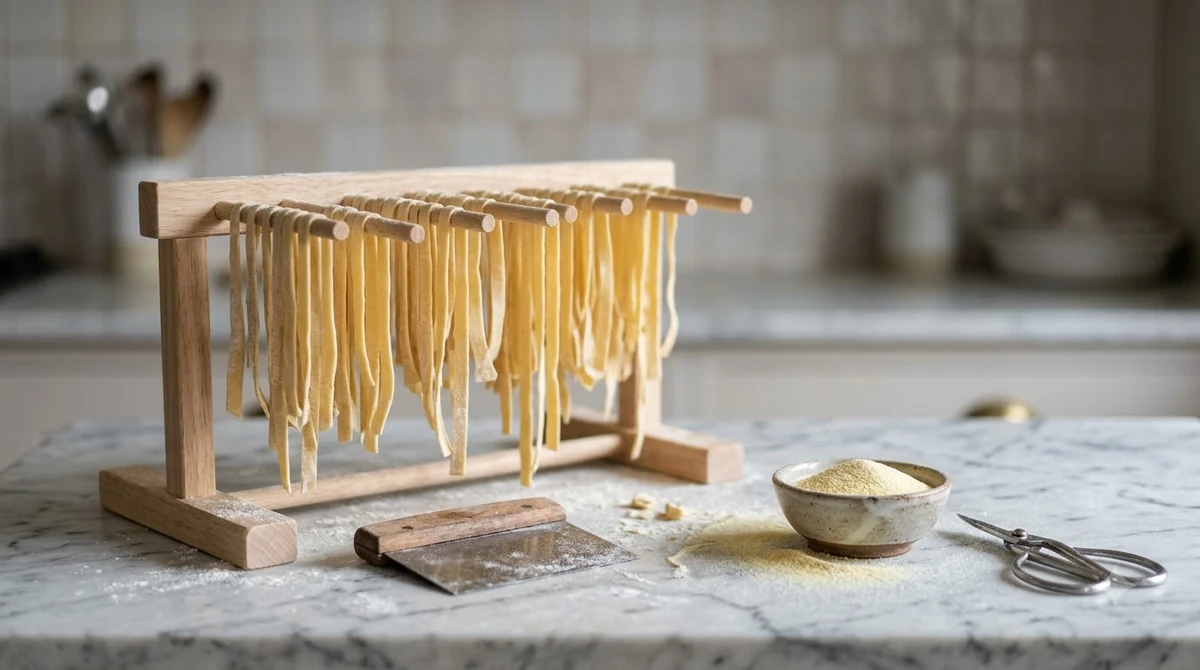
For tagliatelle, the classic partner is a meat sauce. Wikipedia names Bolognese and says thick sauces are typically made with beef, veal or pork, while creamy sauces with cheese are also served.
For tagliolini, the sources point to lighter combinations. These are the most common pairings in the sources read for this guide:
- Butter and white truffle, the tajarin ai tartufi style from Piedmont.
- Sugo d’arrosto, a sauce made from roast meat drippings.
- Light seafood sauces, which The Pasta Project lists first among modern choices.
- Vegetable and creamy sauces that do not weigh down a thin strand.
Sauce choice follows from width and dough. A thick ragù needs a ribbon wide enough to carry it, which is why tagliatelle is the default for Bolognese. Tagliolini’s Piedmont tradition leans toward butter and truffle, where a light coating is the goal.
In practice, the sauce is the deciding factor for most cooks choosing between tagliolini vs tagliatelle. Match the ribbon to the sauce you already make, and the choice becomes clear.
Serving tagliolini with a heavy meat sauce is not wrong, but it goes against the classic pairings in both sets of sources. If you want that dish, tagliatelle is the safer choice for the texture you expect.
Cooking Time and Handling at Home
For tagliolini vs tagliatelle, the sources checked for this guide give no exact minutes for either pasta, so the package time is the safest guide for the brand you buy.
The Pasta Project’s tagliolini guide says tagliolini needs less cooking time than taglierini, which it describes as flat but thinner than tagliatelle, and which takes slightly longer to cook.
Thin ribbons reach doneness sooner than wide ones, so start tasting a minute or two before the package time ends. Drain them while they still have a little bite, then finish them in the pan with the sauce.
Fresh homemade ribbons behave differently from dried boxes. Do not copy a dried-pasta time onto fresh dough, because the moisture and thickness are not the same. Taste first, and keep the timing short.
The timing question in tagliolini vs tagliatelle usually comes down to thickness rather than timing alone. A thinner ribbon has less mass to heat, so it reaches the bite sooner than a wider one at the same boil.
Are the Two Names Interchangeable?
In tagliolini vs tagliatelle, the names are often interchangeable in a home kitchen, because many Italians use them loosely. Width still decides which sauce feels right on the plate.
The Pasta Project notes that many Italians use taglierini and tagliolini interchangeably, and that the Barilla brand sells the two under different names. A package label is therefore a better guide than the name alone.
For a rich ragù, tagliatelle is the traditional choice. For butter, herbs or seafood, tagliolini is the more typical match.
Restaurants and shops follow their own labels, so a menu may call the same ribbon by either name. When the label conflicts with the width you want, trust the width and choose the sauce to match.
So is tagliolini vs tagliatelle a real choice? Yes, but mainly at the level of width and sauce. The names matter less than the millimeters and the plate you plan to serve.
Frequently Asked Questions
Is tagliolini the same as tagliatelle?
No, tagliolini vs tagliatelle is mainly a question of width. Tagliolini is usually 2 to 3 mm wide, while traditional tagliatelle is about 6 mm, so they are close relatives rather than the same cut. The width difference also shapes which sauce works best.
Can I use tagliolini instead of tagliatelle?
Often yes, especially with a light sauce. The choice between tagliolini vs tagliatelle matters most when the sauce is heavy. For a thick meat sauce, the wider tagliatelle is the traditional match, so the swap is a matter of taste more than a strict rule.
What is taglierini?
Taglierini is a flat ribbon that The Pasta Project describes as thinner than tagliatelle. Many Italians use the name for the same shape as tagliolini, so check the package before you buy.
Do both need egg dough?
Both are traditionally made with egg dough. Tagliatelle follows a ratio of about one egg to 100 grams of flour, while tagliolini dough can include semolina, flour and salt.
How does the cutter decide the width?
Both start from the same rolled egg sheet, and the cutter sets the width. A thin cutter gives tagliolini, and a wider one gives tagliatelle.
If you are choosing for a meal, start with the sauce, since that settles most of the tagliolini vs tagliatelle question. Pick tagliatelle for a rich meat ragù and tagliolini for butter, truffle, seafood or vegetable dishes. When you shop, read the width on the package, because the name alone is used loosely. For more shape comparisons, browse our pasta guides.