
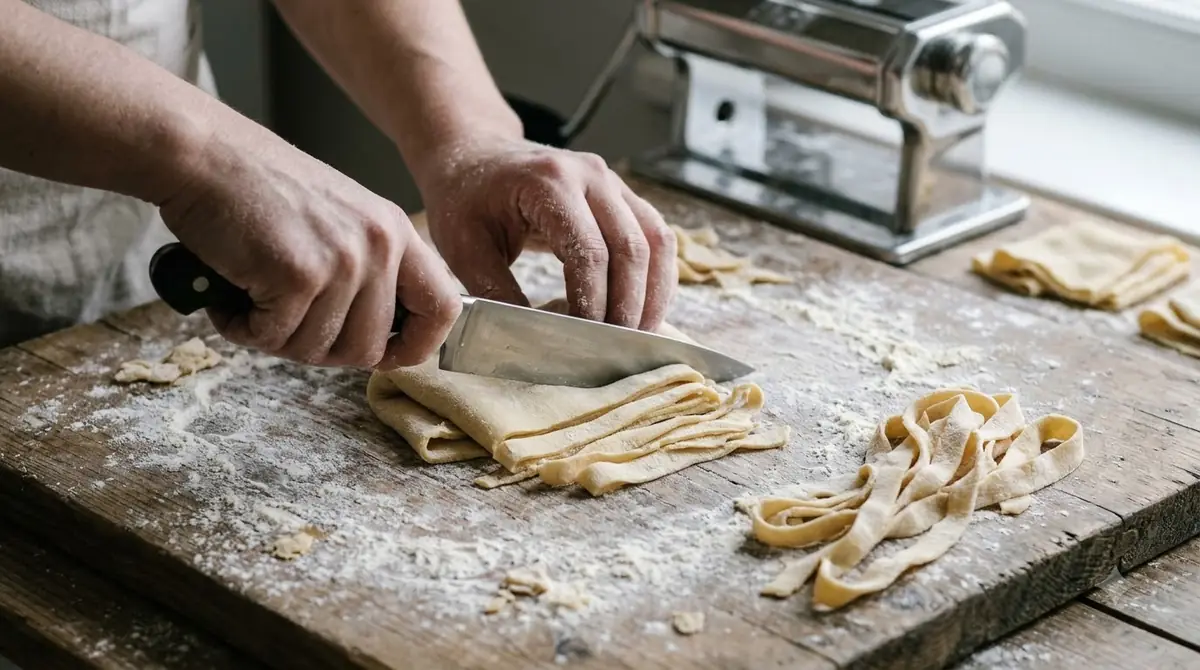

Umbricelli pasta is a thick, eggless noodle from Umbria in central Italy, made only from flour and water and rolled by hand. Its thick, chunky strands hold rich sauces well, which is why it has long been a home staple in the region. Sources describe its size differently, so the shape matters more than any single number.
What Are Umbricelli Pasta?
Umbricelli pasta is a hand-rolled, egg-free noodle from Umbria, made from flour and water and shaped into long, thick strands.
The Pasta Project’s Umbria guide describes umbricini or umbricelli as thick, hand-drawn spaghetti, and it ties the name to the earthworm because the shape resembles one. Pasta Social Club calls them chubby hand-rolled spaghetti, which captures the texture well.
Traditional cooks make the dough from nothing more than flour and water. Without eggs, the result is a rustic strand rather than the silky texture of an egg noodle such as tagliatelle. For an egg-based contrast, see this fresh pasta dough recipe.
How Umbricelli Differ from Spaghetti and Pici
Umbricelli pasta is thicker and shorter than pici, according to Pasta Social Club, and Gustoblog describes it as thicker and shorter than spaghetti. The table below sets out the main differences the sources give.
| Feature | Umbricelli | Pici |
|---|---|---|
| Dough | Flour and water, no eggs | Flour and water, per Pasta Social Club |
| Relative thickness | Thicker and shorter | Thinner, and longer than umbricelli |
| Home of the shape | Umbria, where Spoleto and Foligno both claim it | Tuscany, particularly Siena |
For the Tuscan cousin, see the pici pasta guide. For a cook, the practical difference is weight. A thicker strand suits heavier sauces than a thin one, which is why umbricelli pair with the meat, sausage and truffle sauces below. For the benchmark strand, see classic spaghetti.
How Thick Are Umbricelli?
A home recipe aims for strands about 3 to 5 mm in diameter and roughly 35 cm long, while other sources give no measurement at all.
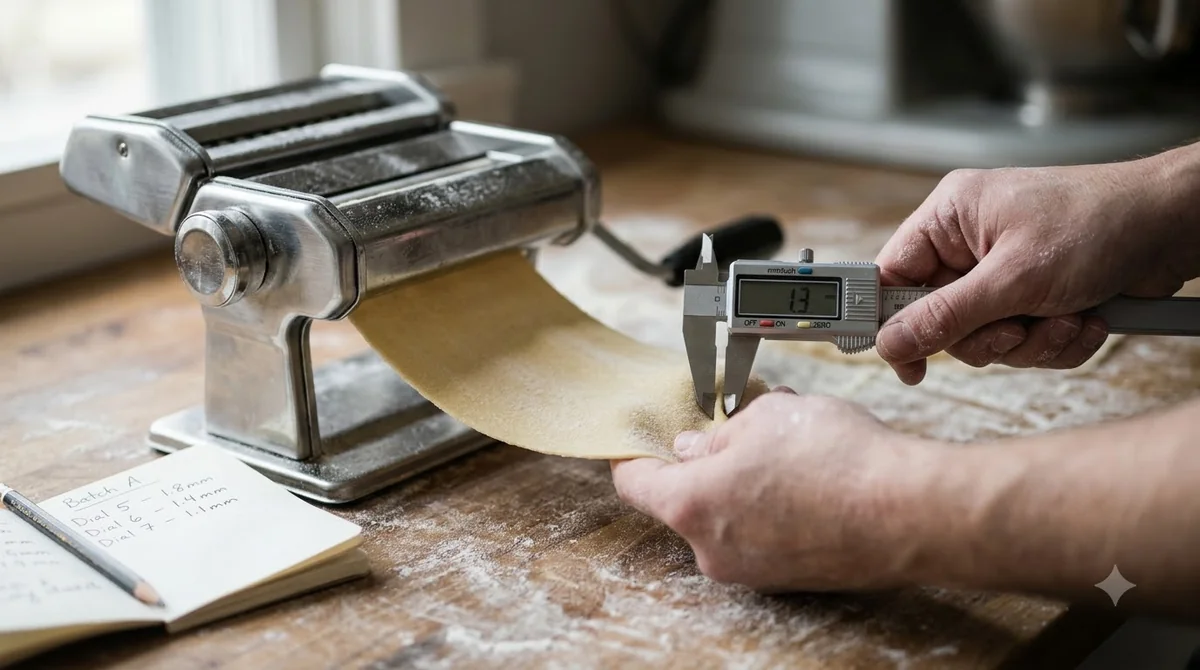
Size is where sources differ most for umbricelli pasta. Gustoblog uses spaghettoni as its reference, with strands about 35 cm long and 3 to 5 mm across. The Pasta Project gives no measurements, and Pasta Social Club compares the shape to pici without a figure.
Treat 3 to 5 mm as a guide for a home cook, not a standard. The thickness depends on how hard you roll and how large each piece is. When you check a finished batch, look for these traits:
- A thick strand, closer to spaghettoni than to a flat ribbon.
- A length near the 35 cm reference, with some natural variation.
- A slightly irregular surface, since the hand-rolled method is less even than a machine cut.
How to Make Umbricelli Pasta at Home
You make umbricelli by kneading flour, water and salt into a smooth dough, resting it, and rolling walnut-sized pieces by hand on an unfloured surface.
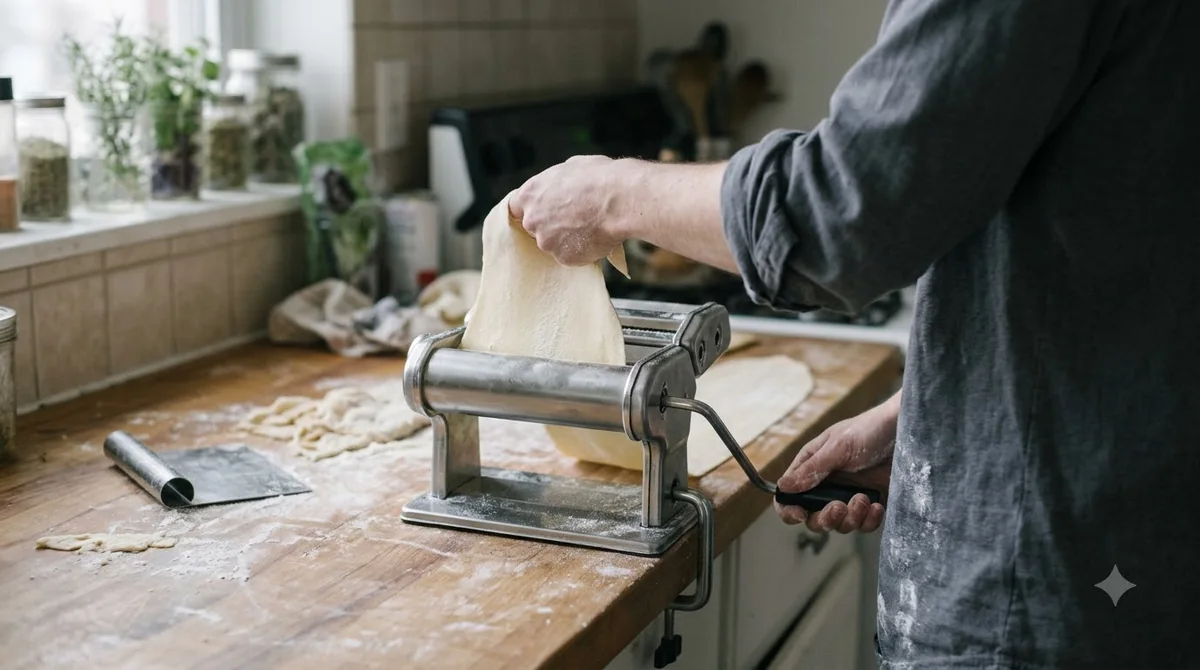
- Mix flour, water and salt, and knead until you have a smooth ball.
- Cover the dough with a cloth and rest it for 30 minutes.
- Cut pieces about the size of a walnut and roll each one by hand on the work surface.
- Keep the work surface unfloured, as Gustoblog advises.
- If the strands shrink back, rest them for another 15 minutes before you continue.
- Lay the finished pasta on a floured board, cover it, and rest it for one hour.
Pasta Social Club says the recipe needs no special equipment, and the method is a little more haphazard than making pici. In its words, you already have everything you need: flour, water and your own two hands. A different handmade shape, braided into rings in Sardinia, is covered in this guide to lorighittas ring pasta.
Flour choice is open. Pasta Social Club notes that cooks use soft wheat, durum wheat, farro, spelt and chestnut flour. Gustoblog uses two flours but does not name them or give amounts, so follow a tested recipe if you need exact ratios.
Traditional Sauces for Umbricelli Pasta
Umbrian cooks pair umbricelli pasta with a spicy tomato sauce, a sausage and cream sauce, a guanciale tomato sauce, or black truffle, plus a lake fish sauce near Trasimeno.
A thick, chunky strand suits sauces that cling. These are the regional sauces the sources describe, with the amounts that Gustoblog’s umbricelli guide gives for the home versions:
- Alla spoletina: 400 g cherry tomatoes, garlic, chili, 5 tablespoons olive oil, salt and 1 tablespoon chopped parsley. The tomatoes cook for about 10 minutes.
- Alla norcina: 4 sausages browned and crumbled, cooked with 250 ml fresh cream for 10 minutes, then finished with 2 tablespoons truffle oil and 40 g pecorino.
- Al rancetto: 150 g Umbrian guanciale, 30 g Cannara onion, 300 g tomato passata, marjoram and pecorino, close to an amatriciana.
- Al tartufo: olive oil or butter with one black truffle shaved thin. Gustoblog notes that the truffle is not cheap.
- Trasimeno style: lake perch fillets with shallot, garlic and peperoncino, as The Pasta Project describes it.
Pasta Social Club also points to sugo finto, a classic partner for these long strands. Its Tuscan version is a meatless ragù-style sauce built on carrot, celery and onion, while the Umbrian version is a lighter tomato sauce with wine, garlic and parsley.
Names and Origins: Umbricelli, Stringozzi and Ciriole
Umbricelli pasta takes its name from the Umbrian word umbrico, meaning earthworm, a nod to the shape, and Spoleto and Foligno both claim the pasta as their own.
Gustoblog gives umbrico as the Umbrian dialect word for earthworm. Pasta Social Club adds that peasants valued earthworms for enriching the soil, which gives the name a farming connection. Treat the earthworm link as one explanation of the name rather than settled history.
The pasta goes by several names. Sources list umbricelli, umbrichelli, umbricini, stringozzi and strangozzi, and in Terni the related ciriole, which The Pasta Project describes as a fettuccine-like pasta from that city.
Strangozzi are the hardest name to pin down. The Pasta Project calls them thicker than tagliolini, Gustoblog describes stringozzi as flatter, like thick tagliatelle (see tagliolini vs tagliatelle for that gap), and Wikipedia’s strangozzi entry describes a long pasta with a square section made of flour and water. Treat these as close cousins with different cuts rather than one shape; the full profile is in the stringozzi pasta guide.
Gustoblog also reports that the Italian ministry lists umbricelli as a traditional agri-food product (PAT) of Umbria. That listing was not confirmed on a ministry page, so check the official list if you need it for a source.
Storing and Cooking Umbricelli Pasta
Raw umbricelli pasta keeps for 2 to 3 days in the refrigerator or about one month in the freezer, according to Gustoblog.
Cook them in plenty of salted water and drain them as soon as they float to the surface. Toss them straight into the sauce so they stay hot. Once cooked, eat them right away, or refrigerate them for up to a couple of days.
Frequently Asked Questions
What are umbricelli pasta made of?
Umbricelli pasta is made from flour and water, and traditionally it has no eggs. Pasta Social Club notes that cooks use soft wheat, durum wheat, farro, spelt or chestnut flour, and Gustoblog adds salt to the dough.
How thick are umbricelli?
Gustoblog’s home recipe aims for strands 3 to 5 mm in diameter and about 35 cm long. The Pasta Project gives no measurement, so treat the size as approximate, since it depends on how you roll.
Are umbricelli the same as pici?
No, but they are close relatives. Pasta Social Club says umbricelli are thicker and shorter than pici, which come from Tuscany, particularly Siena.
What is the difference between umbricelli and strangozzi?
The sources do not agree on the shape of strangozzi. Some describe a flatter strand and others a square section, so the cut varies by maker. Check the package or ask the maker before you assume they match.
Can I use spaghetti instead?
Spaghetti can stand in if you cannot find or make umbricelli, especially with lighter tomato sauces. Umbricelli pasta is thicker and shorter, so a heavy truffle or sausage sauce will suit them better than plain spaghetti. Another thick option is Venetian bigoli pasta, an extruded noodle that also holds rich sauces.
Umbricelli pasta is a good choice when you want a rustic, chunky noodle with a regional sauce. Because the sources disagree on size and shape, judge the strand by its look and feel, and pair it with a sauce that suits a thick, eggless pasta.