
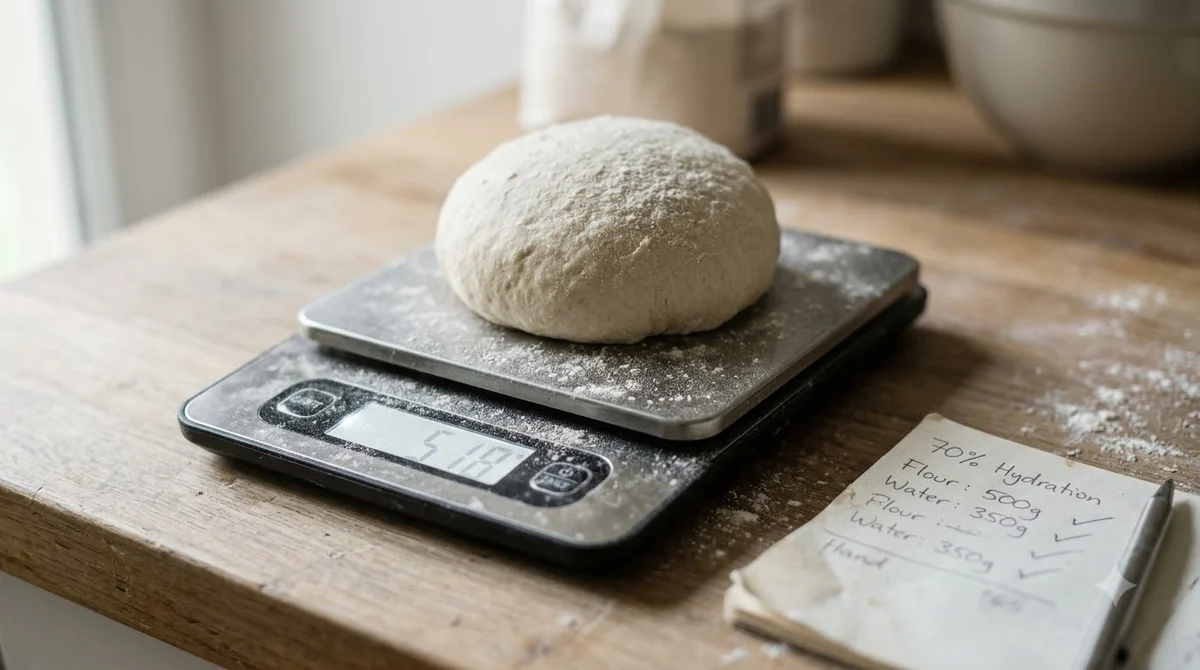

Vegan pasta dough is made from flour, water, salt and oil, with no eggs at all. The published versions use durum or semolina flour, roughly 160 to 180 g of water per 300 g of semolina, and a short rest before shaping. Without eggs the dough is firmer and can crack if it is too dry, so the water amount matters more than it does in an egg dough.
This guide sets out the ratios from two published sources, explains how to mix and knead by hand or in a stand mixer, and covers the rest times and the fixes for dough that is too dry or too sticky.
What Makes Pasta Dough Vegan?
Vegan pasta dough is simply pasta dough without eggs or any other animal product, so the structure comes from the flour and the water alone.
Egg pasta gets its richness and its yellow colour from the yolks. Without them, a small amount of olive oil adds softness and helps the dough roll smoothly. The Ankarsrum recipe uses 2 tablespoons of olive oil for this reason, and the Caputo semolina dough uses none at all.
What Ratio Works for Vegan Pasta Dough?
Two published recipes give a usable starting point, and they use different measures, so pick the one that matches your scale.
The Ankarsrum egg-free and vegan pasta dough recipe uses 4 cups of durum wheat flour, finely ground, 180 ml of warm water, 2 tablespoons of olive oil and 2 teaspoons of salt. The page gives no flour weight, so the cup measure varies with how you scoop.
The Caputo traditional semolina dough guide uses 300 g of semolina and 160 to 180 g of room-temperature water. Weighing the flour makes this ratio more repeatable than a cup measure.
If you use a cup measure, start with the lower water amount and add more only if the dough will not come together.
How Do You Mix Vegan Pasta Dough by Hand?
Mix the flour and water until a shaggy dough forms, then knead it until smooth, which usually takes 8 to 10 minutes.
- Weigh the semolina and place it directly on a clean board.
- Make a well in the centre with the bottom of a bowl, then pour in the room-temperature water.
- Whisk the flour into the water slowly with a fork, pulling in flour from the edges.
- Use a bench scraper to work in the remaining flour until the dough is shaggy.
- Knead for 8 to 10 minutes until the dough is smooth and firm.
The Caputo guide describes the ideal dough as firm, with a golden colour and an al dente bite once cooked. Add water in small increments if the dough is too dry, because a little extra water can change the texture more than you expect.
How Do You Knead Vegan Dough in a Stand Mixer?
A stand mixer with a dough hook or pasta dough arm can handle the kneading, provided you add the ingredients in the right order.
The Ankarsrum method adds all the flour to the bowl on low speed, then the water, then the oil. If the dough does not start to mix, guide the arm gently toward the centre a few times. Once a dough forms, move the arm about 2 to 4 cm from the bowl edge, then knead for at least 10 minutes, timed. Finish by kneading lightly on a floured board.
How Long Should Vegan Pasta Dough Rest?
Rest the dough before you roll it, because resting relaxes the gluten and makes the sheet easier to thin.
The Ankarsrum recipe calls for at least 60 minutes in the refrigerator. The Caputo guide allows 30 minutes to 6 hours wrapped at room temperature. Beyond 6 hours, refrigerate the dough and let it come back to room temperature for at least two hours before rolling.
| Situation | What to do |
|---|---|
| Dough is too dry and cracks | Add water in small amounts and knead again |
| Dough sticks to the board | Dust lightly with flour, and rest the dough before rolling again |
| Dough will wait longer than 6 hours | Refrigerate, then warm to room temperature for at least 2 hours |
What Shapes Can You Make With Vegan Pasta Dough?
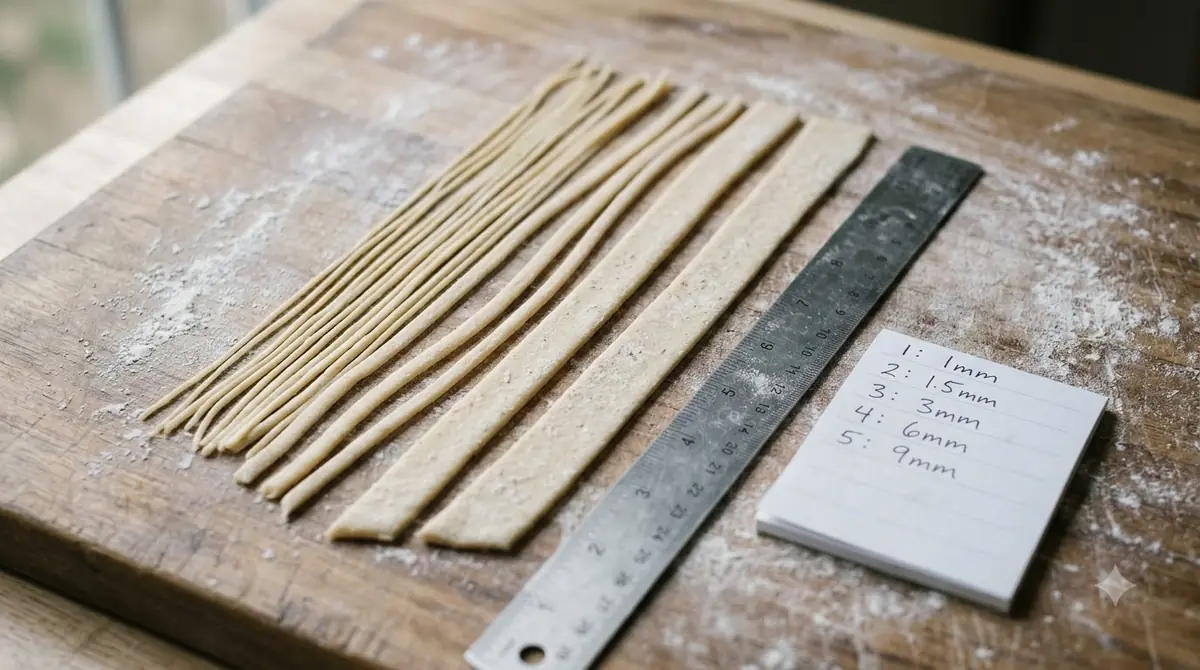
A firm semolina-based vegan dough suits short shapes, and the Caputo guide points to cavatelli and orecchiette as examples.
The Caputo guide says the dough can be shaped into cavatelli and orecchiette, and it links those recipes separately. Both are short shapes that suit a firm dough because they need less stretching than a long strand.
Long shapes such as spaghetti or fettuccine can also be made from vegan dough, but they need a firm dough and a careful rest so they do not break. Before you copy any speed figure from a press chart, check that your own machine’s manual matches it.
How Do You Store Vegan Pasta Dough?
Wrap the dough tightly, keep it at room temperature for up to 6 hours, and refrigerate it for anything longer.
The Caputo guide gives a room-temperature window of 30 minutes to 6 hours. If you need to hold the dough longer, refrigerate it and bring it back to room temperature for at least two hours before rolling. Cold dough is stiff and tears when rolled, so the warm-up step is not optional.
Once the pasta is shaped, dry it or cook it promptly. Keep the pieces in a single layer on a floured tray so they do not stick, and do not stack them while they are still soft.
Frequently Asked Questions
Can vegan pasta dough use all-purpose flour?
The published recipes use durum or semolina, which give a firmer dough. All-purpose flour can work, but expect a softer dough and check the package for its recommended use.
Why is my vegan pasta dough cracking?
The dough is usually too dry. Add water in small increments and knead again until the surface is smooth.
Do I need olive oil in vegan pasta dough?
Not always. The Ankarsrum recipe includes 2 tablespoons, while the Caputo semolina dough uses flour and water only.
How long should vegan pasta dough rest?
At least 60 minutes in the refrigerator for the Ankarsrum recipe, or between 30 minutes and 6 hours at room temperature for the Caputo semolina dough.
Vegan pasta dough is forgiving once you learn the feel of the dough. Weigh the flour, add the water a little at a time, and give the dough its full rest before you roll it.
 8 min readLearnNeapolitan Pizza Dough Recipe: Ratios, Mixing and RiseUpdated Nov 10, 2026
 9 min readLearnHow to Make Spinach Pasta Dough: Ratios, Kneading and RestingUpdated Nov 10, 2026
 8 min readLearnVegan Pizza Recipe: Dough, Cheese and Toppings That WorkUpdated Nov 12, 2026
 6 min readLearnEggless Pasta Dough: Semolina, Water and Resting TimeUpdated Nov 13, 2026
 8 min readLearnFresh Pasta Dough Recipe: Ingredients, Kneading and Resting TimesUpdated Nov 6, 2026
 6 min readLearnHow to Make Cannoli Shells: Dough, Resting and Frying at 350°FUpdated Nov 13, 2026