
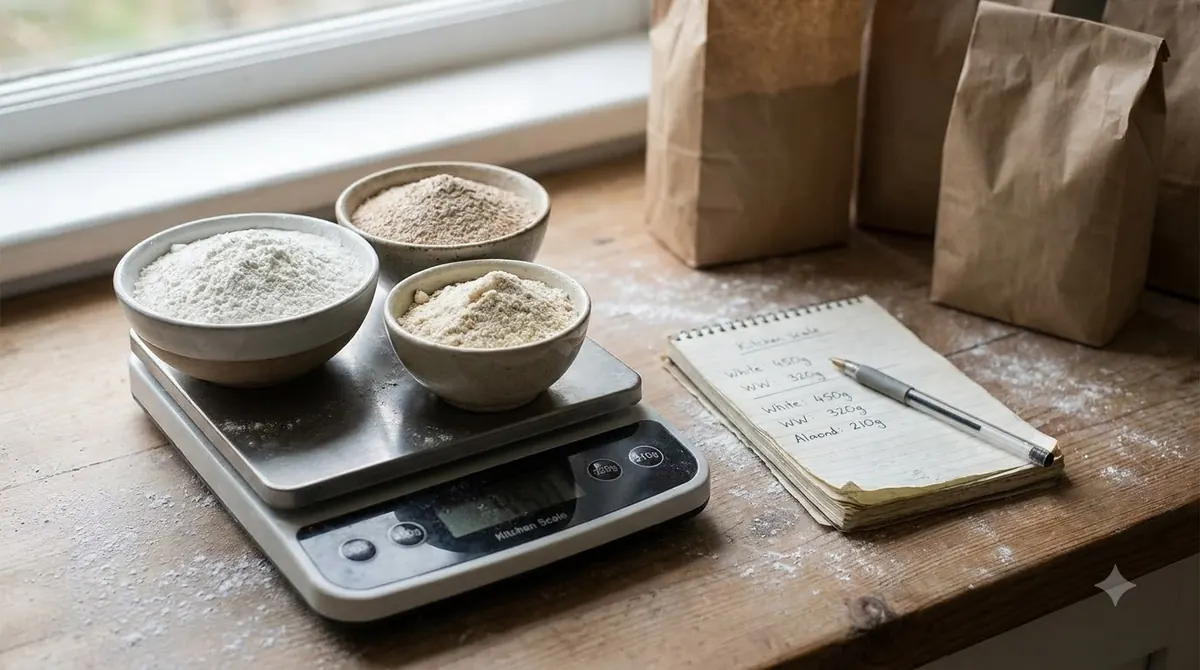

Eggless pasta dough is usually just durum semolina, water and a pinch of salt, kneaded until smooth and rested before rolling. Without eggs, the dough is firmer and more textured, and the water amount changes with the flour. Start with less water than the recipe lists, then add it a spoonful at a time until the dough comes together.
If you are looking for an eggless pasta dough for a vegan kitchen, a dairy-free diet or simply a pantry with no eggs on hand, the method below follows two recipes that give exact weights and clear checks for doneness.
What Is Eggless Pasta Dough Made Of?
Eggless pasta dough is made from semolina, or a blend of semolina and all-purpose flour, with water and salt.
The Lurch recipe uses 400 g of durum wheat semolina, 1 teaspoon of salt and water, and it notes that a pinch of turmeric can be added for color. The Lurch basic recipe is a plain semolina dough with no egg, so the flavor and color come mainly from the flour itself.
Some recipes blend semolina with all-purpose flour for a softer dough. Sources note that all-purpose flour gives a softer and gummier result than semolina alone, while semolina adds bite, so the blend is a trade-off between texture and chew.
How Much Water Does Eggless Dough Need?
Start with about 90 percent of the listed water, then add the rest in small amounts until the dough holds together without being sticky.
The Lurch recipe lists 190 g of water for 400 g of semolina, but it advises starting with about 90 percent and adding more as needed. The page also notes that durum semolina can absorb a little more or a little less water from one batch to the next, so the amount is a guide rather than a fixed rule.
The Homecooking Collective version uses 320 g of semola rimacinata with 160 ml of water, plus more as needed. It recommends lukewarm to warm water, which helps coarse semolina knead into a smooth dough. If the dough is sticky, add about a teaspoon of flour at a time. If it is dry, lightly mist it or wet your hands.
How Long Should You Knead Eggless Pasta Dough?
Plan on roughly 15 to 18 minutes of hand kneading for a semolina dough, after the flour and water have formed a shaggy mass.
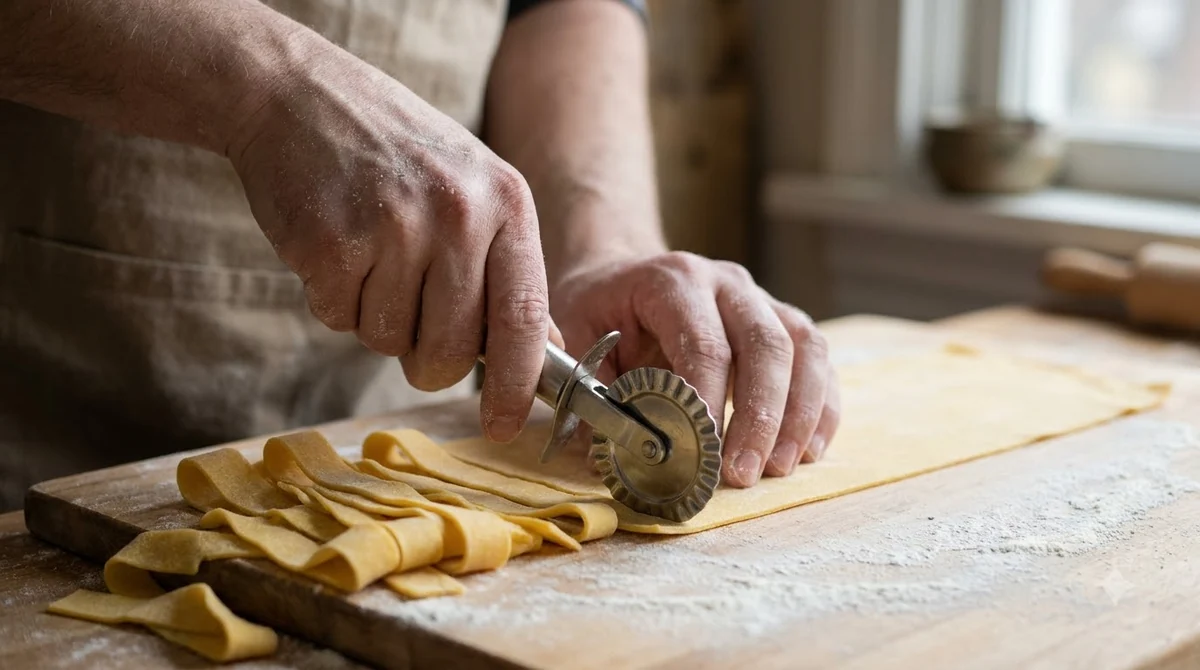
Form a well in the flour, add the water, and gradually work the flour in with a fork until a shaggy mass forms. That takes about 2 to 3 minutes on the counter. Then knead for about 15 to 18 minutes. The Homecooking Collective method says to discard any small dry bits that will not incorporate, rather than forcing them into the dough.
The Lurch recipe says to knead everything into a dough but does not give a time, so use the look and feel of the dough as the guide. Knead until the dough is even in color with no dry streaks.
How Long Should Eggless Dough Rest?
Wrap the dough tightly and let it rest before rolling, for at least one hour.
The Homecooking Collective method rests the dough at room temperature for 1 hour, and up to 2 hours, to relax the gluten and smooth it out. The Lurch recipe wraps the dough in plastic wrap and refrigerates it for at least one hour. The two sources differ on where the dough should rest, but both agree that a rest makes it easier to roll.
Keep the dough wrapped while it rests so it does not dry out. Before rolling, bring a refrigerated piece back toward room temperature so it does not crack when you run it through a roller.
How Does Eggless Dough Compare to Egg Pasta?
Eggless dough has more bite and a firmer texture, while egg dough is softer and silkier when rolled and cut.
Texas Real Food’s guide to bucatini substitutes describes fettuccine as having an egg-based dough that adds silkiness and creaminess. An eggless semolina dough gives a different result: a firmer, more textured strand that holds up well under rich or chunky sauces.
Semolina is the reason for that firmer bite. Sources say it gives more bite than all-purpose flour, so a semolina dough suits sturdy sauces such as meat ragu or a thick tomato sauce better than a very light butter sauce.
How to Tell the Dough Is Ready
The dough is ready when it feels soft, tacky but not sticky, and almost perfectly smooth, with no dry bits on the surface.
Press a finger into the dough. If it springs back slowly, the gluten has developed enough. If it is dry and crumbly, add a few drops of water. If it sticks to your fingers and the counter, add about a teaspoon of flour at a time.
Dough that rests well and has the right feel will roll out evenly and hold its shape. Cut or shape it soon after rolling so the sheets do not dry out on the counter.
Frequently Asked Questions
What flour is best for eggless pasta dough?
Durum wheat semolina is the flour both sources use as the base. Fine semola rimacinata is recommended for a smooth dough, while all-purpose flour gives a softer, gummier result when used alone.
Why is my eggless pasta dough dry?
Semolina can absorb water unevenly from batch to batch. Lightly mist the dough or wet your hands, then knead the moisture in before adding more liquid.
Can eggless dough be used for any pasta shape?
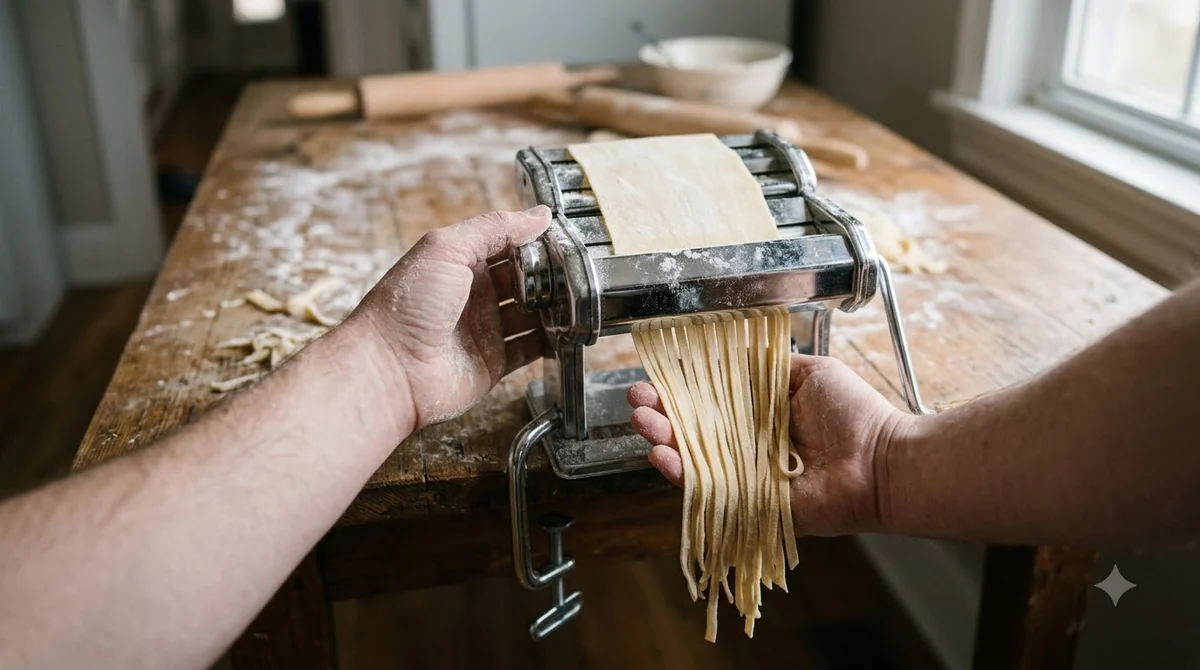
The dough can be rolled into sheets for cut shapes or pushed through a shaping tool. Its firmer texture suits sturdy shapes and heavier sauces best.
How long should the dough rest before rolling?
Rest it for at least one hour, wrapped. The Homecooking Collective method allows up to two hours at room temperature, and the Lurch recipe wraps and refrigerates it for at least an hour.
Eggless semolina dough is simple to make with three ingredients and a little patience at the kneading stage. Measure the water carefully, add it slowly, knead until smooth, and let the dough rest before rolling. Those steps matter more than the exact flour blend, and they give a dough that holds its shape in the pot.
 8 min readLearnFresh Pasta Dough Recipe: Ingredients, Kneading and Resting TimesUpdated Nov 6, 2026
 9 min readLearnNo Knead Pizza Dough: Flour, Water and Time Do the WorkUpdated Nov 10, 2026
 6 min readLearnVegan Pasta Dough: Ratios, Mixing and RestingUpdated Nov 13, 2026
 9 min readLearnHow to Make Spinach Pasta Dough: Ratios, Kneading and RestingUpdated Nov 10, 2026
 5 min readLearnHow to Make Semolina Pasta Dough: Simple StepsUpdated Nov 13, 2026
 6 min readLearnHow to Make Cannoli Shells: Dough, Resting and Frying at 350°FUpdated Nov 13, 2026